Politics
Environmental commitment: 30 plans to remove pollution and address industrial hotspots
The National Center for Environmental Compliance Monitoring revealed the completion of the project to rehabilitate polluted areas resulting from industrial pollution


The National Center for Environmental Compliance revealed the completion of the project to rehabilitate polluted hotspots resulting from industrial pollution, through the development of 30 plans to remove pollution and treat the most dangerous sites within the framework of the project, which began in July 2022, and is scheduled to continue until the end of the third quarter of this year, as part of the center’s ambitious initiatives to restore the environment to its original state.
Dr. Saad Al-Dahlawi, Director of the General Department for Environmental Assessment and Reports, said: Identifying the locations of polluted hotspots is done in several stages, starting with reviewing inspection reports and environmental violations to identify critical areas and polluted sites, passing through assessing the most dangerous industries based on the type of pollutants they produce, and finally conducting an extensive survey of potential areas using satellites to identify any areas suspected of being exposed to pollution.
He added that after identifying these areas, the contaminated sites are visited to inspect them on the ground, where the necessary field measurements are taken to form a preliminary picture of the site, and then samples are collected from various contaminated environments for analysis in accredited laboratories to ascertain the type and concentration of pollutants present at this site.
Al-Dahlawi confirmed the preparation of 30 plans to remove pollution and treat the most dangerous sites within the scope of the project, explaining that this initiative aims to ensure the use of environmental standards that comply with the environmental system and international agreements, in addition to treating polluted hotspots in ways that preserve the safety of the environment, promote its use and restrict it, as well as working on treating and rehabilitating these sites.
He pointed out that after the center accepts and approves the rehabilitation plan, the responsible party must contract with specialized entities approved by the National Center for Waste Management to treat and dispose of the pollutants present at the site. After the work is completed, the center ensures that the work has been carried out as required through a licensed consultant who prepares a comprehensive report on the treatment work that has been done and the extent of the responsible party’s commitment to the approved plan. Based on this, the responsible party is granted a certificate confirming that the closure process was carried out in a systematic manner and in accordance with the center’s regulations.
He explained that one of the tasks of the Environmental Compliance Center is to prepare plans to rehabilitate polluted industrial sites spread across various regions of the Kingdom, noting that most of these hotspots are concentrated in the governorate of Buqayq, the governorate of Jeddah, and the city of Rabigh.


Politics
Kuwait revokes citizenship of 65 people: reasons and repercussions
Kuwait has issued decrees revoking the citizenship of 65 individuals and their dependents. Learn about the legal background of the decision and its impact within the framework of the naturalization review campaign.

Kuwaiti authorities, through the official gazette "Kuwait Today," announced the issuance of four decrees and a ministerial decision to revoke the Kuwaiti citizenship of 65 individuals, in addition to all those who acquired it through them by dependency. This step comes within the framework of an ongoing campaign aimed at reviewing and scrutinizing naturalization files to ensure their compliance with the strict legal requirements stipulated by Kuwaiti law.
Details of decrees and procedures
According to reports, the citizenship revocations were distributed as follows: the first decree revoked the citizenship of 54 individuals, while the second and third decrees each revoked it of two individuals, and the fourth decree revoked it of one individual. Additionally, a Cabinet decision revoked the citizenship certificates of six other individuals. These decisions are based directly on the provisions of Kuwaiti Nationality Law No. 15 of 1959 and its amendments, which grants the executive authority the power to revoke citizenship in specific cases, such as obtaining it through fraud, forgery, or based on false information.
General context and historical background
Citizenship in Kuwait and other Gulf states is a highly sensitive and important issue, closely linked to the welfare state system that provides citizens with significant benefits, including free education and healthcare, housing support, government jobs, and social assistance. For this reason, the state imposes strict criteria for granting citizenship and is keen to protect the demographic composition and national identity. The current campaign to review citizenship files is not the first of its kind, but it has gained increasing momentum in recent months as the government seeks to address any past abuses and ensure the integrity of citizenship records.
Importance and expected impact
Domestically, these measures reflect the government's seriousness in enforcing the law and combating corruption and forgery, a stance supported by broad segments of Kuwaiti society who demand the preservation of the integrity of national identity. This campaign is expected to deter future attempts at manipulation. Regionally, this step aligns with a general Gulf trend toward stricter oversight of naturalization files. Internationally, the decisions to revoke citizenship have drawn the attention of human rights organizations that closely monitor statelessness cases, although Kuwait maintains that its procedures are carried out in accordance with its sovereignty and domestic laws. The Kuwaiti Ministry of Interior had previously clarified that it had established controls and criteria for dealing with cases where citizenship had been revoked, particularly those previously granted based on the "distinguished service" clause, to define the procedures and associated benefits.
Politics
Extending the truce in Syria: An opportunity to integrate the SDF and unify the country?
The Syrian government and the Syrian Democratic Forces announced a 15-day extension of the ceasefire. The truce comes after a rapid advance by government forces in the northeast of the country.
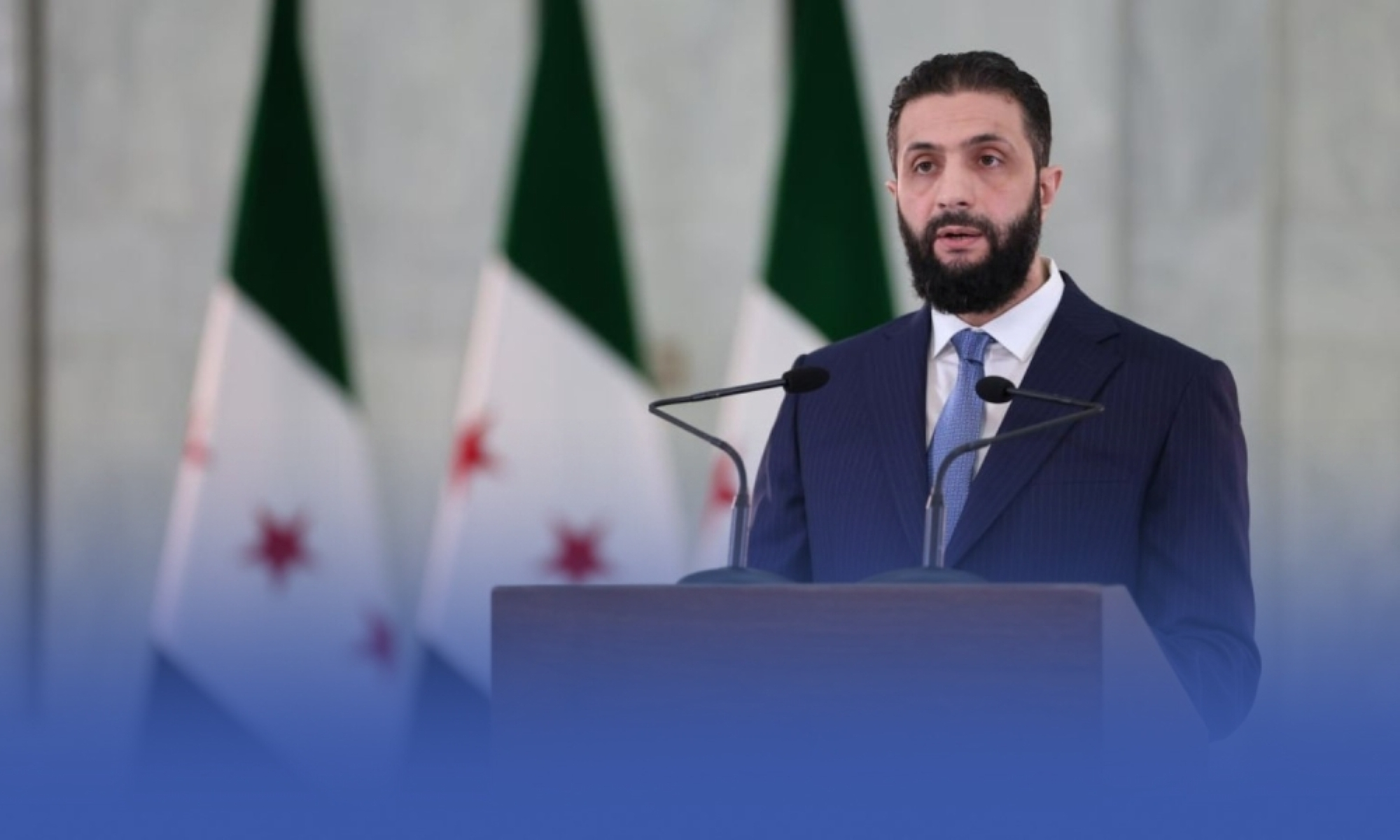
The Syrian Interim Government and the Kurdish-led Syrian Democratic Forces (SDF) announced a 15-day extension of the fragile ceasefire in the northeast of the country, which was set to expire Saturday evening. This extension comes at a crucial time, opening the door to intensive negotiations aimed at averting a large-scale military confrontation and integrating SDF fighters into the structure of the new Syrian National Army.
Background of rapid developments
Syria underwent a radical political transformation in late 2014 with the fall of Bashar al-Assad's regime and the rise of a new transitional government led by Ahmed al-Sharaa. Following this change, the new government's forces moved swiftly to consolidate their control over all Syrian territory. In the past two weeks, these forces have made significant territorial gains in the north and east of the country, capturing two key predominantly Arab provinces previously held by the Syrian Democratic Forces (SDF). This has greatly strengthened the new government's authority and redrawn the map of power in the country.
The importance and impact of a ceasefire
The initial ceasefire announcement came as a surprise, just as government forces were closing in on the last remaining strongholds of the Syrian Democratic Forces (SDF) in the northeast. This truce offered the SDF an opportunity to consider its options: either lay down its arms and join the unified Syrian army as part of a national integration plan, or face a full-scale offensive that could result in heavy casualties. This development represents a pivotal moment for the future of the Kurdish-led autonomous administration established over years of war, and it will determine the fate of the region's diverse ethnic and religious groups.
Regional and international dimensions
This issue is being closely followed internationally and regionally. The United States, which was the main backer of the Syrian Democratic Forces (SDF) in their fight against ISIS, now finds itself facing a new political reality that requires a reassessment of its strategy and partnerships in Syria. Meanwhile, Turkey, which considers the Kurdish People's Protection Units (YPG), the main component of the SDF, a terrorist organization, is watching developments closely, as any agreement could affect the security of its southern border. The success of negotiations to peacefully integrate the SDF would be a major step toward achieving stability and unifying Syria after more than a decade of division and war, while failure could ignite a new round of conflict with dire humanitarian and geopolitical consequences.
Politics
The book "The Neighbor Before the House": An Analysis of Saudi-Yemeni Relations
The book “The Neighbor Before the House” by researcher Mohammed Al-Faqih reviews the history of Saudi-Yemeni relations, documenting the Saudi role in supporting legitimacy and presenting a future vision for the partnership between the two countries.

In a new publication aimed at documenting and analyzing one of the most important and complex Arab relationships, Yemeni writer and researcher Mohammed al-Faqih has released a book titled "Yemen and Saudi Arabia: Neighbor Before Home." The 523-page book, divided into eight chapters, offers an in-depth political and historical analysis of the fraternal relations between the Kingdom of Saudi Arabia and the Republic of Yemen, emphasizing that these relations transcend current political circumstances and are based on solid foundations of geography, history, and shared destiny.
Historical background and general context
The relationship between Saudi Arabia and Yemen has deep historical roots, as the two countries share a long geographical border and strong tribal, cultural, and social ties. This relationship has witnessed pivotal moments throughout history, most notably the Treaty of Taif in 1934, which demarcated the border and established a framework for cooperation. Over the decades, the Kingdom has played a central role in supporting Yemen's economic and political stability and has hosted millions of Yemenis who have contributed to its development. This book comes at a critical juncture for Yemen and the region, as current challenges have created a new reality that necessitates a re-examination of this relationship from a strategic perspective that ensures the security and stability of both countries.
The book's content and its analytical dimensions
In his book, the author emphasizes that the relationship between the two countries cannot be reduced to mere geographical proximity, but rather is akin to "two inseparable bodies" whose security and stability constitute an indivisible unity. The book analytically examines the Saudi role in supporting the legitimate Yemeni government and state institutions since the outbreak of the recent crisis, documenting relief and development efforts and reconstruction projects. It also sheds light on external attempts and destabilizing agendas that have sought, and continue to seek, to target this shared strategic depth with the aim of destabilizing the entire region.
Importance and expected impact
This publication is of paramount importance on several levels. Domestically, it provides the Yemeni people with documentation that reinforces confidence in Saudi Arabia's role as a sincere strategic partner striving for Yemen's prosperity. Regionally, the book represents a valuable addition to the Arab political library, offering an analytical perspective that counters narratives seeking to distort the nature of the relationship, emphasizing that Yemen's stability is the first line of defense for the security of the Arabian Peninsula. Internationally, the book is considered an important reference for researchers and decision-makers interested in Yemeni affairs, as it presents a comprehensive perspective linking historical roots with contemporary challenges and proposes a future vision based on full partnership, respect for sovereignty, and the building of a strong and stable Yemen that supports its neighbors, embodying the saying, "The neighbor comes before the house.".
In a statement to Okaz, Al-Faqih explained that his work is not limited to narrating events, but aims to be a real addition to the public discussion about the future of Yemen and its relationship with its surroundings, foremost among them the Kingdom of Saudi Arabia, which Yemenis view as a major supporter that has not hesitated to offer everything precious for the stability and progress of their country.
-

 Reports one week ago
Achievements of Saudi government sectors in 2025
-
Culture and Art, 1 week ago
Sherine Abdel Wahab's brother threatens to sue the Musicians' and Actors' Syndicates
-
Local News 3 days ago
Non-Saudi ownership of property in Saudi Arabia: The new system comes into effect
-
Local news two days ago
First birth on the Riyadh train: A heartwarming story at Andalus station
-
Sports 6 days ago
Sadness prevails among Moroccan fans after losing the Africa Cup of Nations
-
Local news one week ago
Development of the Thumamah Bridge in Riyadh: Infrastructure improvement and Vision 2030
-
Local News 4 days ago
The death of Prince Faisal bin Turki bin Abdullah, and the Royal Court mourns
-
Sports one week ago
Juventus' title hopes fade after defeat to Cagliari