Politics
Israel: No decision yet to send a delegation to negotiate on Gaza
Israeli officials confirmed to Axios that no decision has yet been made regarding sending a negotiating delegation to Egypt or Qatar concerning Gaza, and that disagreements persist

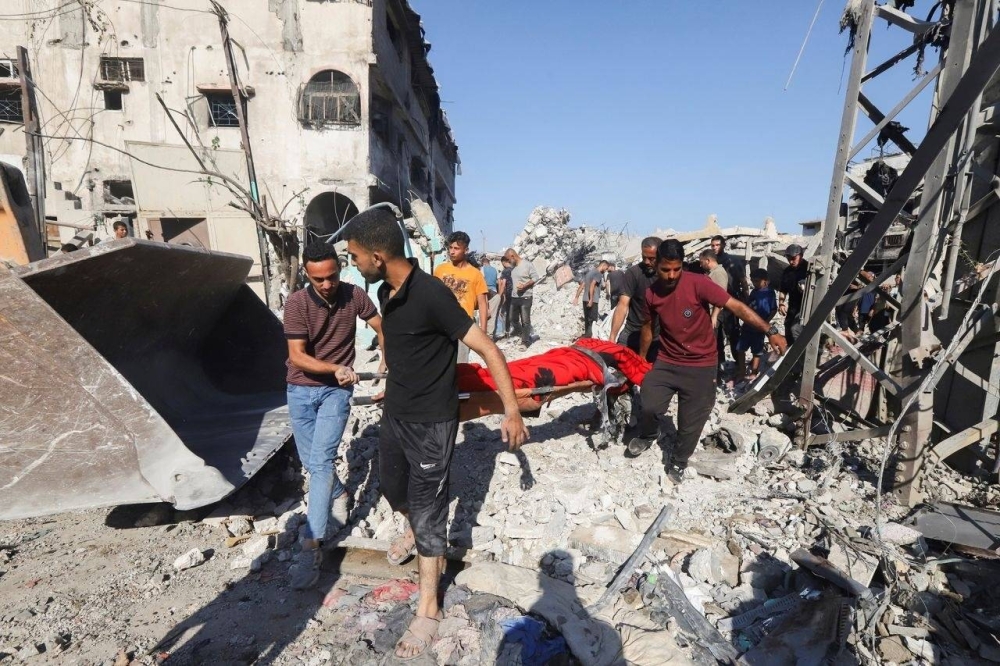
While Israeli officials confirmed to Axios that no decision has yet been made regarding sending a negotiating delegation to Egypt or Qatar concerning Gaza, and that disagreements with Hamas remain significant, the Palestinian Ministry of Education revealed that more than 16,000 students have been killed and more than 26,000 others injured in the West Bank and Gaza Strip since the start of the Israeli war of extermination on October 7, 2023.
The ministry announced that 15,553 students were killed in the Gaza Strip and 23,411 others were injured, while 103 students were killed and 691 others were injured in the West Bank, accusing the Israeli occupation of arresting 361 students.
Regarding the university sector, the ministry stated that 1,111 students were killed and 2,317 others were injured, and an unknown number were detained in the Gaza Strip. In the West Bank, 35 students were killed and more than 219 others were injured, and 399 were arrested.
The ministry reported that the number of deaths among teachers and school affiliates in Gaza reached 701 dead and 3,015 injured, while the number of deaths among university affiliates, academics and administrators, reached 221 dead and 1,416 injured.
The ministry indicated that the occupation destroyed more than 118 schools in the Gaza Strip, while 252 government schools were severely damaged, and 91 schools were damaged by bombing. 93 schools belonging to the UNRWA agency were also bombed, and more than 60 university buildings were completely destroyed, while 152 schools were vandalized in the West Bank, and 8 universities were stormed by the Israeli occupation forces.
The Israeli military machine continues to exterminate civilians in the Gaza Strip, especially children, women and the elderly, by shelling a number of neighborhoods amid suspicious international silence.
Three senior Israeli officials announced that significant gaps remain with Hamas regarding a ceasefire and prisoner exchange in Gaza. One of them, who is familiar with the negotiations, said: "At this stage, we are still stuck, and the disagreement with Hamas over the terms for ending the war remains substantial.".
They indicated that at this stage no decision has yet been made to send a negotiating delegation to Egypt or Qatar regarding the prisoner exchange deal with Hamas, according to what was reported by the Axios website.
A Hamas official had said earlier today that contacts between mediators and his movement had intensified regarding reaching an agreement for a ceasefire and prisoner exchange in Gaza.
Related News




Politics
The head of Iranian police intelligence and other senior commanders were killed in a large-scale attack
Details of the killing of Iranian police intelligence chief Gholam Reza Rezaian, Supreme Leader Ali Khamenei and the defense minister in US-Israeli attacks targeting a meeting of the Defense Council in Tehran.
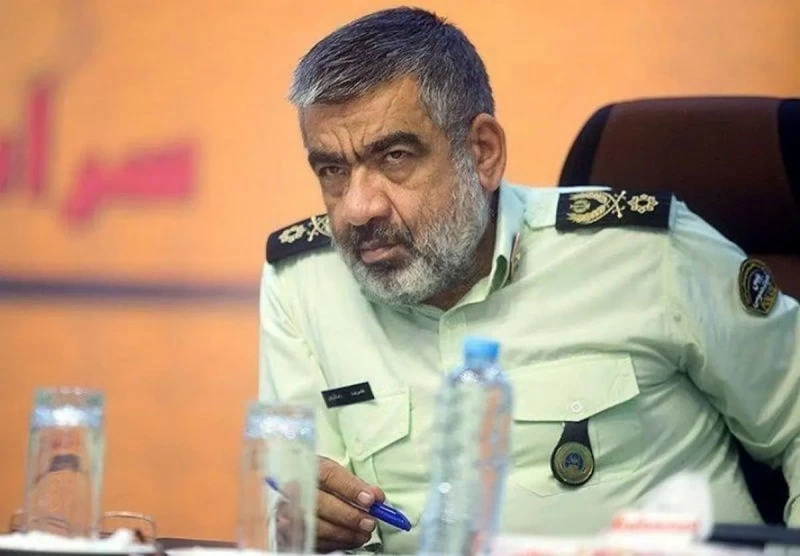
In an unprecedented security and military development that could alter the balance of power in the Middle East, Iranian media announced the death of Brigadier General Gholam Reza Rezaian, the head of Iranian police intelligence, in a series of violent and coordinated attacks by US and Israeli forces. The Fars News Agency officially confirmed Rezaian's death, stating he succumbed to injuries sustained in the strikes that targeted sensitive sites yesterday.
Details of the attack and targeting of senior leaders
The military operations were not limited to targeting security leaders; Israel also released footage documenting its intensive airstrikes that struck vital installations in the capital, Tehran. The footage showed the destruction of a central command headquarters of the Iranian regime, as well as an attack on a Revolutionary Guard compound, indicating a significant intelligence and military penetration.
In a dangerous escalation, Iranian state television announced today (Sunday) heavy losses within the military leadership, confirming the deaths of Iranian Defense Minister Aziz Nasirzadeh and Chief of Staff of the Armed Forces Abdolrahim Mousavi. Reports indicate that these two commanders were targeted in a precise airstrike that struck a meeting of the Defense Council, reflecting the accuracy of the intelligence possessed by those who carried out the attack.
The announcement of the Supreme Leader's death and the repercussions of the event
The most shocking and impactful news came with Tehran's confirmation of the death of Iranian Supreme Leader Ali Khamenei in this massive attack, which sources described as unprecedented. This announcement represents a historic turning point in the trajectory of the Iranian political system, given the Supreme Leader's absolute authority within the structure of governance and decision-making.
Regional context and strategic importance
This event comes amid escalating tensions in the region that have persisted for years between Tehran on one side, and Tel Aviv and Washington on the other. While Iranian military and nuclear sites have long been a focus of attention for military planners in Israel and the United States, targeting the very top of the political and military establishment with such comprehensiveness is unprecedented since the founding of the Islamic Republic in 1979.
The absence of key figures such as the defense minister, the chief of staff, and especially the head of police intelligence, who plays a pivotal role in internal security, presents the Iranian military and security establishment with enormous challenges related to restructuring and maintaining internal security, as well as addressing external threats. Furthermore, the vacancy in the position of Supreme Leader will open the door to widespread speculation about the future of leadership in Iran and potential succession scenarios under these difficult circumstances.
Politics
Four sailors injured in Iranian attack on oil tanker in Strait of Hormuz
The Sultanate of Oman announces that four sailors were injured following an Iranian attack on the oil tanker Skylight in the Strait of Hormuz. Details of the attack and its impact on maritime security in the Gulf.
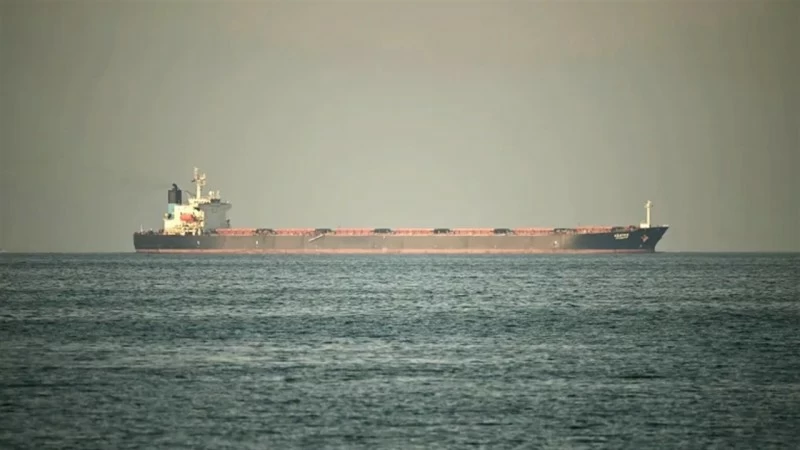
The Sultanate of Oman has officially announced that an oil tanker was attacked in the strategic Strait of Hormuz, resulting in injuries to four sailors on board, in an incident that once again highlights security tensions in one of the world's most important waterways.
The official Oman News Agency, quoting the Maritime Security Centre, reported that the attack targeted a commercial vessel flying the flag of Palau, named "Skylight." The incident occurred specifically five nautical miles north of the port of Khasab in the Musandam Governorate, an area directly overlooking shipping traffic in the strait.
Details of the evacuation and injuries
The Maritime Security Centre in the Sultanate of Oman explained that, in response to the distress call, an immediate evacuation operation was carried out for the 20-member crew of the tanker SKYLIGHT. Official data indicated that the crew included 15 Indian nationals and 5 Iranian nationals.
The center noted that initial information and medical assessments confirmed that four crew members sustained injuries of varying severity and were quickly transferred to Omani medical facilities for treatment. This comes as media reports, including those from Iranian television, indicated that Iranian forces targeted the tanker, adding a complex political and security dimension to the incident.
The strategic importance of the Strait of Hormuz
This incident is of paramount importance given its location in the Strait of Hormuz, a vital artery for global oil supplies. Nearly a fifth of the world's oil consumption passes through this narrow waterway, and major Asian and European nations rely on it to secure their energy needs. Any security threat in this region not only affects the littoral states but also has repercussions for the stability of global energy markets and oil prices.
Context of maritime tensions in the region
This incident is not isolated from the context of ongoing tensions in the Gulf and the Sea of Oman. The past few years have witnessed a series of similar incidents targeting commercial vessels and oil tankers, prompting several major powers to bolster their naval presence to ensure freedom of navigation. The international community views such attacks with grave concern, considering them a direct threat to international maritime law and security.
The Sultanate of Oman usually plays a pivotal role in maintaining balance and stability in this sensitive region, thanks to its geographical location and balanced foreign policy, as the Omani Maritime Security Centre always seeks to ensure the safety of navigation and to deal quickly with any maritime emergencies that may occur in territorial waters or exclusive economic zones.
Politics
Egypt denies Israeli claims of informing it of the date of the strike on Iran
An Egyptian source denies Haaretz reports that Tel Aviv notified Cairo of the date of the attack on Iran, stressing Egypt's rejection of military escalation and its commitment to the diplomatic path to resolve crises.
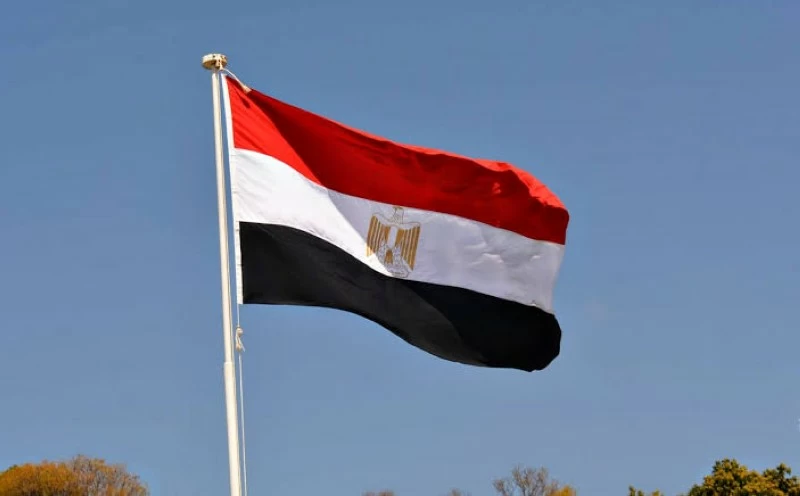
A senior Egyptian official categorically denied on Sunday Israeli media reports claiming that Tel Aviv had informed Cairo of its plans to launch a military attack on Iran approximately 48 hours beforehand. The official asserted that these claims were "completely baseless" and had no connection to reality, emphasizing that Egypt's position was clear and publicly stated.
This official denial came in response to a report published by the Israeli newspaper Haaretz yesterday (Saturday), in which it claimed, quoting unnamed diplomatic sources, that Israel had informed Egypt in advance of the strike plan and its timing, claiming that Cairo did not express an intention to participate but was aware of it, which Cairo categorically denied.
The context of regional tensions and Egypt's firm stance
This denial comes at a highly sensitive time, as the Middle East region witnesses unprecedented geopolitical tensions. Egypt has consistently affirmed, through its diplomatic channels and official statements, its unwavering commitment to resolving regional crises through diplomacy and dialogue, rejecting the principle of military escalation that could drag the region into a full-blown war. Since the outbreak of the current tensions, Cairo has played a pivotal role as a buffer, attempting to mediate and de-escalate the situation, both in the Gaza Strip and in other regional issues related to the Israeli-Iranian conflict.
Dimensions of Egyptian exile and its political impact
The Egyptian denial carries significant political implications on both the regional and international levels. It preempts any attempts to implicate Egypt or suggest the existence of covert security coordination in offensive operations that contradict Egypt's political doctrine of defending Arab national security and refraining from military intervention in the affairs of other countries. This decisive stance also aims to refute the Israeli narrative, which sometimes attempts to portray the existence of implicit regional alliances against Tehran—a notion that clashes with Egypt's foreign policy, which seeks to maintain balanced relations and consistently calls for restraint.
Risks of escalation and its repercussions
Egypt has repeatedly warned of the dangers of sliding into open military confrontations between regional powers, noting that the repercussions of such attacks would not be limited to the warring parties but would extend to affect maritime security, energy prices, and food security in the region and the world. Experts assert that including Egypt's name in such Israeli reports may be an attempt to embarrass Cairo or muddy the political waters. However, Egypt's swift and decisive response reaffirmed its independent decision-making and its rejection of any infringement upon its sovereignty or its declared positions.
-

 Local News 3 days ago
Saudi Arabia approves regulations for the continued presence of Gulf vehicles: duration and penalties
-
Local News 6 days ago
The Ministry of Interior begins procedures for a royal pardon for common law prisoners
-
Local news one day ago
Jeddah Airport alerts for travelers due to airspace closure and flight disruptions
-
Politics, one week ago
Trump plans to create a $2 billion alternative to the World Health Organization
-
 Local news one week ago
Three billion riyals deposited as Ramadan aid for social security beneficiaries
-
Local News 5 days ago
The deadline for property registration in Hail and Riyadh is Thursday
-
Local News 5 days ago
Under the patronage of the Minister of Information, an agreement was signed between the Ministry of Information and Waves Marketing Company
-
Sports one week ago
Tickets for the Al-Ahli vs. Al-Hilal King's Cup match postponed: New date