Politics
Israel rejects Hamas' amendments to the Gaza truce terms
Israeli Prime Minister Benjamin Netanyahu rejected the amendments Hamas requested to the Gaza truce proposal, asserting that they

Israeli Prime Minister Benjamin Netanyahu rejected Hamas's proposed amendments to the Gaza ceasefire agreement, deeming them "unacceptable." He instructed his delegation to accept the invitation to continue talks and announced that the Israeli delegation would depart for Doha on Sunday to resume discussions on a ceasefire deal. The delegation includes senior security officials, among them representatives from the Shin Bet and one of Netanyahu's top advisors, according to Israel's Channel 12.
The sources revealed that the war will continue until the agreement is signed, and the negotiations will take place under continuous fire, as they described it.
Netanyahu is scheduled to visit Washington, D.C., tomorrow (Monday) to meet with U.S. President Donald Trump. Israeli media outlets have speculated that Trump will announce the Gaza agreement tomorrow (Monday) or the day after, Tuesday, during Netanyahu's visit—provided the negotiations proceed smoothly.
The Israeli government is expected to ratify the agreement remotely on Wednesday or Thursday, while Netanyahu remains in the United States. Israeli sources anticipate the deal will go into effect next Sunday.
Hamas revealed that it had three main demands: a permanent cessation of fighting, Israel's withdrawal to the positions it occupied on March 2, when it renewed its offensive and entered the northern part of Gaza, and that the United Nations take over the provision of humanitarian aid.
A Hamas official told CNN earlier that the movement was ready to return the detainees in one day, on one essential condition: that the war does not resume.
Sources revealed that Egypt is coordinating with the factions and resolving outstanding issues in implementing the agreement. They indicated that arrangements are underway for a meeting in Cairo bringing together Egyptian officials and leaders from Hamas and Islamic Jihad. According to informed sources, the Egyptian and Qatari mediators will contact Washington regarding guarantees requested by Hamas.
For its part, the Maariv newspaper revealed that Netanyahu’s government discussed in its last meeting encouraging Gaza residents to move to the southern part of the Strip.
According to the newspaper, the Israeli cabinet raised the possibility of turning the Rafah area into a humanitarian aid zone, adding that Netanyahu asked the army to prepare an action plan for the Rafah crossing by next Thursday.
On the ground, the Israeli army expanded its operations in the Gaza Strip in recent hours. Israeli warplanes launched a series of intense airstrikes targeting residential homes and tents sheltering displaced people, as well as Palestinian gatherings in various parts of the Strip, particularly in the central and southern regions.




Politics
Khamenei's assassination and the Gulf escalation: details of the attacks and the targeting of an oil tanker
Comprehensive coverage of the military escalation in the Gulf following the killing of Ali Khamenei. Missile attacks on Gulf states and the targeting of an oil tanker in Oman raise global fears of a full-blown war.
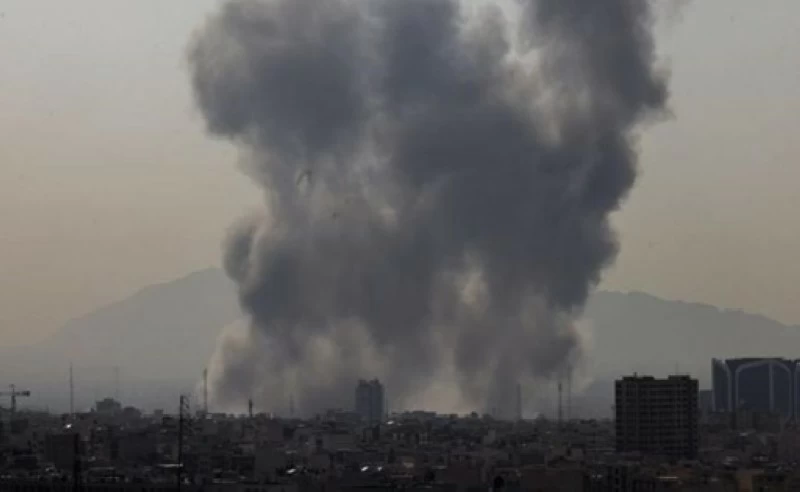
The Middle East and the Arabian Gulf region are witnessing a historic transformation and an unprecedented, dangerous turning point, as the pace of military escalation accelerates dramatically following the announcement of targeted airstrikes that killed Iranian Supreme Leader Ali Khamenei, along with a number of senior military commanders in Tehran. This momentous event has placed the entire region on the brink of a conflagration, with international observers describing it as the most dangerous development in the history of modern regional conflict.
A wave of widespread retaliatory attacks
In an immediate and direct response, the Gulf Cooperation Council (GCC) countries today witnessed a fierce wave of Iranian retaliatory attacks. Swarms of drones and ballistic missiles targeted the infrastructure and airspace of the United Arab Emirates, Qatar, Bahrain, Oman, and Kuwait. Despite the intensity of the attacks, the advanced air defense systems of the Gulf states successfully intercepted the vast majority of these threats. However, the explosions and air raid sirens triggered widespread panic and disruption to civil aviation, and cast a dark shadow over financial markets, which experienced sharp fluctuations.
Targeting shipping lanes in Oman
In a significant development that threatens global energy security, an oil tanker was directly attacked off the coast of Oman, specifically five miles north of the strategic port of Khasab. The attack resulted in injuries to four people, necessitating the immediate evacuation of the entire crew. The Omani News Agency confirmed the injuries, further escalating the risks posed by the Strait of Hormuz.
Strategic context and international importance
This escalation cannot be understood in isolation from the geopolitical importance of the Gulf region, a vital artery for the global economy. The Strait of Hormuz, located near the site of the tanker attack off Khasab, sees approximately 20% of the world's oil supply pass through it daily. Targeting oil tankers evokes memories of the "Tanker War" of the 1980s, but today it occurs against a backdrop of more sophisticated and precise missile arsenals, placing a heavy responsibility on the international community to ensure freedom of navigation.
Expected repercussions
Strategic analysts believe that the assassination of a figure as significant as Ali Khamenei represents a breach of traditional rules of engagement, potentially pushing the region toward a protracted, open-ended conflict. The repercussions will not be limited to the military sphere; they will extend to a dramatic surge in oil prices and maritime insurance costs, as well as a reshaping of regional security alliances to address the potential leadership vacuum in Tehran and anticipated retaliatory actions.
Politics
Trump threatens Iran with an unprecedented strike after Khamenei's assassination
Donald Trump threatens Tehran with overwhelming military force if it retaliates for the killing of Supreme Leader Ali Khamenei. Iran declares 40 days of mourning and vows a powerful strike amid unprecedented regional tensions.

In a dangerous escalation that threatens radical changes in the geopolitical landscape of the Middle East, US President Donald Trump today (Sunday) issued a direct and strongly worded threat to the Iranian regime, vowing to use “unprecedented” military force if Tehran carries out any retaliatory attack in response to the recent US-Israeli strikes.
These threats come in the wake of the announcement of the killing of Iranian Supreme Leader Ali Khamenei and a number of top regime leaders, as well as members of his family, in a joint military operation described as the strongest of its kind, putting the entire region on a knife's edge.
Eid via “Truth Social”
The US president used his social media platform, Truth Social, to deliver his warning, writing: “Iran has just announced that they will be launching a very powerful strike today, more powerful than any strike before. They better not do it, because if they do, we will hit them harder than they have ever been hit before.” These statements indicate Washington’s willingness to go further in the military confrontation, exceeding the traditional rules of engagement that have governed the relationship between the two countries for decades.
Declaration of mourning and mobilization within Iran
On the other hand, Tehran is experiencing internal turmoil, with a 40-day period of national mourning declared following the official confirmation of the Supreme Leader's death. Iranian media reported that the attacks targeted not only the political and religious leadership but also members of Khamenei's family, increasing public and political pressure within Iran for an immediate and harsh response.
The context of the conflict and its regional repercussions
To understand the gravity of the current situation, one must consider the historical context of US-Iranian relations, which have been characterized by hostility since 1979. However, targeting the very top of the Iranian regime represents an unprecedented event, as the Supreme Leader holds ultimate authority over all strategic and military policies in the country. The absence of such a powerful figure creates a significant void and could lead to internal conflicts, coinciding with external threats.
International observers believe that Trump's threat of an "unprecedented" strike could mean the use of advanced tactical weapons or a comprehensive targeting of Iran's nuclear and oil infrastructure, potentially crippling the Iranian economy. Conversely, Iran possesses a vast network of proxies in the region, raising concerns about a full-blown regional war that could disrupt international shipping lanes and global energy supplies.
International stance and cautious anticipation
The world's attention is now focused on Tehran to see the nature of the "strong strike" it has threatened, and on Washington, which awaits the execution of its threat. The international community fears that any miscalculation in military calculations could lead to an open confrontation with uncontrollable consequences, especially given the current state of international polarization.
Politics
The killing of Khamenei and Iranian leaders: details of the joint attack
Details of the killing of Iranian Supreme Leader Ali Khamenei and senior military commanders, including Mousavi and Shamkhani, in precise Israeli-American strikes targeting Tehran.

In an unprecedented development that changes the balance of power in the Middle East, Iranian state media and the Israeli military announced the killing of the Supreme Leader of the Iranian Revolution, Ali Khamenei, along with an elite group of senior military and security leaders, in a series of coordinated Israeli-American airstrikes that targeted sensitive sovereign sites in Iran on Saturday morning.
Details of the precise intelligence operation
According to Reuters, citing senior US officials, the operation was not a spur-of-the-moment decision but rather the culmination of months of planning based on highly accurate intelligence. The timing of the attacks was precisely chosen to coincide with a high-level meeting involving Khamenei, his top aides, and military commanders. The sources confirmed that the attack targeted three locations simultaneously, effectively crippling the command and control center in Tehran.
Iranian reports indicated that Supreme Leader Ali Khamenei was carrying out his duties in his office at the moment of the attack, which resulted in his death and the death of a number of his family members, including his daughter and one of his grandchildren, as well as his son’s wife and his daughter’s husband.
List of targeted leaders: A devastating blow to the leadership hierarchy
The attack was not limited to the top of the political and religious hierarchy, but also targeted key military leaders who manage Iran's defense and security apparatus. Iranian state television mourned the following figures:
- Ali Khamenei: The Supreme Leader of the Iranian Revolution.
- Major General Abdul Rahim Mousavi: Chief of the General Staff of the Armed Forces.
- Aziz Nasirzadeh: Iranian Minister of Defense.
- Mohammad Pakpour: A commander in the Revolutionary Guard.
- Ali Shamkhani: Advisor to the Supreme Leader and former Secretary of the Supreme National Security Council.
The list also included prominent technical and intelligence figures, including intelligence official Saleh Asadi, defense researchers Hossein Jabal Amelian and Reza Mozaffari Nia, as well as Mohammad Shirazi, a veteran defense liaison officer.
Strategic context and repercussions of the event
This event marks a historic turning point in the region, as the absence of Ali Khamenei, who has held the reins of power for decades, represents a significant leadership vacuum within the Iranian regime. The targeting of a meeting that included the defense minister, the chief of staff, and Revolutionary Guard commanders simultaneously indicates a profound security breach and raises questions about the future of the military balance in the region.
For its part, the Israeli army spokesperson confirmed the killing of seven senior officials, presenting photos and documentation of the operation and describing the targeted figures as "high-ranking and pivotal" in the administration of government operations. Amid this dramatic escalation, the international community is awaiting potential reactions and the impact of this political and military upheaval on the region's volatile issues, with expectations that Tehran will announce additional names of victims as the search for debris and assessment of damage continue.
-

 Local News 3 days ago
Saudi Arabia approves regulations for the continued presence of Gulf vehicles: duration and penalties
-
Local News 6 days ago
The Ministry of Interior begins procedures for a royal pardon for common law prisoners
-
Local news one week ago
19 requirements to reduce dust from projects in Riyadh and fines for violators
-
Local news 24 hours ago
Jeddah Airport alerts for travelers due to airspace closure and flight disruptions
-
Politics, one week ago
Trump plans to create a $2 billion alternative to the World Health Organization
-
Culture and Art, 1 week ago
Amr Diab appears with his four sons and a highly anticipated concert in Türkiye
-
 Local news one week ago
Three billion riyals deposited as Ramadan aid for social security beneficiaries
-
Local News 5 days ago
The deadline for property registration in Hail and Riyadh is Thursday