Politics
America is determined to make the Gaza deal a success... and Netanyahu is contradicting himself
As the Israeli occupation army continues to escalate its operations in the West Bank today (Wednesday), it is sending reinforcements to the city of Jenin

While the Israeli occupation army continues to escalate its operations in the West Bank today (Wednesday), sending reinforcements to the cities of Jenin and Tulkarm and bombing residential neighborhoods in Gaza, the Israeli Prime Minister's efforts to obstruct American, Egyptian, and Qatari mediation efforts are still ongoing, whether through direct announcements or through conflicting statements from his negotiating team, which sometimes confirms readiness to withdraw from the Philadelphi Corridor, sometimes refuses, and at other times stresses that they are ready to withdraw in the second phase.
The Israeli newspaper Haaretz quoted an American official as saying: “We want the prisoner exchange agreement more than Israeli Prime Minister Benjamin Netanyahu and Hamas leader Yahya Sinwar, and we are pushing for it in every possible way. If we give up, no one will deal with this issue anymore, and we have no other option.”.
The official noted that the head of Mossad had assured the mediators of Israel's readiness to withdraw from Philadelphia before Netanyahu announced his refusal to do so. Meanwhile, the Wall Street Journal quoted senior officials in US President Joe Biden's administration as saying: Washington is unlikely to withdraw from the talks because it wants to stop the war and most of the terms of the deal have been agreed upon.
The Israeli Broadcasting Authority said that mediators had contacted Israeli officials to inquire about the possibility of flexibility in the negotiations, indicating that the head of the Mossad had informed the mediators that Israel would withdraw from the Philadelphi Corridor in the second phase of the deal.
In light of the demands of the Israeli Prisoners Authority to continue demonstrations in a number of Israeli cities, Israeli opposition leader Yair Lapid renewed his attack on Benjamin Netanyahu's government, saying: "As long as this government exists, the war will continue," noting that the war will not serve Israel's security, economic and political interests, but rather we need to end this war on its own terms and complete the deal for the abductees and close it.
In an attempt to evade prosecution by the International Criminal Court, Israeli media revealed that the legal advisor to Netanyahu’s government proposed opening a criminal investigation to avoid the ICC issuing arrest warrants against Israeli Prime Minister Benjamin Netanyahu and his Defense Minister Yoav Gallant, after ICC Prosecutor Karim Khan warned against issuing arrest warrants against them.
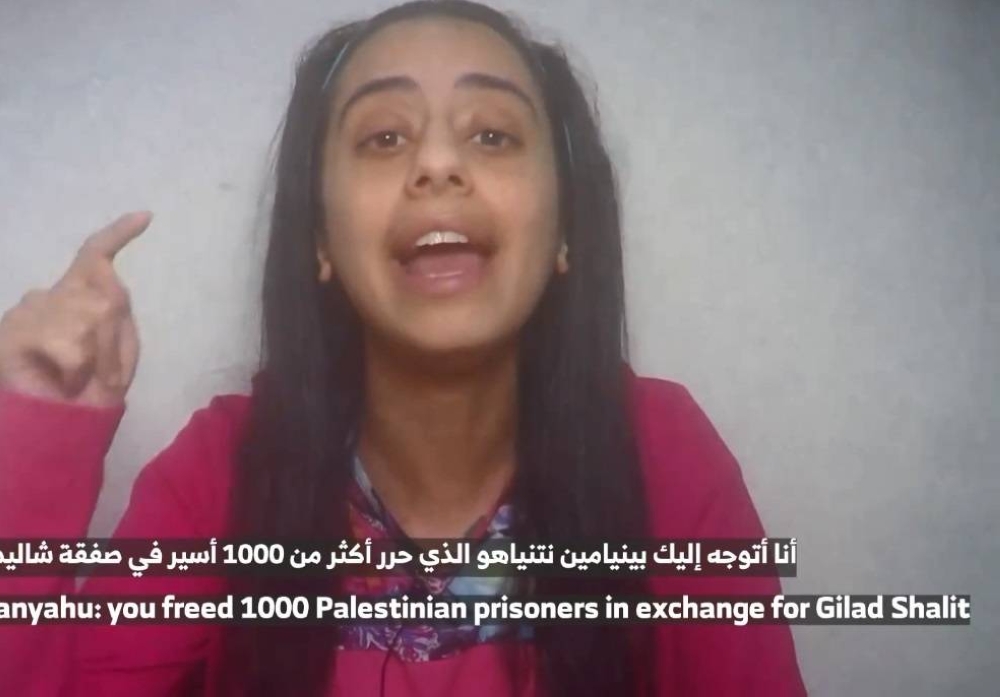
Meanwhile, Hamas today released a video of an Israeli prisoner demanding that Netanyahu quickly finalize the deal, saying that they are living under bombardment and waiting to die at any moment. Hamas stressed that the fate of the living Israeli prisoners depends on stopping the war on the Gaza Strip, and if it stops, they can return alive.
The movement said in the video: “Every day that Israeli Prime Minister Benjamin Netanyahu remains in power could mean a new coffin,” condemning the UN Security Council’s disregard for Israeli genocide crimes.
On the ground, the Israeli occupation army today bombed the security zone in Rafah, north of the Gaza Strip, which is inhabited by displaced people, leaving a massacre against civilians. According to medical sources, there are about 10 dead, including a doctor and his family, and dozens of wounded in the bombing that targeted the vicinity of the Sheikh Zayed Towers.




Politics
The wife of Mojtaba Khamenei and the Supreme Leader's son-in-law were killed in airstrikes on Tehran
Reports indicate that Mojtaba Khamenei's wife and the Iranian Supreme Leader's son-in-law were killed in a bombing in Tehran. Details of the targeting of Khamenei's family and its impact on the succession landscape and the conflict with Israel.
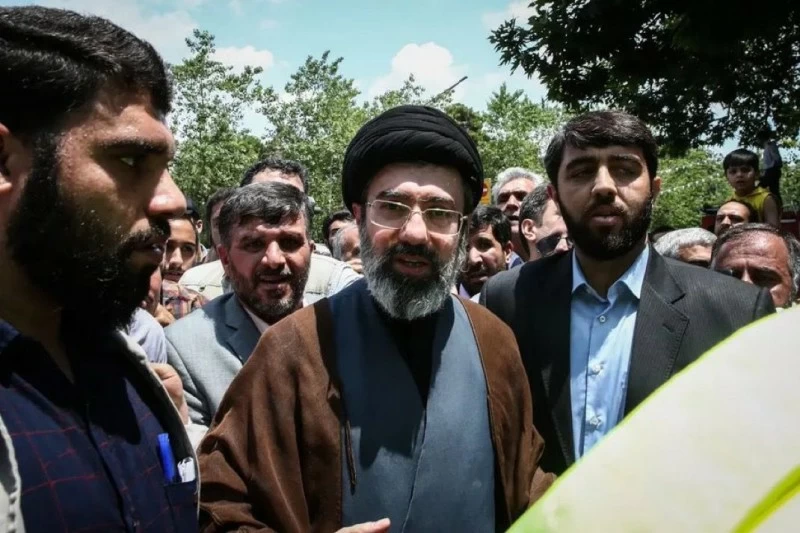
In a dramatic development that represents a dangerous turning point in the ongoing conflict in the Middle East, specifically within the context of the open confrontation between Iran on one side and Israel and the United States on the other, Tehran City Council member Meysam Mozaffar revealed information indicating the killing of figures from the very tight circle surrounding the Supreme Leader of the Iranian Revolution, Ali Khamenei.
According to statements carried by local media, the strikes targeting the capital, Tehran, resulted in the death of Dr. Mesbah al-Hoda Bagheri Kani, the son-in-law of the Iranian Supreme Leader and son of Ayatollah Bagheri Kani. Furthermore, Mozaffar indicated that Zahra Haddad Adel, daughter of prominent politician Gholam Ali Haddad Adel and wife of Mojtaba Khamenei, the Supreme Leader's second son and one of the most controversial figures within the Iranian regime, was also killed.
Implications of targeting the family circle of the counselor
This event, if officially confirmed, carries extremely serious security and political implications. Targeting Mojtaba Khamenei's family is not merely a military act, but a direct political message striking at the very heart of the Supreme Leader's inner circle. Mojtaba Khamenei is known for his extensive influence within the Revolutionary Guard and the Basij militia, and his name has long been circulated in Western and Iranian political circles as a leading candidate to succeed his father as Supreme Leader. Therefore, any attack on his family would be a significant blow, both morally and in terms of security, to the potential succession plan.
The political background of the targeted families
To understand the magnitude of this development, one must consider the influence of the affected families. The Haddad-Adel family is a pillar of the conservative political establishment in Iran; Gholam Ali Haddad-Adel previously served as Speaker of Parliament and is a close advisor to Khamenei. Similarly, the Bagheri Kani family holds significant sway over sensitive portfolios, most notably the nuclear and diplomatic files, through Ali Bagheri Kani. Therefore, this attack targets a network of kinship ties that wield considerable power in Tehran.
Security breach and unprecedented escalation
This announcement comes at a time of significant military escalation in Iran, with sensitive sites and shadowy figures under intense scrutiny. The access to these individuals within the capital, Tehran, suggests a profound intelligence breach, reminiscent of previous assassinations targeting nuclear scientists and military leaders. However, approaching the Supreme Leader's immediate family crosses all traditional red lines in the unwritten rules of engagement.
So far, no detailed official statements have been issued by the Revolutionary Guard or the Supreme Leader’s office clarifying the exact circumstances of the incident or the targeted location. This secrecy is typical in the early hours of such serious events, pending an assessment of the situation and containment of the internal and external repercussions of this political and security earthquake.
Politics
Trump announces Khamenei's death: Will the balance of power in the Middle East change?
In a historic development, Trump announced the killing of Iranian Supreme Leader Ali Khamenei in US-Israeli strikes, asserting that this event paves the way for a new and easier diplomatic path with Tehran.
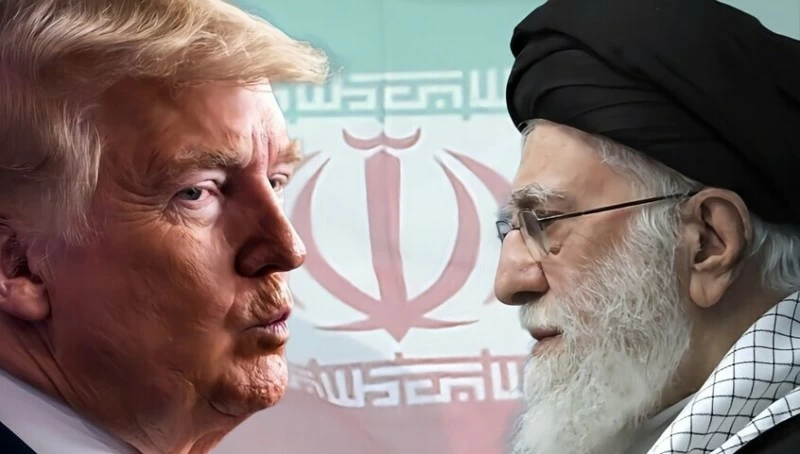
In a dramatic development described by observers as the biggest political earthquake in the Middle East in decades, US President Donald Trump officially announced the death of Iran's Supreme Leader, Ali Khamenei, following a series of joint US-Israeli airstrikes. This announcement, which brings to a close an era spanning more than three decades, opens the door to multiple scenarios for the future of relations between Washington and Tehran.
Trump's statements: Towards a new diplomatic path
In an exclusive interview with CBS News , President Trump asserted that the geopolitical landscape has fundamentally changed. He indicated that Khamenei's absence from the scene could remove the formidable obstacles that had hindered negotiations, stating that conditions are now "much easier than they were yesterday." The US president believes that these strikes, which he described as having very positive results for US national security, could be the key to forging new agreements that guarantee regional stability, expressing his complete confidence in his administration's strategy.
The end of an era and the beginning of the unknown
Ali Khamenei, who has served as Supreme Leader since 1989, succeeding the founder of the Islamic Republic, Ruhollah Khomeini, is the most powerful and influential figure in Iran. As the Supreme Leader, he has the final say on all strategic issues, including foreign policy, the nuclear program, and the military operations of the Islamic Revolutionary Guard Corps. His passing is not merely the loss of a political figure; it represents a profound upheaval within the Iranian regime, where the Supreme Leader controls the judiciary, the media, and the military.
Succession challenges and the future of the region
This event presents the ruling establishment in Tehran with a difficult historical test. According to the Iranian constitution, the Assembly of Experts is tasked with choosing the new successor, a process that could witness sharp disagreements between different factions within the regime. The international community, particularly the White House, is closely monitoring Tehran's expected reactions, amid concerns about a potential military escalation or retaliatory actions through proxies in the region.
American-Israeli alliance
The announcement that the strikes were a joint operation between the United States and Israel underscores the depth of security and military coordination between the two allies in confronting Iranian influence. Analysts believe this operation could alter the rules of engagement in the region and impose a new reality that might push Tehran either toward further intransigence or toward accepting the diplomatic path being pursued by Trump.
Politics
Iran forms a temporary leadership council after the assassination of Ali Khamenei
Iran announces the formation of a temporary leadership council comprising the president and the head of the judiciary following the assassination of Supreme Leader Ali Khamenei in US-Israeli airstrikes, amid a declaration of national mourning and regional tension.
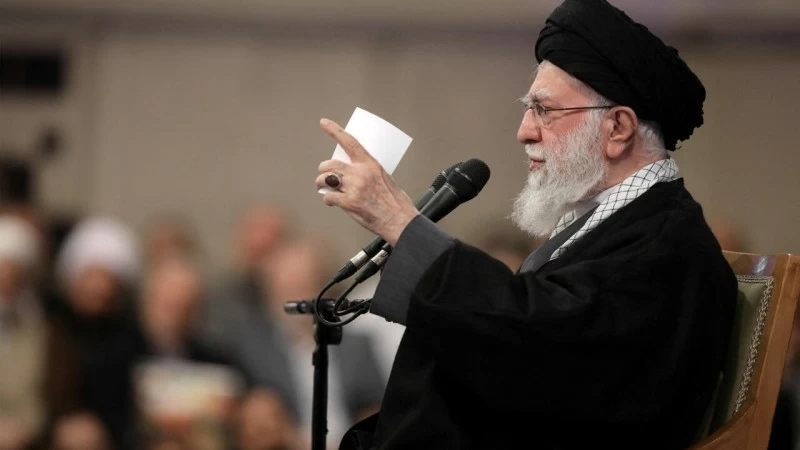
In a dramatic development that represents a historic turning point in the Middle East, the official Iranian news agency IRNA announced news that shook international political circles, confirming the temporary transfer of power in the Islamic Republic to a three-member leadership council, following the official announcement of the assassination of the country’s Supreme Leader, Ali Khamenei, in joint airstrikes carried out by US and Israeli forces.
Details of the new Transitional Council
According to the official statement, and based on the constitutional arrangements in place in Tehran, the interim leadership council consists of three key figures representing the pillars of the regime:
- Masoud Pezeshkian: The President of the Republic, who represents the executive authority.
- Gholam Hossein Mohseni Ejei: Head of the judiciary, who represents the hardline judicial wing.
- One of the jurists of the Guardian Council: to be chosen to complete the legal and legitimate quorum of the council.
This step comes to fill the sudden leadership vacuum and ensure the continued functioning of state institutions during the critical transitional phase the country is going through.
Constitutional context and mechanism for transfer of power
These procedures are based on Article 111 of the Iranian Constitution, which explicitly states that in the event of the Supreme Leader's death, removal, or resignation, the Assembly of Experts, composed of the President, the Head of the Judiciary, and one of the Guardian Council's jurists, assumes the leadership temporarily. This article also mandates that the Assembly of Experts convene immediately to begin intensive consultations to appoint the new Supreme Leader as quickly as possible—a process that could witness significant political wrangling between conservative and reformist factions within the regime.
Declaration of mourning and the repercussions of the national shock
In the first official response reflecting the magnitude of the political earthquake, the Iranian government declared a 40-day period of national mourning, a tradition deeply symbolic in Shia Islam. A full week of public holiday was also declared, with markets, educational institutions, and government offices closed, amidst an atmosphere of heightened anticipation and caution on the Iranian street.
Geopolitical dimensions and regional risks
This event comes at a highly sensitive time, as the region witnesses an unprecedented escalation. The position of Supreme Leader in Iran carries broad powers, including command of the armed forces, control of the Revolutionary Guard, and the formulation of foreign and nuclear policies. Therefore, Khamenei's removal from the scene in such a violent manner opens the door to multiple scenarios, ranging from direct military escalation in response to the assassination, to the region entering a period of strategic uncertainty and a realignment of alliances.
The international community, especially Western capitals and neighboring countries, is watching the next steps of the interim leadership council and how Tehran manages this thorny issue, amid fears that things could slide into an open confrontation that could change the map of the Middle East for decades to come.
-

 Local News 3 days ago
Saudi Arabia approves regulations for the continued presence of Gulf vehicles: duration and penalties
-
Local News 6 days ago
The Ministry of Interior begins procedures for a royal pardon for common law prisoners
-
Local news one week ago
19 requirements to reduce dust from projects in Riyadh and fines for violators
-
Local news 20 hours ago
Jeddah Airport alerts for travelers due to airspace closure and flight disruptions
-
Politics, one week ago
Trump plans to create a $2 billion alternative to the World Health Organization
-
Culture and Art, 1 week ago
Amr Diab appears with his four sons and a highly anticipated concert in Türkiye
-
 Local news one week ago
Three billion riyals deposited as Ramadan aid for social security beneficiaries
-
Local News 5 days ago
The deadline for property registration in Hail and Riyadh is Thursday