Politics
Regional governors discuss mechanisms for achieving comprehensive development across all sectors
Several regional governors met yesterday in their weekly meetings with heads of courts, citizens, and directors of civil government departments

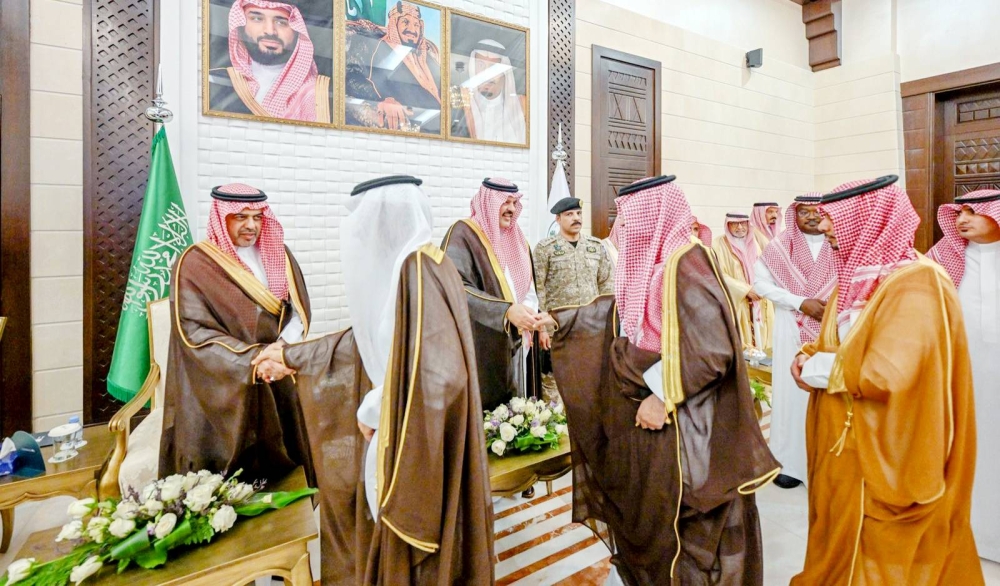
In their weekly meetings yesterday, a number of regional princes discussed with heads of courts, citizens, and directors of civil and military government departments a number of topics that contribute to advancing development in the governmental, private, and non-profit sectors, in services, and in the economic, cultural, and social fields.
In this context, Prince Fahd bin Sultan bin Abdulaziz, the Governor of Tabuk Region, affirmed the Saudi society’s distinction in its sincere national unity, asking God Almighty to perpetuate the country’s security, glory and stability.
During the weekly meeting, which was attended by his deputy, Prince Khalid bin Saud bin Abdullah bin Faisal bin Abdulaziz, he discussed several topics of interest to the region in various fields.
Aviation targets in the Eastern Province
Prince Saud bin Nayef bin Abdulaziz, the Governor of the Eastern Province, indicated that the targets for the aviation sector in the region are large, and that the destinations will be more than expected, in addition to the number of companies required to operate them being sufficient. We certainly aspire to more than what exists, and I believe that there is movement in the right direction with regard to future expansions and developments witnessed by the region’s airports.
During the weekly council meeting (Monday gathering), the Governor of the Eastern Province reviewed the support for the transportation system in the region, especially aviation, in the presence of his deputy, Prince Saud bin Bandar bin Abdulaziz, the CEO of Dammam Airports Company, Engineer Mohammed Al-Hassani, and a number of the company’s employees.
Engineer Al-Hassani confirmed that a number of achievements have been made recently, as King Fahd Airport received 3 awards for Saudi airports in May 2024 from the General Authority of Civil Aviation, and also received the Green Airports Award for the first time from the Airports Council International. In addition, during 2023, the airport was upgraded to the third level of customer experience from the Airports Council International, and work is continuing to reach the fifth level, which represents the highest levels.
Al-Hassani added that “Al-Ahsa International Airport has been developed and upgraded, and in an effort to develop cargo facilities, a partnership was established with a company to develop cargo facilities at King Fahd International Airport. The company is committed to obtaining operating licenses for its airports, and this has positively impacted safety, as no incidents related to aircraft safety have been recorded.” He pointed out that Dammam Airports has adopted a new vision, aiming to be the preferred airport for travelers in the region. The company’s strategic pyramid was built on this basis, focusing on six tracks. In implementing this strategy, the company, in collaboration with a specialized consultant, began the “Company Airports Master Plan Project,” conducting a comprehensive analysis of the current and future needs of the airports for passenger and air cargo traffic. The initial master plan will be prepared in August 2024, followed by approvals. The initial vision for King Fahd International Airport and its future expansions will showcase its new features, aiming to reach 32 million passengers annually and more than 100 direct destinations.
Open meeting in Hail
The weekly meeting of the Governor of Hail Region, Prince Abdulaziz bin Saad bin Abdulaziz, included an open meeting between citizens and officials of the Hail Municipality, coinciding with a live broadcast of the field and supervisory work process amidst interaction from citizens with the speed of handling the reports received during the meeting, in the presence of the Deputy Governor, Adel bin Saleh Al Sheikh, and the Secretary of the Region, Engineer Sultan Al Zaidi.
The Emir of Hail was briefed on the operational mechanism of the 940 Reporting Center, the Urban Prosperity Center, the Health Control Center, the Control and Monitoring Center, the Reports Processing Center, and the bicycle path in the parks. He also launched the work of the Building Compliance Caravan through the mobile units for community support to issue the Building Compliance Certificate.
Visual landscape treatment in "Northern"
In his weekly meeting, Prince Faisal bin Khalid bin Sultan bin Abdulaziz, the Governor of the Northern Borders Region, discussed the developmental role of the region’s municipality in the visual landscape and addressing visual distortions, and the adoption of urban planning for the region in order to achieve the objectives of the Ministry of Municipal and Rural Affairs and Housing, which aim to activate the “Quality of Life” program within the Vision 2030 programs, to improve the urban landscape in cities and regions.
Prince Faisal stressed the need to intensify awareness efforts to spread a culture of awareness and promote values and concepts among members of society in preserving national achievements, and to provide a sustainable mechanism for updating, monitoring, following up on and removing elements of visual distortion, and maintaining the highest standards of implementation quality, calling for raising the efficiency of managing and addressing visual distortions in the region, and improving services provided to citizens.
Driving development in Al-Jawf
The Deputy Governor of Al-Jawf Region, Prince Mutaib bin Mishaal bin Badr bin Saud, appreciated the support that Al-Jawf Region, like all regions of the Kingdom, receives from the Custodian of the Two Holy Mosques and his Crown Prince to keep pace with Vision 2030, and to drive the wheel of development in the region with its governmental, private, and non-profit sectors, and in all areas of services, economic, cultural, and social fields.
In his speech to the citizens, he addressed many topics of interest to the region in various fields. Discussions were held regarding the affairs of the region, and he listened to many interventions from the attendees in various fields.




Politics
Khamenei's wife dies after US-Israeli attack: Details and repercussions
Iran announced the death of Mansoureh Khojasti, Khamenei's wife, from injuries sustained in the US-Israeli attack. Learn details of the assassination and the Revolutionary Guard's escalation in the Strait of Hormuz.
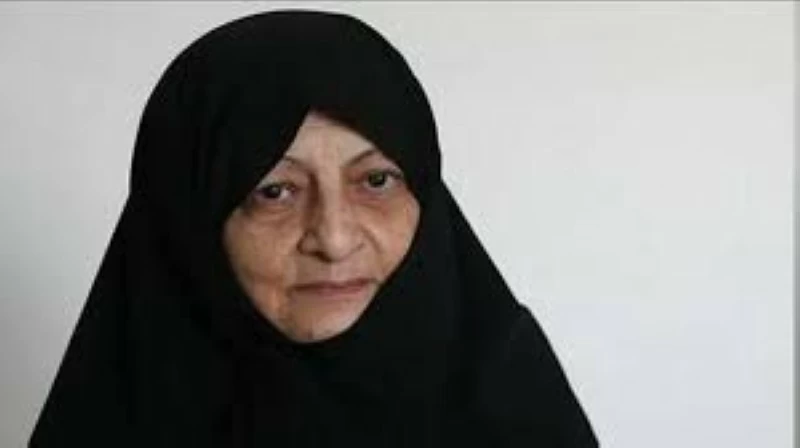
Iranian state media announced on Monday the death of Mansoureh Khojasti Bagherzadeh , wife of Iranian Supreme Leader Ali Khamenei, from injuries sustained in the recent US-Israeli attack. This announcement further heightens the already unprecedented tensions in the region, particularly following reports confirming that the Supreme Leader's residence in Tehran was targeted.
Details of the attack and confirmation of the death
According to the Tasnim news agency and other official sources, Ms. Mansoureh Khojasti passed away two days after the US and Israeli attack last Saturday, which directly targeted the presidential residence and the Supreme Leader's headquarters. This attack, according to the official account, resulted in the death of Supreme Leader Ali Khamenei and several members of his family, in what is considered the most serious incident of its kind in the history of the conflict between Tehran and Washington.
In the context of official procedures, the Iranian authorities declared a period of national mourning for 40 days, in addition to suspending official departments and declaring a 7-day holiday, in honor of the victims and to emphasize the severity of the injury inflicted on the political system in Iran.
Historical background and context of the event
Mansoureh Khojasti Bagherzadeh remained a prominent figure throughout her husband's rule, having married Ali Khamenei in 1964 and stood by him through the Iranian Revolution and subsequent major political events. Her passing, along with her husband, at this time marks a pivotal turning point in the Iranian domestic landscape.
This military escalation comes at a time when international relations are experiencing significant complications, as observers believe that targeting the head of the pyramid in the Iranian regime represents a radical change in the rules of engagement, and shifts the confrontation from proxy wars to direct clashes that could drag the region into unknown scenarios.
Military escalation in the Strait of Hormuz
Coinciding with the announcement of the death, military activity in the territorial waters escalated. The Iranian Revolutionary Guard announced that it had targeted a fuel tanker in the Strait of Hormuz with two drones, causing it to catch fire. The Strait of Hormuz is a vital waterway through which a large portion of the world's oil supply passes, and any tension there has an immediate impact on energy markets and the global economy.
The Revolutionary Guard confirmed launching a new wave of retaliatory attacks, while media reports spoke of the use of new missile models that had not been previously revealed, indicating that the Iranian response may go beyond the traditional boundaries of previous confrontations, amid international fears of the conflict expanding to include international shipping lanes and military bases in the region.
Politics
Araqchi and Woitkov clash: Will it end diplomacy and ignite war?
Details of the heated exchange between Abbas Araqchi and Steve Witkopf regarding Iran's nuclear program. Will it hasten the collapse of talks and the outbreak of a military confrontation? An NBC report reveals the behind-the-scenes details of the clash.
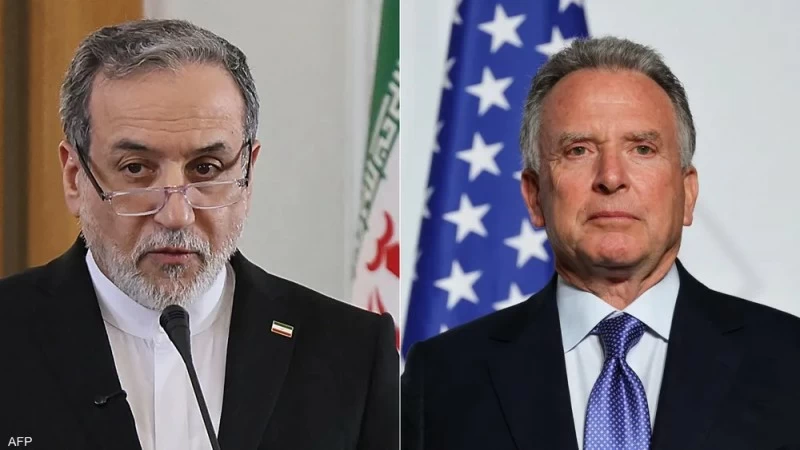
American media reports, citing NBC News, revealed details of a heated and unprecedented verbal exchange that took place behind closed doors between Iranian Foreign Minister Abbas Araqchi and US envoy Steve Wittkopf. This incident, which occurred during sensitive talks, is being interpreted as a dangerous sign that the diplomatic process has reached a dead end, paving the way for more dire scenarios that could include a direct military confrontation.
Details of the diplomatic clash
According to US administration officials, tensions rose at the meeting when the American delegation, led by Wittkopf, presented stringent conditions that Tehran considered a crossing of red lines. The American demand centered on Iran refraining from significant steps in its nuclear program, specifically a complete freeze on uranium enrichment for the next ten years. This proposal was met with firm rejection and strong reservations from the Iranian side.
During the debate, Abbas Araqchi reiterated his country's commitment to what he called its "inalienable right to uranium enrichment" for peaceful purposes, based on national sovereignty. However, the response from US envoy Steve Wittkopf was swift and sharp, as he interrupted his counterpart, stating that the United States also possessed "an inalienable right to defend its national security and prevent the proliferation of nuclear weapons that threaten global stability," thus ending the discussion on a high note.
Background to the nuclear crisis and history of setbacks
This dispute cannot be separated from the complex historical context of US-Iranian relations, particularly since Washington's unilateral withdrawal from the Joint Comprehensive Plan of Action (JCPOA) in 2018. Since then, the pace of Iran's nuclear program has accelerated, with reports from the International Atomic Energy Agency indicating that Tehran has reached enrichment levels close to weapons-grade (60%). This backdrop made the current talks a last chance to salvage the situation. However, the vast gap between US demands for a return to strict restrictions and Iran's insistence on lifting sanctions and preserving the gains of its nuclear program has made a clash inevitable.
The repercussions of failed diplomacy regionally and internationally
This diplomatic impasse carries serious implications that extend far beyond closed-door meetings. The failure of the talks effectively erodes peaceful options, placing the entire region on a knife's edge. Observers believe this clash could be the spark that precipitates military action, whether by Israel, which constantly threatens to strike nuclear facilities, or through a US-led mobilization to impose a suffocating isolation that could escalate into limited clashes. The shift from quiet diplomacy to direct verbal sparring between senior officials reflects Washington's growing strategic impatience and Tehran's readiness for confrontation, foreshadowing a new phase of escalation that could redraw the geopolitical map of the Middle East.
Politics
Trump hints at a ground intervention in Iran: The major strike has not yet begun
In a dangerous escalation, Trump confirms that a major strike against Iran is imminent and threatens a ground invasion. British Prime Minister Keir Starmer comments on the effectiveness of airstrikes for regime change.

In a striking development that portends a new phase of escalation in the Middle East, US President Donald Trump confirmed that the United States has not yet begun to launch its real and powerful strikes against Iran, indicating that what has happened so far is merely a prelude to what is to come.
In a fiery interview with CNN, Trump declared firmly, "We haven't even started hitting Iran hard yet. The big wave hasn't happened yet. The big strike is coming soon." The US president didn't stop at threatening airstrikes; he went further, indicating that he would not hesitate to make the dangerous strategic decision to send ground troops to Iran if necessary. This represents a radical shift in US military doctrine, which in recent years has relied on airstrikes and special operations.
The British position: Doubts about the effectiveness of air strikes
Across the Atlantic, a divergence of views emerged between Washington and London. British Prime Minister Keir Starmer addressed UK lawmakers, outlining his country's cautious stance. Starmer stated unequivocally, "I don't believe that attempting to remove Iran's leadership through airstrikes without a ground invasion will succeed." He explained that this military and political assessment was a key reason why the UK would not join the joint US-Israeli strikes against Iran, adding the deeply significant phrase, "This government does not believe in regime change from the sky," alluding to past lessons from conflicts in the region.
Context of tension and history of conflict
These statements come at a time of unprecedented tension in US-Iranian relations, reminiscent of the era of "maximum pressure." The Iranian issue has long been a major point of contention in international politics, with Washington accusing Tehran of destabilizing the region through its proxies and threatening international shipping. Analysts point out that the threat of a "ground invasion" constitutes a dangerous verbal escalation, given the immense geographical and military challenges posed by Iran's terrain, as well as the high human and material costs of such an intervention.
Regional repercussions and Arab concerns
In his remarks, Trump expressed surprise at the audacity of the Iranian strikes targeting Arab states, reflecting growing American concern about the security of its Gulf allies. Observers believe that any American ground military action against Iran would not only have repercussions for Tehran and Washington, but would ignite the entire region, potentially impacting global energy supplies and oil prices, in addition to the possibility of Iran activating its network of regional alliances to respond to any potential invasion.
-

 Local News 4 days ago
Saudi Arabia approves regulations for the continued presence of Gulf vehicles: duration and penalties
-
Local news two days ago
Jeddah Airport alerts for travelers due to airspace closure and flight disruptions
-
Local news one week ago
The Ministry of Interior begins procedures for a royal pardon for common law prisoners
-
Local News 6 days ago
The deadline for property registration in Hail and Riyadh is Thursday
-
Sports one week ago
Tickets for the Al-Ahli vs. Al-Hilal King's Cup match postponed: New date
-
Local News 7 days ago
Under the patronage of the Minister of Information, an agreement was signed between the Ministry of Information and Waves Marketing Company
-
Culture and Art 5 days ago
The Devil's Prisons series was halted: The full story of "The Emperor's" being moved to YouTube
-
Local news one week ago
Saleh Al-Maghamsi appointed Imam of the Prophet's Mosque: Details of the Royal Decree