Local News
The Secret in the Story program was suspended because of the bus girl
The Supreme Media Council decides to suspend the program "The Secret in the Story" and ban presenter Sarah Hadi from appearing after hosting the accused in the bus girl incident, amid widespread public anger.


Egypt's Supreme Council for Media Regulation, headed by Engineer Khaled Abdel Aziz, issued a decisive decision to suspend the program "The Secret in the Story" and ban its presenter, Sarah Hadi, from appearing on air until the ongoing investigations are concluded. This decision came as a swift and firm response after the program hosted the accused in the harassment case known in the media as the "Bus Girl" incident, a move considered a serious violation of media and ethical standards.
Details of the Supreme Media Council's decision
The decision mandates that all media outlets subject to the provisions of Law No. 180 of 2018 prohibit the appearance of the program's presenter and the guest accused in the harassment case, especially since the case is still under investigation by the Public Prosecution and no final verdict has been issued. The council affirmed that this prohibition will remain in effect until the Complaints Committee completes its thorough examination of the incident and conducts the necessary investigations to ensure that those responsible for this transgression are held accountable.
Public anger and rejection of media chaos
The episode of the program that hosted the accused sparked a wave of anger and controversy on the Egyptian street and on social media platforms. A wide segment of the public and human rights activists expressed their categorical rejection of this move, considering it a blatant disregard for the feelings of the victim and all victims of harassment. Critics argued that giving a media platform to someone accused in a sensitive morality case before a judicial ruling constitutes a form of unacceptable "reputation whitewashing," and contributes to inflaming public sentiment rather than calming it.
The legal and ethical context of the media
This incident brings to the forefront the issue of professional standards in Egyptian media. The Media Code of Ethics and Professional Conduct prohibit exploiting criminal cases to achieve high viewership (trending) at the expense of societal values. Preempting the Public Prosecution's investigations and hosting defendants in the media to defend themselves before the court proceedings violates the principle of "innocent until proven guilty," but in a manner that harms the victim and influences the course of justice. The Supreme Council for Media Regulation has firmly addressed this issue.
The impact of the decision and its societal importance
The decision to suspend the program carries significant implications that extend beyond mere administrative punishment; it sends a clear message to all media content creators about the necessity of adhering to social responsibility. Given the efforts of the state and civil society to combat harassment and increase penalties for perpetrators, the media's role is to support these efforts, not hinder them. Addressing attempts to "manufacture fame" through moral transgressions is a crucial step in regulating the media landscape and ensuring that media platforms do not become arenas for chaos or the justification of crimes.
In conclusion, many followers demanded that the penalties be deterrent to prevent the recurrence of such professional lapses in the future, stressing that the pursuit of fame should not be a justification for violating the privacy of victims or manipulating public opinion.


Local News
Inauguration of the general aviation terminal at King Fahd Airport and the automatic landing system
The Governor of the Eastern Province inaugurates the general aviation terminal at King Fahd International Airport and the first CAT III automated landing system in the Kingdom, to enhance aviation efficiency and the objectives of the transport strategy.

In a strategic move that enhances the Kingdom of Saudi Arabia’s position as a global logistics hub, His Royal Highness Prince Saud bin Nayef bin Abdulaziz, Governor of the Eastern Province, inaugurated today (Monday) two vital projects at King Fahd International Airport in Dammam: the new General Aviation Terminal and the upgrade of the automated landing system on the western runway to Category III (CAT III).
A quantum leap in private aviation services
The General Aviation Terminal is a significant addition to the airport's infrastructure, built on a total area exceeding 23,000 square meters. Designed to meet the needs of the private aviation sector and VIPs, the terminal offers the highest levels of privacy and luxury. The main terminal, spanning 3,900 square meters, includes state-of-the-art facilities for expedited check-in procedures.
The project also includes an aircraft parking area spanning more than 12,000 square meters, with a capacity sufficient to park four aircraft at once, in addition to parking spaces and support facilities covering an area of 6,600 square meters, ensuring smooth traffic flow and integrated services.
Automated Landing Technology (CAT III): The first of its kind in the Kingdom
In a technological first for the Kingdom's airports, a Category III (CAT III) Instrument Landing System was inaugurated on the western runway. The significance of this advanced system lies in its ability to enable aircraft to land safely and fully automatically in extremely low visibility conditions, such as dense fog and dust, significantly reducing the likelihood of flight diversions or delays and enhancing operational continuity and air safety reliability.
The upgrade project included the rehabilitation of the 4,000-meter western runway, the construction of an aircraft service road of the same length, and the provision of the runway with more than 3,000 smart lighting units operating with standardized technologies to serve different aircraft models.
Strategic context and national objectives
These inaugurations are part of the National Transport and Logistics Strategy, stemming from the Kingdom's Vision 2030, which aims to increase the capacity of Saudi airports and enhance air connectivity. King Fahd International Airport in Dammam is a key gateway to the Eastern Province, the Kingdom's industrial and oil hub, making the development of its infrastructure an economic imperative to serve the business sector and attract foreign investment.
His Excellency the Minister of Transport and Logistics, Engineer Saleh Al-Jasser, affirmed that these projects will enhance the airport's operational capacity to the highest international standards, thereby strengthening the competitiveness of Saudi airports regionally and internationally. For his part, the President of the General Authority of Civil Aviation, Abdulaziz Al-Duailij, explained that the selection of a global company like Universal to operate the terminal reflects the attractive investment environment created by the Authority to develop the general aviation sector.
Local News
90,000 stem cell donors honored in Saudi Arabia – KIMARK
The King Abdullah Center for Medical Research honored stem cell donors who received the King Abdulaziz Medal. The Saudi registry includes 90,000 donors who have saved hundreds of lives.

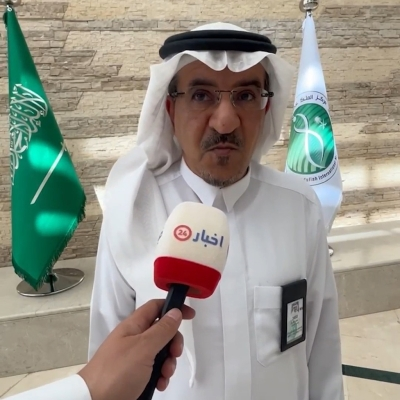
In a humanitarian gesture reflecting the values of giving and solidarity in Saudi society, the King Abdullah International Medical Research Center (KAIMRC) honored a select group of humanitarian heroes last weekend, awarding stem cell donors the King Abdulaziz Medal, Third Class. The ceremony, attended by the center's Executive Director, Professor Dr. Ahmed Al-Askar, recognized their noble sacrifices that have instilled hope and directly contributed to saving the lives of many cancer and hematological patients.
A tribute befitting those who give
In an exclusive statement to Akhbar24, Dr. Ahmed Al-Askar expressed his immense pride and honor at receiving this recognition, which embodies the leadership's and the nation's appreciation for those awarded the King Abdulaziz Medal, Third Class. He explained that this medal is not merely an honor, but a testament to the merit of those who sacrificed a part of themselves to save the lives of others suffering from fatal diseases, thus embodying the highest ideals of humanity and the value of being "present for one another" in times of hardship.
The Saudi Record: A success story that began in 2011
In discussing the infrastructure of this medical achievement, the CEO of “Kimark” pointed to the great development witnessed by the Saudi Stem Cell Donor Registry since its establishment in 2011. This registry has turned into a huge and vital database that currently includes 90,000 registered donors, all of whom are ready to donate their stem cells as soon as a genetically matching patient is found, reflecting the growing health and societal awareness in the Kingdom.
A global impact that transcends borders
The impact of the Saudi registry has not been limited to the local level, but has extended internationally. Dr. Al-Askar explained that the registry has contributed to the treatment of more than 200 patients, including 80 patients from outside the Kingdom, representing approximately 15 countries. This success is a result of close cooperation between the Saudi registry and all international registries specializing in stem cells, placing the Kingdom among the leading countries in the field of cross-border humanitarian medical services.
The medical importance of stem cells
It is worth noting that stem cell transplantation is the only lifeline for many patients with blood cancers (such as leukemia), bone marrow failure, and some genetic and immune diseases. The medical challenge lies in finding a tissue match, as genetics and ethnicity play a significant role in compatibility. Therefore, having a large national registry of 90,000 donors greatly increases the chances of survival for Saudi and Arab patients and reduces the need to search for donors in foreign registries whose tissues may not match those of patients in the region.
Local News
Haramain High-Speed Railway during Ramadan: 1.7 million seats and 3,600 trips
SAR announces the Haramain train operating plan for the Ramadan season 1447 AH, providing 1.7 million seats and operating more than 3,600 trips to facilitate the movement of pilgrims between Makkah and Madinah.

Saudi Railways (SAR) announced the completion of all operational preparations for the holy month of Ramadan 1447 AH, through the launch of a comprehensive strategic plan for the Haramain High-Speed Railway. This plan aims to increase capacity to an unprecedented level and boost the number of daily trips to ensure smooth traffic flow and facilitate the journey of pilgrims between the Two Holy Mosques in Mecca and Medina during the holy month.
Expanded operational plan with record numbers
In its announced plan, SAR explained that it aims to operate more than 3,662 flights during the season, providing over 1.7 million seats for passengers. This significant increase comes in response to the growing and anticipated demand for flights between the two holy cities at this time of year. The number of daily flights is expected to exceed 100, clearly demonstrating the high level of operational readiness and flexibility in managing schedules to precisely align with prayer times and the density of pilgrims and visitors.
The Haramain High-Speed Railway: A key pillar of Vision 2030
The importance of these steps extends beyond the operational aspect. SAR emphasized that these efforts align with the objectives of the Kingdom's Vision 2030 and the National Transport and Logistics Strategy. The project primarily aims to enhance the quality of services provided to pilgrims, as the Kingdom seeks to increase its capacity for Umrah to 30 million by 2030. The Haramain High-Speed Railway is the main artery of rapid land transport, supporting these aspirations and contributing to the comprehensive development the Kingdom is witnessing across various sectors.
World-class infrastructure and standard specifications
The Haramain High-Speed Railway is ranked among the top 10 fastest electric trains in the world, with an operational speed of up to 300 kilometers per hour. The project spans 453 kilometers of double-track railway, connecting Mecca and Medina via Jeddah Central Station, King Abdulaziz International Airport Station, and King Abdullah Economic City in Rabigh. Since its inauguration, this project has revolutionized transportation in the Kingdom, reducing travel time between the two holy cities to approximately two hours and 20 minutes, and providing a safe, comfortable, and environmentally friendly alternative to traditional modes of transport.
Future expansion to strengthen the fleet
As part of its forward-looking vision to enhance efficiency, this upgrade to its current operational readiness is an extension of SAR's ongoing efforts to develop its fleet. The company recently announced the signing of a contract to purchase 20 new trains from the Spanish company Talgo. This strategic move will support future operational expansion, enabling the network to accommodate the increasing numbers of pilgrims during peak seasons, and reflects the wise leadership's commitment to harnessing all available resources to serve those visiting the Two Holy Mosques.
-

 Local news one week ago
The Spears of Victory 2026 military exercises concluded in Saudi Arabia with international participation
-
Culture and Art 5 days ago
The "Between and Between" exhibition in Jeddah: 5 artists reshape Saudi memory
-
Culture and Art 6 days ago
Shakira's concert in Jeddah: Details of the international star's first concert in Saudi Arabia
-
Local News 3 days ago
Saudi Arabia's National Arabic Language Policy: 8 Principles to Promote Identity
-
Culture and Art, 1 week ago
The truth about Nancy Ajram's video and Epstein Island, and her legal response
-
Local news two days ago
Adopting the National Policy for the Arabic Language: Strengthening Identity and Vision 2030
-
Culture and Art, 1 week ago
Rawan Bin Hussain's first appearance after her imprisonment and deportation from Dubai
-
Local News 3 days ago
The Riyadh-Rin-Bisha dual carriageway, spanning 559 km, has been completed