
Local News
The Shura Council calls on the Export Bank to strike a balance between supporting exporters and financial sustainability
The Shura Council calls for a balance between supporting exporters and financial sustainability, with a focus on improving the management of real estate assets for minors and enhancing financial governance.

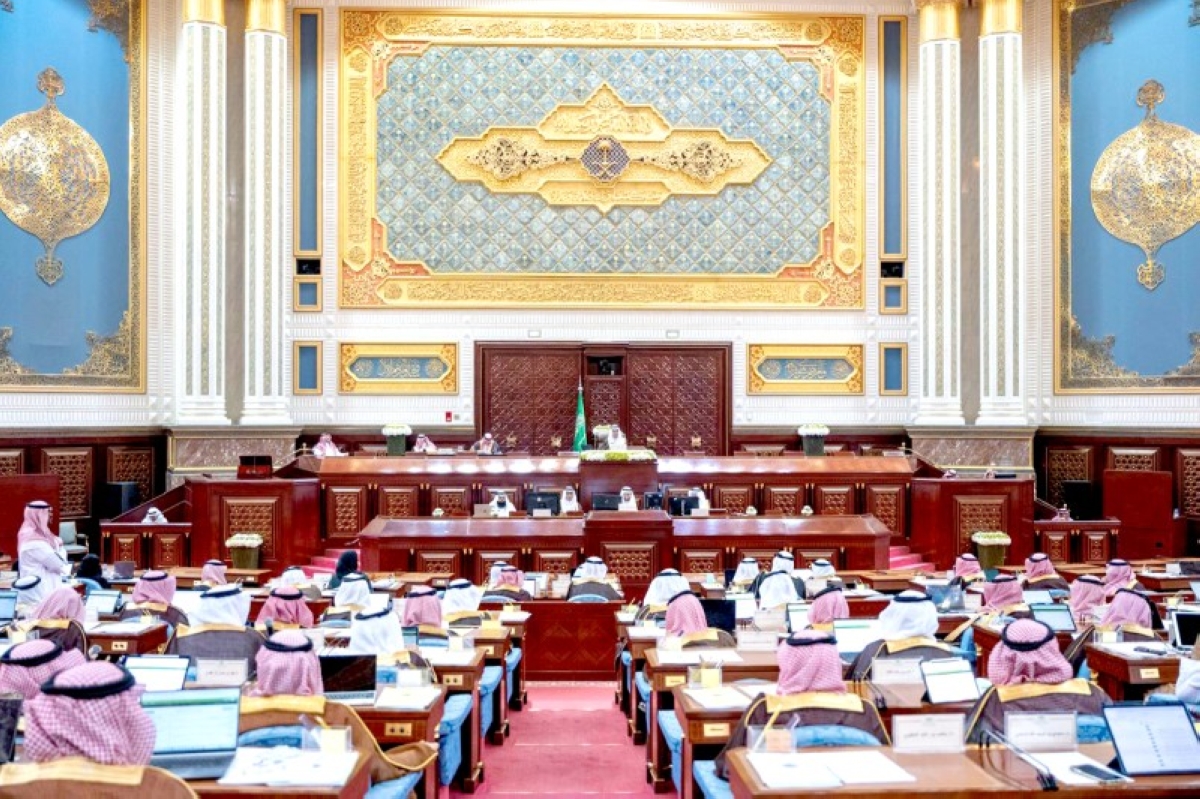
An economic analysis of the Shura Council's decisions and their impact on the local economy
In its seventh regular session of the second year of its ninth term, the Shura Council issued a series of resolutions aimed at improving the management of real estate assets belonging to minors and those under guardianship. This decision comes within the framework of efforts to enhance the efficiency of real estate management, reflecting the importance of strengthening financial governance and transparency in the management of these assets.
Managing the funds of minors: challenges and solutions
The Council called upon the General Authority for Guardianship of Minors' Funds to coordinate with relevant entities to study solutions for addressing the challenges related to managing, preserving, and developing the real estate assets of minors. This step comes in light of the increasing need to develop operational mechanisms related to the powers of guardians, trustees, and custodians, ensuring the protection of minors' rights and maximizing the benefit derived from their funds.
Improving real estate asset management is expected to increase financial returns for this segment, contributing to the strengthening of the local economy through increased investment and capital circulation within the local market. Furthermore, developing training and qualification programs for minors before they reach adulthood can help prepare a generation capable of making informed and effective financial decisions.
The role of the Saudi Export-Import Bank
In a move aimed at enhancing the competitiveness of Saudi exporters, the Council has requested the Saudi Export-Import Bank to expand its import and re-export programs and products. This comes as part of a strategy to enable targeted sectors to access global markets and ensure the bank's financial sustainability.
Developing pricing mechanisms for the bank's products that balance empowering exporters with ensuring the bank's sustainability is a vital step in achieving economic growth objectives. Furthermore, developing specialized products to finance letters of credit for small and medium-sized enterprises (SMEs) can significantly contribute to supporting this vital sector and enhancing its international competitiveness.
King Fahd National Library: Innovation and Development
On another front, the Council called upon the King Fahd National Library to coordinate with relevant entities to establish an online portal showcasing its cultural, artistic, creative, and social collections. This initiative aims to enhance awareness of the national cultural heritage and make it accessible to the public in a manner that complies with intellectual property rights regulations.
The council also urged the library to adopt internationally recognized performance indicators to enhance its operations and align these indicators with its strategic objectives. This move reflects the Kingdom's desire to keep pace with global developments and strengthen its position as a leading cultural and intellectual center.
Future prospects and the general economic context
Globally, these decisions come amid multiple economic challenges facing major economies as a result of the COVID-19 pandemic and geopolitical tensions. Therefore, focusing on improving the financial management of domestic assets and enhancing the competitiveness of Saudi exporters represents strategic steps to promote economic stability and sustainable development.
Future projections indicate the possibility of achieving sustainable economic growth if these policies are implemented effectively and efficiently.
Linking effective management of domestic assets with boosting exports can contribute significantly to diversifying national income sources and reducing dependence on oil as a primary source of government revenue.




Local News
Details of the Blue Defender 26 naval exercise between Saudi Arabia and the United States
Saudi and US naval forces are conducting Blue Defender 26 exercise at King Faisal Naval Base in Jeddah to enhance military cooperation and protect shipping lanes.
As part of ongoing efforts to enhance defense capabilities and deepen strategic partnerships, the Royal Saudi Naval Forces and their US counterparts conducted the joint naval exercise “Blue Defender 26.” This important military exercise took place at King Faisal Naval Base in Jeddah, and aimed to improve military coordination and the exchange of combat and operational expertise between the two sides.
The “Blue Defender 26” exercise witnessed the execution of a series of complex field and tactical scenarios designed to simulate realistic scenarios of potential maritime threats. Participating forces from both sides demonstrated a high level of professionalism and combat readiness, reflecting the high competence of naval crews and their superior ability to work together to enhance operational capabilities and strengthen maritime security in the region.
Strategic importance for enhancing Red Sea security
This exercise comes at a crucial time, underscoring the strategic importance of the Red Sea region as one of the world's most vital shipping lanes. The objectives of "Blue Defender 26" extend beyond military training to include securing international shipping lanes and ensuring the flow of global trade, reflecting the commitment of the Kingdom of Saudi Arabia and the United States to maintaining regional stability and protecting shared interests.
Extended military partnership
This exercise is an extension of a long history of close military cooperation between Riyadh and Washington, with the armed forces of both countries regularly conducting joint exercises. These drills contribute to unifying military concepts, honing the leadership and field skills of officers and personnel, and testing and developing joint command and control systems to address various security challenges.
Raising combat readiness
At the conclusion of the exercise, organizers affirmed that the results achieved reflect the significant progress made by the naval forces and their ability to adapt to the rapidly evolving landscape of modern naval warfare. The success of "Blue Defender 26" represents a further step towards strengthening military deterrence and ensuring maximum readiness to confront any contingency that threatens the security and safety of territorial and international waters.
Local News
Rainfall amounts in Saudi Arabia: Al-Khurmah recorded the highest at 32 mm, with details for 7 other regions
Learn more about the Ministry of Environment's report on rainfall amounts in Saudi Arabia. Al-Khurmah recorded the highest rainfall at 32.6 mm, and rain also fell in Riyadh, Mecca, the Eastern Province, and Qassim.

The daily report issued by the Ministry of Environment, Water and Agriculture in the Kingdom of Saudi Arabia, which specializes in monitoring rainfall amounts, revealed that varying amounts of rainfall were recorded in 7 different administrative regions, as part of the ongoing monitoring of the climatic conditions in the Kingdom.
The official report indicated that monitoring stations recorded the highest rainfall in the Al-Gharif area of Al-Khurmah Governorate in the Makkah region, reaching 32.6 mm. This data is based on readings from 51 hydrological and climatological monitoring stations distributed throughout the Kingdom, covering the period from 9:00 AM on Friday to 9:00 AM on Saturday.
Details of rainfall amounts in regions and governorates
The Makkah region experienced varying rainfall amounts. Besides Al-Khurmah, which recorded the highest rainfall, Al-Ruknah in Al-Muwayh recorded 8.0 mm, Maysan 1.7 mm, and Haddad Bani Malik in Taif recorded 0.5 mm. In the Madinah region, stations recorded 11.6 mm in Tharb in Mahd Al-Dhahab Governorate and 2.2 mm in Al-Hasu Municipality in Al-Hanakiya.
In Riyadh and its surrounding governorates, the Sajaa Reserve in Afif recorded 8.6 mm of rainfall, King Khalid International Airport 5.0 mm, and Al Majmaah 3.4 mm, while Al Kharj and Halban in Al Quway'iyah each recorded 1.6 mm. In the Qassim region, rainfall reached 6.2 mm at the Ministry's branch in Al Nabhaniyah, 3.9 mm in Al Tarfiyah Al Gharbiyah, and 1.4 mm in the Al Ulya neighborhood of Al Asyah.
Rain also fell in the Eastern Province, with Ras Tanura recording 3.4 mm, Hafr al-Batin 2.9 mm, and the Jubail naval base 2.8 mm. In the northern regions, Baqaa in the Hail region recorded 1.0 mm, while Rafha Airport in the Northern Borders region recorded 0.8 mm.
The importance of hydrological monitoring and the impact of rainfall
These daily reports are of paramount importance in the context of water resource management in Saudi Arabia, where the Ministry relies on a vast network of precise hydrological and climatological monitoring stations. This data contributes to informed decision-making regarding agriculture and dam management, in addition to its vital role in enhancing groundwater reserves, which are a cornerstone of water security in arid and semi-arid regions.
These rains, though varying in quantity, have a positive impact on vegetation and natural pastures in desert areas, thus supporting the livestock sector. Accurate monitoring of these rainfall amounts also helps relevant authorities, such as civil defense and meteorology, to issue early warnings and take necessary measures to ensure the safety of citizens and residents, especially in areas experiencing high rainfall that could lead to flash floods in valleys and streams.
Local News
The Public Transport Authority apprehends 689 violators of the unlicensed taxi service and clarifies the penalties
The Public Transport Authority has apprehended 689 violators of the unlicensed taxi service and 614 for illegal street vending. Learn about the fines, which can reach 20,000 riyals, and the vehicle impoundment under the new regulations.

The Public Transport Authority announced the results of its intensive inspection campaigns during January, which resulted in the detection of 689 violations related to operating unlicensed passenger transport services, known locally as "Kaddada," across various regions of Saudi Arabia. These efforts are part of the Authority's commitment to regulating the land transport sector and raising compliance levels with regulations.
Details of the violations detected and the field campaigns
Official statistics released by the authority revealed that monitoring teams, in cooperation with relevant security agencies, identified and apprehended 614 violators during the same month for engaging in what is known as "sowing" – the preparatory activities used to attract and transport passengers in private vehicles without the necessary licenses. In addition, 75 other violators were apprehended for transporting passengers in unauthorized ways. The relevant authorities dealt firmly with these violations, impounding 83 vehicles and taking legal action against their owners.
Campaign context and its strategic importance
These monitoring campaigns are of paramount importance, going beyond simply monitoring violations. They are an essential part of the Kingdom's efforts to achieve the objectives of the National Strategy for Transport and Logistics, stemming from the Kingdom's Vision 2030. These moves aim to eliminate the phenomenon of unregulated transport, which negatively affects fair competition in the sector and harms the interests of legitimate operators, licensed taxi drivers, and approved transport applications.
Through these measures, the Authority also focuses on enhancing safety and security standards for passengers, as unlicensed transport vehicles often lack proper insurance coverage and are not subject to the strict periodic inspections imposed by the Authority on public transport, which poses a risk to the safety of users.
Penalties and fines according to the new system
The Public Transport Authority confirmed that the new regulations governing land transport include strict penalties to deter violators, with fines for those who practice “calling” (preparatory work) reaching 11,000 riyals, with the vehicle being impounded for 25 days upon repetition of the violation.
Regarding the practice of unregulated transportation, the penalty can reach a fine of 20,000 riyals, along with vehicle impoundment for up to 60 days. In case of repeated violations, the system allows for the vehicle to be sold at public auction, in addition to deportation for non-Saudi violators, reflecting the seriousness of the relevant authorities in regulating this vital sector.
Call for compliance and reporting
In closing, the authority called on all citizens and residents to cooperate by refraining from dealing with unlicensed carriers and to review the updated regulations and bylaws on its official website. It also urged everyone to report any observations or violations related to transportation activities via the unified number 19929 or through official communication channels such as the customer care account on the “X” platform.
-

 Culture and Art, 1 week ago
The death of artist Huda Shaarawi “Umm Zaki” and her funeral in Damascus
-
Technology one week ago
ICAN 2026 Conference Conclusion: Initiatives to Enhance Saudi Arabia's Leadership in Artificial Intelligence
-
Local News 3 days ago
Launch of the city's shuttle bus service in Ramadan 1447 AH: Routes and stations
-
Culture and Art, 1 week ago
Huda Shaarawi: Farewell to “Umm Zaki,” the icon of Syrian drama
-
Culture and Art, 1 week ago
The murder of Huda Shaarawi, "Umm Zaki": Details of the crime and its impact
-
Local News 5 days ago
Rabigh inaugurates the world's largest water innovation oasis and enters the Guinness World Records
-
Culture and Art 4 days ago
The series "Rouh OFF" was permanently canceled by a decision of the Actors' Syndicate
-
Culture and Art, 1 week ago
The murder of Syrian artist Huda Shaarawi and details of the investigations


