
Local News
The safety of Aptamil milk in Saudi Arabia: The Food and Drug Authority clarifies the facts
The Food and Drug Authority confirmed that the batches of Aptamil milk that were subject to global warnings did not enter the Saudi market, stressing the safety of the available products and their continuous monitoring.


The Saudi Food and Drug Authority (SFDA) has reassured consumers in the Kingdom of Saudi Arabia regarding the safety of Aptamil infant formula products available in local markets. In an official statement, the SFDA confirmed that the specific batches of the product, which were the subject of recent global warnings, have not been released to the Saudi market. The authority emphasized that all products available to consumers are completely safe and subject to the highest regulatory standards.
Fast response and transparent communication
The Authority's clarification came as a direct and swift response to inquiries and concerns expressed by some citizens and residents on social media platforms, specifically on the "X" platform (formerly Twitter), following reports of international warnings concerning certain batches of Aptamil milk. The Authority explained that it follows a proactive approach in monitoring the safety of food products, especially those intended for vulnerable groups such as children, and that it immediately initiates all necessary regulatory procedures upon any suspicion of contamination or non-compliance with approved specifications, whether by withdrawing the products or preventing their entry altogether.
The global context of food safety
This incident highlights the importance of food safety regulations in the age of globalization, where food supply chains cross multiple international borders. A product is often manufactured in one country and distributed to dozens of others, meaning that even a minor flaw in the production process can trigger global alerts. Regulatory bodies, such as the Saudi Food and Drug Authority, are the consumer's first line of defense, meticulously inspecting incoming shipments and ensuring their compliance with standards and technical regulations before allowing them to be sold in the market.
The importance of infant formula safety and its impact
The safety of infant formula is a top priority for health authorities worldwide, as infants are the most vulnerable and sensitive group to any food contaminants. Infants rely entirely on milk as their primary source of nutrition during their early developmental stages, and any bacterial or chemical contamination can lead to serious health consequences. Therefore, the stringent measures taken by the Food and Drug Administration (FDA) not only aim to protect children's health but also contribute to strengthening public confidence in the regulatory system and the safety of products available on the market, thus preventing the spread of rumors and misinformation that could cause unwarranted panic.
In conclusion, the Authority affirmed that it continues its ongoing monitoring and follow-up of all food and pharmaceutical products, calling on consumers to obtain information from official sources and avoid being swayed by rumors, and to contact it directly through its approved channels in case of any inquiry or report.






Local News
Zatka: 1202 smuggling attempts foiled in one week
The Zakat, Tax and Customs Authority (ZATCA) announced the seizure of 1,202 cases of smuggling of prohibited items, including drugs, weapons and tobacco, through Saudi ports, confirming its efforts to protect the security of society.

The Zakat, Tax and Customs Authority (ZATCA) announced today in a statement a new security achievement, adding to its impressive record. It successfully thwarted 1,202 attempts to smuggle contraband through various land, sea, and air customs ports in the Kingdom of Saudi Arabia in just one week. These efforts reflect the vital role the Authority plays as the first line of defense in protecting the security and economy of the community.
The seizures included a wide range of prohibited substances that pose a direct threat to social security and public health. ZATCA explained that the confiscated items included 64 types of highly dangerous narcotics, such as hashish, cocaine, heroin, and methamphetamine, as well as large quantities of Captagon pills, which specifically target young people. Authorities also seized 546 other prohibited substances, 12 types of weapons and related equipment, and uncovered 11 cases of smuggling involving undeclared sums of money, often linked to money laundering and the financing of illicit activities. In addition, the smuggling of 2,426 tobacco products, intended to evade applicable duties and taxes, was thwarted.
A strategic role in protecting the homeland
These high-quality operations reflect the Kingdom's comprehensive strategy, aligned with the goals of Vision 2030, which aims to build a safe and prosperous society. The Kingdom's strategic geographic location, which makes it a global logistics hub, places a heightened responsibility on its security and customs agencies to secure its borders against organized crime networks that seek to exploit international trade to smuggle their illicit goods.
Effects that extend beyond local boundaries
The success of the Zakat, Tax and Customs Authority in thwarting these large quantities of contraband has an impact not only on the local level but also on regional and international security. Every successful seizure contributes to dismantling a link in the chain of transnational smuggling networks and limits their ability to deliver their poisons to other countries, thus reaffirming the Kingdom's role as an active and reliable partner in combating organized crime on the global stage. Protecting society from the scourge of drugs, preventing the spread of illicit weapons, and combating tax evasion are all fundamental pillars for achieving sustainable development and stability.
In closing its statement, ZATCA reiterated its firm commitment to tightening customs control over all imports and exports of the Kingdom, stressing the importance of continued cooperation and coordination with its partners in the security and military authorities to unify efforts and tighten the noose on anyone who tries to compromise the security and safety of the homeland and its resources.
Local News
44 types of native plants for developing vegetation cover in Al-Jawf
The National Afforestation Program announced the identification of 44 local plant species in Al-Jawf, as part of Vision 2030's efforts to increase green spaces and combat desertification.
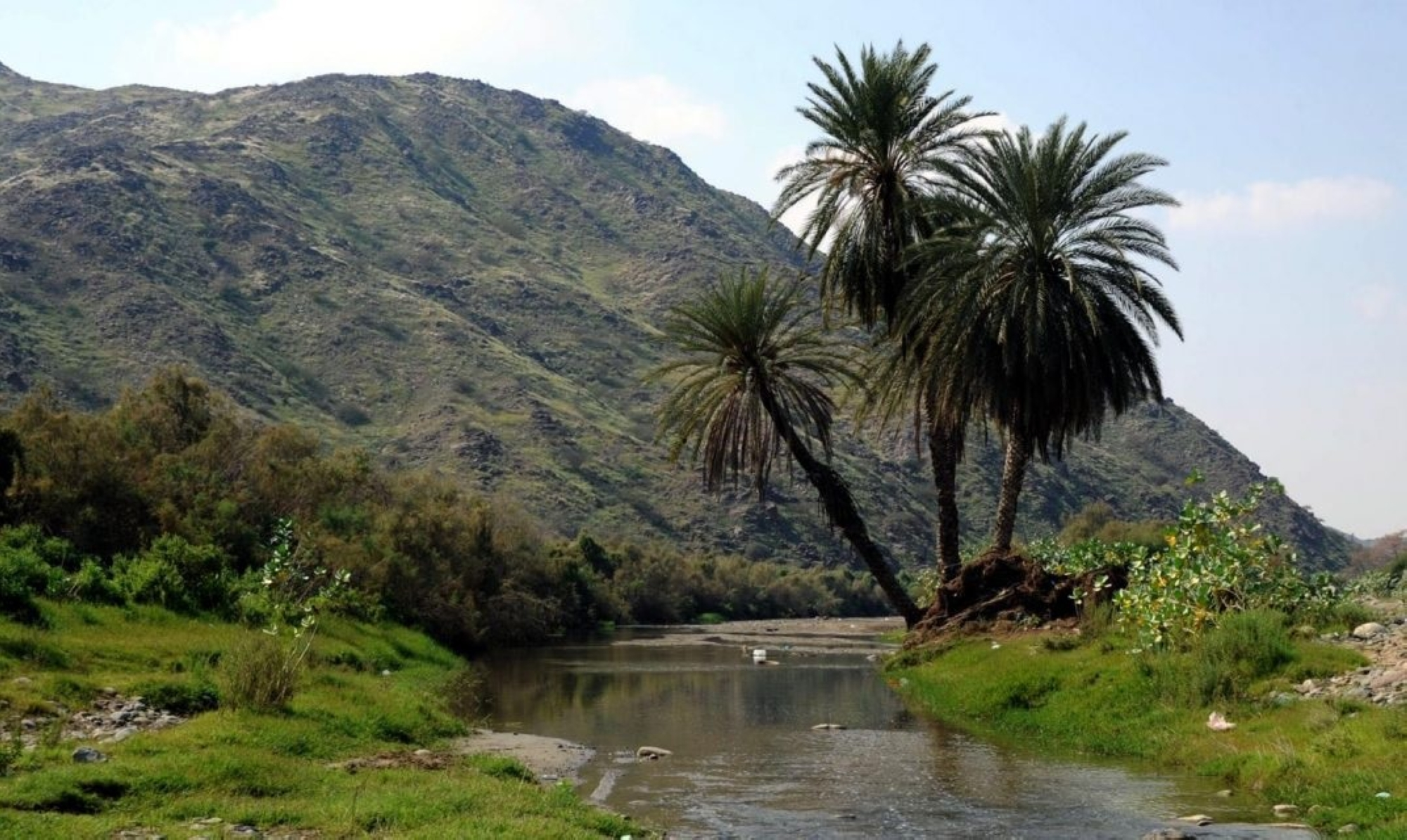
The National Afforestation Program has announced the identification of 44 native plant species that thrive in the diverse environments of the Al-Jawf region, a move reflecting the Kingdom's commitment to achieving its environmental sustainability goals. These environments include sand dunes, plains, highlands, valleys, plateaus, and salt flats, highlighting the region's rich biodiversity and its potential to support ambitious afforestation projects.
General context: Part of a national green vision
These efforts are part of a broader initiative led by Saudi Arabia to achieve a comprehensive environmental transformation, a key pillar of Saudi Vision 2030. The Saudi Green Initiative, which aims to plant billions of trees across the Kingdom, is the driving force behind these projects. The National Afforestation Program, by focusing on native plants, aims to ensure the success and sustainability of these initiatives, as these species are perfectly adapted to harsh climatic conditions and require less water and resources, making them the ideal choice for combating desertification and effectively developing vegetation cover.
The importance of the event and its expected impact
At the local level, the afforestation of the Al-Jawf region with these plants contributes to improving air quality, reducing land degradation, stabilizing the soil to withstand sandstorms, and enhancing the natural habitats of native organisms. The project also raises community awareness about the importance of environmental conservation and encourages local participation in afforestation efforts, creating a sustainable legacy for future generations. Regionally and internationally, the Kingdom's success in rehabilitating its desert ecosystems using native plants provides a leading model for other countries facing similar challenges and underscores its active role in global efforts to combat climate change and preserve biodiversity.
Botanical treasures in the Al-Jawf region
The program highlighted the rich biodiversity of the Al-Jawf region, encompassing shrubs, trees, and perennial and annual herbs. Among the most prominent identified species are: *Acacia tortilis*, *Atriplex halimus*, *Atriplex thalis*, *Atriplex thalis*, *Atriplex rhizome*, *Atriplex senegal*, *Atriplex halimus ... and *Atriplex halimus*. These plants belong to diverse families such as legumes, Atriplex halimus, Atriplex halimus, and *Atriplex halimus*, reflecting the region's rich biodiversity. This diversity not only supports the ecosystem but also preserves the Kingdom's natural heritage.
Local News
Real estate registration to begin in neighborhoods of Riyadh and Mecca in 2026
The General Authority for Real Estate has announced the commencement of real estate registration in selected neighborhoods in Riyadh and Mecca. Learn about the details, importance, and registration steps.
The General Authority for Real Estate announced the commencement of a new phase of the real estate registration project in the Kingdom. This phase includes one property in the Al-Mughterah neighborhood of Dhurma Governorate in the Riyadh region, and another property in the Al-Hudaybiyah neighborhood of the Makkah region. The registration period is scheduled to begin on February 1, 2026 (corresponding to 13 Sha'ban 1447 AH) and continue until May 7, 2026 (corresponding to 20 Dhu al-Qi'dah 1447 AH).
Historical background and strategic context
This announcement represents a significant step in implementing the goals of Saudi Vision 2030, which aims to develop, regulate, and enhance the efficiency of the real estate sector. The new property registration system marks a qualitative shift from the previous system based on personal deeds to a system that uses the property itself as the fundamental unit of registration. Instead of linking ownership to an individual, the new system assigns each property a unique identity through a distinctive registration number and precise geospatial information, thus preventing duplicate ownership and significantly reducing real estate disputes.
Project importance and expected impact
The importance of the Real Estate Registry lies in its role as the cornerstone for building a reliable and transparent real estate sector. Locally , the system will provide absolute protection for property owners' rights, as the title deed issued by the registry becomes conclusive and unchallengeable. It will also facilitate buying, selling, and mortgage transactions, thereby enhancing market liquidity. Nationally , the project will contribute to increasing the attractiveness of the Kingdom's investment environment and encourage local and foreign investment in the real estate sector, given the existence of a clear and reliable legal framework that protects assets. Furthermore, it will provide an accurate and comprehensive real estate database that supports urban planning efforts and infrastructure development in Saudi cities.
Registration mechanism and required steps
The General Authority for Real Estate called on property owners in the designated neighborhoods to register during the announced period. The process can be completed electronically through the Real Estate Registry platform (rer.sa) or by visiting designated service centers. The Authority emphasized that the essential requirement for completing registration is a fully documented electronic title deed that meets all regulatory requirements. Upon completion of registration, a new title deed will be issued for each property unit, including its descriptive data, legal status, and any associated rights and obligations, supported by accurate geospatial data.
The authority explained that these neighborhoods were selected based on specific criteria, and confirmed that the remaining areas and neighborhoods to be included in the upcoming phases of the project across the Kingdom will be announced subsequently. For any inquiries, beneficiaries can contact the customer service center at 199002 or visit the authority's official platforms.
-
 Local News 6 days ago
Landslide in Riyadh: Details of the incident in Al-Sahafa neighborhood and containment efforts
-
 Local news one week ago
The death penalty was carried out against a citizen who stabbed another to death in Tabuk
-

 Local news one week ago
First birth on the Riyadh train: A heartwarming story at Andalus station
-

 Culture and Art 6 days ago
Haifa Wehbe's absence in Riyadh: A photo crisis or a strained relationship with the media?
-
 Local News 6 days ago
Riyadh collapse: Emergency plans to secure water after a main pipeline burst
-
 Culture and Art 6 days ago
City Kitchen series: A drama of conflict and the middle class during Ramadan
-

 Culture and Art 6 days ago
The series "Kasra": Dawood Hussein in a moving social drama this Ramadan
-

 Local News 5 days ago
Applying for the 1447 Opportunities Program for Teachers via the Fares System