Local News
Second meeting of the Shura Council for the ninth session 2023
The Saudi Shura Council meeting strengthens legislative work with the participation of prominent leaders to discuss vital issues concerning the Kingdom's future in its ninth session

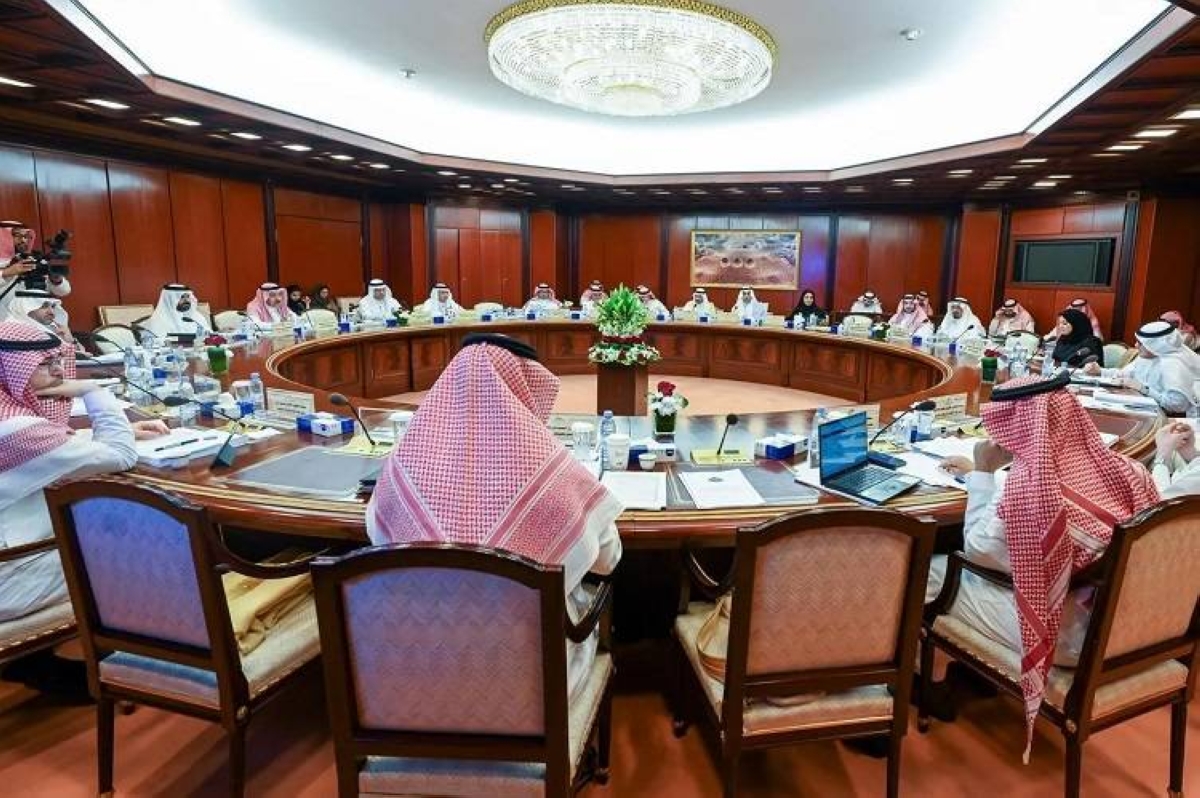
General Assembly Meeting of the Shura Council: Strengthening Legislative Work in Saudi Arabia
The General Assembly of the Saudi Shura Council held its second meeting of the second year of its ninth session at the Council's headquarters in Riyadh. The meeting was chaired by the Council's Vice President, Dr. Meshal Al-Sulami, and attended by the Assistant Speaker, Dr. Hanan Al-Ahmadi, the Secretary-General, Mr. Mohammed Al-Mutairi, and the heads of the specialized committees. The meeting focused on reviewing the topics on the agenda, which reflect the Kingdom's strategic directions in various fields.
Referral of annual reports and legislative projects
The General Assembly referred 20 topics studied by the specialized committees to the agenda of the upcoming council sessions. Among these topics is the annual report of the Small and Medium Enterprises Bank for the fiscal year 1445/1446 AH, which is crucial for supporting the entrepreneurship sector and strengthening the national economy. The Assembly also approved referring the annual report of the Human Resources Development Fund for the same fiscal year, reflecting the Kingdom's commitment to developing human capital as part of Vision 2030.
In a related matter, the Authority referred the annual report of the University of Hail for the academic year 2024 and the annual report of the Ministry of Tourism for the fiscal year 1445/1446 AH. These reports are part of the Kingdom's efforts to enhance higher education and develop the tourism sector as a vital economic pillar.
Strengthening international cooperation through memoranda of understanding and agreements
The General Assembly approved the referral of several reports from the Council's specialized committees, which included draft memoranda of understanding and agreements with a number of sisterly and friendly countries in various fields. This reflects Saudi Arabia's foreign policy, which seeks to strengthen international cooperation and strategic partnerships in a way that serves national interests and supports sustainable development.
The role of the General Authority of the Shura Council
The General Assembly plays a pivotal role according to the Shura Council's rules of procedure and internal regulations. It is responsible for developing the general plan for the Council and its committees, ensuring the procedural aspects of committee reports are sound and ready for presentation to the Council, and setting the agenda for Council sessions, in addition to several other responsibilities outlined in the Council's rules of procedure and internal regulations.
Through these continuous and diverse efforts, the Saudi Shura Council stands out as one of the main pillars supporting the legislative and developmental process in the Kingdom of Saudi Arabia, enhancing its regional and international standing and confirming its commitment to achieving the ambitious goals of Vision 2030.


Local News
The Ministry of Information signs media scholarship agreements with 9 companies
The Minister of Information sponsors the signing of agreements for the Media Scholarship Program with 9 companies to provide 94 study and training seats in the finest international universities within the framework of Vision 2030.

In a strategic step aimed at empowering national cadres and raising the efficiency of the media sector in the Kingdom of Saudi Arabia, the Minister of Media, Mr. Salman bin Yousef Al-Dossari, sponsored the signing of a package of qualitative agreements with nine leading media companies, under the umbrella of the “Media Scholarship” program within the (Wa’ed) track, one of the main tracks of the Custodian of the Two Holy Mosques Scholarship Program.
An integrated partnership between the public and private sectors
These agreements represent a true model of effective partnership between the public and private sectors, through which the Ministry aims to invest directly in human capital. The list of signatory companies includes: MBC Group, One Group, Al-Dhahour Media Company, Hawadi Company, Al-Jazeera Company, Salham Company, La’ba Company, Jazr Production Company, and Waves Company. These partnerships ensure that the outcomes of academic education and practical training are linked to direct employment opportunities, thus enhancing the sustainability of the media sector.
Details of study and training opportunities
The program is an effective economic empowerment tool, providing 94 diverse study and training places in the world's most prestigious educational institutions, distributed as follows:
- 21 Master's degree seats: in universities in Britain, America, and Spain.
- 56 seats for Bachelor's degrees: in the USA and Britain.
- 11 seats for diploma programs: in Canada and Spain.
- 6 seats allocated for vocational training: in America and Spain.
Strategic shift towards the creative economy
In the context of strengthening the national economy, the Deputy Minister of Media for Media Sector Development, Israa Mansour Asiri, explained that this step reflects the ministry's shift from its traditional legislative role to that of an enabler and catalyst for growth. She emphasized that media today is no longer merely a means of disseminating news, but has become a driver of the creative economy, with its value chains extending to production, distribution, platform development, and digital marketing, thus necessitating a qualified national workforce trained to the highest international standards.
Keeping pace with the Kingdom's Vision 2030
These agreements are particularly important in light of the goals of the Kingdom's Vision 2030, which seeks to diversify income sources and increase the contribution of non-oil sectors to the GDP. Developing media talent contributes to strengthening the Kingdom's position as a regional and international hub for media content creation, thus enhancing its soft power and projecting a positive image to the world. The "Media Scholarship" program allows companies to design programs that precisely align with their staffing needs, bridging the gap between education and the labor market.
It is worth noting that applications for these opportunities and programs will be submitted through the Ministry of Education’s “Safir” platform, and details will be announced through the partner companies’ accounts, in order to activate the scholarship program that supports Saudi competitiveness globally.
Local News
Welcoming the first Umrah flights for Ramadan 1447 at King Abdulaziz Airport
King Abdulaziz Airport passport control in Jeddah receives the first flights of pilgrims to perform Umrah during Ramadan 1447, confirming its full readiness to complete procedures smoothly and easily through the latest technologies.

In a spiritually uplifting atmosphere, the passport control terminals at King Abdulaziz International Airport in Jeddah welcomed the first flights of pilgrims arriving from outside the Kingdom to perform Umrah during the holy month of Ramadan 1447 AH. The reception ceremony was conducted amidst a comprehensive system of services, with specialized staff completing the pilgrims' entry procedures smoothly and efficiently, reflecting the early preparations for this important season.
The General Directorate of Passports confirmed its full readiness to receive the increasing numbers of pilgrims during the holy month, noting that it has supported all passport halls at air, land and sea ports with qualified and highly trained personnel, in addition to equipping the counters with modern technical devices and advanced fingerprint systems to ensure the rapid flow of travelers and reduce waiting times, thus ensuring a comfortable travel experience from the moment of arrival.
The Ramadan Umrah season holds special significance for Muslims worldwide, as rewards are multiplied and eagerness to visit the Holy Kaaba grows, based on Prophetic traditions that equate performing Umrah during Ramadan with performing Hajj alongside the Prophet (peace be upon him). Given this profound spiritual importance, Saudi Arabia witnesses a massive influx of pilgrims each year, requiring high-level security and logistical coordination to ensure their safety and well-being.
This smooth reception comes as part of the Kingdom's ongoing efforts to achieve the goals of Saudi Vision 2030, which places great importance on the program for serving pilgrims and seeks to increase capacity and improve the services provided to them. King Abdulaziz International Airport in Jeddah is the main gateway to the Two Holy Mosques, and therefore receives special attention in developing its digital and service infrastructure to be a modern gateway befitting the Kingdom's stature and its visitors.
In closing its statement, the General Directorate of Passports stressed the importance of those coming to perform Umrah adhering to the regulations and instructions governing Hajj and Umrah in the Kingdom, and complying with the time periods specified in the visas, stressing that compliance with the regulations contributes to the smooth flow of movement and avoids any obstacles that the pilgrim may face until he leaves the Holy Land and returns to his homeland safe and sound.
Local News
Obligating the private sector to use the term "persons with disabilities"
The Authority for the Care of Persons with Disabilities renews its directive to the private sector to adopt the official term in advertisements and correspondence in line with the royal decrees and the Kingdom’s Vision 2030.

The Commission for the Care of Persons with Disabilities renewed its strong call to private sector establishments in the Kingdom of Saudi Arabia to fully comply with the Royal Decree stipulating the adoption of the term “persons with disabilities” in all official correspondence, media statements, and advertising materials, and to refrain from using any other terms that may not reflect the correct and rights-based concept for this precious group.
This directive was issued in an official letter seen by media sources, in which the authority explained that the renewed demand stems from its ongoing observation of the use of inconsistent and inaccurate terminology to describe people with disabilities in numerous private sector advertisements, whether on digital screens or billboards in roads and public facilities. The authority emphasized that standardizing terminology is not merely a formality, but a fundamental step to ensure the protection of their rights and promote their inclusion in society.
This move comes within the framework of the Kingdom's ongoing national efforts to promote the rights of persons with disabilities, in line with the objectives of Vision 2030, which places great importance on empowering all segments of society without discrimination. Adherence to internationally and locally adopted terminology is part of the international conventions ratified by the Kingdom, which emphasize the importance of using language that promotes human dignity and eliminates the social stigma that may be caused by outdated or inaccurate terms such as "persons with special needs" or other labels that are no longer acceptable in the modern human rights context.
From a social and psychological perspective, experts point out that using the correct term “persons with disabilities” places “person” before “disability,” thus reinforcing their inherent human value and emphasizing that disability is merely one aspect of human diversity, not the sole defining characteristic of an individual. This linguistic standardization directly contributes to changing prevailing stereotypes and supports community awareness efforts led by the Authority and other relevant stakeholders.
The Authority emphasizes that the private sector is a strategic partner in development, and therefore its role is not limited to employment or service provision, but extends to adopting a sound corporate culture that respects the highest directives and national standards. This commitment is expected to contribute to creating a conscious advertising and media environment that reflects the Kingdom's progress in the area of human rights in general, and the rights of persons with disabilities in particular.
-

 Culture and Art 7 days ago
The "Between and Between" exhibition in Jeddah: 5 artists reshape Saudi memory
-
Local News 5 days ago
Saudi Arabia's National Arabic Language Policy: 8 Principles to Promote Identity
-
Culture and Art, 1 week ago
Shakira's concert in Jeddah: Details of the international star's first concert in Saudi Arabia
-
Local News 4 days ago
Adopting the National Policy for the Arabic Language: Strengthening Identity and Vision 2030
-
Local News 5 days ago
The Riyadh-Rin-Bisha dual carriageway, spanning 559 km, has been completed
-
Culture and Art, 1 week ago
Ramez Level the Monster: Details of Ramez Galal's program in Ramadan 2026
-
Local news one week ago
Launch of the new Dammam project with investments of 98 billion riyals
-
Local News 3 days ago
The Supreme Court calls for the sighting of the crescent moon of Ramadan 1447 on Tuesday evening