
Local News
Trade name reservation requirements in Saudi Arabia: Record growth with 69,000 applications
The Ministry of Commerce announced the registration of 69,300 trade names in three months. Learn about the full requirements, the list of prohibited names, and how these figures reflect the growth of the Saudi economy.

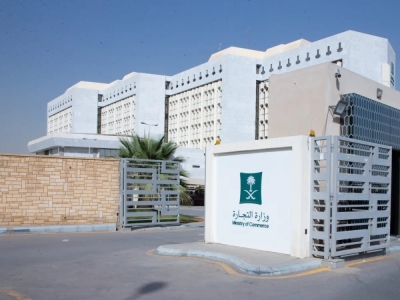
A strong indicator of the flourishing business environment in the Kingdom
The Saudi Ministry of Commerce announced a record number of registered trade names during the third quarter of 2025, with a total of approximately 69,300 approved names. This official data, reviewed by Akhbar24, reflects the growing dynamism of the Kingdom's entrepreneurial environment and the increasing interest in establishing new businesses, aligning with the goals of Saudi Vision 2030 to diversify the economy and strengthen the role of the private sector.
Digital transformation and streamlined procedures: The Saudi Business Center's success story
This growth comes within the context of the comprehensive digital transformation of government services in the Kingdom. The online trade name reservation service, offered by the Ministry through the Saudi Business Center platform, is a prime example of how technology contributes to streamlining procedures and facilitating the journey for investors and entrepreneurs. This service allows beneficiaries to reserve a preliminary trade name for up to 60 days, a period sufficient to complete the commercial registration procedures without needing to visit Ministry branches, thus saving time and effort and enhancing the efficiency of the business environment.
The importance of the event and its impact on the national economy
The significant increase in applications for reserving trade names is not merely a statistic, but a crucial economic indicator. Domestically, this surge reflects the confidence of citizens and residents in the future of the Saudi economy and their desire to contribute to its growth by establishing small and medium-sized enterprises (SMEs), which are the backbone of any vibrant economy and capable of creating thousands of jobs. Regionally and internationally, these figures and the streamlined procedures enhance the Kingdom's attractiveness as a leading investment destination and assure foreign investors that the regulatory environment in Saudi Arabia has become more flexible and competitive.
Terms and conditions for reserving trade names: A comprehensive guide
To ensure market regulation and protect consumers and businesses, the Ministry of Commerce has established a set of clear terms and conditions that must be adhered to when reserving a trade name. These rules aim to prevent misrepresentation, protect national identity and religious symbols, and prevent similarities that could lead to commercial disputes.
Key requirements for application:
- The applicant must be at least 18 years old.
- The applicant must be the employer or an officially authorized representative of the employer.
- Names can be reserved in both Arabic and English.
- The name must not be contrary to public order or public morals.
- The name must not be already reserved or similar to a registered and well-known trademark.
List of prohibited trade names
Regulations prohibit the use of certain types of names to maintain public order and protect national and religious symbols. The prohibited list includes the following:
- The Most Beautiful Names of God: such as (the Most Gracious, the Most Holy, the Creator).
- Names of government agencies: such as (Ministry of Interior, Capital Market Authority).
- Names of government projects and platforms: such as (Vision 2030, Absher, Tawakkalna).
- Names of international organizations: such as (the United Nations, the World Bank).
- Military ranks, professional and royal titles: such as (Lieutenant General, Major General, Doctor, Engineer, Prince, King).
- Names with direct religious connotations: such as (Islamic, the Holy Land).
- Famous symbols and abbreviations: which may cause confusion with well-known entities such as (NASA, SAMA).




Local News
Food and Drug Authority: 34 pharmacies fined 4 million riyals for violating "monitoring" regulations
The General Authority for Food and Drug fined 34 pharmacies 4.2 million riyals in January 2026 for violating the “Monitoring” system and failing to provide medicines, stressing the continuation of monitoring to ensure availability.

The Saudi Food and Drug Authority (SFDA) announced the imposition of strict financial penalties on 34 violating pharmacies, as part of its intensive inspection tours during January 2026. The total fines imposed amounted to approximately 4.2 million Saudi riyals, as a result of these establishments' failure to comply with the regulations and bylaws related to providing pharmaceutical products and reporting their movement immediately through the approved electronic tracking system “Rasad”.
Details of observed violations
The authority revealed in its statement that the violations detected varied in nature, but all fell under the category of compromising pharmaceutical security. These violations included facilities failing to report anticipated shortages or disruptions in drug supplies well in advance, thus preventing the implementation of necessary measures. Furthermore, they neglected to provide immediate and real-time reporting on drug movement within the supply chain. The authority also observed a clear breach of the minimum mandatory drug inventory requirements designed to ensure patient needs are met for specific periods, a serious violation that jeopardizes public health and safety.
The “Monitoring” system and its strategic role in drug security
This decisive measure underscores the paramount importance that the Kingdom of Saudi Arabia places on the pharmaceutical sector. The electronic tracking system for pharmaceutical products, "Rasad," is a cornerstone of the healthcare sector's digital transformation strategy. This advanced system aims to track human medicines with extreme precision from the moment they leave the production lines in factories, through storage warehouses and distribution points, until they reach the end consumer. The system's significance lies in its ability to combat commercial fraud and prevent the circulation of expired or counterfeit medications, thereby enhancing drug safety and bolstering consumer confidence in the healthcare system.
Regulatory sanctions and their impact on compliance
In a related context, the Saudi Food and Drug Authority (SFDA) emphasized that penalties stipulated by applicable regulations are not limited to fines, but can reach a maximum of 5 million riyals per establishment. The SFDA clarified that punitive measures may escalate to include the temporary closure of the violating pharmacy for up to 180 days, or even the permanent revocation of its license in cases of serious violations. These stringent penalties aim to deter violators and ensure everyone adheres to strict health standards.
Call to comply with regulations
The authority concluded its statement by urging all pharmaceutical establishments and those working in the drug sector to fully comply with the approved regulations and instructions, and to take the "Rasad" system seriously. It emphasized that protecting public health and ensuring the availability of medicine for citizens and residents is a red line that cannot be crossed, noting that its monitoring tours will continue regularly to regulate the market and guarantee the continuous and efficient supply of medicines.
Local News
Journalist Marwa Hashem suspended for 3 months for insulting an Iraqi officer
The Media and Communications Commission decided to suspend journalist Marwa Hashem for 90 days and suspend the Voice of the People program, after broadcasting content offensive to an officer in the Ministry of Interior and violating broadcasting rules.

The Iraqi Media and Communications Commission issued strict penalties against journalist Marwa Hashem and the "Iraq Al-Hadath" channel, following the detection of serious professional violations in the program "Sawt Shaab" (Voice of the People). These penalties are part of the commission's oversight role to regulate the media landscape and ensure that media outlets adhere to professional and ethical broadcasting standards.
Details of penalties and binding procedures
According to the official statement issued by the authority, the program "Voice of the People" was suspended for 30 days, and its presenter, journalist Marwa Hashem, was banned from appearing on television for 90 days (three months). The authority did not stop at suspension; it also mandated that the channel remove the episode containing the violation from all its platforms and issue a formal and public apology to the Ministry of Interior and the affected officer. The authority based its decisions on its legal powers, asserting that the episode broadcast on January 27, 2026, contained serious violations of the approved broadcasting regulations.
The nature of the violation and misleading public opinion
The commission clarified that the observed violations were not mere isolated lapses, but rather included the dissemination of fabricated visual content shared from social media platforms without verification. This content contained unethical allegations against an officer of the Iraqi Ministry of Interior, which constituted incitement to violence and a violation of public decency and morality. The commission indicated that the lack of accuracy and transparency in disseminating information contributed to misleading public opinion and damaging the reputation of the national security institution, which is a clear breach of regulations.
Context of regulating digital and traditional media
This incident highlights the growing challenges facing traditional media in the face of the dominance of social media. The Media and Communications Commission is continuously working to establish regulations that curb the spread of "fake news" or fabricated content from the unregulated online sphere to television screens, which are supposed to be highly credible. Relying on social media content without filtering or verifying its accuracy is one of the most prominent mistakes made by some talk shows in their pursuit of sensationalism, necessitating firm regulatory intervention to protect society from rumors.
The importance of preserving the prestige of security institutions
From a professional and national perspective, this decision is of particular importance given its connection to the security establishment. While the constitution and the law guarantee freedom of expression and the press, this freedom is limited by the bounds of defamation or unsubstantiated slander, especially when it concerns officers and personnel of the Ministry of Interior, who represent a cornerstone of security and stability. The measures taken by the authority reflect the need for a balance between constructive criticism and personal attacks that could undermine trust between citizens and security agencies, emphasizing that media platforms should be tools for building and uncovering the truth, not instruments of destruction and spreading falsehoods.
Local News
Medical air evacuation of 3 citizens from Egypt to complete their treatment in the Kingdom
The Ministry of Defense's air medical evacuation plane transported 3 citizens from Egypt to the Kingdom to complete their treatment, in coordination with the Saudi Embassy in Cairo to ensure their safety.

As part of the ongoing care that the government of the Kingdom of Saudi Arabia provides to its citizens abroad, the Air Medical Evacuation Plane of the Ministry of Defense Health Services carried out a successful transfer of three Saudi citizens from Cairo International Airport in the Arab Republic of Egypt to the homeland, in order to complete their treatment journey and receive the necessary health care in specialized hospitals in the Kingdom.
This step was taken through direct coordination and close follow-up by the Embassy of the Kingdom of Saudi Arabia in Cairo, which worked alongside the relevant Egyptian authorities to facilitate all transfer procedures and ensure the patients' safety until they boarded the specially equipped aircraft. The Embassy confirmed in a statement that this measure stems from its ongoing commitment to monitoring the well-being of its citizens, ensuring their safety, and providing them with all forms of support and assistance, especially in emergency situations and critical health conditions.
Saudi air medical evacuation capabilities
The Saudi Ministry of Defense's air medical evacuation fleet is one of the most advanced in the region, possessing aircraft equipped as "flying hospitals" with the latest medical technologies and mobile intensive care units. These services play a pivotal role in the Kingdom's healthcare system, extending beyond military operations to encompass humanitarian needs and serving citizens whose conditions cannot be treated locally. This reflects the high level of preparedness of Saudi medical personnel and pilots in handling various critical cases.
The diplomatic role in caring for citizens
This incident highlights the vital role played by Saudi diplomatic missions abroad, whose work extends beyond political representation to include the social and health care of Saudi citizens. The embassies operate under the directives of the wise leadership, which places the health and safety of citizens at the forefront of its priorities, regardless of their location. The seamless cooperation between the embassy and the Egyptian authorities demonstrates the depth of the fraternal relations between the two brotherly countries, contributing to the swift implementation of the necessary administrative and security procedures for medical evacuations.
The embassy concluded its statement by expressing its sincere thanks and appreciation to all the medical and administrative bodies that contributed to the success of this humanitarian mission, wishing the three citizens a speedy recovery and a safe return to their families in good health.
-

 Local News 5 days ago
Launch of the city's shuttle bus service in Ramadan 1447 AH: Routes and stations
-
Local news one week ago
Rabigh inaugurates the world's largest water innovation oasis and enters the Guinness World Records
-
Culture and Art 6 days ago
The series "Rouh OFF" was permanently canceled by a decision of the Actors' Syndicate
-
Culture and Art 4 days ago
Yasser Galal and Radwa El Sherbiny: Details of a new artistic project that brings them together
-
Local news one week ago
Schedule of Taraweeh and Tahajjud prayers at the Two Holy Mosques for Ramadan 1447 AH
-
Local News 5 days ago
The Ministry of Education revokes the licenses of 74 private schools due to safety and quality violations
-
Local News 7 days ago
Saudi Arabia weather: Rain in Riyadh, the Eastern Province, and Qassim, and dense fog
-
Local News 4 days ago
Mohammed Al-Rasasmeh appointed as official spokesperson for the Ministry of Municipalities and Housing


