Local News
Saudi Arabia leads in artificial intelligence and data technologies
Saudi Arabia is leading in artificial intelligence thanks to a future vision and the leadership's interest. Discover how SDAIA contributes to promoting innovation and development.

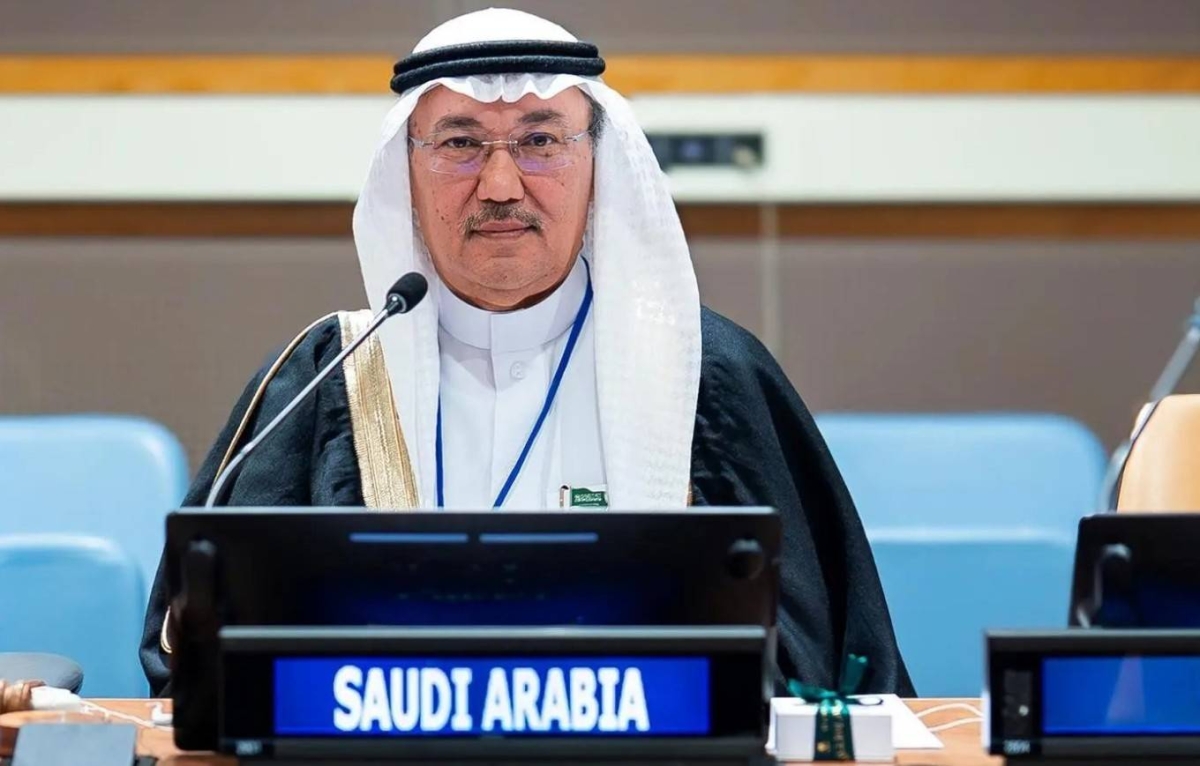
Artificial intelligence in Saudi Arabia: A future vision
Engineer Sami bin Abdullah Muqim, Vice President of the Saudi Data and Artificial Intelligence Authority (SDAIA), affirmed that artificial intelligence receives significant attention from the Saudi leadership. This attention led to the establishment of SDAIA as the national authority for all matters related to the development, regulation, and use of artificial intelligence.
SDAIA is leveraging its capabilities to enhance research, development, and innovation in this field, propelling the Kingdom towards advancements in data and artificial intelligence technologies. This aligns with Vision 2030 , which aims to build advanced human capital in these areas.
The remarkable development in the Kingdom
Following his participation in the United Nations General Assembly sessions in New York, Engineer Sami Muqim noted that the Kingdom is witnessing remarkable progress in data and artificial intelligence technologies. This development aligns with Crown Prince Mohammed bin Salman's aspirations to make the Kingdom one of the world's leading data-driven and AI-powered economies.
The goal is for Saudi Arabia to become a global hub for artificial intelligence . This means it will be a magnet for international companies and talent working in this field.
Saudi Arabia's international role
The Kingdom plays a pivotal role on the international stage as a key partner in decision-making and promoting global cooperation in artificial intelligence. This role has been strengthened through the Saudi Data & Artificial Intelligence Authority's (SDAIA) organization and participation in international events such as the United Nations sessions.
Saudi Arabia seeks to support other countries in utilizing these technologies and addressing the challenges associated with them. It also aims to raise awareness about how to approach artificial intelligence in line with the United Nations Sustainable Development Goals 2030.
Developing local human resources
Domestically, the Kingdom places great importance on developing human capital . The Saudi Data & Artificial Intelligence Authority (SDAIA) is developing training programs and camps to enhance the skills of Saudi nationals both within and outside the Kingdom. Among these initiatives is the program to train one million Saudis in artificial intelligence skills.
This investment in education and training aims to equip the next generation with the skills needed to compete globally . It also directly contributes to achieving Vision 2030, which focuses on diversifying the Saudi economy and reducing its dependence on oil.
In conclusion: A bright future for artificial intelligence in Saudi Arabia
In short, Saudi Arabia aims to be a global leader in artificial intelligence . By focusing on developing technology and human capital, the Kingdom is strengthening its position as a knowledge-based and technologically advanced economic powerhouse. This is not only to improve the daily lives of Saudi citizens but also to contribute more significantly to the international community.




Local News
Welcoming the first Umrah flights for Ramadan 1447 at King Abdulaziz Airport
King Abdulaziz Airport passport control in Jeddah receives the first flights of pilgrims to perform Umrah during Ramadan 1447, confirming its full readiness to complete procedures smoothly and easily through the latest technologies.

In a spiritually uplifting atmosphere, the passport control terminals at King Abdulaziz International Airport in Jeddah welcomed the first flights of pilgrims arriving from outside the Kingdom to perform Umrah during the holy month of Ramadan 1447 AH. The reception ceremony was conducted amidst a comprehensive system of services, with specialized staff completing the pilgrims' entry procedures smoothly and efficiently, reflecting the early preparations for this important season.
The General Directorate of Passports confirmed its full readiness to receive the increasing numbers of pilgrims during the holy month, noting that it has supported all passport halls at air, land and sea ports with qualified and highly trained personnel, in addition to equipping the counters with modern technical devices and advanced fingerprint systems to ensure the rapid flow of travelers and reduce waiting times, thus ensuring a comfortable travel experience from the moment of arrival.
The Ramadan Umrah season holds special significance for Muslims worldwide, as rewards are multiplied and eagerness to visit the Holy Kaaba grows, based on Prophetic traditions that equate performing Umrah during Ramadan with performing Hajj alongside the Prophet (peace be upon him). Given this profound spiritual importance, Saudi Arabia witnesses a massive influx of pilgrims each year, requiring high-level security and logistical coordination to ensure their safety and well-being.
This smooth reception comes as part of the Kingdom's ongoing efforts to achieve the goals of Saudi Vision 2030, which places great importance on the program for serving pilgrims and seeks to increase capacity and improve the services provided to them. King Abdulaziz International Airport in Jeddah is the main gateway to the Two Holy Mosques, and therefore receives special attention in developing its digital and service infrastructure to be a modern gateway befitting the Kingdom's stature and its visitors.
In closing its statement, the General Directorate of Passports stressed the importance of those coming to perform Umrah adhering to the regulations and instructions governing Hajj and Umrah in the Kingdom, and complying with the time periods specified in the visas, stressing that compliance with the regulations contributes to the smooth flow of movement and avoids any obstacles that the pilgrim may face until he leaves the Holy Land and returns to his homeland safe and sound.
Local News
Obligating the private sector to use the term "persons with disabilities"
The Authority for the Care of Persons with Disabilities renews its directive to the private sector to adopt the official term in advertisements and correspondence in line with the royal decrees and the Kingdom’s Vision 2030.

The Commission for the Care of Persons with Disabilities renewed its strong call to private sector establishments in the Kingdom of Saudi Arabia to fully comply with the Royal Decree stipulating the adoption of the term “persons with disabilities” in all official correspondence, media statements, and advertising materials, and to refrain from using any other terms that may not reflect the correct and rights-based concept for this precious group.
This directive was issued in an official letter seen by media sources, in which the authority explained that the renewed demand stems from its ongoing observation of the use of inconsistent and inaccurate terminology to describe people with disabilities in numerous private sector advertisements, whether on digital screens or billboards in roads and public facilities. The authority emphasized that standardizing terminology is not merely a formality, but a fundamental step to ensure the protection of their rights and promote their inclusion in society.
This move comes within the framework of the Kingdom's ongoing national efforts to promote the rights of persons with disabilities, in line with the objectives of Vision 2030, which places great importance on empowering all segments of society without discrimination. Adherence to internationally and locally adopted terminology is part of the international conventions ratified by the Kingdom, which emphasize the importance of using language that promotes human dignity and eliminates the social stigma that may be caused by outdated or inaccurate terms such as "persons with special needs" or other labels that are no longer acceptable in the modern human rights context.
From a social and psychological perspective, experts point out that using the correct term “persons with disabilities” places “person” before “disability,” thus reinforcing their inherent human value and emphasizing that disability is merely one aspect of human diversity, not the sole defining characteristic of an individual. This linguistic standardization directly contributes to changing prevailing stereotypes and supports community awareness efforts led by the Authority and other relevant stakeholders.
The Authority emphasizes that the private sector is a strategic partner in development, and therefore its role is not limited to employment or service provision, but extends to adopting a sound corporate culture that respects the highest directives and national standards. This commitment is expected to contribute to creating a conscious advertising and media environment that reflects the Kingdom's progress in the area of human rights in general, and the rights of persons with disabilities in particular.
Local News
Environment authorities destroy 58,000 kg of food and intensify monitoring for Ramadan
The Ministry of Environment destroyed 58,500 kg of vegetables and meat and conducted 17,000 inspection visits in preparation for Ramadan 1447 AH. Learn more about the inspection campaign and slaughterhouse statistics.

As part of its ongoing efforts to enhance food security and ensure the safety of products offered to consumers, the Ministry of Environment, Water and Agriculture announced the results of its intensive inspection campaigns conducted during the second week of February. These field operations are part of a comprehensive proactive plan aimed at ensuring the operational readiness of markets and slaughterhouses across the Kingdom in preparation for the holy month of Ramadan 1447 AH, which typically sees a significant increase in demand for food products.
Seizure and destruction of huge quantities of non-compliant food
The ministry revealed in its report that field teams, comprising 494 judicial officers, were able to identify large quantities of food products unfit for consumption or violating health standards. These inspections resulted in the seizure and destruction of more than 58,500 kilograms of vegetables, fruits, meat, poultry, and fish. These figures underscore the ministry's firm stance against any violations that could jeopardize consumer health, as regulations and bylaws were immediately applied to violators to ensure these products did not reach consumers' tables.
Slaughterhouse and health control statistics
In a related context, the ministry explained that the campaign included visits to approximately 17,900 establishments, resulting in the issuance of 2,800 violations and warnings. Regarding slaughterhouses, the ministry recorded the slaughter of 111,300 head of sheep, cattle, and camels during the same week, amidst strict monitoring procedures to ensure the safety of the slaughtered animals and their freedom from disease. This monitoring is of paramount importance with the approach of Ramadan, when demand for red meat increases, necessitating heightened vigilance at all slaughterhouses and points of sale.
Laboratory tests and community awareness
To ensure that agricultural products are free from chemical contaminants, specialized teams conducted thorough pesticide residue tests, examining 1,482 samples of marketed products. This step is a cornerstone of the Ministry's strategy to safeguard public health and mitigate the risks associated with the indiscriminate use of pesticides. Alongside these regulatory efforts, the Ministry also prioritized awareness campaigns, implementing 368 educational initiatives aimed at promoting sound health practices among both beneficiaries and service providers. These campaigns involved the active participation of 31 food preservation associations, reflecting the integration of regulatory work with social responsibility.
The importance of early preparation for the Ramadan season
These proactive campaigns come at a crucial time to ensure market stability and the availability of high-quality goods during the holy month of Ramadan. Through these stringent measures, the Ministry aims to achieve the highest standards of compliance and thwart any attempts to promote spoiled or counterfeit goods by exploiting increased demand. The Ministry affirms its commitment to continuing its inspection tours to guarantee a safe and sustainable food environment that meets consumer expectations throughout the Kingdom.
-

 Culture and Art 7 days ago
The "Between and Between" exhibition in Jeddah: 5 artists reshape Saudi memory
-
Local News 5 days ago
Saudi Arabia's National Arabic Language Policy: 8 Principles to Promote Identity
-
Culture and Art, 1 week ago
Shakira's concert in Jeddah: Details of the international star's first concert in Saudi Arabia
-
Local News 4 days ago
Adopting the National Policy for the Arabic Language: Strengthening Identity and Vision 2030
-
Culture and Art, 1 week ago
The truth about Nancy Ajram's video and Epstein Island, and her legal response
-
Local News 5 days ago
The Riyadh-Rin-Bisha dual carriageway, spanning 559 km, has been completed
-
Local news one week ago
Launch of the new Dammam project with investments of 98 billion riyals
-
Culture and Art, 1 week ago
Ramez Level the Monster: Details of Ramez Galal's program in Ramadan 2026