Local News
Victory Spears 2026 Maneuvers: Saudi Arabia Leads a Military Coalition
The “Spears of Victory 2026” exercise has commenced in Saudi Arabia with the participation of 15 countries. The largest air exercise in the region aims to enhance military cooperation and regional security.


The “Spears of Victory 2026” military exercise, one of the largest and most important tactical air exercises in the Middle East, commenced today in the Kingdom of Saudi Arabia. The exercise is being held at the Advanced Air Warfare Center in the Eastern Sector, with broad participation from various branches of the Saudi Armed Forces, along with forces from 15 allied and friendly nations, reflecting the strategic importance of this event.
Strategic background and historical context
The “Spears of Victory 2026” exercise is a continuation of the Kingdom’s approach to strengthening defense partnerships and deepening international military cooperation. Historically, Saudi Arabia has hosted and conducted a series of joint military exercises aimed at enhancing combat readiness and standardizing operational concepts among allied nations. The Eastern Sector Air Warfare Center, which is hosting the maneuvers, is a world-class training facility specifically designed to simulate the most complex modern combat scenarios and provide a realistic training environment that allows for testing and evaluating the latest tactics and combat systems.
Exercise objectives and tactical dimensions
The “Spears of Victory 2026” exercise primarily aims to achieve operational integration among the participating air forces and exchange expertise in planning and executing complex air operations. The maneuvers will include a series of precise drills focused on enhancing readiness to address current and future threats. Activities will encompass a variety of tasks, such as:
- Joint offensive and defensive air operations.
- Electronic and cyber warfare tasks in a multi-dimensional operational environment.
- Tactics for dealing with advanced air and ground threats.
- Coordination of logistical and technical support between aircrews and support technical teams.
The exercise also includes holding specialized academic lectures to exchange knowledge and standardize concepts among all participants.
Importance and impact at the regional and international levels
The significance of “Spears of Victory 2026” lies in its clear message of collective commitment to the security and stability of the region. Regionally, the exercise strengthens the joint defense system of the Gulf Cooperation Council (GCC) states and enhances their ability to address security challenges in a unified manner. Internationally, the participation of forces from major powers such as the United States, the United Kingdom, France, and Italy underscores the depth of strategic partnerships and the importance of Gulf security to global stability. This cooperation contributes to building bridges of military trust and facilitates joint operations in any future peacekeeping or crisis response efforts.
Broad international participation
The exercise involves forces from the Saudi Armed Forces (land, air, sea, air defense), the Ministry of the National Guard, the Presidency of State Security, in addition to the Unified Military Command of the Cooperation Council for the Arab States of the Gulf, and forces from the following countries: the Kingdom of Bahrain, Bangladesh, France, Greece, Italy, Jordan, Malaysia, Morocco, the Sultanate of Oman, Pakistan, Qatar, Turkey, the United Kingdom, and the United States of America.




Local News
Tabuk police arrest 6 expatriates in a prostitution and human trafficking case
Tabuk police announced the arrest of six expatriates for practicing prostitution, as part of the Kingdom’s efforts to combat moral crimes, human trafficking and protect community security.
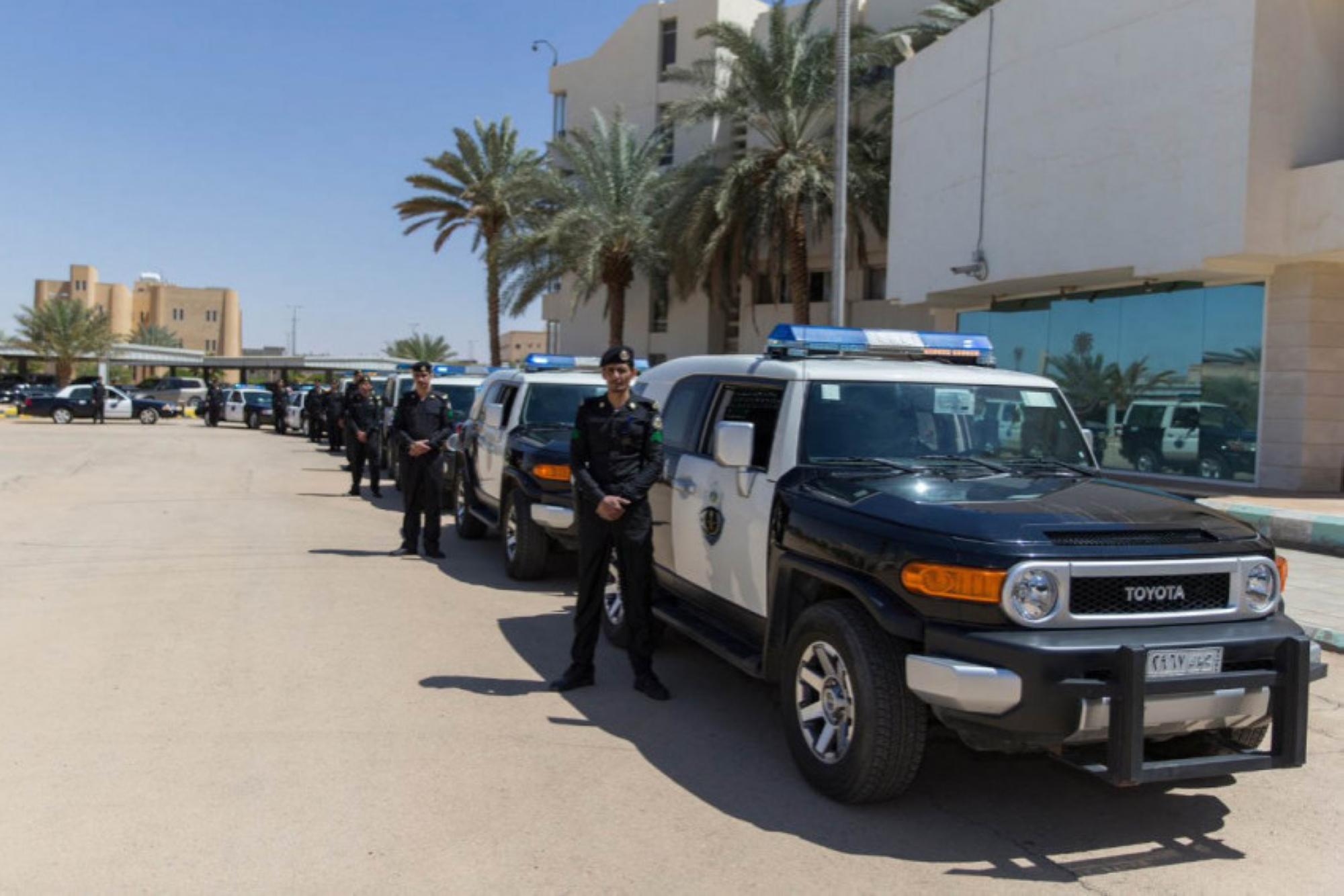
As part of ongoing security efforts to enhance security and stability across the Kingdom, Tabuk police announced the arrest of six expatriates on charges of prostitution. This successful operation was conducted in close cooperation with the General Directorate of Community Security and Combating Human Trafficking, reflecting the integrated efforts of security agencies to address crimes that threaten societal values and security.
Background and context of the security operation
This operation is part of a series of security campaigns conducted by the Saudi Ministry of Interior to apprehend violators of regulations and laws, particularly those related to moral crimes and human trafficking. Saudi authorities consistently emphasize their zero-tolerance policy towards any criminal activities of this nature and their commitment to applying the maximum penalties against those involved, including imprisonment, fines, and, for expatriates convicted of such crimes, permanent deportation from the Kingdom.
Legal framework and efforts to combat human trafficking
The Kingdom of Saudi Arabia bases its laws on Islamic Sharia, which categorically prohibits such practices and considers them crimes punishable by severe penalties. The Kingdom has enacted strict regulations and laws to combat prostitution and human trafficking, establishing specialized bodies to monitor these cases, provide support to victims, and prosecute perpetrators to ensure they do not escape punishment. These efforts are an integral part of the Kingdom's commitment to international agreements related to human rights and combating organized crime.
Importance and expected impact of the process
Such crimes have dire negative consequences for society, extending beyond moral and religious dimensions to encompass serious health and social issues, such as the spread of infectious diseases, family disintegration, and the undermining of community security. Therefore, these security operations are of paramount importance in protecting the social fabric, preserving human dignity, and sending a decisive message that the security of society and the safety of its members are inviolable. Furthermore, such arrests bolster the confidence of citizens and residents in the security forces and their ability to enforce the rule of law.
Security agencies in Tabuk and the rest of the Kingdom continue their tireless efforts, calling on citizens and residents to cooperate with them and report any suspicious activities that may harm the security of the homeland and the safety of society, stressing that the security eye is vigilant to protect everyone and apply the law against anyone who dares to tamper with the security and stability of the country.
Local News
Developing Al-Jamal Square in Jeddah: Traffic solutions and enhancing the urban landscape
Jeddah Municipality begins work to improve the Abhur 'Camel' Square to raise the efficiency of traffic flow and enhance the urban landscape, while preserving the famous artistic sculpture within the framework of Vision 2030.

The Jeddah Municipality announced the launch of the project to improve and develop Abhur Square, popularly known as "Camel Square," in a strategic move aimed at achieving a delicate balance between the demands of modern urban development and the preservation of artistic landmarks that form part of the city's memory and visual identity. This project is part of a package of ambitious initiatives to improve the efficiency of the road network and enhance the quality of life in the Bride of the Red Sea.
General context: Jeddah, a city of art and development
For decades, Jeddah has been known as an open-air art museum, its squares and main streets adorned with dozens of sculptures created by international and local artists, becoming an integral part of the city's urban fabric. One of the most prominent of these landmarks, and one of the most memorable for residents of northern Jeddah and its visitors, is the camel sculpture in Abhur Square, designed by the artist Rabie Al-Akhras in 1997. The sculpture consists of two camels; the larger one is 21 meters tall and weighs 10 tons, while the smaller one is 15 meters tall and weighs 7 tons, making it a distinctive landmark in the area.
Project objectives and its traffic impact
The project primarily aims to address the increasing traffic congestion in this vital area, which is experiencing rapid population and urban growth. The development works include implementing advanced traffic engineering solutions and new operational arrangements to improve traffic flow at key intersections. The project is expected to reduce travel time and enhance road safety on vital arteries connected to the roundabout, such as King Abdul Aziz Road, the Corniche Road, Prince Talal Bin Mansour Road, and Prince Abdullah Al Faisal Road.
Importance and expected impact
Locally, Jeddah residents will experience a direct improvement in their daily lives through reduced traffic congestion and the beautification of one of the city's most important squares. Nationally, the project reflects Saudi Arabia's commitment, as part of its Vision 2030, to developing and humanizing the infrastructure of Saudi cities, making them more livable and attractive for investment and tourism. Preserving the camel sculpture in its original location underscores a developmental approach that respects the cultural and historical dimensions of the site, sending a clear message that development does not mean erasing identity, but rather refining and enhancing it. This project is expected to further boost Jeddah's appeal as a leading tourist destination, combining efficient infrastructure with the aesthetics of urban art.
Local News
The 'Saudi Gap' brand covers 95% of milk production in Saudi Arabia
The Ministry of Environment announced that 95% of milk production in Saudi Arabia has obtained the 'Saudi GAP' mark, which enhances food safety and supports achieving self-sufficiency within Vision 2030.

The Ministry of Environment, Water and Agriculture announced a significant achievement in the Saudi dairy sector, with 95% of raw milk production in the Kingdom now bearing the Saudi GAP quality mark. This figure reflects producers' commitment to implementing the highest quality and food safety standards and confirms that local products conform to national and international standards, further solidifying the Kingdom's position as a leading center for sustainable food production.
Historical background of the dairy sector in Saudi Arabia
This achievement culminates a long journey of development in the Saudi dairy sector, an inspiring success story in achieving food security. After being heavily reliant on imports, the Kingdom has transformed itself over the past decades to achieve complete self-sufficiency in fresh milk and dairy products, and has even become a major exporter in the region. This was made possible thanks to continuous government support, massive investments in infrastructure, and the adoption of the latest global technologies in specialized dairy farms, which have transformed the desert into advanced production oases.
The importance and impact of the "Saudi Gap" brand
The “Saudi GAP” label, based on Global Good Agricultural Practices (GGP), is more than just a logo on a product. It is a certification that assures consumers that the product has been produced according to strict standards encompassing all stages of production, from the health and nutrition of the cows, through milking and storage methods, to transportation and distribution. This initiative aims to establish the concept of sustainable agriculture, improve the management of natural resources, and increase the efficiency of agricultural input use.
Official figures for 2024 showed that raw milk production in specialized dairy farms exceeded 2.7 billion liters, with approximately 233,000 dairy cows in these farms. The Riyadh region led production with 1.6 billion liters, followed by the Eastern Province with 1.1 billion liters, highlighting the scale of this vital sector.
Local and international impact of the achievement
Domestically, this achievement boosts consumer confidence in national products and supports public health by providing safe, high-quality food. It also aligns directly with the goals of Saudi Vision 2030 to enhance food security and diversify the national economy. Regionally and internationally, obtaining globally recognized quality certifications for Saudi products opens export opportunities to new markets, enhances their competitiveness, and solidifies the Kingdom's reputation as a reliable producer of high-quality food products.
The ministry continues its efforts through awareness campaigns that highlight the importance of adopting good agricultural practices, supporting farmers and technicians to develop their skills, and encouraging innovation to ensure the sustainability and growth of this vital sector.
-

 Reports 5 days ago
Achievements of Saudi government sectors in 2025
-
Local news two weeks ago
FDA warns of contaminated Nestle infant formula | Recall details
-
Technology 4 weeks ago
Artificial intelligence regulations in Saudi education and student data protection
-
Technology 4 weeks ago
US ban on drones: reasons and consequences
-
Technology 4 weeks ago
SRMG and Snapchat partnership: The future of digital media in the Middle East
-
Technology 4 weeks ago
Saudi Arabia's Ministry of Islamic Affairs is employing artificial intelligence in public speaking
-
Sports 4 weeks ago
Salah leads Egypt to a thrilling comeback against Zimbabwe in the Africa Cup of Nations
-
Sports 4 weeks ago
Napoli win the Italian Super Cup in Riyadh for the third time (2025)