
Local News
Saudi Arabia launches the world's most advanced flying laboratory for rain enhancement research
Saudi Arabia has launched its latest cloud seeding research aircraft, the 'Flying Laboratory', to enhance its water resources and address climate change within the framework of Vision 2030 and digital transformation.

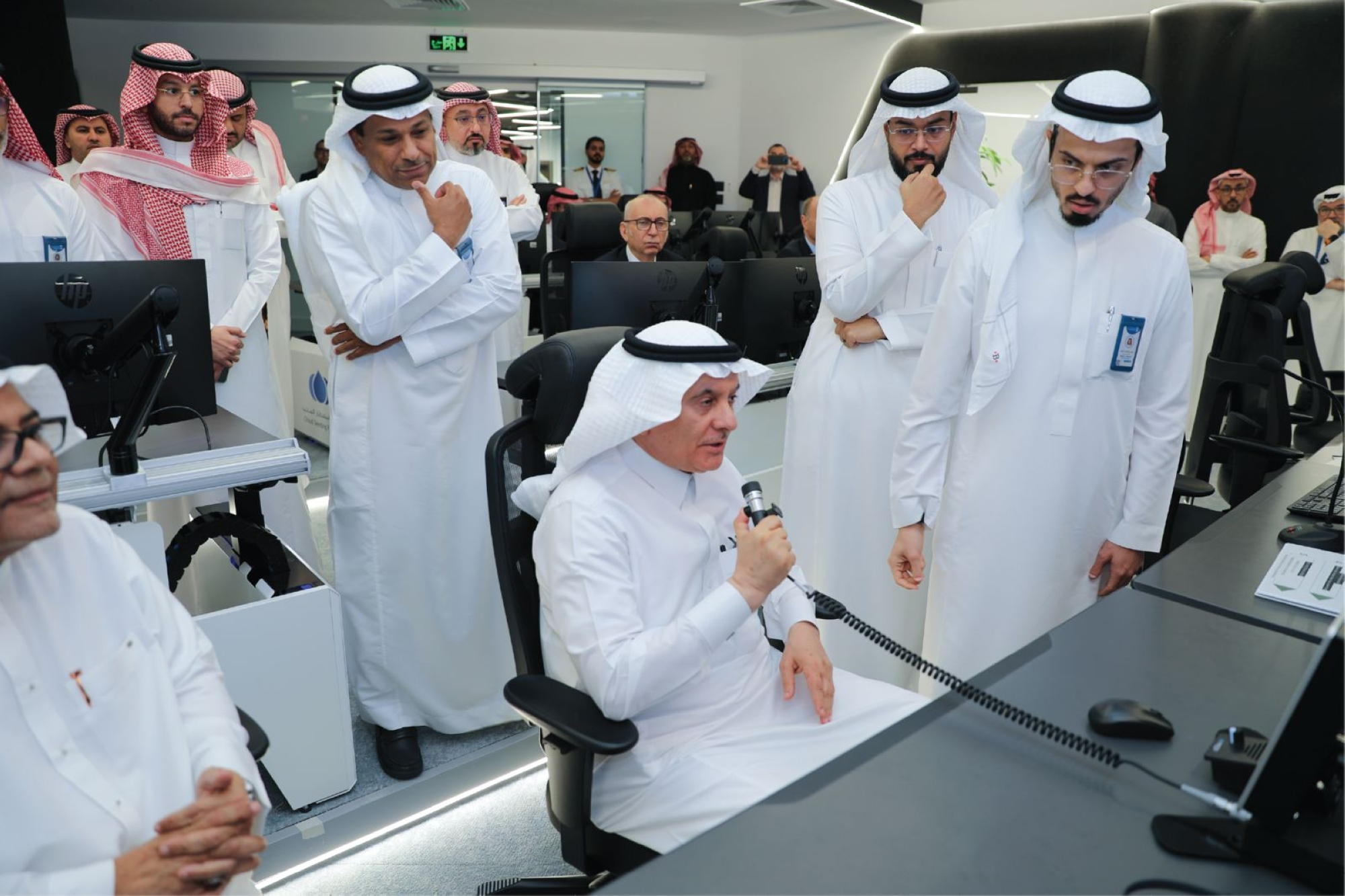
In a strategic move aimed at enhancing water security and addressing the challenges of climate change, His Excellency the Minister of Environment, Water and Agriculture, Engineer Abdulrahman bin Abdulmohsen Al-Fadhli, inaugurated the new cloud seeding research aircraft, the most advanced of its kind in the world. This sophisticated aircraft serves as a fully integrated “flying laboratory,” equipped with state-of-the-art technology for monitoring and measuring atmospheric elements with high precision, directly supporting research and studies related to cloud seeding operations and increasing rainfall rates.
This launch took place during the Minister's visit to the cloud seeding program's operations room at the National Center for Meteorology in Jeddah, where he was briefed on the integrated system for meteorological and operational activities. The visit not only included the launch of the aircraft but also the inauguration of a suite of advanced systems and programs in the fields of weather, climate, and numerical modeling, reflecting a qualitative leap in the Kingdom's capabilities in this vital area.
Strategic context within Vision 2030
This achievement comes within the framework of broader national efforts to realize the goals of Saudi Vision 2030, which prioritizes environmental sustainability and water security. Given its geographical location within the desert region, the Kingdom faces significant challenges related to water scarcity. Therefore, the Saudi Rain Enhancement Program represents one of the innovative solutions adopted by the Kingdom to increase renewable water resources, support agriculture, combat desertification, and improve quality of life, in line with ambitious initiatives such as "Green Saudi Arabia.".
Expected effects on various levels
The “flying laboratory” and its associated systems are expected to have tangible positive impacts. Locally, the precise data it will collect will enhance the efficiency of cloud seeding operations, leading to increased rainfall and the replenishment of groundwater reservoirs and dams. Regionally, this advancement solidifies the Kingdom’s position as a regional leader in water and meteorological technologies, and opens avenues for cooperation and knowledge exchange with neighboring countries facing similar climate challenges. Internationally, the data and research generated by this project will constitute a valuable scientific contribution to the international community, fostering a deeper understanding of cloud physics and the effects of climate change.
Integrated digital infrastructure
The visit also included a review of the project to archive and digitize the Kingdom's historical climate records, spanning 73 years (from 1951 to 2023). This project represents a cornerstone for supporting the digital transformation of the meteorological sector, as this vast amount of historical data provides a solid foundation for building more accurate climate models, predicting extreme weather events, and monitoring long-term climate change trends, thus enhancing the Kingdom's ability to proactively plan and adapt to future environmental changes.





Local News
Riyadh collapse: Emergency plans to secure water after a main pipeline burst
The Saudi Water Authority announced the activation of emergency plans after a main water line broke north of Riyadh, causing a partial road collapse. Learn about the efforts to contain the crisis and secure the water supply.
The Saudi Water Authority announced on Sunday that it has activated emergency plans in response to the breakage of one of the main water transmission lines in the north of the capital, Riyadh, which led to a partial collapse of a road in the Al-Sahafa neighborhood, stressing that alternative water sources have been provided to ensure that residents in the affected neighborhoods are not affected.
According to the authority, the incident occurred as a result of the water line belonging to the National Water Company being affected by construction excavation work being carried out by a building contractor at a nearby site. The Riyadh Infrastructure Projects Center responded immediately to the incident, and field teams successfully contained the situation, secured the site, and isolated the affected assets, ensuring the continuity of services to customers without interruption.
General context and urban challenges
This incident comes amidst the rapid urban development Riyadh is experiencing as part of the Saudi Vision 2030 goals. The capital is transforming into a massive construction site encompassing colossal infrastructure projects and modern buildings, placing significant strain on existing service networks such as water, sewage, and electricity. Damage to pipelines during excavation and construction work is among the most prominent challenges facing rapidly growing cities, necessitating the highest levels of coordination between service providers and contractors to ensure the safety of vital infrastructure.
The importance of the incident and its expected impact
Locally, the immediate impact is the temporary inconvenience to residents of the affected neighborhoods and the potential for traffic congestion around the collapse site in the Al-Sahafa district. However, the incident's greater significance lies in the fact that it represents a true test of the emergency plans and crisis management capabilities of the relevant authorities. The speed of response and activation of alternative water supply plans reflects the readiness of the Kingdom's water sector to deal with such emergencies, which is vital to ensuring the stability of services in a city the size of Riyadh.
Regionally, this incident provides an important case study for other cities in the region experiencing similar growth spurts, highlighting the need for strict oversight of construction work near main utility lines. It also underscores the importance of investing in resilient and robust infrastructure with clear protocols for rapid response. The Saudi Water Authority is closely monitoring the ongoing fieldwork and working directly with the National Water Company and other relevant entities to expedite repairs and restore normalcy as quickly as possible, reaffirming its commitment to ensuring the sustainability and reliability of water services for citizens and residents.
Local News
The Council of Senior Scholars holds its first meeting chaired by Mufti Al-Fawzan
The Council of Senior Scholars held its 98th session, chaired by Grand Mufti Saleh Al-Fawzan, to discuss important topics referred by the Royal Court and the Ministry of Interior, amid anticipation of the impact of its decisions.
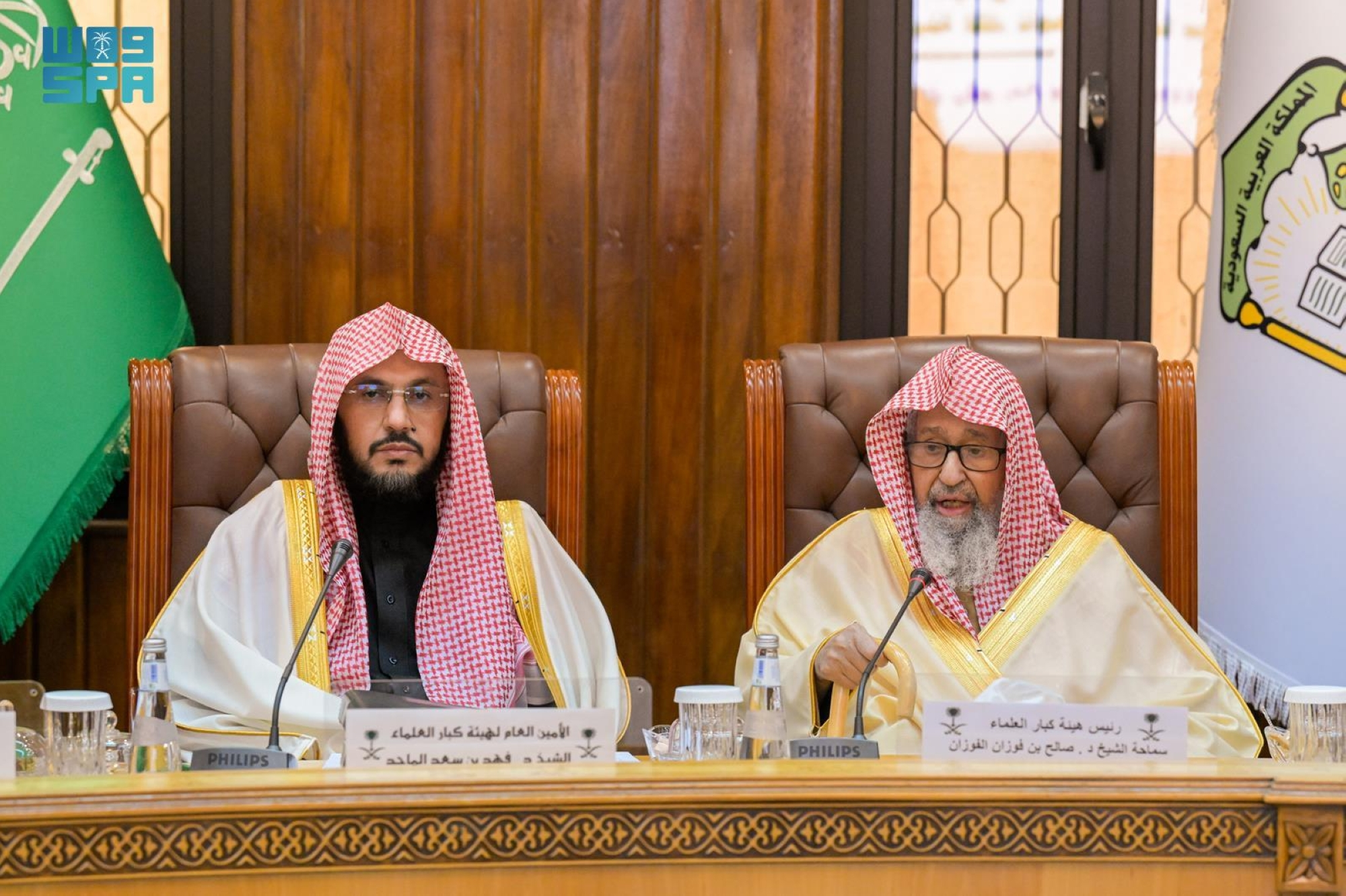
The Council of Senior Scholars in the Kingdom of Saudi Arabia held its 98th session today (Sunday) at the headquarters of the General Presidency for Scholarly Research and Ifta in Riyadh. This meeting is of particular importance as it is the first to be chaired by the Kingdom's new Grand Mufti, Sheikh Dr. Saleh bin Fawzan Al-Fawzan, with all members of the Council and its Secretary-General in attendance.
In his opening remarks, Grand Mufti Al-Fawzan praised the significant support the Commission receives from the Custodian of the Two Holy Mosques, King Salman bin Abdulaziz, and Crown Prince Mohammed bin Salman bin Abdulaziz, Deputy Prime Minister. He emphasized that this support is the cornerstone enabling the Commission to fulfill its duties in thoroughly examining the issues and developments referred to it and issuing appropriate Sharia rulings that serve both religion and the nation.
Historical context and the role of the Council of Senior Scholars
The Council of Senior Scholars was established in 1971 by royal decree of King Faisal bin Abdulaziz and is the highest official religious body in the Kingdom of Saudi Arabia. Composed of the country's most senior jurists and scholars, its primary function is to provide religious rulings on public matters referred to it by the ruler, as well as to conduct research and offer counsel on religious affairs. This gives its decisions a profound impact on legislation and public policy in the Kingdom.
Sheikh Al-Fawzan highlighted the blessings bestowed upon the Kingdom by God, foremost among them the blessings of security, stability, and prosperity. He emphasized that these were achieved first and foremost through God's grace, and then through adherence to the Quran and the Sunnah of the Prophet, and the implementation of Islamic law. He also stressed the blessings God has granted the country in terms of national unity and solidarity behind its leaders, which serves as a safeguard for the stability and strength of the state. He commended the Kingdom's historic role, both its leadership and its people, in serving the Two Holy Mosques and the holy sites, and in providing all necessary facilities for pilgrims to perform their rituals with ease and tranquility.
The importance of the meeting and its expected impact
This meeting is of particular importance as it is the first under the leadership of the new Grand Mufti, thus placing the future direction of the body under close scrutiny. The topics on the agenda, submitted by sovereign entities such as the Royal Court and the Ministry of Interior, indicate that the session's outcomes will have a direct impact on important societal, security, and organizational issues. Regionally and internationally, the Islamic world is closely monitoring the body's decisions, given the Kingdom's religious standing and its leadership of the Muslim world.
In concluding his remarks, Grand Mufti Al-Fawzan did not forget his predecessor, praying that God Almighty would have mercy on the late Grand Mufti, His Eminence Sheikh Abdulaziz bin Abdullah Al Sheikh, and reward him abundantly for his service to Islam and Muslims. For his part, the Secretary-General of the Council of Senior Scholars, Sheikh Dr. Fahd Al-Majed, explained that the session's agenda included important topics requiring in-depth legal study. He noted that the General Secretariat had prepared for the session through specialized advisory committees, rigorous research, and expert consultations to ensure that the issues were studied from all angles before being presented to the Council members.
Local News
The Governor of Riyadh inaugurates Terminal 2 at King Khalid Airport as part of expansion plans
The Governor of Riyadh inaugurated Terminal 2 at King Khalid International Airport, increasing its capacity to 14 million passengers annually, in a move that supports Vision 2030 to enhance the aviation sector.

In a strategic move aimed at enhancing the aviation infrastructure in the Kingdom of Saudi Arabia, His Royal Highness Prince Faisal bin Bandar bin Abdulaziz, Governor of Riyadh Region, inaugurated Terminal 2 at King Khalid International Airport today (Sunday). The event also marked the official completion of the development and expansion project for Terminals 1 and 2, representing a significant leap forward for the airport in keeping pace with the rapid growth in air travel.
This ambitious project comes within the rich history of King Khalid International Airport, which opened in 1983 as the main air gateway to Riyadh and one of the most important airports in the region. Over the past decades, the airport has played a pivotal role in connecting the Kingdom to the world, and this expansion is the latest in a series of upgrades aimed at solidifying its position as a global aviation hub.
A huge leap in capacity
The significance of this project lies in the enormous increase it has brought to the airport's operational capacity. Following the completion of the development works, the combined capacity of Terminals 1 and 2 has risen from 6 million passengers annually to 14 million, representing a growth rate exceeding 130%. This remarkable leap would not have been possible without the comprehensive upgrades, which included expanding the departure and arrival areas, modernizing operational systems with the latest technologies, and improving passenger flow to ensure smooth procedures and enhanced operational efficiency—all of which will positively impact the passenger experience.
Supporting the goals of Vision 2030
This achievement cannot be viewed in isolation from the broader goals of the Kingdom’s Vision 2030 and the National Aviation Strategy. The Kingdom aims to transform the aviation sector into a key driver of economic development, increasing passenger numbers to 330 million annually by 2030. The development of King Khalid International Airport is a cornerstone of achieving this goal, enhancing Riyadh’s ability to attract more international airlines, supporting the tourism, business, and logistics sectors, and solidifying the capital’s position as a leading global destination.
In this regard, His Excellency the Minister of Transport and Logistics, Engineer Saleh bin Nasser Al-Jasser, affirmed that “the inauguration of the project to develop Terminals 1 and 2 represents an important stage in the development of King Khalid International Airport, and comes in response to the rapid growth in travel traffic, and in fulfillment of the aspirations of our ambitious vision.”.
For his part, His Excellency the President of the General Authority of Civil Aviation, Mr. Abdulaziz bin Abdullah Al-Duailij, considered that “the completion of the project to develop and expand the two international terminals No. 1 and 2 and the inauguration of Terminal 2 at King Khalid Airport reflects the rapid progress in developing airport facilities and improving the quality of operational processes, in line with the best international standards.”.
-

 Local News 6 hours ago
Landslide in Riyadh: Details of the incident in Al-Sahafa neighborhood and containment efforts
-

 Culture and Art 5 days ago
Ramez Galal in Ramadan 2026: Details of the bloody prank show
-
 Local news two days ago
First birth on the Riyadh train: A heartwarming story at Andalus station
-
Sports 2 hours ago
Al-Nassr's absences against Al-Taawon in the Roshan League and their impact on the team
-
 Local news one day ago
The death penalty was carried out against a citizen who stabbed another to death in Tabuk
-
Sports 6 hours ago
Roshan League Transfers 2024: Al-Hilal leads the way in winter deals
-
Sports 2 hours ago
Death of an Egyptian player... The tragedy of Louay Ali raises the issue of safety in stadiums
-

 Culture and Art 2 hours ago
The film "Take Care of Yourself" starring Ahmed El Sakka and Yasmine Abdel Aziz has been postponed until the summer