Local News
Saudi Arabia strengthens its aid system to ensure peace and security for all
Saudi Arabia is strengthening its global role in humanitarian aid through the King Salman Center, affirming its commitment to peace and security for all at a session at the United Nations.

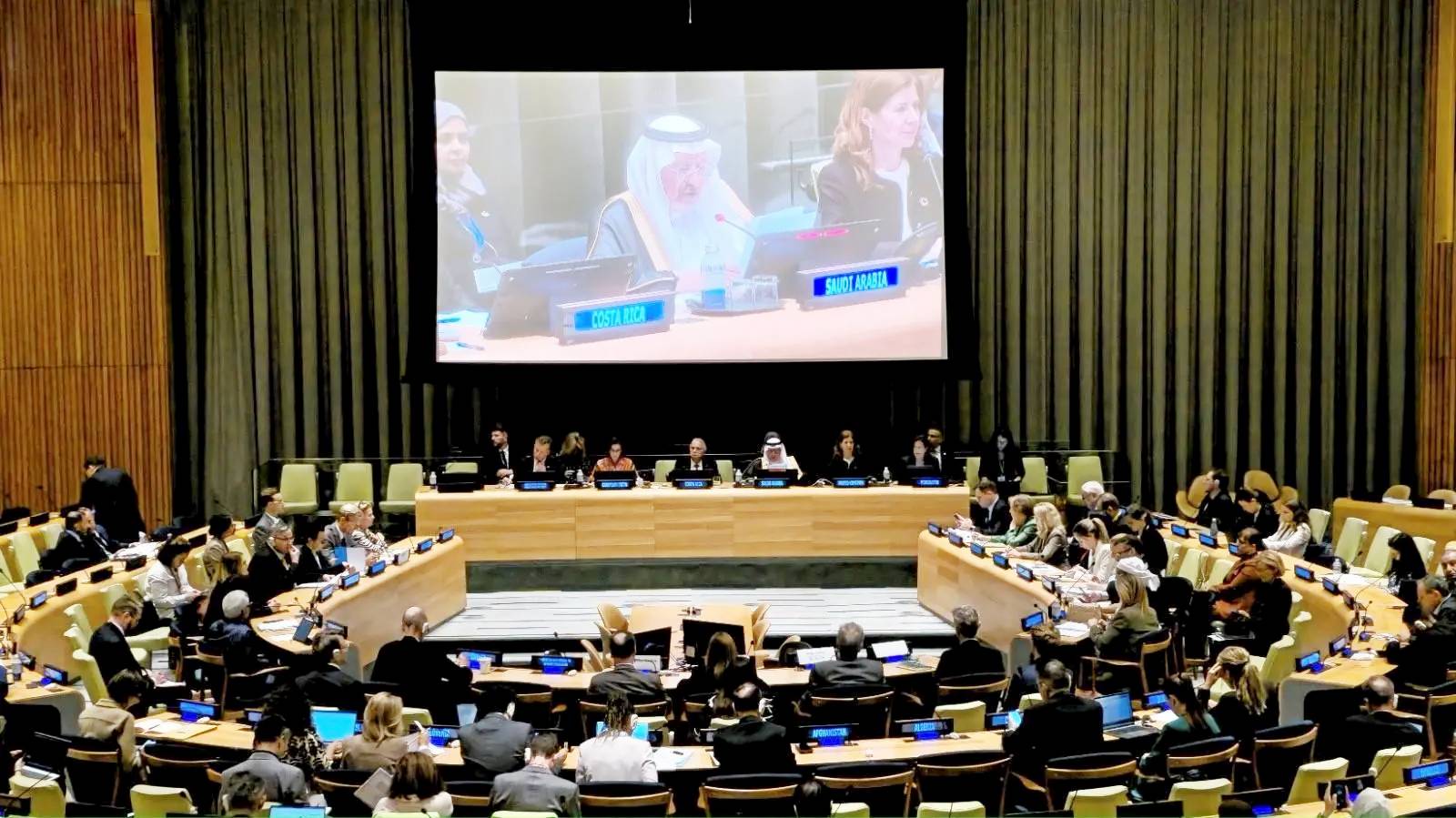
The Kingdom's role in promoting global humanitarian aid
Dr. Abdullah Al-Rabeeah, Advisor at the Royal Court and General Supervisor of the King Salman Center for Relief and Humanitarian Aid, participated in a dialogue session entitled “Reform for Impact” on the sidelines of the United Nations General Assembly in New York.
Dr. Al-Rabeeah affirmed that the Kingdom of Saudi Arabia, through the King Salman Humanitarian Aid and Relief Center, will continue its leading role in building a global humanitarian aid system that guarantees equal opportunities for everyone to live in peace, security and dignity.
Challenges facing the humanitarian system
Dr. Al-Rabeeah explained that the closure of numerous humanitarian projects poses a significant challenge to the humanitarian community. This has left millions in need without support and forced many humanitarian workers to resign due to the increasing challenges and fragility plaguing the humanitarian system.
In the face of these challenges, unique opportunities emerge to reimagine and reshape the vision for the benefit of humanity. The UN 80 initiative presents an opportunity to reform the humanitarian system in a way that restores trust, motivation, and dignity to all stakeholders.
Reforms needed to enhance efficiency and transparency
Dr. Al-Rabeeah emphasized the importance of reform extending beyond the executive level to encompass accountability, transparency, and inclusivity. Saudi Arabia views the 80th anniversary of the United Nations as an opportunity to renew collective commitment and promote sustainable reform.
Working together to ensure the system is efficient, aligned with development priorities, and leveraging institutional expertise is crucial.
Local and global economic impact
Saudi Arabia is a key player in the international humanitarian aid arena. This role enhances its global economic and political standing and underscores its commitment to sustainable development and international cooperation.
From an economic standpoint, investments in humanitarian aid strengthen bilateral relations with beneficiary countries and open up new prospects for trade and investment cooperation.
Future prospects
With continued reform efforts and increased transparency and accountability, the effectiveness and efficiency of aid provided can be expected to improve and achieve a greater impact globally and locally.
This will enhance social and economic stability in the affected areas and improve the quality of life for millions of people around the world.
Summary
The Kingdom of Saudi Arabia remains committed to its leading role in providing humanitarian aid and promoting international cooperation to achieve sustainable development and global peace. The proposed initiatives and reforms represent an important step towards a more efficient, effective, and inclusive humanitarian system.




Local News
Medical evacuation of Saudi citizens from Egypt coordinated by the embassy and the Ministry of Defense
The Saudi Embassy in Cairo announces the successful medical evacuation of a critically ill Saudi citizen and his wife via a Ministry of Defense aircraft. Learn more about the government care and the medical evacuation efforts.

As part of ongoing efforts to care for Saudi citizens abroad and provide them with the highest levels of healthcare, the Embassy of the Kingdom of Saudi Arabia in Cairo announced the successful medical evacuation of a Saudi citizen, male and female, after they suffered a critical health condition that required their urgent transfer back to the homeland.
Details of the medical evacuation process
The embassy explained that it had been monitoring the health of the citizens from the outset, coordinating directly and swiftly with the relevant Egyptian authorities to facilitate the transfer. The evacuation was carried out via a dedicated Saudi Ministry of Defense medical evacuation aircraft, equipped with the latest medical technology and staffed by specialized personnel to handle critical cases during the flight. The aircraft departed from Cairo International Airport bound for the Kingdom to complete the patients' treatment program in specialized hospitals.
Government care and leadership guidance
This step comes in implementation of the directives of the wise leadership – may God support them – which places the health and safety of Saudi citizens at the forefront of its priorities, whether inside or outside the Kingdom. Medical air evacuations are an integral part of the comprehensive care system provided by the state to its citizens, where all diplomatic, military, and health resources are mobilized to ensure the safe and secure return of citizens facing emergency medical conditions abroad to their homeland.
Capabilities of the Saudi medical evacuation fleet
It is worth noting that the Saudi Ministry of Defense's air medical evacuation fleet is among the largest and most advanced in the Middle East and the world. The fleet includes jet and helicopter aircraft equipped as flying intensive care units, enabling the transfer of critical and complex cases over long distances without compromising the patient's stability. This rapid response reflects the high level of preparedness of the relevant authorities and their exceptional ability to manage emergency health crises efficiently and effectively.
Saudi-Egyptian cooperation
This operation also highlights the deep fraternal relations and close cooperation between the Kingdom of Saudi Arabia and the Arab Republic of Egypt. Egyptian authorities demonstrated significant cooperation in facilitating all logistical, security, and medical procedures at Cairo Airport to ensure the swift transfer of citizens. This joint coordination underscores the strength of the ties between the two brotherly countries and the Embassy's unwavering commitment to overcoming any obstacles that Saudi citizens may encounter while in Egypt.
The embassy concluded its statement by affirming its continued commitment to monitoring the affairs of citizens and providing urgent support in emergency situations, wishing the citizen a speedy recovery and complete health and well-being.
Local News
Weather forecast for Ramadan: Fog and active winds in Mecca and the Eastern Province
Check the weather forecast for the second day of Ramadan. The Meteorology Department predicts fog in Mecca and the Eastern Province, and dust-raising winds in several regions, along with details on wave activity in the Red Sea.

The National Center for Meteorology in the Kingdom of Saudi Arabia revealed details of the expected weather conditions for Thursday, the second day of the holy month of Ramadan, as the Kingdom's atmosphere is witnessing various weather fluctuations affecting several regions, which calls for the attention of those fasting and highway users.
Fog and surface wind forecast
The center explained in its daily report that conditions are favorable for dense fog during the night and early morning hours along the coastal areas of the Makkah and Eastern Provinces. This weather phenomenon is one of the features that can affect horizontal visibility, especially on highways connecting coastal cities.
In a related context, the report indicated a noticeable increase in surface wind activity, stirring up dust and sand, which is expected to reduce horizontal visibility in parts of Al-Jawf, the Northern Borders, Hail, and Al-Qassim regions, as well as the eastern parts of the Madinah region. This weather pattern is part of the usual fluctuations during the transitional periods between seasons.
Red Sea conditions and wave movement
Regarding the marine conditions, the National Center for Meteorology indicated that the surface wind movement on the Red Sea will be northwesterly to northerly on the northern and central parts, with speeds ranging between 25 to 45 km/h, and may sometimes reach 55 km/h towards the Gulf of Aqaba, which may lead to high waves and sea disturbance.
As for the southern part of the Red Sea, the winds will be southeasterly to southwesterly at a speed ranging from 12 to 35 km/h, reaching speeds of up to 45 km/h towards the Bab al-Mandab Strait, which requires caution for fishermen and seafarers in those areas.
The importance of monitoring the weather during Ramadan
Following weather forecasts becomes even more important during the holy month of Ramadan, given the direct impact of weather conditions on those fasting and on travel. In the Makkah region, which witnesses a large influx of pilgrims and visitors during this blessed month, stable weather is vital to ensuring smooth traffic flow and the safety of pilgrims, especially with the forecast of fog along the coasts that could affect the Jeddah-Makkah Expressway.
Dust-raising winds in the northern and central regions also require drivers to be cautious, especially during travel between cities to break their fast with families or to perform Umrah rituals, as traffic safety is a top priority in light of the potential decrease in visibility.
The relevant authorities always call on citizens and residents to follow the continuous updates on the weather through official channels, and to adhere to public safety instructions while driving in foggy or dusty conditions to ensure everyone’s safety during the holy month.
Local News
Visiting times to the Prophet's Mosque during Ramadan 1446 and how to book an appointment
Find out the visiting times for the Prophet's Mosque (Al-Rawdah Al-Sharifah) during Ramadan for men and women. The General Authority for the Care of the Two Holy Mosques announces the schedules for the first twenty days and the last ten days, and the booking process through Nusuk.

The General Authority for the Care of the Grand Mosque and the Prophet’s Mosque officially announced the approved timetable for visiting the Noble Garden during the holy month of Ramadan, as part of its operational plan for the Umrah and visitation season, with the aim of ensuring smooth movement and providing the opportunity for the largest number of Muslims to pray in this holy place in a safe and convenient faith-based atmosphere.
Visit schedule during the first twenty days of Ramadan
The authority explained that the visitation schedule relies on precise time intervals separating men and women to ensure privacy and comfort. For the first twenty days of Ramadan , the times were set as follows:
- For men: Two periods daily; the first is morning and evening, extending from 11:20 am to 8:00 pm, and the second is nighttime, from 2:00 am to 5:00 am.
- For women: There are two periods as well; the first from 11:00 PM until 1:40 AM, and the second in the morning from 6:00 AM until 11:00 AM.
Visiting times during the last ten days
Due to the expected high density in the last ten days of Ramadan, the authority made slight adjustments to accommodate the numbers, and the times are as follows:
- For men: three periods; the first from 11:20 am to 8:00 pm, the second from 11:00 pm to 12:00 am, and the third from 2:00 am to 5:00 am.
- For women: One morning period has been allocated, extending from 6:00 AM to 11:00 AM.
The importance of the Holy Garden and its spiritual significance
Visiting the Prophet's Mosque (Al-Rawdah Al-Sharifah) holds immense importance in the hearts of Muslims, for it is the place about which the Prophet (peace and blessings be upon him) said: “Between my house and my pulpit is a garden from the gardens of Paradise.” Praying there is among the most significant spiritual experiences for visitors to Medina, especially during Ramadan, when rewards are multiplied. Pilgrims from all corners of the earth are keen to seize the opportunity to be in this blessed space for supplication and prayer, making the organization of entry and exit a vital necessity to maintain the tranquility of the place and the safety of visitors.
Technical organization through “Nusk” and the Kingdom’s efforts
The authority emphasized that entry to the Prophet's Mosque (Al-Rawdah Al-Sharifah) is contingent upon booking an appointment in advance through the Nusuk app, stressing the importance of adhering to the time specified in the permit. This regulation is part of the Kingdom of Saudi Arabia's ongoing efforts to utilize technology to serve pilgrims, aiming to eliminate overcrowding and achieve the highest standards of safety and security, in line with the goals of the Kingdom's Vision 2030 to facilitate the journey of pilgrims and visitors and enrich their religious and cultural experience.
-

 Culture and Art, 1 week ago
The "Between and Between" exhibition in Jeddah: 5 artists reshape Saudi memory
-
Local News 6 days ago
Saudi Arabia's National Arabic Language Policy: 8 Principles to Promote Identity
-
Culture and Art, 1 week ago
Shakira's concert in Jeddah: Details of the international star's first concert in Saudi Arabia
-
Local News 5 days ago
Adopting the National Policy for the Arabic Language: Strengthening Identity and Vision 2030
-
Local News 6 days ago
The Riyadh-Rin-Bisha dual carriageway, spanning 559 km, has been completed
-
Culture and Art, 1 week ago
Ramez Level the Monster: Details of Ramez Galal's program in Ramadan 2026
-
Local news one week ago
Launch of the new Dammam project with investments of 98 billion riyals
-
Local News 4 days ago
The Supreme Court calls for the sighting of the crescent moon of Ramadan 1447 on Tuesday evening