Local News
The deadline for property registration in Hail and Riyadh is Thursday
The General Authority for Real Estate announces that the deadline for registering 148,000 properties in Hail and Riyadh is next Thursday. Learn about the neighborhoods included and the penalties for failing to register.

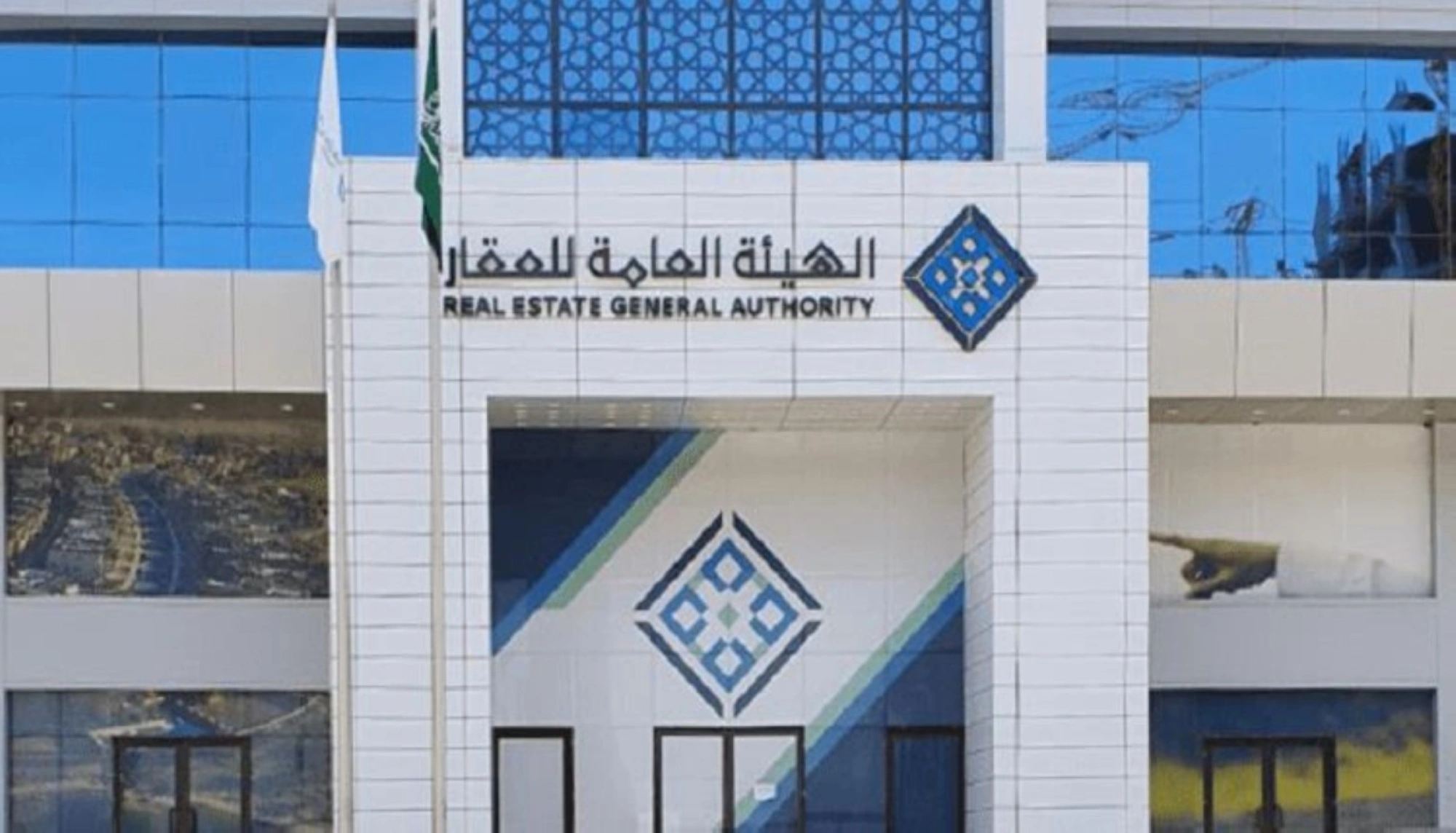
The General Authority for Real Estate in Saudi Arabia announced that the deadline for the initial registration of 148,400 properties in the Hail and Riyadh regions is approaching, with the deadline being the end of business next Thursday. This step is part of the Authority's ongoing efforts to regulate the real estate sector and protect the rights of property owners.
The importance of the real estate registry project and Vision 2030
The Real Estate Registration Project is a cornerstone of the real estate sector strategy stemming from the Kingdom's Vision 2030. This ambitious national project aims to transform real estate documentation from the outdated personal system to a precise, real estate-based system that identifies properties and their geographical locations. The significance of this transformation lies in enhancing trust in the Saudi real estate market, attracting local and foreign investment by providing a transparent and secure real estate environment, and drastically reducing property disputes related to boundaries and ownership.
Targeted neighborhoods in Hail and Riyadh
The authority clarified that the deadline includes large neighborhoods in the city of Hail, including: Durrat Al Wadi, Al Shurooq, Al Nassiyah, Al Suwaifilah, Safana, Murayfiq, Granada, Al Nakheel, Al Anwar, Al Muruj, Sharaf, Qurtuba, Al Rahab, Jawharat Al Wasita, Al Khaleej, Al Majd, Al Aziziyah, Al Andalus, Al Madain, Mughaydah, Al Buhayrah, Al Wadi, Sababa, Qifar, Al Bawadi, Sanayat Al Taqaddum, Al Qadisiyah, Al Mursalat, Ishbiliya, Al Wasita, Al Zubarah, Qasr Al Ashrawat, Labdah, Al Salam, Al Ghadeer, Al Fayha, Sadyan, Anqah, Hadri Al Bilad, Mishar, Samah, Al Buzai’i, and King Abdullah.
The list in Hail also includes the neighborhoods of: Al-Sahab, Al-Furusiyah, Al-Rawabi, Al-Yamamah, Al-Fajr, A’arif, Al-Ulya, Al-Wafa, Al-Kawthar, Al-Muza’bar, Luluat Qifar, Naqbin, Al-Narjis, Hail Airport, Al-Nahda Industrial Area, Al-Jabal, Durrat Mishar, Al-Naqrah, Al-Izdihar, Al-Taawun, Al-Rabwah, Al-Samra, Arkan, Al-Yasmin, Al-Tilal, Al-Khuzama, Al-Wadi, Industrial City, Al-Masif, Al-Zahra, Al-Shifa, Uqdah, Al-Jami’ah, Al-Ra’ilah, Luluat Al-Khuzama, Salah Al-Din, Al-Mamlakah, Aja, Al-Atheer, Al-Rasf, Al-Manar, Al-Rayyan, King Fahd Suburb, Al-Wurud, Al-Jami’een, Bada’i’ Murayfiq, Hattin, Al-Laqita, Al-Jathamiyah, Al-Zuhur, Al-Khamashiyah, Al-Na’am, Al-Nafl, Al-Rimal, Al-Bazmin, Al-Matar, Ghayyadh, Al-Maghwat, Barzan, and Al-Qayrawan.
In the Riyadh region, registration is concentrated in Al-Rayn Governorate and includes the neighborhoods of: Uhud, Al-Nasifah, Al-Rawamah, Al-Badai’, Al-Qamash, Al-Rayn Al-A’la, Al-Huwaymil, Al-Yamamah, Al-Qadisiyah, Al-Nur, Al-Rafi’ah, and Al-Rafa’i’.
Registration mechanism and resulting penalties
The authority urged all property owners in the aforementioned areas to register promptly through the "Real Estate Registry" platform (https://rer.sa/) before the deadline to avoid penalties. It emphasized that the new system will assign each unit a "property number" and a title deed containing precise geospatial data, thus facilitating future buying, selling, and mortgaging transactions.
The authority stressed that failure to register during the announced period exposes owners to financial penalties in accordance with the real estate registration system, which are determined by a committee specializing in reviewing violations, noting that the registration process will remain open to receive applications even after the deadline, but with the application of the regulatory procedures.




Local News
Inauguration of the economic city in Abyan: the largest investment project in Yemen
The Minister of Public Works laid the foundation stone for the economic city in Abyan, in the Al-Alam area. The project, spanning 96 million square meters and including a waterway, aims to boost investment and infrastructure.
This post was originally published on this site .
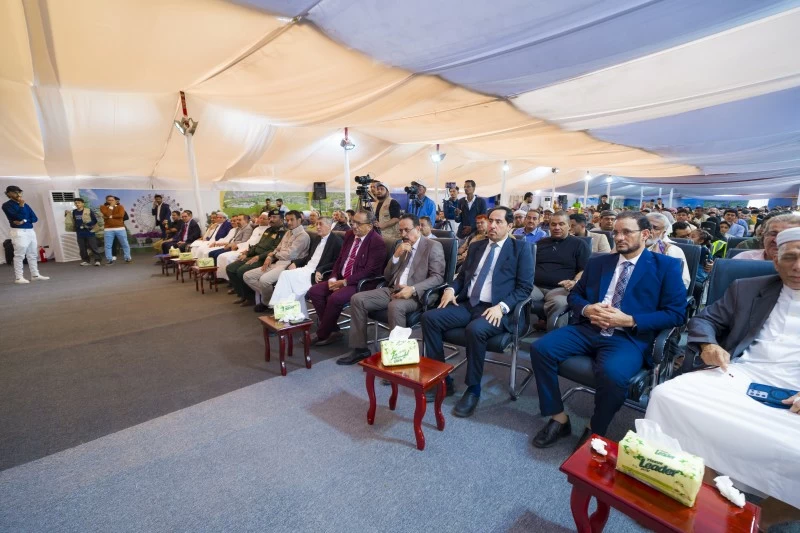
In a strategic move aimed at accelerating development and reconstruction in the liberated governorates, the Minister of Public Works and Highways, Engineer Hussein Al-Aqrab, laid the foundation stone today, Saturday, for the "New Economic City" project in the coastal area of Al-Alam in Abyan Governorate. This project is one of the largest investment and development projects the region has witnessed, spanning a vast area of approximately 96 million square meters.
Details of the giant investment project
The project boasts a strategic location in the Al-Alam district, considered the eastern gateway to the interim capital, Aden, and a vital link to Abyan Governorate. According to the announced plans, the project goes beyond traditional urban planning, encompassing the construction of a massive canal exceeding 26 kilometers in length. This canal aims to enhance the city's aesthetic appeal and tourism potential, while also boosting the investment climate and attracting local and foreign capital, reflecting an ambitious vision to transform the region into a vibrant economic hub.
High-level official attendance
The inauguration ceremony was attended by prominent state and local government officials, including Minister of Youth and Sports Naif al-Bakri and Secretary-General of the Abyan Governorate Local Authority Mahdi al-Hamdi. A large number of undersecretaries, security and military leaders, and prominent social figures from the governorates of Aden, Abyan, and Lahj were also present, along with a select group of businesspeople and investors who see this project as a promising opportunity to revitalize the real estate and commercial market in Yemen.
The strategic and economic importance of the project
The establishment of the economic city comes at a crucial time, as the Yemeni government seeks to create genuine investment opportunities that transcend current challenges. The Al-Alam area derives its significance from being a pristine coastal region possessing immense, yet untapped, tourism and commercial potential. This project is expected to generate thousands of job opportunities for young people, revitalize the contracting and construction sector, and alleviate population and urban pressure on Aden by creating new, well-planned urban centers designed according to the latest engineering standards.
Supporting infrastructure and regional integration
Officials confirmed during the inauguration that this project is not merely a residential development, but rather the nucleus of a fully integrated city that will bolster the national economy. The new economic city is expected to serve as a hub for commercial activity among the southern governorates, thus strengthening economic integration between Abyan, Aden, and Lahj. This initiative is part of a series of government efforts aimed at normalizing conditions and improving services and infrastructure that have suffered in recent years, sending reassuring messages to investors about the future of the investment climate in the region.
Local News
King Salman directs that stranded Gulf nationals be hosted in the Kingdom's airports
Based on the Crown Prince’s proposal, the Custodian of the Two Holy Mosques directed that the stranded Gulf nationals be hosted in the Kingdom’s airports and provided with full care, as a confirmation of the depth of the fraternal ties.

In a generous humanitarian gesture that embodies the deep and strong fraternal ties that unite the Gulf Cooperation Council (GCC) countries, the Custodian of the Two Holy Mosques, King Salman bin Abdulaziz Al Saud - may God protect him - issued a royal directive approving the hosting of all stranded Gulf nationals at the Kingdom’s airports.
This generous directive came in response to what was presented by His Royal Highness Prince Mohammed bin Salman bin Abdulaziz, Crown Prince and Prime Minister, as the royal order included an emphasis on preparing all the necessary procedures to host and honor the Gulf citizens, and providing all means that ensure their comfort and reassurance among their families and brothers in their second country, the Kingdom of Saudi Arabia, until the appropriate conditions are prepared that allow them to return to their countries safe, honored and respected.
An embodiment of the concept of a unified Gulf
This decision reflects the Kingdom of Saudi Arabia's unwavering policy towards its brothers in the Gulf Cooperation Council (GCC), a policy based on the principle of "one body" and a shared destiny. The Kingdom, under its wise leadership, has always been a steadfast protector and a welcoming home for the people of the Gulf in all circumstances and crises. This hosting is not merely a matter of protocol, but a tangible embodiment of the values of brotherhood and neighborliness enshrined in the GCC charters and reinforced by the deep-rooted historical and social ties between the peoples of the region.
Immediate response and crisis management
The Custodian of the Two Holy Mosques also directed all relevant government, security, and service agencies to take the necessary measures to implement this directive immediately and to dedicate all available resources to serving those stranded. This swift action reflects the efficiency of the Kingdom's crisis management system and its ability to deal with unforeseen circumstances with remarkable flexibility, placing human life, safety, and dignity above all else.
The depth of Saudi-Gulf relations
Historically, the Kingdom of Saudi Arabia has never hesitated to provide support and assistance to its brothers, whether on the political, economic, or social levels. Caring for Gulf citizens and treating them as Saudi citizens in such circumstances is an extension of a long legacy of honorable stances taken by the Kings of Saudi Arabia. The sense of security felt by Gulf citizens while under the Kingdom's hospitality underscores the success of the Gulf Cooperation Council in consolidating the concept of Gulf citizenship, where Gulf citizens do not feel like strangers in Saudi Arabia, but rather among their own family and kin.
May God protect the Custodian of the Two Holy Mosques and His Crown Prince, and may He perpetuate the blessings of security, safety, stability and prosperity upon the Kingdom and the Gulf States.
Local News
Al-Jaloud Mosque in Hail: A history renewed by the Mohammed bin Salman project
Learn about the details of the development of the historic Al-Jaloud Mosque in Hail, part of the Prince Mohammed bin Salman project. An architectural masterpiece dating back to 1175 AH, it regains its splendor on the Kufan Hajj route.

In a move reflecting the great importance placed on Islamic architectural heritage in Saudi Arabia, the historic Al-Jaloud Mosque in the Hail region has undergone a comprehensive development and meticulous restoration as part of the first phase of Prince Mohammed bin Salman's project to develop historic mosques. This pioneering project aims to restore the splendor of these ancient mosques and preserve their authentic architectural identity that has distinguished them for centuries.
The mosque is located in the heart of Samira Governorate, southeast of the Hail region, approximately 120 kilometers from the region's administrative capital. It is considered a historical icon in the Al-Jaloud region, dating back to 1175 AH (1761 CE), making it a witness to more than two and a half centuries. The mosque has undergone several phases of construction, most notably its reconstruction in 1347 AH, remaining a firmly established religious and social landmark in the memory of the region's inhabitants.
The strategic and historical importance of Al-Jaloud Mosque lies in its distinguished geographical location on the ancient Mecca-Kufa pilgrimage route. The mosque was not merely a place of prayer, but also a rest stop and meeting point for pilgrims and trade caravans crossing the Najd desert, thus giving it a cultural dimension that transcended its geographical boundaries. It played a pivotal role in the social life of the inhabitants of Samira and the surrounding villages, where Friday prayers were held, religious gatherings were conducted, and social meetings took place.
Architecturally, the mosque is a prime example of the building style prevalent in the central region of the Kingdom. Its construction relied on readily available natural materials from their environment. The walls were built of mud and stone to provide adequate thermal insulation, and the roof was constructed of tamarisk wood and palm fronds, with iron sheets covering the roof for protection from the rain. This architectural style reflects the ingenuity of the ancient Saudi people in adapting nature to serve their religious and secular needs.
As part of the recent renovations, the mosque's facilities were upgraded while fully preserving its visual identity. The mosque's area was increased from 227 square meters to 250 square meters, and its capacity rose to 129 worshippers. The work included the restoration of the prayer hall, the renovation of the inner courtyard, the reconstruction of the partially collapsed prayer room, and the modernization of the restrooms and ablution facilities to meet the needs of worshippers according to the highest modern standards.
The imam and preacher of the mosque, Ibrahim bin Abdullah Al-Jaloud, expressed his appreciation for this generous gesture, noting the mosque's rich history and the attention it has received from rulers throughout history, beginning with the expansion undertaken by King Saud bin Abdulaziz (may God have mercy on him) in 1371 AH, and culminating in this remarkable project during the reign of the Custodian of the Two Holy Mosques and his Crown Prince. He emphasized that the replacement of the mud columns with stone in a previous expansion, followed by the current comprehensive renovation, has resulted in the mosque blending the charm of the past with the comfort of the present.
It is worth noting that the Prince Mohammed bin Salman Project for the Development of Historical Mosques aims not only at structural restoration but also seeks to achieve the goals of the Kingdom's Vision 2030 in preserving national heritage and highlighting the Kingdom's rich cultural history. The project operates according to a precise mechanism that ensures a balance between traditional heritage standards and modern construction techniques, with the participation of Saudi engineering experts and specialized companies, to guarantee the sustainability of these mosques as living testaments to the Kingdom's long and distinguished Islamic history.
-

 Local News 3 days ago
Saudi Arabia approves regulations for the continued presence of Gulf vehicles: duration and penalties
-
Local News 6 days ago
The Ministry of Interior begins procedures for a royal pardon for common law prisoners
-
Local news one week ago
19 requirements to reduce dust from projects in Riyadh and fines for violators
-
Politics, one week ago
Trump plans to create a $2 billion alternative to the World Health Organization
-
Culture and Art, 1 week ago
Amr Diab appears with his four sons and a highly anticipated concert in Türkiye
-
 Local news one week ago
Three billion riyals deposited as Ramadan aid for social security beneficiaries
-
Sports one week ago
Laporta attacks refereeing: A systematic conspiracy against Barcelona
-
Local News 11 hours ago
Jeddah Airport alerts for travelers due to airspace closure and flight disruptions