Local News
Electricity and water costs: Linking them to property occupants
Learn about the new real estate expropriation system in Saudi Arabia, and how it links electricity and water costs to property occupants to achieve Vision 2030.

The system of expropriation of real estate for public interest: a step towards modernization and regulation
The Saudi Cabinet approved a law governing the expropriation of real estate for public benefit and the temporary seizure of properties, a move aimed at strengthening infrastructure and developing national projects. This decision is part of the Kingdom's efforts to modernize its legal and administrative systems in line with Vision 2030.
Linking service consumption costs to property occupants
A key aspect of the decision is directing the Ministries of Environment, Water and Agriculture, and Energy to take the necessary measures to link electricity and water consumption costs to property occupants rather than property deeds. This measure is expected to be implemented within one year of the system's approval, with the possibility of extending the period by a Cabinet decision.
This change aims to improve resource management and reduce unnecessary financial burdens on property owners who do not directly occupy their properties. It also reflects the Saudi government's commitment to adopting more efficient and flexible policies in addressing real estate and related services.
Mechanism for handling consumption bills for expropriated properties
The decision also stipulated a specific mechanism for handling electricity and water bills for properties expropriated under the new system. The “Diriyah Development Project” model will be used as a framework for implementing this mechanism during the first year of the system's application.
This model aims to ensure fairness and transparency in dealing with outstanding invoices, which contributes to reducing potential disputes between government agencies and the occupants or former owners of expropriated properties.
The historical and legal context of the expropriation system
The new provisions are based on the Expropriation of Real Estate for Public Benefit and Temporary Seizure of Property Law, issued by Royal Decree No. (M/15) dated 11/3/1424 AH. This law encompasses all cases of expropriation and temporary seizure for which decisions were issued before the new law came into effect.
This confirms the Kingdom's continued commitment to updating its legal frameworks in line with economic and social developments, and ensuring a balance between individual rights and the requirements of national development.
Multiple viewpoints on the decision
Supporters:
- Economic development: Some believe that the decision will greatly contribute to accelerating the pace of major development projects that require the reallocation of land and real estate to achieve long-term strategic goals.
- Administrative efficiency: Others believe that linking service costs to occupants enhances administrative efficiency and reduces bureaucratic complexities associated with managing invoices and contracts.
Opponents:
- Property rights: There are concerns about the impact of expropriation decisions on the rights of individuals and original property owners, as some may feel that their rights are being violated in favor of projects that may not directly benefit them.
- Practical application: Some critics question the ability of the two ministries concerned to implement the new linkage of service costs efficiently and on time, pointing to potential logistical and technical challenges that may hinder the actual implementation of the decision.
The Saudi position: Strategic balance and effective diplomacy







Local News
Saudi Arabia weather forecast for today: rain, fog, and dust
Check today's weather forecast for Saudi Arabia. The National Center for Meteorology predicts light rain in the north, fog along the coasts, and active winds stirring up dust in several regions.

The National Center for Meteorology issued its daily report on the expected weather conditions in the Kingdom of Saudi Arabia for today (Tuesday), with forecasts indicating weather fluctuations affecting several regions, ranging from light rainfall and dense fog to surface wind activity.
In detail, the center predicted light rain in the northern parts of the Kingdom, a typical weather pattern for this time of year due to the region being affected by humid air masses. These forecasts are part of the ongoing monitoring of weather conditions across the Kingdom, where weather phenomena vary due to the country's vast geographical area.
The center also warned in its report of a favorable chance of fog formation, which could reduce horizontal visibility during the night and early morning hours. This includes the coastal areas of Makkah, Asir, and Jazan regions, as well as parts of the Eastern Province. Fog is a weather phenomenon that requires special attention from drivers and highway users in these coastal areas, where humidity levels are high.
Regarding wind patterns, the weather report indicated the continued influence of active winds that stir up dust and sand, reducing horizontal visibility in open areas. This impact encompasses large parts of the Northern Borders, Al-Jawf, Tabuk, and Hail regions, extending to the eastern parts of the Madinah and Makkah regions. These winds also contribute to changes in perceived temperatures and the stirring up of suspended dust.
The importance of following weather forecasts and taking precautions
These daily reports are of paramount importance to citizens and residents, as they help in planning daily activities and avoiding potential road hazards. Authorities consistently urge caution while driving in dusty or foggy conditions, adherence to speed limits, and maintaining a safe following distance to ensure public safety.
This variation in weather patterns reflects the Kingdom's geographical nature. Northern regions are affected by low-pressure systems originating from the Mediterranean, while coastal areas experience high humidity, and the interior and central regions are subject to surface wind activity. The National Center for Meteorology plays a vital role in monitoring these changes using the latest technologies to ensure accurate information is provided to the public and relevant government agencies.
Local News
Al-Bassami inspects the readiness of the security plans for Umrah 1447 AH and the field scenarios
Director of Public Security, Lieutenant General Mohammed Al-Bassami, inspects the readiness of the plans for the 1447 AH Umrah season and witnesses a field simulation of the security deployment in the Grand Mosque to ensure the safety of the pilgrims.

As part of intensive preparations to ensure the safety and security of pilgrims, the Director of Public Security, Lieutenant General Mohammed bin Abdullah Al-Bassami, conducted a comprehensive inspection tour to assess the readiness of security and traffic sectors to implement the approved plans for the 1447 AH Umrah season. This tour underscores the wise leadership's ongoing commitment to providing the utmost comfort and peace of mind for pilgrims and visitors.
Details of the field tour and security assumptions
During the tour, Lieutenant General Al-Bassami, accompanied by the Commander of the Umrah Security Forces and several prominent field commanders, was briefed on a live field exercise simulating real-world security deployments. This exercise aimed to test the speed of response and the efficiency of coordination among the various participating agencies, ensuring a professional approach to all potential scenarios during peak seasons.
The inspection tour also included a field visit to the vital sites and routes inside the Grand Mosque and its outer courtyards, where the Director of Public Security listened to a detailed explanation of the mechanism for implementing the approved security plans, which focus mainly on crowd management and organizing human flows in a way that ensures smooth movement and the safety of worshippers and pilgrims.
General context and the importance of early preparation
These early security preparations for the 1447 AH Hajj season come within the framework of the Kingdom of Saudi Arabia's ongoing efforts to serve the Two Holy Mosques, and in line with the objectives of Vision 2030, which seeks to increase the capacity to receive pilgrims while providing high-quality services. Security and traffic plans are a fundamental pillar of this integrated system, and are updated regularly based on lessons learned from previous seasons and using the latest technologies.
Security integration and its impact on the pilgrim's experience
This on-the-ground experience reflects the importance of integration between security, traffic, and service sectors. Advance planning and field training through live drills directly contribute to enhancing visitors' sense of security, enabling them to perform their rituals with ease and comfort. Crowd management at the Grand Mosque is a global model to be emulated, given the high human density within a specific geographical area, which necessitates meticulous execution and constant monitoring by security leaders.
In conclusion, this tour confirms the readiness of the security personnel and the efficiency of the plans put in place to receive pilgrims in the 1447 AH season, harnessing all human and technical capabilities to serve those who come to the Sacred House of God.
Local News
Al-Bassami inspects the readiness of the Umrah security plans for the 1447 AH season
Director of Public Security, Lieutenant General Mohammed Al-Bassami, inspects the security and traffic preparations for the 1447 AH Umrah season and witnesses field simulations to ensure the safety of the pilgrims in the Grand Mosque of Mecca.
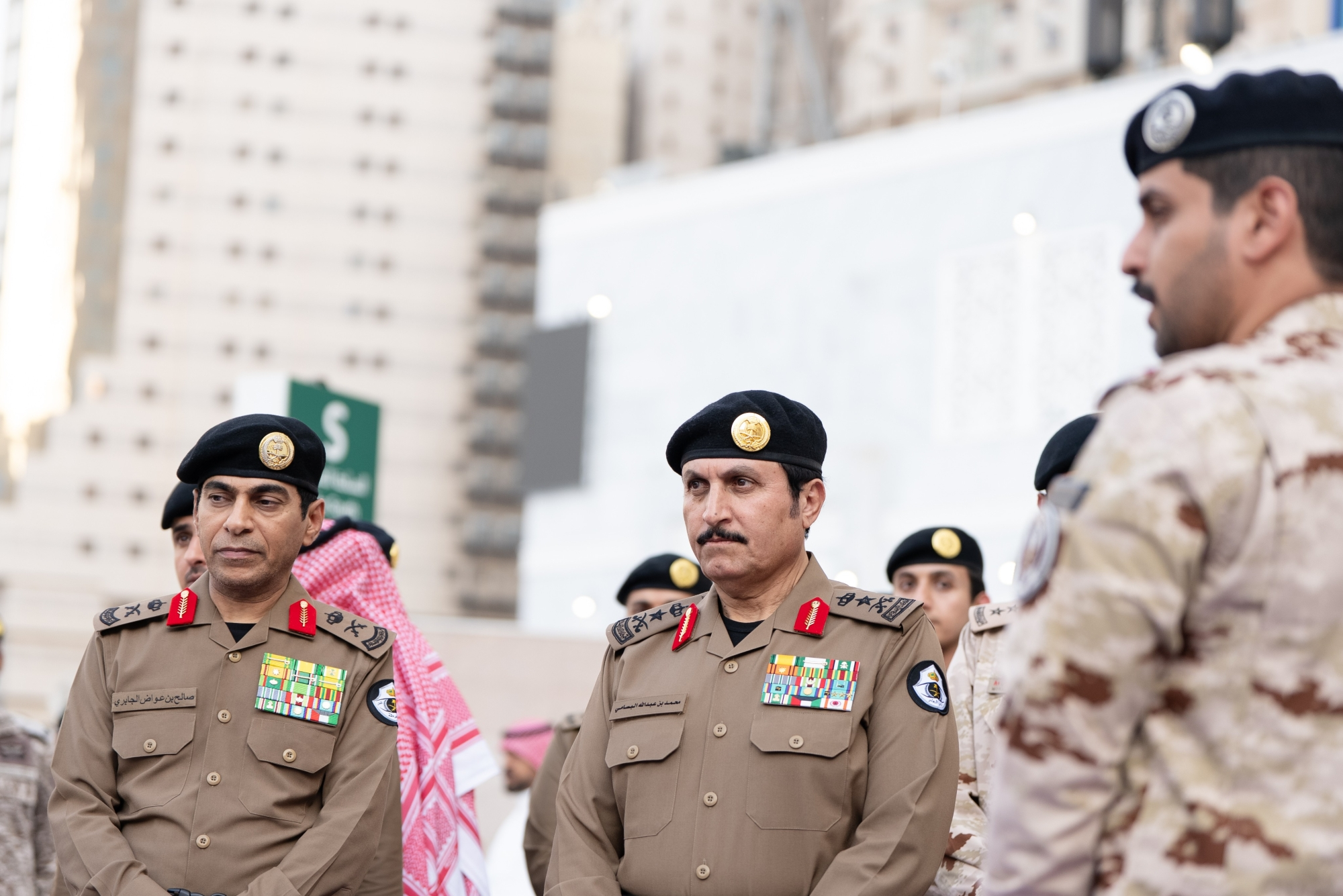
As part of the Kingdom of Saudi Arabia's extensive and early preparations to serve the pilgrims, the Director of Public Security, Lieutenant General Mohammed bin Abdullah Al-Bassami, conducted a comprehensive inspection tour to assess the readiness of the security and traffic sectors involved in implementing the approved plans for the 1447 AH Umrah season. This tour underscores the security authorities' commitment to providing the highest levels of safety and security for pilgrims and worshippers at the Grand Mosque in Mecca.
Tour details and field hypotheses
During the inspection tour, Lieutenant General Al-Bassami, accompanied by the Commander of the Umrah Security Forces and several prominent field commanders, observed a live field exercise simulating potential security deployment scenarios and how to manage large crowds. These exercises aim to assess response times, the accuracy of coordination among participating sectors, and the effectiveness of emergency plans and crowd management strategies during peak times, ensuring smooth traffic flow and the safety of visitors.
Comprehensiveness of security and traffic plans
The Director of Public Security's tour included inspecting vital locations and designated routes within the Grand Mosque and its outer courtyards, as well as the roads leading to it. Al-Bassami was briefed directly on the implementation of the approved security and traffic plans, which rely on employing modern technologies and trained personnel to ensure a safe and convenient spiritual experience for pilgrims. These plans focus on regulating entry and exit, preventing overcrowding, and facilitating the movement of pedestrians and vehicles in the central area.
The context of focusing on serving the guests of God
These preparations fall within the broader context of the Kingdom's ongoing efforts to develop its Hajj and Umrah services system, in line with the objectives of Vision 2030, which aims to host millions of pilgrims annually and provide them with the highest quality services. Security preparedness is the cornerstone that enables visitors to the Holy Mosque to perform their rituals with ease and peace of mind. The on-site supervision of these plans by senior security leaders reflects the level of responsibility and attention the wise leadership gives to the safety and security of everyone who sets foot on the Holy Land.
The importance of joint security coordination
The success of the Umrah seasons is a result of the integrated efforts of all security and service sectors. The importance of such inspection tours lies in boosting the morale of the participating forces and ensuring that any potential gaps are addressed before the peak season begins, thus enhancing the efficiency of field operations and reinforcing the sense of security among pilgrims arriving from all corners of the earth.
-

 Culture and Art 5 days ago
The "Between and Between" exhibition in Jeddah: 5 artists reshape Saudi memory
-
Culture and Art 7 days ago
Shakira's concert in Jeddah: Details of the international star's first concert in Saudi Arabia
-
Local News 4 days ago
Saudi Arabia's National Arabic Language Policy: 8 Principles to Promote Identity
-
Local News 3 days ago
Adopting the National Policy for the Arabic Language: Strengthening Identity and Vision 2030
-
Culture and Art, 1 week ago
The truth about Nancy Ajram's video and Epstein Island, and her legal response
-
Local News 4 days ago
The Riyadh-Rin-Bisha dual carriageway, spanning 559 km, has been completed
-
Fashion one week ago
Sneaker Con Jeddah 2026: The largest gathering for sneaker culture and fashion
-
Local news one week ago
Launch of the new Dammam project with investments of 98 billion riyals