Local News
Qatif almonds: a treasure of the Eastern Province's golden summer
Discover the golden treasure of Qatif almonds in the Eastern Province summer, where agricultural traditions meet health benefits in a special harvest season between July and August.

Almond cultivation in Qatif: an agricultural tradition and health benefits
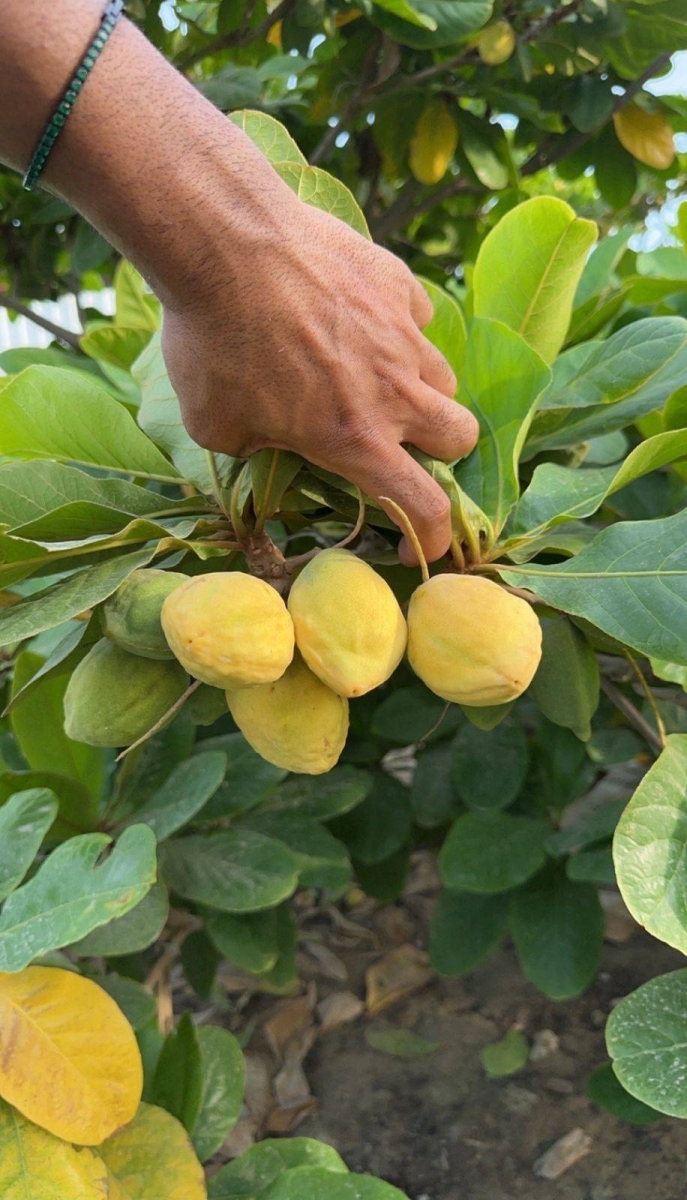
The Qatif Governorate in the Eastern Province of Saudi Arabia is home to almond trees that are widespread in farms, streets and even homes, making it a major source of almonds that fill the markets every summer.
The almond harvest season usually begins in humid weather between July and August. The farms of Qatif are known for being a fertile environment for growing almond trees, as the growth of these trees depends on the hot and humid climate to produce abundant fruits of suitable size, attractive color, and pleasant aroma.
Nutritional benefits of Qatif almonds
Local almonds from Qatif are considered a food rich in healthy nutrients. According to nutritionist Jawahir Al-Abdullah, consuming almonds can contribute to improved heart health by lowering bad cholesterol levels and regulating blood sugar levels thanks to their magnesium content.
Almonds also promote satiety and aid in weight loss, in addition to providing the body with calcium and magnesium, which are essential for strong bones and teeth. They also support digestive health and relieve heartburn.
The antioxidants in almonds play a vital role in protecting cells, improving skin elasticity, and delaying signs of aging. Their rich composition of fiber, healthy fats, and other nutrients is also believed to contribute to improved mood.
Caring for almond trees
Farmers in Qatif point out that almond trees require year-round care and attention, including fertilization, grafting, and protection from pests. The humid summer season sees the production of "Haban almonds," also known as Qatif or Alexandrian almonds, which are distinguished by their red and yellow color and are the most sought-after by residents and visitors alike.
Agricultural heritage and markets
Farmer Jawad Al-Sultan confirms that almond cultivation in Qatif is a deeply rooted tradition passed down from fathers to sons. Prices per kilogram range from 20 to 35 riyals depending on the variety and quality.
of Qatif almonds is not limited to eating them fresh; rather, it extends to include various uses such as adding them to sweets and different meals, making them an integral part of the region’s food and cultural heritage.
Qatif almonds remain a symbol of natural richness and ancient agricultural traditions that attract shoppers not only from various cities in the Eastern Province but also from neighboring Gulf countries.




Local News
Security warning: Penalties for photographing missile launch sites in Saudi Arabia
Saudi security authorities warn against photographing the sites where projectiles or shrapnel have fallen, stressing that doing so exposes one to legal accountability under the Anti-Cybercrime Law.
The competent security authorities in the Kingdom of Saudi Arabia have renewed their strict warnings regarding the danger of filming or publishing any videos or pictures documenting the locations of hostile projectiles or shrapnel resulting from their interception, stressing that these practices represent a direct threat to national security and public safety, and expose their perpetrators to severe legal accountability.
These warnings come within a highly critical strategic security context. Security experts have explained that publishing images of strike locations on social media platforms provides a free service to hostile actors. In modern military practice, attacking forces rely on what are known as "open sources" to assess the accuracy of their strikes. Consequently, any image that is circulated could be used to correct bombing coordinates and direct new, more precise strikes, placing civilian lives and vital infrastructure in direct danger.
Legally, the relevant authorities emphasized that these actions clearly fall under the purview of the Kingdom's Anti-Cybercrime Law. Sharing such content is classified as a crime against public order and national security. According to the regulations, penalties are not limited to fines but may include imprisonment for varying periods, given the extent of the harm that could be inflicted on state security and public safety as a result of this irresponsible dissemination.
Regarding field safety, authorities warned that gathering around impact sites or attempting to tamper with them significantly hinders the work of first responders, including civil defense, ambulance, and security patrols. Furthermore, some projectiles or fragments may contain hazardous materials or unexploded ordnance, making approaching them a dangerous and potentially fatal risk to onlookers.
Security authorities confirmed they are continuing to closely monitor the digital sphere to identify those who photograph or share such material, with the aim of summoning them and referring them to the Public Prosecution for legal action. They urged everyone to be mindful of their national responsibility and not to be swayed by the desire for a false media scoop at the expense of national security. They stressed the importance of immediately reporting any suspicious objects through official channels (911) and leaving the technical handling to specialists.
Local News
Ramadan decorations in Jeddah bring together school friends after 46 years
A touching story from Jeddah: Ramadan decorations and a traditional Hijazi gathering reunite school friends after 46 years apart. Discover the details of the reunion that revived fond memories.

In a touching scene that embodies the spirituality of the holy month, the Ramadan decorations in Jeddah played an unexpected role in reconnecting what had been severed for decades, as the streets of the Bride of the Red Sea, sparkling with lights, became a stage for a moving reunion that brought together study friends after a separation of more than 46 years.
A Ramadan coincidence imbued with the fragrance of history
The story began when the dazzling lights and distinctive Ramadan decorations adorning the home of citizen Mohammed Al-Lakhmi caught the attention of a group of passersby. This wasn't merely a fleeting admiration for the artistic designs; it was a pivotal moment when these old colleagues found themselves face to face with the traditional Hijazi "Markaz" (a traditional gathering place) that prominently displays the front of the house.
In moments where feelings of astonishment and joy mingled, the long years of absence faded away, and colleagues Hussein Al-Qasimi, Fahd Al-Maghamsi, Fawzi Al-Harbi, Omar Bashmil, and Abdeen Sheiba got to know each other, and the surprised looks turned into a warm embrace that washed away the fatigue of the years, in a coincidence they described as “the most beautiful gift of the holy month.”.
The Hijazi Center: A social parliament and an authentic heritage
The presence of the "Markaz" (a traditional meeting place) in this gathering was not merely a fleeting decorative element, but rather a deeply rooted cultural and social symbol in the Western Region, specifically in Jeddah. Historically, the Markaz is known as a "miniature social parliament," where neighborhood issues were, and still are, resolved, guests were received, and friendly conversations took place.
Historians and those interested in Hijazi heritage point out that maintaining the traditional gathering place (markaz) in front of homes, especially during Ramadan, is evidence of adherence to the region's cultural identity. It embodies the values of generosity and good neighborliness, and reflects the open and interconnected nature of Jeddah's society.
Ramadan in Jeddah: A season for mending relationships
Ramadan nights in Jeddah have a unique character that distinguishes them from other cities, where worship blends with inherited social customs. The Ramadan decorations and lanterns that fill the streets and squares are an integral part of the city's cultural heritage, adding a special joy to the city.
In their interview with “Akhbar 24,” colleagues emphasized that the spiritual atmosphere and attractive decorations acted as a magnet, drawing them in, while the gathering place itself served as a sanctuary, holding memories spanning nearly half a century. They unanimously agreed that the continuation of these traditional celebrations is the true guarantee of social cohesion, as these customs remain a bridge connecting the past with the present, reuniting loved ones regardless of the distances that may separate them.
This incident confirms that Ramadan traditions in the Kingdom are not just formalities, but rather effective tools in promoting psychological and social health, and a strong incentive to revive human bonds in a time when the pace of life has accelerated.
Local News
Saudi Arabia weather: Cold conditions to continue until the end of the week
The National Center for Meteorology forecasts continued cold weather and lower temperatures across most of the Kingdom from Tuesday until the end of the week. Here are the details.

The National Center for Meteorology issued its weather forecast, indicating that cold weather will continue in several regions of Saudi Arabia from tomorrow, Tuesday, until the end of this week (March 2-3). This forecast confirms that large parts of the country will be affected by a noticeable drop in temperatures, necessitating caution from citizens and residents.
Weather details and affected areas
According to initial indicators and meteorological data, this cold wave is a result of cold air masses directly affecting the northern and northwestern regions, gradually extending to other areas in the central and eastern parts of the Kingdom. These weather changes are typically accompanied by increased surface wind activity, which may intensify the feeling of cold, especially during the night and early morning hours.
The climatic context and nature of the atmosphere in the Kingdom
Saudi Arabia is characterized by a wide climatic and geographical diversity. The northern regions and highlands typically experience sharp drops in temperature during the transitional seasons between winter and spring. These weather fluctuations are a natural part of the region's climate at this time of year, as warm and cold air masses clash, resulting in atmospheric instability and a noticeable decrease in temperatures before the arrival of spring weather.
The importance of warnings and their impact on daily life
The National Center of Meteorology's reports are of paramount importance in guiding daily life and economic and social activities. Locally, these alerts help families take necessary precautions to protect children and the elderly from colds and seasonal illnesses associated with changing weather. They also play a vital role in alerting drivers on highways, especially in open areas that may experience reduced visibility or strong winds.
Safety and prevention guidelines
In these cold conditions, relevant authorities, such as the Civil Defense and the Ministry of Health, consistently emphasize the importance of following public safety guidelines. This includes ensuring the safety of heating appliances and avoiding the use of coal or firewood in poorly ventilated enclosed spaces to prevent carbon monoxide poisoning, as well as wearing appropriate winter clothing to keep warm. It is also advisable to follow the continuous updates issued by the National Center of Meteorology through its official channels to obtain the most accurate information on weather developments.
-

 Local News 4 days ago
Saudi Arabia approves regulations for the continued presence of Gulf vehicles: duration and penalties
-
Local news two days ago
Jeddah Airport alerts for travelers due to airspace closure and flight disruptions
-
Local news one week ago
The Ministry of Interior begins procedures for a royal pardon for common law prisoners
-
Local News 6 days ago
The deadline for property registration in Hail and Riyadh is Thursday
-
Sports one week ago
Tickets for the Al-Ahli vs. Al-Hilal King's Cup match postponed: New date
-
Local News 7 days ago
Under the patronage of the Minister of Information, an agreement was signed between the Ministry of Information and Waves Marketing Company
-
Local news one week ago
Saleh Al-Maghamsi appointed Imam of the Prophet's Mosque: Details of the Royal Decree
-
Culture and Art 5 days ago
The Devil's Prisons series was halted: The full story of "The Emperor's" being moved to YouTube