
Local News
Rainy weather in Saudi Arabia: Rain expected in most regions
The National Center for Meteorology has announced a new rainy spell starting today and lasting for a week, affecting most regions of the Kingdom. Learn more about the details and expected impacts.


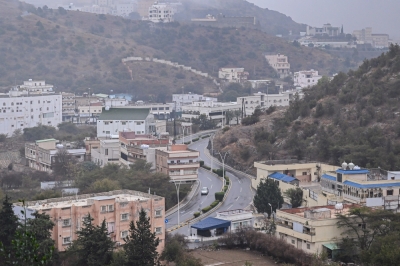
The National Center for Meteorology in Saudi Arabia has announced its forecast of a new rainy spell affecting most regions of the Kingdom, beginning today (Wednesday) and continuing until Wednesday of next week. This forecast is based on the latest outputs of the advanced Saudi numerical weather prediction model, which is used to analyze meteorological data and provide accurate forecasts of weather phenomena.
Areas affected by the rainy weather
The center explained in its report that the list of areas affected by this weather system is extensive, including scattered parts of the Makkah, Al-Baha, Asir, Jazan, and Madinah regions. The effects also extend to the Qassim, Riyadh, and Eastern Province regions, in addition to northern areas such as Tabuk, the Northern Borders, and Al-Jawf. The report indicates the possibility of thunderstorms accompanied by active winds, necessitating caution.
The climatic context and the importance of rainfall for the Kingdom
This rainfall occurs within a climate characterized by seasonal changes. Rainfall is of paramount importance in the Kingdom due to its predominantly desert landscape. It directly contributes to replenishing groundwater reservoirs and dams, supports the agricultural sector, and revitalizes vegetation and natural pastures, positively impacting the environment and wildlife. Furthermore, the mild weather that accompanies rainfall provides a welcome respite for citizens and residents and contributes to improved air quality.
Expected effects and calls for caution
While rainfall brings many benefits, authorities are also issuing warnings about potential hazards. Heavy rainfall in some areas is expected to cause flash floods in valleys and ravines, posing a risk to lives and property. Strong winds may also stir up dust and reduce visibility on highways. In this context, the General Directorate of Civil Defense urges citizens and residents to follow the alerts issued by the National Center for Meteorology and to stay away from floodplains and low-lying areas, and to exercise caution while driving. Dense fog is also possible in the mountainous regions of southern and western Saudi Arabia, as well as in parts of the northern and eastern regions during the early morning hours.




Local News
Ramadan discounts in Saudi Arabia: 2,000 licenses and 5 million products
The Ministry of Commerce has issued approximately 2,000 licenses for the Ramadan sales season, covering 5 million products. Learn more about the offers and how to verify their authenticity using barcodes.

The Saudi Ministry of Commerce announced the issuance of 1,987 licenses for discounts and promotional offers, targeting commercial establishments and online stores across the Kingdom. This announcement coincides with the launch of the "Ramadan Discounts" season, which officially began on the 13th of Sha'ban and is scheduled to continue until after Eid al-Fitr, thus covering the peak of the annual shopping season.
Details of licenses and products covered
The ministry explained in its statement that the issued licenses cover a wide range of products, exceeding 5 million, reflecting the anticipated volume of commercial activity. These products are diverse, encompassing all the needs of Saudi and resident families. Food and consumer goods topped the list due to high demand during the holy month, followed by electrical and electronic appliances, then perfumes and cosmetics, clothing and fashion, in addition to other miscellaneous luxury goods.
Context of the event and its economic importance
The month of Ramadan and Eid al-Fitr are among the most important commercial seasons in the Kingdom and the Arab region, witnessing exceptional market activity and a significant increase in purchasing power. The Ministry of Commerce's move to regulate and issue this number of licenses is part of a strategy aimed at controlling markets, preventing price manipulation, and ensuring the availability of goods in quantities that meet the growing demand. This regulation not only benefits consumers but also contributes to stimulating the economy and enabling merchants to sell their inventory in a systematic and transparent manner.
Technical empowerment and consumer protection
In its commitment to protecting consumer rights and preventing deceptive offers, the Ministry of Commerce has implemented modern technology to verify the legitimacy of discounts. Shoppers can now instantly confirm the legality and validity of discounts by scanning the QR code found on the discount permit displayed in stores or on websites. This allows consumers to access all the offer's details, including the type of discount, its actual percentage, its duration, and the licensing information of the establishment, thus enhancing transparency and trust in commercial transactions.
Continuous monitoring and market stability
The Ministry affirmed that these regulatory efforts are complemented by intensive and ongoing field inspection tours of commercial establishments across the Kingdom. These tours aim to verify that stores adhere to approved regulations and requirements, and to ensure the absence of any misleading business practices. The Ministry also highlighted the streamlined procedures for establishments wishing to participate, noting that applications for discount permits can be submitted electronically through the dedicated website. This enhances the range of choices available to consumers and supports price stability during this crucial season.
Local News
Al-Haqil: Residents' satisfaction with municipal services rises to 65%
Minister of Municipalities Majid Al-Hogail announces that residents' satisfaction with municipal services has risen to 65%, and reveals plans to develop digital twins for cities and use artificial intelligence.

Minister of Municipalities and Housing, Majid Al-Hogail, revealed a qualitative leap in municipal performance indicators, as the percentage of residents’ satisfaction with municipal services rose from 49% to 65%, while the percentage of satisfaction with the cleanliness of cities rose from 53% to 76%, thanks to the digital transformation and re-engineering of procedures adopted by the ministry.
Strategic shift in city management
This came during the minister's meeting with academics and students at King Fahd University of Petroleum and Minerals in Riyadh, where he emphasized that the ministry is no longer content with developing traditional services, but has moved to a stage of "re-engineering the way we think" and decision-making. He explained that this transformation has contributed to reducing the percentage of waste treated using unsanitary methods from 64% to 49%, reflecting the Kingdom's commitment to environmental sustainability standards.
Against the backdrop of this movement, this development aligns with the objectives of "Vision 2030" and the Quality of Life Program, which aim to transform Saudi cities into smart, sustainable cities that compete globally. After decades of relying on traditional management, the Kingdom is witnessing an organizational revolution based on big data to reduce bureaucracy and increase the efficiency of government spending.
Digital twins and innovation labs
Al-Haqil noted that the ministry is working on developing "Digital Twin" for cities, an advanced technology that allows for the virtual simulation of future scenarios before their implementation. This technology aims to support proactive, data-driven decision-making, thereby enhancing operational efficiency and ensuring resource sustainability.
He added that the ministry is working to establish national laboratories for artificial intelligence applications, ranging from generative urban design to the use of computer vision-enabled drones. This approach not only accelerates the transfer of innovation from university labs to the streets but also ensures the responsible and ethical application of modern technologies.
Economic and operational impact
On the economic front, the minister explained that the adoption of modern technologies such as smart monitoring has yielded tangible results, including:
- Raising the compliance rate to 64%.
- Reduced operating costs by a staggering 80%.
- Reducing reliance on in-person reviews for beneficiaries to only 2%.
- Achieving operational savings exceeding 250 million riyals as a result of improving the quality of road layers.
This transformation is of paramount importance both regionally and internationally, as the Kingdom presents a pioneering model of "cognitive cities" that proactively manage vast assets. These assets include more than 8,000 parks and public squares, and a road network spanning over 196,000 kilometers. This model enhances the attractiveness of Saudi cities to foreign investment and improves their ranking in global competitiveness indices.
Partnership with the academic sector
Al-Haqil emphasized that universities, particularly King Fahd University of Petroleum and Minerals and King Saud University, are not merely educational institutions, but strategic partners in this transformation. He noted that collaboration with universities has resulted in the adoption of 19 design guidelines and the establishment of a foundation for Saudi architecture, thus enhancing the quality of the urban landscape.
The minister concluded his remarks by emphasizing that the ministry’s ambition is to build an integrated national model that combines knowledge and decision-making, driven by the power of artificial intelligence, to achieve sustainable urban development that serves future generations.
Local News
The Ministry of Tourism launches a self-inspection service to improve the quality of the sector
The Ministry of Tourism has made available a self-inspection service through its website to enable investors to assess their establishments' compliance with standards, as part of efforts to develop digital services and improve quality.

The Ministry of Tourism announced today (Sunday) the launch of the new "self-inspection" service through its official website, in a step aimed at raising the readiness of tourist establishments and enabling investors to assess the level of their establishments' compliance with the approved regulations and bylaws on a self-assessment basis.
Empowering investors and enhancing compliance
The ministry explained that this service is part of its ongoing efforts to develop its digital services system and facilitate the investor journey in the tourism sector. The new digital service allows tourism business owners a proactive opportunity to assess their establishments' compliance with the ministry's regulations, standards, and official requirements before official inspectors visit.
The ministry confirmed that the self-inspection mechanism enables those in charge of tourism activities to conduct a comprehensive survey covering all operational aspects, including the quality of facilities and strict adherence to safety and hygiene standards, thus ensuring a safe and comfortable environment for visitors.
Supporting digital transformation in the tourism sector
This initiative falls under the Kingdom of Saudi Arabia's digital transformation strategy across various government sectors, with the Ministry of Tourism aiming to automate procedures and reduce paperwork and bureaucracy. The launch of this service is part of a package of facilitations designed to create an attractive and transparent investment environment, helping investors rectify their situations immediately and avoid violations, thus strengthening the principle of partnership between the public and private sectors.
Keeping pace with the goals of the Kingdom's Vision 2030
Strategically, this measure is of paramount importance in achieving the goals of the Kingdom's Vision 2030 and the National Tourism Strategy, which aim to make the Kingdom a leading global tourist destination. With the anticipated increase in tourist and visitor numbers, maintaining high quality standards becomes essential to ensuring a distinctive tourist experience.
The self-inspection service directly contributes to improving the customer experience, as establishments' adherence to standards increases satisfaction among both domestic and international tourists. The service also aims to enhance the operational efficiency of establishments, which positively impacts the reputation of the Saudi tourism sector as a whole and strengthens its competitiveness regionally and internationally.
-

 Local News 5 days ago
Launch of the city's shuttle bus service in Ramadan 1447 AH: Routes and stations
-
Local News 7 days ago
Rabigh inaugurates the world's largest water innovation oasis and enters the Guinness World Records
-
Culture and Art 6 days ago
The series "Rouh OFF" was permanently canceled by a decision of the Actors' Syndicate
-
Culture and Art 4 days ago
Yasser Galal and Radwa El Sherbiny: Details of a new artistic project that brings them together
-
Local News 7 days ago
Schedule of Taraweeh and Tahajjud prayers at the Two Holy Mosques for Ramadan 1447 AH
-
Local News 5 days ago
The Ministry of Education revokes the licenses of 74 private schools due to safety and quality violations
-
Local News 7 days ago
Saudi Arabia weather: Rain in Riyadh, the Eastern Province, and Qassim, and dense fog
-
Local News 4 days ago
Mohammed Al-Rasasmeh appointed as official spokesperson for the Ministry of Municipalities and Housing


