Local News
The Ministry of Commerce is conducting 10,000 inspection visits to control prices during Ramadan
The Ministry of Commerce carried out more than 10,000 inspection visits during a week in Ramadan to monitor the availability of goods, control prices, and combat commercial fraud in all regions of the Kingdom.

As part of its ongoing efforts to regulate markets and protect consumer rights during peak shopping seasons, the Ministry of Commerce announced that it conducted over 10,000 field inspection visits to commercial establishments across various regions and cities of the Kingdom of Saudi Arabia in just one week. These intensive inspections coincide with the holy month of Ramadan, aiming to monitor the availability of goods, food supplies, and consumer products, and to ensure the availability of suitable alternatives for products in high demand during this blessed month.
Integrated monitoring plans to ensure price stability
The ministry explained in its statement that it has put in place proactive and comprehensive monitoring plans to direct field teams to work around the clock throughout the holy month. These plans are based on two main pillars: first, ensuring an ample supply of essential goods and Ramadan products to meet all local consumption needs; and second, firmly addressing any attempts to manipulate prices or create artificial shortages to unjustifiably inflate prices.
Combating commercial fraud and ensuring the legitimacy of offers
During its field visits, the Ministry of Commerce emphasized its close monitoring of the compliance of commercial establishments, including central markets, hypermarkets, and small shops, with the approved sales regulations in the Kingdom. The inspections included verifying that price tags were clearly and legibly displayed for consumers, in accordance with the provisions of the sales regulations, as well as ensuring that products conformed to product safety standards and specifications.
The monitoring teams also paid special attention to controlling cases of fraud and deception that may accompany the promotional offers and discounts that are common during the month of Ramadan, to ensure their credibility and that the consumer gets real discounts and not fake ones.
General context and importance of seasonal monitoring
These monitoring campaigns are of paramount importance in the Kingdom's economic and social context, as Ramadan is one of the busiest seasons for buying and selling, which may tempt some unscrupulous individuals to exploit the increased demand by raising prices or selling counterfeit goods. The Ministry of Commerce works regularly and annually to intensify its field presence before and during religious and national holidays to bolster confidence in the Saudi market.
These efforts positively impact local economic stability by ensuring smooth supply chains and the availability of goods at fair and competitive prices, thus protecting the purchasing power of citizens and residents. The Ministry calls upon all consumers to cooperate by reporting any observed commercial violations through the "Commercial Report" application or the unified call center at 1900, emphasizing that community oversight is a key partner in the success of regulatory plans.




Local News
Weather forecast: Temperature drop, dust, and rain in Saudi Arabia today
The National Center for Meteorology forecasts indicate a drop in temperatures in Tabuk, Al-Jawf and the Northern Borders, with dust-raising winds in Riyadh and the Eastern Province and chances of rain and fog.

The National Center for Meteorology issued its daily report on the expected weather conditions in the Kingdom of Saudi Arabia, indicating significant weather changes affecting several regions, with a wave of low temperatures leading the way, accompanied by multiple weather phenomena ranging from active winds and dust storms to the possibility of rainfall and fog formation.
Weather details in the northern regions
The report indicated that the northern regions of the Kingdom will be most affected by the drop in temperatures, encompassing large parts of the Tabuk, Al-Jawf, and Northern Borders . This decrease will be accompanied by increased surface wind activity, which may reduce horizontal visibility, necessitating caution for those traveling on highways and open roads in these areas. These regions are typically the first point of entry for cold air masses arriving from the north, making them susceptible to rapid and significant temperature fluctuations.
Winds and dust in the central and eastern regions
In a related context, the National Center for Meteorology highlighted the effects of active winds stirring up dust and sand, which are expected to affect parts of the Riyadh, Qassim, and Eastern Province . These weather phenomena are considered part of the Kingdom's typical climate during periods of weather fluctuations, as surface winds contribute to stirring up suspended dust, which may affect air quality and visibility. This necessitates that those with respiratory conditions and asthma take the necessary precautions when going outside.
Chance of rain and fog in the highlands
On another note, the report indicated that there remains a chance of light rain in parts of the aforementioned regions, in addition to the rain extending to parts of the highlands of Makkah, Al-Baha, Asir, and Jazan . These areas are characterized by their mountainous terrain, which facilitates cloud formation and rainfall. The center also noted the possibility of fog forming in parts of the highlands of these regions, a common natural phenomenon in mountainous areas due to air saturation with humidity and low temperatures, which could lead to near-zero visibility in the early morning or late evening hours.
The importance of following weather forecasts
These forecasts are part of the National Center for Meteorology's ongoing efforts to monitor and track climate changes in the Kingdom, with the aim of providing accurate information that contributes to the safety of citizens and residents. These reports are of paramount importance to vital sectors such as transportation and agriculture, as well as being crucial for individuals in planning their commutes and daily activities, especially given the Kingdom's vast geographical diversity, which leads to varying weather patterns from one region to another.
Local News
Launch of the Mawardi platform to regulate food supply in Makkah | Vision 2030
The Minister of Municipalities launched the “Mawredi” platform in Makkah to enhance food security and regulate supply chains for pilgrims, in a strategic partnership between “Al-Balad Al-Amin” and “Sari”.

In a strategic move aimed at enhancing food security and improving the efficiency of services provided to pilgrims, the Minister of Municipalities and Housing, Mr. Majid Al-Hogail, launched the "Mawrdi" platform in the Holy City of Mecca. This initiative is the result of a strategic partnership between Al-Balad Al-Ameen Company (the investment arm of the Holy City Municipality) and Sari Company, a leader in supply chain solutions, to form a unified digital platform for managing and organizing food supply chains in the Holy City.
Strategic context within Vision 2030
The launch of this platform comes at a crucial time, coinciding with the Kingdom's accelerated progress towards achieving the goals of Vision 2030, particularly the "Serving the Guests of God" program. The Kingdom aims to host 30 million Umrah and Hajj pilgrims annually by 2030, a goal that necessitates a robust logistical infrastructure and smart supply systems capable of handling this enormous demand. Makkah is a unique global model for crowd management, making the automation of supply chains an urgent necessity to ensure food sustainability and safety.
The importance of the platform for food security in the holy sites
The launch of "Mawrdi" is of paramount importance given the unique geographical and temporal characteristics of Mecca. The high demand during Hajj and Umrah seasons necessitates a precise balance between supply and demand to prevent food waste or shortages. The new platform serves as a vital link in the catering system, which meets the needs of over 1.8 million pilgrims during the season, in addition to millions of Umrah performers and visitors throughout the year. This digital transformation ensures the availability of high-quality food at competitive prices, while reducing reliance on paper-based and traditional transactions that may present operational challenges.
How the platform works and its technical features
The "Mawrdi" platform operates as an integrated B2B marketplace, connecting suppliers with central kitchens, catering companies, and other relevant entities within a unified digital environment. The platform offers advanced features including:
- Order management and real-time tracking of operations to ensure on-time delivery.
- Providing accurate data and analysis to support strategic decision-making for regulatory and commercial entities.
- Enabling suppliers to showcase their products, manage inventory and purchase orders electronically to increase market reach.
- Providing kitchens and catering companies with the opportunity to track supply chains and proof of delivery to ensure reliability.
Strengthening governance and transparency
The launch ceremony was attended by the Mayor of Makkah and Chairman of the Board of Directors of Al-Balad Al-Ameen Company, Mr. Musaed Al-Dawood, along with several industry leaders. The platform primarily aims to enhance seasonal preparedness by providing real-time market insights, thereby improving coordination among stakeholders and implementing clear procurement and supply standards. This approach strengthens governance, transparency, and rapid response to any emergencies in the supply chain, positively impacting the Hajj and Umrah pilgrimage experience and improving operational efficiency for service providers.
Local News
Launch of the Mawardi platform to regulate food supply in Makkah
The Minister of Municipalities launches the digital supplier platform in partnership with Sari and Al-Balad Al-Amin to regulate food supply chains and serve pilgrims and Umrah performers within the initiatives of the Kingdom’s Vision 2030.
In a strategic move aimed at enhancing the efficiency of services provided to pilgrims, the Minister of Municipalities and Housing, Mr. Majid bin Abdullah Al-Hogail, inaugurated the "Mawrdi" platform in the Holy City of Mecca. This platform is the result of a strategic partnership between "Al-Balad Al-Ameen" Company, the investment arm of the Holy City Municipality, and "Sari" Company, a leader in supply chain solutions, thus forming a unified digital platform for managing and regulating the food system in Mecca.
An integrated partnership to serve the guests of God
The launch ceremony was attended by the Mayor of Makkah and Chairman of the Board of Directors of Al-Balad Al-Ameen Company, Mr. Musaed bin Abdulaziz Al-Dawood, along with a number of leaders from the municipal and housing sectors. The new platform serves as an advanced operational model and an integrated electronic marketplace connecting suppliers with various catering establishments and central kitchens, creating a unified digital environment that enables real-time order management and process tracking, thus providing accurate data to support decision-makers in managing seasonal events.
The importance of the platform in the context of Vision 2030
The "Mawrdi" platform gains its paramount importance through its direct alignment with the objectives of the Kingdom's Vision 2030, specifically the Guests of God Service Program. Makkah faces unique logistical challenges globally, namely the need to provide safe and healthy food for more than 1.8 million pilgrims annually within a few days, in addition to millions of Umrah performers and visitors throughout the year. This platform bridges the coordination gap between supply and demand, ensuring a continuous flow of food without interruption or waste.
Technical features and operational impact
The platform primarily aims to enhance seasonal preparedness by providing "real-time market insights," meaning the ability to predict needs before crises occur. The platform's technical features include:
- Direct connection: Enabling suppliers to display their products, manage inventory and purchase orders electronically.
- Transparency and governance: Applying clear standards for procurement and supply that ensure quality and fair pricing.
- Real-time tracking: Providing catering companies with the opportunity to track supply chains and proofs of delivery, reducing commercial disputes and improving operational performance.
Enhancing food security and sustainability
The role of "Mourdi" extends beyond the commercial aspect to include enhancing food security in the central region and the holy sites. Through the analysis of big data provided by the platform, stakeholders will be able to accurately identify consumption patterns, reduce food waste, and ensure the delivery of high-quality meals on time, reflecting a positive image of the services provided in the Kingdom.
This initiative embodies an ideal model of integration between the government sector (represented by the Ministry and the Secretariat) and the private technology sector, to enhance the sustainability and efficiency of food supply chains, and to move forward towards transforming Makkah into a smart city that employs technology to serve the pilgrims of the Holy Mosque.
-
Local news one week ago
Human Resources sets the date for the 2026 Founding Day holiday for both sectors
-

 Culture and Art, 1 week ago
The ban on the Hamdiya series in Iraq: Reasons and official response
-
Sports one week ago
Al-Shabab crushes Hadramout Solidarity 13-0 and qualifies for the Gulf Cup semi-finals
-
Sports one week ago
Club Brugge vs Atletico Madrid: Match date and Champions League play-off details
-
Local News 4 days ago
The Ministry of Interior begins procedures for a royal pardon for common law prisoners
-
Culture and Art, 1 week ago
Ramez Level the Monster promo: Prank details and list of victims this Ramadan
-
Culture and Art, 1 week ago
The series "Taht El Ard" (Underground) has been postponed and will not air during Ramadan 2026
-
Reports one week ago
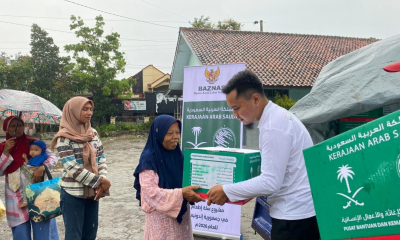
King Salman Relief Center's Ramadan aid includes 9 countries