
Local News
Conditions for sighting the crescent moon of Ramadan 1447 AH: Al-Majma'ah Observatory explains the details
Learn about the scientific conditions for observing the crescent moon of Ramadan 1447 AH according to the Al-Majmaah University Observatory. Detailed information regarding sunset times and visibility in Hawtat Sudair and Mecca.


The Al-Majmaah University Astronomical Observatory in Hawtat Sudair revealed today (Tuesday) the details and scientific conditions related to observing the crescent moon of Ramadan for the year 1447 AH. This preliminary data clarifies for the public and specialists the observation coordinates for Tuesday, the 29th of Sha'ban 1447 AH, corresponding to February 17, 2026, the day designated for sighting the crescent moon.
Details of astronomical calculations and sunset times
The observatory explained in its statement that, based on precise scientific calculations adopted at the observatory's astronomical site, and according to the Umm al-Qura calendar, the moment of central conjunction will occur, God willing, at 3:03 PM Riyadh time. Regarding Mecca, the calculations indicate that the sun will set at 6:19 PM, while the crescent moon will set shortly afterward at 6:23 PM, meaning the crescent will remain visible on the horizon for a short period after sunset.
As for the main observation site at the Majmaah University Observatory in Hawtat Sudair, the calculations showed that the sun will set at 5:52 pm at 257 degrees, followed by the crescent moon setting at 5:54 pm at 256 degrees. Thus, the time difference between sunset and moonset will be only two minutes, as the crescent moon sets after the sun at an altitude of 0.5 degrees and an elongation of 1.61 degrees from the sun.
The importance of astronomical observation in the Kingdom
The sighting of the new moon in Saudi Arabia is of paramount importance, not only locally but also regionally and within the wider Islamic world, given the connection of religious observances such as fasting and Hajj to the timing of the new moon, and the Kingdom's status as the Qibla (direction of prayer) for Muslims. The Kingdom relies on the legitimate sighting of the new moon (with the naked eye or binoculars) to establish the beginning of the Islamic months, in accordance with Islamic law, while also utilizing precise astronomical calculations to guide those observing and scientifically confirm the possibility of sighting the new moon.
The role and scientific standing of the Hawtat Sudair Observatory
The Al-Majmaah University Observatory in Hawtat Sudair is one of the most important astronomical observatories in the region, distinguished by its strategic geographical location and the nature of its terrain, which aids in observation. The observatory exerts diligent efforts to provide accurate scientific data that contributes to supporting official moon-sighting committees and the Supreme Court in making decisions regarding the beginning of lunar months. This scientific data on the "crescent's visibility period" (the duration it remains visible after the sun) is a crucial factor in guiding predictions about the possibility of sighting the crescent. Current data for the year 1447 AH indicates the sensitivity and critical nature of the situation due to the short visibility period (two minutes), making observation a process that requires high precision and ideal weather conditions.




Local News
Implementation of water lines in Tuwaiq, Riyadh, at a cost of 132 million riyals
National Water Company completes water pipeline project in Tuwaiq neighborhood in Riyadh at a cost of 132 million riyals, to extend 53 km of networks and enhance water security within Vision 2030.

The National Water Company announced the completion of a vital new phase in its infrastructure development projects in the capital, having finished laying main water pipelines of varying diameters to support the daily distribution system in several districts west of the Tuwaiq neighborhood in Riyadh. This major project is a key component of the second phase of the strategic water plan, with a total cost of 132 million riyals.
Project details and technical scope
The company explained in its statement that the project included laying 53 kilometers of water pipelines, in addition to implementing and connecting 20 networks to the existing lines. This extensive engineering work aims to improve the efficiency of the current network, enhance operational efficiency, and increase water service coverage in the targeted neighborhoods, thus directly contributing to maximizing the utilization of existing assets and improving the quality of life for residents.
Strengthening infrastructure to keep pace with urban expansion
This project comes amidst the rapid urban development Riyadh is witnessing, particularly in western areas such as the Tuwaiq district, one of the fastest-growing and most densely populated neighborhoods. The National Water Company is working to meet this increasing demand by investing heavily to ensure the sustainability of services. The implementation of such projects not only provides water but also supports comprehensive urban development, as water infrastructure is the lifeblood of any residential or commercial expansion.
Water security and the Kingdom's Vision 2030
These efforts fall within the framework of the National Water Strategy, which is fully aligned with the objectives of the Kingdom's Vision 2030. The company seeks to achieve sustainable water security and reduce network losses by upgrading pipelines and enhancing their operational efficiency. The company affirmed its full commitment to implementing its projects according to the approved timelines, while adhering to the highest international standards of quality and performance, to ensure that these service projects achieve the desired positive impact and meet citizens' aspirations for reliable and sustainable water services around the clock.
Local News
Today's weather: Active winds, dust, and fog in 7 Saudi regions
Check the weather forecast for Saudi Arabia today. The Meteorology Department predicts active winds and dust in seven regions, with fog and reduced visibility in Mecca, the Eastern Province, and the highlands.
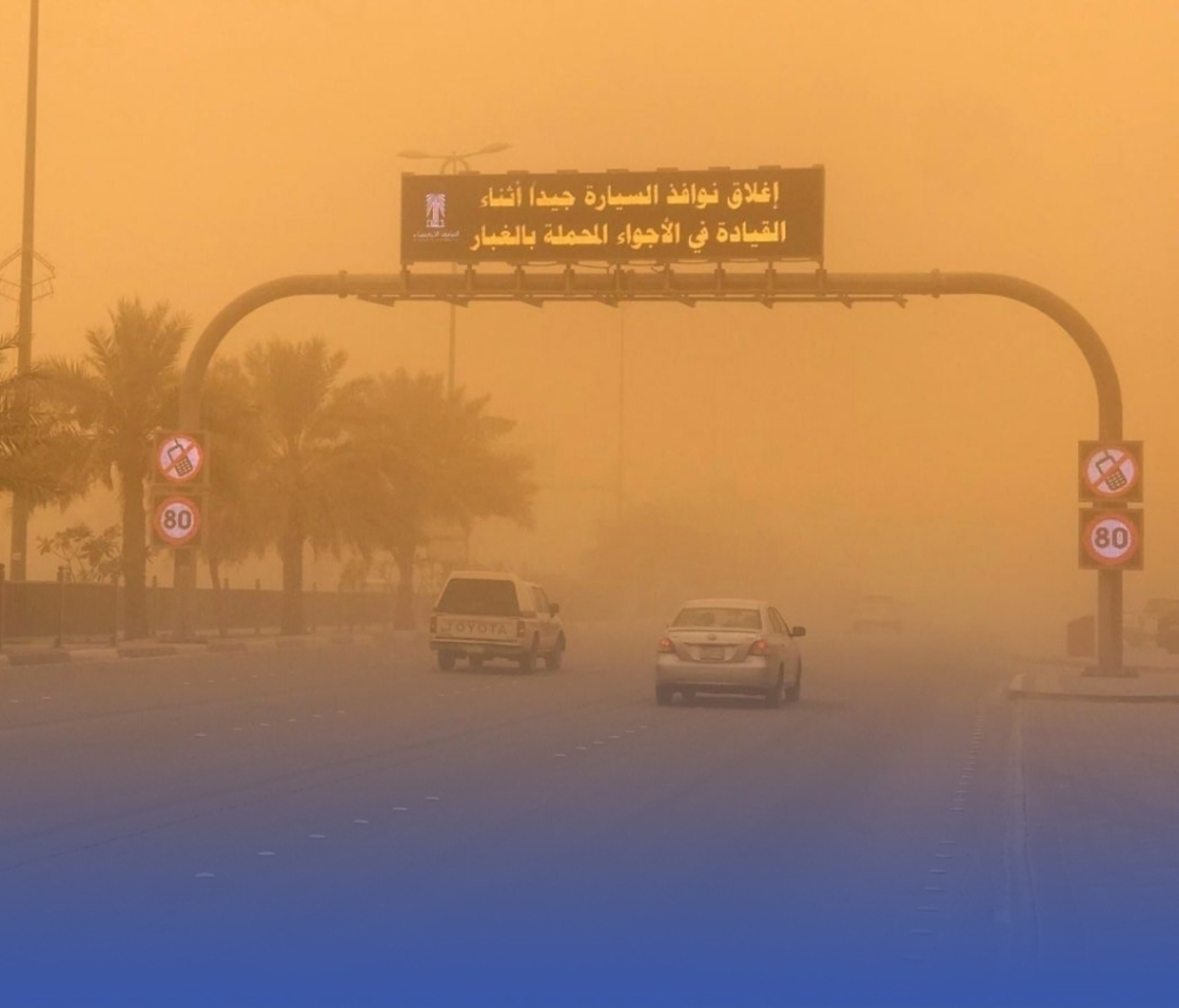
The National Center for Meteorology in Saudi Arabia issued its daily weather report for today (Tuesday), indicating continued weather fluctuations affecting several regions of the Kingdom. The report included forecasts of active surface winds that may stir up dust and sand, leading to reduced horizontal visibility in open areas and on highways.
The meteorological department explained in its detailed statement that the impact of the active winds will extend to large parts of the Northern Borders, Al-Jawf, Tabuk, Hail, Al-Qassim, Madinah, and Riyadh regions. This weather pattern will also affect the eastern parts of the western and southwestern highlands of the Kingdom, prompting caution among motorists in those areas due to the possibility of dust storms and reduced visibility.
In a related development, the National Center for Meteorology highlighted another weather phenomenon coinciding with the winds: the formation of dense fog during the night and early morning hours. Fog is expected in parts of the Makkah, Al-Baha, Asir, and Jazan regions, with a significant decrease in visibility anticipated in the highlands of these areas. The center also warned of near-zero or zero horizontal visibility along the coastal areas of the Eastern Province due to dense fog and high humidity.
These forecasts are consistent with the typical climatic characteristics of Saudi Arabia, whose geography is marked by significant topographical diversity, encompassing open desert regions, humid coastal areas, and mountainous highlands. This diversity contributes to varying weather patterns, with some areas experiencing dust storms while others experience dense fog or rain, reflecting the continental nature of the Arabian Peninsula's climate.
As a precaution, weather experts and relevant authorities always advise caution in such conditions. Drivers on highways connecting areas affected by wind and dust are advised to reduce speed and use headlights when visibility is reduced. Those with respiratory conditions and asthma are advised to avoid direct exposure to dust and sand to protect their health. In foggy areas, adhering to traffic regulations and maintaining a safe following distance is crucial for everyone's safety.
The National Center for Meteorology plays a pivotal role in monitoring and tracking these weather changes using the latest technologies and early warning systems, with the aim of providing citizens, residents and government agencies with accurate and up-to-date information to ensure public safety and facilitate movement between different regions of the Kingdom.
Local News
Saudi Arabia's Ministry of Interior signs agreements to localize military industries by 2026
The Ministry of Interior signed contracts and memoranda of understanding at the World Defence Exhibition 2026 to enhance security, localize military industries and increase local content in line with Vision 2030.
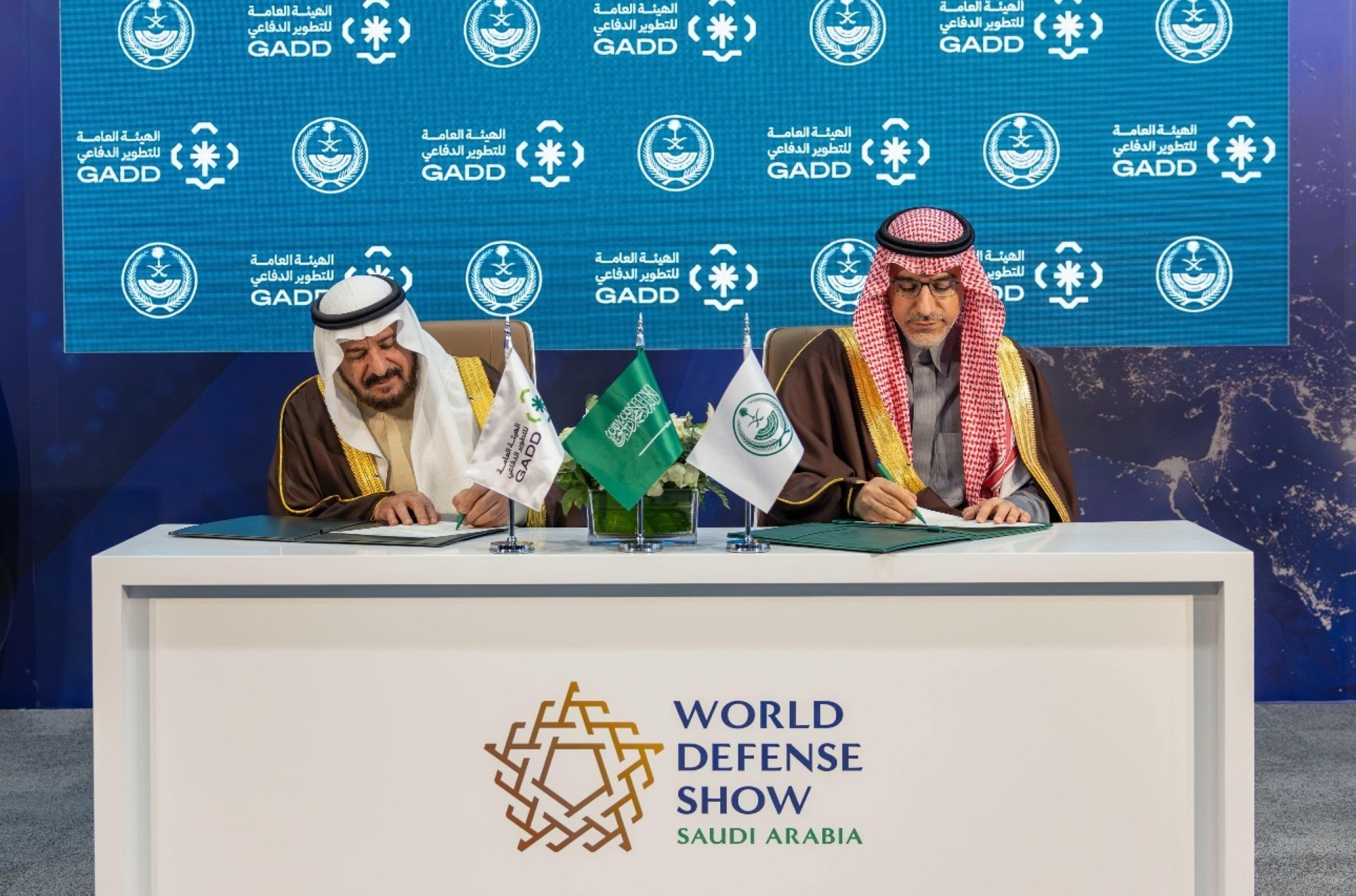
In a strategic move reflecting the Kingdom of Saudi Arabia's commitment to strengthening its security and industrial sovereignty, the Ministry of Interior signed a series of high-level agreements and memoranda of understanding with leading local and international entities. This took place during the World Defence Exhibition 2026, hosted by Riyadh from February 8-12, a leading global platform for showcasing the latest defense and security technologies and a key driver for achieving the goals of the Kingdom's Vision 2030 in the military industries sector.
Enhancing maritime security and localizing industries
At the forefront of these agreements, the Ministry signed a significant contract with Lürssen Australia International, aimed at localizing the marine equipment manufacturing industry. This step is of paramount importance given the Kingdom's geographical location and extensive coastline, as this collaboration will contribute to enhancing the efficiency of border protection and vital maritime installations, in addition to strengthening search and rescue capabilities and maritime disaster management. The Ministry was represented at the signing by Assistant Minister of Interior Dr. Hisham Al-Falih, and the company was represented by Board Member Hamoud bin Nasser Al-Shathri.
Integration of national institutions and efficiency of spending
As part of unifying national efforts, the Ministry signed an agreement with the General Authority for Military Industries (GAMI) and a memorandum of cooperation with the General Authority for Defense Development (GADF). These partnerships, signed by Dr. Hisham Al-Falih with GAMI Governor Eng. Ahmed bin Abdulaziz Al-Ohali and GADF Governor Dr. Faleh Al-Sulaiman, aim to enhance the efficiency of government spending, support the research and development system, and accelerate the localization of advanced security technologies, in line with the national objective of increasing the percentage of local content in the military sector.
Advanced air capabilities and digital solutions
To enhance its response to environmental emergencies, the Ministry signed a contract with Advanced Aircraft Technology Company to secure and operate Thrush 710P aircraft, designed for combating forest fires and rugged terrain. The contract was signed by the Undersecretary of the Ministry, Dr. Khalid Al-Battal, and the company's CEO, Ahmed Al-Shami. Concurrently, a contract was signed with Imdad Solutions for Information Technology Company to develop the digital infrastructure for public security, reflecting the Ministry's commitment to digital transformation and the sustainability of its technological services.
Strategic data partnership
The Ministry concluded its efforts by signing a strategic cooperation agreement with the General Authority for Statistics, signed by the Director of Public Security, Lieutenant General Mohammed Al-Bassami, and the Authority's President, Dr. Fahd Al-Dosari. This agreement aims to enhance reliance on accurate statistical data and indicators to support security decision-making, thereby serving the goals of sustainable development.
-

 Local News 6 days ago
Launch of the city's shuttle bus service in Ramadan 1447 AH: Routes and stations
-
Local news one week ago
Rabigh inaugurates the world's largest water innovation oasis and enters the Guinness World Records
-
Culture and Art 7 days ago
The series "Rouh OFF" was permanently canceled by a decision of the Actors' Syndicate
-
Culture and Art 5 days ago
Yasser Galal and Radwa El Sherbiny: Details of a new artistic project that brings them together
-
Local news one week ago
Schedule of Taraweeh and Tahajjud prayers at the Two Holy Mosques for Ramadan 1447 AH
-
Local News 6 days ago
The Ministry of Education revokes the licenses of 74 private schools due to safety and quality violations
-
Local news one week ago
Saudi Arabia weather: Rain in Riyadh, the Eastern Province, and Qassim, and dense fog
-
Local News 5 days ago
Mohammed Al-Rasasmeh appointed as official spokesperson for the Ministry of Municipalities and Housing


