
Local News
Lulwa Al-Dossari: The story of a Saudi nurse in air medical evacuation
Learn about the story of Luluah Al-Dossari, a medical evacuation nurse at the Ministry of Defense, and her experience in transporting conjoined twins and the challenges of air nursing within the Kingdom’s vision.


In a powerful demonstration of Saudi women's ability to excel in the most challenging and demanding fields, the name of Saudi nurse Lulwa Al-Dossari has emerged as an inspiring role model in the Armed Forces Medical Services. After seven years of dedicated service in hospitals and intensive care units, Al-Dossari decided to expand her humanitarian passion, joining the Ministry of Defense's air medical evacuation fleet and establishing herself as a leading female figure in this vital sector.
From intensive care to the heavens
During her participation in the World Defense Show 2026, which recently concluded in Riyadh, Al-Dossari shared details of her career journey with Akhbar 24. She explained that she specializes in intensive and critical care, a field requiring quick reflexes and high skill, but practicing it in the air adds complex physiological and logistical challenges. She indicated that her decision to pursue this experience stemmed from a desire for renewal and discovery, describing aerial nursing as a school that teaches you to "expect the unexpected.".
Air transport challenges and the impact of pressure
Al-Dossari addressed the technical aspects of her work, noting that patients who appear stable in the hospital may experience sudden changes upon takeoff due to atmospheric pressure fluctuations and the relative lack of oxygen at high altitudes. This reality necessitates that the medical evacuation team maintain a high level of readiness for rapid intervention and handling of any emergency to ensure the patient's safety until reaching their destination, reflecting the high quality of training received by the Ministry of Defense's health services personnel.
A transcontinental humanitarian mission: Jamaica's twins
In discussing the highlights of her career, Lulwa Al-Dossari recalled a long humanitarian journey that lasted 18 continuous hours in July 2025. The mission involved transporting conjoined twins from Jamaica to Saudi Arabia. This mission is an extension of the Kingdom's leading global role in the conjoined twins separation program, which enjoys generous support and direct attention from the wise leadership. Saudi medical evacuation aircraft have traveled the world to assist humanitarian cases, making the Kingdom a leading global destination in this specialized medical field.
An inspiring message for the daughters of the nation
Lulwa Al-Dossari concluded her remarks with a message brimming with pride and admiration for her fellow Saudi nurses, urging them to recognize the immense responsibility they bear and to keep God's fear before their eyes. In her authentic Najdi dialect, she encouraged them to "strengthen their resolve" and not hesitate to embrace new experiences and innovate within the vast healthcare field. She emphasized that the empowerment Saudi women enjoy today under Vision 2030 opens countless doors for them to participate in building the nation and safeguarding its resources.




Local News
The Supreme Court calls for the sighting of the crescent moon of Ramadan 1447 on Tuesday evening
The Supreme Court of Saudi Arabia called on all Muslims to look for the crescent moon of Ramadan 1447 AH on the evening of Tuesday, February 17, 2026, and to register their testimony with the nearest court.

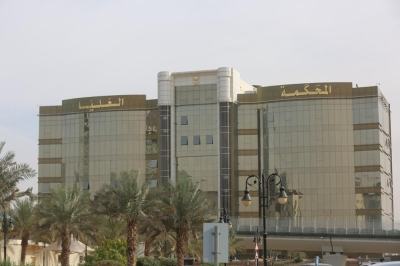
The Supreme Court of the Kingdom of Saudi Arabia issued an official invitation to all Muslims throughout the Kingdom to look for the crescent moon of the blessed month of Ramadan for this year 1447 AH, on the evening of Tuesday, the twenty-ninth of Sha’ban, corresponding to the seventeenth of February 2026 AD, according to the Umm al-Qura calendar.
Details of the Supreme Court's statement regarding the sighting of the crescent moon
This announcement is based on the court's previous ruling regarding the determination of the beginning of Sha'ban, which established that Tuesday, the 1st of Sha'ban 1447 AH, corresponding to January 20, 2026 CE, marks the beginning of the month. Based on this information, Tuesday, the 29th of Sha'ban, is the legally and astronomically approved day for sighting the crescent moon of the holy month.
The court explained in its statement that it hopes that anyone who has the ability to see, whether with the naked eye or using astronomical telescopes, will not hesitate to inform the nearest court to him to officially register his testimony, or to contact the nearest government center to help him reach the competent judicial authorities to document the testimony.
The importance of sighting and official committees
The Supreme Court urged citizens and residents who possess the ability and expertise in sighting the crescent moon to join the official committees established in various regions of the Kingdom for this purpose. The Court emphasized that participation in this matter is considered an act of cooperation in righteousness and piety, and will be rewarded, given its benefit to all Muslims in determining the beginning of one of the pillars of Islam.
The legal and institutional context of crescent sighting in Saudi Arabia
The sighting of the crescent moon for the month of Ramadan in Saudi Arabia is a significant annual event eagerly anticipated by the entire Muslim world, given the Kingdom's status as the Qibla (direction of prayer) for Muslims and its custodianship of the Two Holy Mosques. The Kingdom follows a precise legal methodology that combines direct sighting (with the naked eye or binoculars) with astronomical calculations that determine the visibility of the crescent and the times of sunset and moonset.
This call is part of the established judicial and legal traditions, whereby the Supreme Court holds a special session on the evening of the twenty-ninth of Sha’ban to receive testimonies from various observatories and courts in the regions, and based on the documented testimonies it receives, the royal decision is issued to begin the holy month or to complete the number of Sha’ban as thirty days.
Social and religious dimensions of the event
The announcement of the start of Ramadan is a pivotal moment that impacts public life in the Kingdom and the wider Muslim world. Work and school schedules change, and spiritual and social preparations begin for the month of fasting. The relevant authorities pay close attention to ensuring accuracy in this matter to guarantee that Muslims observe the fast according to proper Islamic guidelines, reflecting the leadership's and religious institutions' commitment to following the Prophetic tradition of determining the new moon.
Local News
Work stoppage service via Musaned: Conditions for contract termination and departure
The Ministry of Human Resources has launched a service for domestic workers to leave their jobs through the Musaned platform. Learn about the conditions for final departure or transfer of sponsorship within 60 days and how to protect your rights.

In a new regulatory step aimed at developing the local labor market, the Ministry of Human Resources and Social Development in Saudi Arabia announced the launch of the "Absence from Work" service through the unified national recruitment platform, "Musaned." This service comes within the framework of the Contractual Relationship Improvement Initiative, through which the Ministry seeks to protect the rights of all parties, whether employers or domestic workers.
Service objectives and its operational mechanism
The ministry explained that the new service primarily aims to facilitate and empower individual employers to terminate the contractual relationship smoothly and systematically in the event of a domestic worker's absence from work. The service, accessible through the "Musaned" platform, offers two main procedures that ensure fairness and transparency: "Termination of Contract Due to Absence from Work" and "Labor Transfer Service.".
Time limits and procedures
The ministry has established precise time limits for dealing with cases of work absence, based on the length of the worker's stay in the Kingdom:
- During the first two years: If the employment contract is terminated due to the employee's absence within the first two years of entering the Kingdom, they must leave permanently within a period not exceeding 60 days. Failure to leave will be considered a violation of the residency and labor laws.
- After two years: If a domestic worker's stay exceeds two years, the worker has the option of either leaving permanently or transferring to a new employer (transfer of services) within 60 days of the date of termination. If their status is not rectified, they will be considered absent from work and in violation of regulations.
Context of the initiative and its importance to the labor market
This step comes as an extension of the Ministry of Human Resources and Social Development's ongoing efforts to regulate the recruitment and domestic worker sector. The "Musaned" platform is one of the key technological pillars the Kingdom relies on to ensure transparency in recruitment and contracting processes. This service is of paramount importance as it addresses one of the most significant challenges employers faced: the ambiguity of procedures when a worker was absent, which could expose them to legal or financial liabilities.
This decision also reflects the Kingdom's commitment to human rights standards and international agreements, as it grants workers the opportunity to rectify their status or transfer to another employer (in specific cases), instead of the previous traditional procedures that completely restricted job mobility upon reporting absence. This contributes to raising the efficiency of the labor market, reducing reliance on undocumented workers, and enhancing the attractiveness of the work environment in the Kingdom, in line with the objectives of Vision 2030, which aims to build a flexible and competitive labor market.
In conclusion, the ministry affirmed that these measures will contribute to improving the quality of services provided, raising the level of compliance with regulations, and ensuring a safe and stable contractual environment for all concerned parties.
Local News
Saudi Arabia to chair the Executive Bureau of Arab Housing Ministers 2026-2027
The Council of Arab Housing Ministers chooses Saudi Arabia as the chair of the Executive Office for the years 2026-2027, and adopts the slogan of community resilience for Arab Housing Day 2026 at the Doha meeting.

In a move reflecting significant regional confidence in the Kingdom of Saudi Arabia's development experience, the Council of Arab Ministers of Housing and Reconstruction elected the Kingdom to chair the Council's Executive Bureau for the next two years (2026-2027). This announcement was made during the Council's 42nd session, hosted by Doha, Qatar, and attended by a select group of ministers and officials responsible for the housing sector in the Arab world.
Saudi leadership in the housing sector
This selection is a culmination of the Kingdom's significant efforts in recent years within the framework of Vision 2030, during which the housing sector has witnessed radical transformations and qualitative leaps that have contributed to increasing homeownership rates and developing sustainable urban environments. The Kingdom's assumption of this position is seen as a valuable opportunity to share its pioneering experience in partnership with the private sector, digital transformation of real estate services, and diverse housing support programs with other Arab countries, thereby enhancing the efficiency of Arab real estate markets.
2026 theme: Community resilience
In a related development, the Council adopted the Saudi proposal for the slogan of Arab Housing Day 2026, entitled: “Community Resilience: Building Adaptable Societies.” This slogan carries profound implications that align with current global challenges, emphasizing the need to plan cities capable of withstanding climate change, economic fluctuations, and social transformations. The slogan aims to guide the Arab world towards adopting the concepts of urban sustainability, not only in terms of green building, but also through creating a resilient urban fabric that ensures a high quality of life for residents under all circumstances.
Strengthening joint Arab action
The Kingdom, through its chairmanship of the Executive Bureau, is set to lead a broad movement to support joint Arab cooperation initiatives. Efforts will focus on unifying visions regarding real estate legislation and exchanging technical expertise in modern urban planning. Under the umbrella of the League of Arab States, the Council also seeks to bridge the gap between supply and demand in Arab markets and provide affordable housing solutions that meet the needs of the region's rapidly growing population.
The importance of the Council of Arab Ministers of Housing and Reconstruction
It is worth noting that the Council of Arab Ministers of Housing and Reconstruction is one of the specialized ministerial councils operating under the umbrella of the League of Arab States. The Council's primary objectives are to foster cooperation among member states in the housing and reconstruction sectors, prepare studies and research that address housing issues, and standardize building codes and technical specifications—a task on which much is expected in the coming phase to achieve comprehensive Arab economic and urban integration.
-

 Local news one week ago
Agreement to regulate and empower street vendors in Jeddah: Details and objectives
-
Local news one week ago
The Spears of Victory 2026 military exercises concluded in Saudi Arabia with international participation
-
Culture and Art 4 days ago
The "Between and Between" exhibition in Jeddah: 5 artists reshape Saudi memory
-
Culture and Art, 1 week ago
Ahmed Dawood in Ramadan 2026 with the series "Baba and Mama Jiran"
-
Culture and Art 5 days ago
Shakira's concert in Jeddah: Details of the international star's first concert in Saudi Arabia
-
Culture and Art 7 days ago
The truth about Nancy Ajram's video and Epstein Island, and her legal response
-
Culture and Art, 1 week ago
Rawan Bin Hussain's first appearance after her imprisonment and deportation from Dubai
-
Culture and Art, 1 week ago
Sarah Al-Wadaani without a hijab ignites social media and tops the trending list


