Local News
Crisis Management Training Program from the Islamic Alliance
An intensive crisis management training program from the Islamic Military Alliance brings together 27 trainees from 17 countries in Riyadh to enhance their skills in combating terrorism.

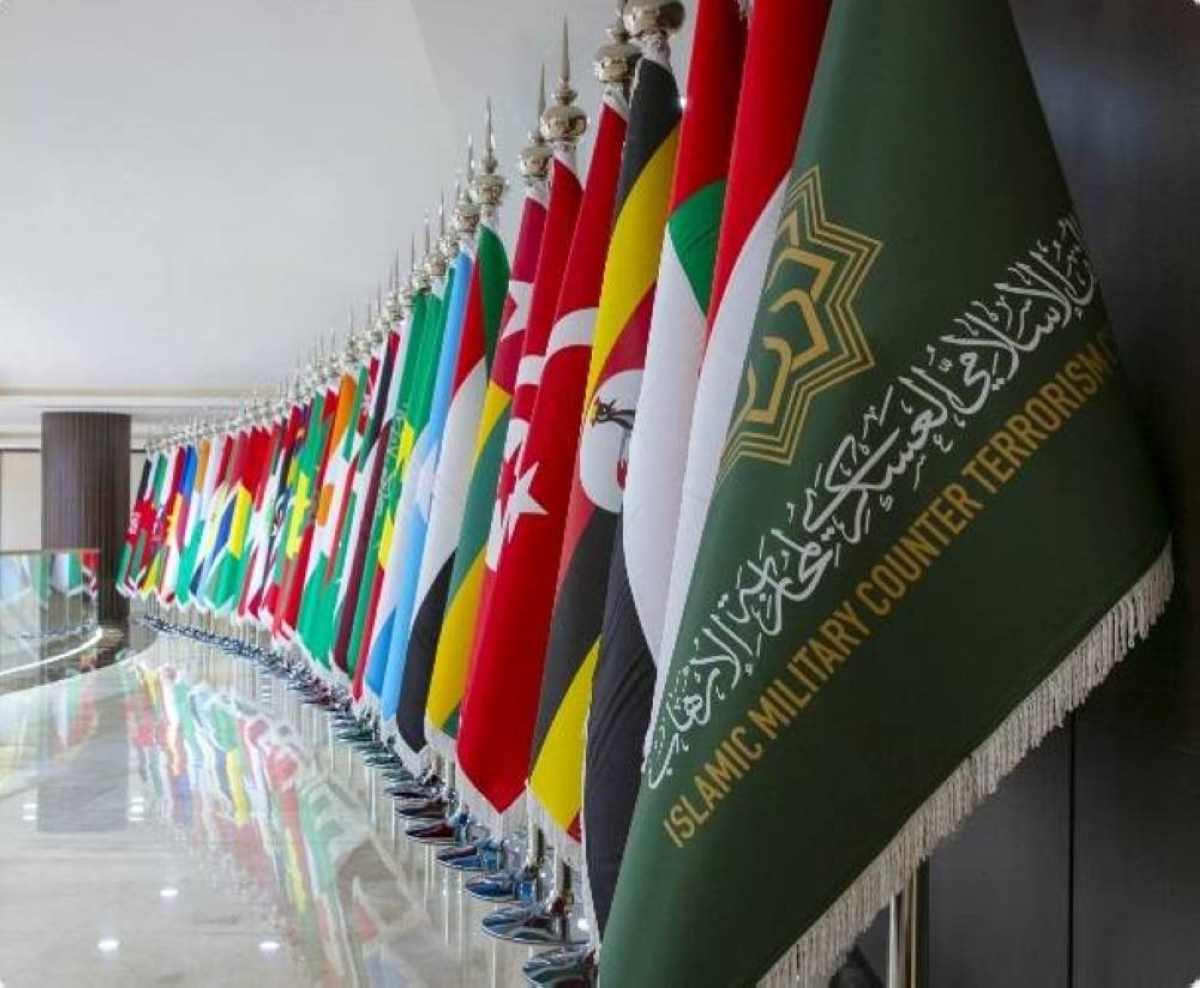
Crisis Management Program for the Islamic Military Alliance
The Islamic Military Counter Terrorism Coalition (IMCTC) concluded a specialized training program on crisis management, in which 27 trainees from 17 member states participated. The program was held at the coalition's headquarters in Riyadh and lasted for five days.
Training details and objectives
During this program, participants received intensive training and lectures delivered by experts specializing in crisis management. These lectures covered theoretical concepts and international best practices, as well as practical applications simulating real-life scenarios. The aim of this training was to refine participants' skills and enhance their preparedness to face crises and emergencies.
For example, trainees can learn how to deal with natural disasters such as earthquakes or floods, or how to respond quickly to security emergencies. Such skills are essential to ensuring the safety of communities and minimizing human and material losses.
The Alliance's commitment to supporting member states
Major General Pilot Staff Mohammed Al-Moghedi, Secretary General of the Islamic Alliance, affirmed that this program reflects the Alliance’s firm commitment to supporting member states in building national capacities and developing competencies capable of formulating effective strategies to confront contemporary crises.
Building national capacity means equipping countries with the tools and knowledge necessary to address challenges independently and effectively. This helps to enhance stability and security in the region as a whole.
Extension of other training programs
Major General Al-Mughaidi explained that the crisis management program is an extension of a number of training programs implemented by the coalition in various fields such as intellectual, media, military and combating the financing of terrorism.
The diversity of training programs ensures the comprehensive development of participating countries' capabilities, contributing to a safer and more stable international community. For example, programs to combat the financing of terrorism help to cut off funding sources for terrorist groups, thereby reducing their ability to carry out operations that threaten global security.
The program's impact on daily life and future
Crisis preparedness : Thanks to these training programs, participating countries will be better prepared to deal with any crisis they may face in the future. This means better protection for citizens and a reduced negative impact from unforeseen events.
International cooperation : Strengthening cooperation between member states will help in exchanging experiences and knowledge, leading to improved efficiency in responding to crises collectively and not just individually.
Improving security infrastructure : By developing effective crisis management strategies, countries can improve their security infrastructure and ensure its sustainability to successfully meet future challenges.


Local News
90,000 stem cell donors honored in Saudi Arabia – KIMARK
The King Abdullah Center for Medical Research honored stem cell donors who received the King Abdulaziz Medal. The Saudi registry includes 90,000 donors who have saved hundreds of lives.

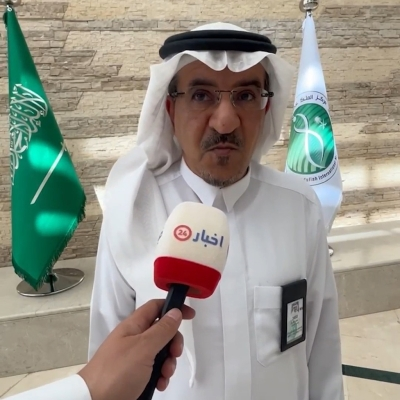
In a humanitarian gesture reflecting the values of giving and solidarity in Saudi society, the King Abdullah International Medical Research Center (KAIMRC) honored a select group of humanitarian heroes last weekend, awarding stem cell donors the King Abdulaziz Medal, Third Class. The ceremony, attended by the center's Executive Director, Professor Dr. Ahmed Al-Askar, recognized their noble sacrifices that have instilled hope and directly contributed to saving the lives of many cancer and hematological patients.
A tribute befitting those who give
In an exclusive statement to Akhbar24, Dr. Ahmed Al-Askar expressed his immense pride and honor at receiving this recognition, which embodies the leadership's and the nation's appreciation for those awarded the King Abdulaziz Medal, Third Class. He explained that this medal is not merely an honor, but a testament to the merit of those who sacrificed a part of themselves to save the lives of others suffering from fatal diseases, thus embodying the highest ideals of humanity and the value of being "present for one another" in times of hardship.
The Saudi Record: A success story that began in 2011
In discussing the infrastructure of this medical achievement, the CEO of “Kimark” pointed to the great development witnessed by the Saudi Stem Cell Donor Registry since its establishment in 2011. This registry has turned into a huge and vital database that currently includes 90,000 registered donors, all of whom are ready to donate their stem cells as soon as a genetically matching patient is found, reflecting the growing health and societal awareness in the Kingdom.
A global impact that transcends borders
The impact of the Saudi registry has not been limited to the local level, but has extended internationally. Dr. Al-Askar explained that the registry has contributed to the treatment of more than 200 patients, including 80 patients from outside the Kingdom, representing approximately 15 countries. This success is a result of close cooperation between the Saudi registry and all international registries specializing in stem cells, placing the Kingdom among the leading countries in the field of cross-border humanitarian medical services.
The medical importance of stem cells
It is worth noting that stem cell transplantation is the only lifeline for many patients with blood cancers (such as leukemia), bone marrow failure, and some genetic and immune diseases. The medical challenge lies in finding a tissue match, as genetics and ethnicity play a significant role in compatibility. Therefore, having a large national registry of 90,000 donors greatly increases the chances of survival for Saudi and Arab patients and reduces the need to search for donors in foreign registries whose tissues may not match those of patients in the region.
Local News
Haramain High-Speed Railway during Ramadan: 1.7 million seats and 3,600 trips
SAR announces the Haramain train operating plan for the Ramadan season 1447 AH, providing 1.7 million seats and operating more than 3,600 trips to facilitate the movement of pilgrims between Makkah and Madinah.

Saudi Railways (SAR) announced the completion of all operational preparations for the holy month of Ramadan 1447 AH, through the launch of a comprehensive strategic plan for the Haramain High-Speed Railway. This plan aims to increase capacity to an unprecedented level and boost the number of daily trips to ensure smooth traffic flow and facilitate the journey of pilgrims between the Two Holy Mosques in Mecca and Medina during the holy month.
Expanded operational plan with record numbers
In its announced plan, SAR explained that it aims to operate more than 3,662 flights during the season, providing over 1.7 million seats for passengers. This significant increase comes in response to the growing and anticipated demand for flights between the two holy cities at this time of year. The number of daily flights is expected to exceed 100, clearly demonstrating the high level of operational readiness and flexibility in managing schedules to precisely align with prayer times and the density of pilgrims and visitors.
The Haramain High-Speed Railway: A key pillar of Vision 2030
The importance of these steps extends beyond the operational aspect. SAR emphasized that these efforts align with the objectives of the Kingdom's Vision 2030 and the National Transport and Logistics Strategy. The project primarily aims to enhance the quality of services provided to pilgrims, as the Kingdom seeks to increase its capacity for Umrah to 30 million by 2030. The Haramain High-Speed Railway is the main artery of rapid land transport, supporting these aspirations and contributing to the comprehensive development the Kingdom is witnessing across various sectors.
World-class infrastructure and standard specifications
The Haramain High-Speed Railway is ranked among the top 10 fastest electric trains in the world, with an operational speed of up to 300 kilometers per hour. The project spans 453 kilometers of double-track railway, connecting Mecca and Medina via Jeddah Central Station, King Abdulaziz International Airport Station, and King Abdullah Economic City in Rabigh. Since its inauguration, this project has revolutionized transportation in the Kingdom, reducing travel time between the two holy cities to approximately two hours and 20 minutes, and providing a safe, comfortable, and environmentally friendly alternative to traditional modes of transport.
Future expansion to strengthen the fleet
As part of its forward-looking vision to enhance efficiency, this upgrade to its current operational readiness is an extension of SAR's ongoing efforts to develop its fleet. The company recently announced the signing of a contract to purchase 20 new trains from the Spanish company Talgo. This strategic move will support future operational expansion, enabling the network to accommodate the increasing numbers of pilgrims during peak seasons, and reflects the wise leadership's commitment to harnessing all available resources to serve those visiting the Two Holy Mosques.
Local News
Results of the National Program for Identifying the Gifted and Talented, and the Global Mawhiba Achievement
The Ministry of Education announced the results of the National Program for Gifted Student Identification, which saw the participation of 89,000 students, coinciding with Mawhiba's entry into the Guinness World Records. Learn more about the details and the significance of this event.

The Saudi Ministry of Education announced today (Monday) the results of the National Program for Identifying Gifted Students , implemented through a strategic partnership between the Ministry, the King Abdulaziz and His Companions Foundation for Giftedness and Creativity (Mawhiba), and the Education and Training Evaluation Commission. This year's program saw wide participation, with over 89,000 male and female students from across the Kingdom, reflecting the growing interest and societal awareness of the importance of nurturing talent.
A global achievement in the Guinness Book of Records
In a related development, the Mawhiba Foundation achieved an unprecedented international milestone by setting a Guinness World Record . This achievement follows the foundation's success in registering the largest number of individuals for the mental abilities test in a single month, demonstrating the efficiency of the program's digital and organizational infrastructure and its capacity to accommodate the growing number of talented individuals.
Program objectives and selection methodology
The Ministry congratulated the students who passed the "Mawhiba Scale for Multiple Intellectual Abilities," emphasizing that the program primarily aims to identify gifted students in the fields of science, technology, and engineering. The methodology employed is based on an integrated system that ensures the highest standards of fairness and equity in selecting gifted students, and subsequently directing them to enrichment programs that align with their abilities and scientific interests.
Strategic context and institutional partnership
The National Program for Gifted Student Identification is the fruit of a long-standing collaboration between three entities (the Ministry of Education, Mawhiba, and the Evaluation Commission). This model was established to serve as the primary gateway for discovering the Kingdom's creative human capital. Students undergo scientifically standardized tests that measure linguistic, numerical, spatial, and scientific reasoning abilities, as well as mental flexibility, ensuring the accurate identification of latent talents that are not revealed by traditional achievement tests.
National importance and its alignment with Vision 2030
This announcement is particularly significant within the framework of the Kingdom's Vision 2030 , specifically as part of the objectives of the "Human Capability Development Program." Identifying these talented individuals is not the end goal, but rather the beginning of a long journey of nurturing and investing in the minds that will drive the transformation towards a knowledge-based economy. The annual results and international awards garnered by Saudi students in international forums (such as ISEF and the International Mathematical and Physics Olympiads) demonstrate that the outcomes of this program constitute a fundamental pillar of innovation and scientific research, thus enhancing the Kingdom's competitive position on the global stage.
-

 Local news one week ago
The Spears of Victory 2026 military exercises concluded in Saudi Arabia with international participation
-
Culture and Art 5 days ago
The "Between and Between" exhibition in Jeddah: 5 artists reshape Saudi memory
-
Culture and Art 6 days ago
Shakira's concert in Jeddah: Details of the international star's first concert in Saudi Arabia
-
Culture and Art, 1 week ago
The truth about Nancy Ajram's video and Epstein Island, and her legal response
-
Local news two days ago
Adopting the National Policy for the Arabic Language: Strengthening Identity and Vision 2030
-
Local News 3 days ago
Saudi Arabia's National Arabic Language Policy: 8 Principles to Promote Identity
-
Culture and Art, 1 week ago
Rawan Bin Hussain's first appearance after her imprisonment and deportation from Dubai
-
Local News 3 days ago
The Riyadh-Rin-Bisha dual carriageway, spanning 559 km, has been completed