
Local News
The full moon of Safar will be on Saturday: Jeddah Astronomy Society explains the details
Get ready to witness the full moon of Safar on Saturday, as it illuminates the sky at 99%, in a magical astronomical phenomenon worth following! Discover the details with Jeddah Astronomy.


Amidst the astronomical developments unfolding in the skies of the Arab world, the Jeddah Astronomical Society announced the observation of the full moon of Safar on Saturday, at 10:55 AM Saudi time. This event is part of a series of remarkable astronomical phenomena gracing the skies during this period.
Significance of astronomical observation
Although the full moon will occur during daylight hours, the moon will appear fully illuminated to the naked eye throughout Friday and Saturday nights, with nearly 99 . This bright light reflects the slow change in the moon's apparent phases, providing astronomy enthusiasts with an ideal opportunity to observe this phenomenon.
Impact on economic and tourism activities
The full moon and its exceptional visibility are expected to attract the attention of tourists, photographers, and astronomy enthusiasts. This could lead to increased tourism in areas offering stunning views of the moon, such as deserts and open mountains. This activity could positively impact the local economy by boosting the tourism sector and related services.
Accompanying astronomical phenomena
Alongside the full moon, the sky will witness a rare conjunction of Venus and Jupiter. This conjunction is a unique event visible to the naked eye and presents a golden opportunity for observers and astronomers to study the movement of the planets and their interaction with each other.
The peak of the Perseid meteor shower
These events also coincide with the peak of the Perseid meteor shower, one of the most famous and spectacular meteor showers. This phenomenon occurs when Earth passes through the debris trail of Comet Swift-Tuttle, resulting in a large number of meteors streaking across the night sky.
Global and local economic context
Globally, these astronomical phenomena come at a time of growing interest in space science and technology. Major powers are investing heavily in space exploration programs and related scientific research. Such events raise public awareness of the importance of space science and may encourage local governments to increase their investments in education and scientific research to enhance their global standing.
Future prospects
With continued global interest in space and astronomy, investments in this field are expected to increase significantly. We may witness further advancements in the technology used to observe and study astronomical phenomena, which will, in turn, contribute to improving the accuracy of weather, marine, and even agricultural forecasts.
In conclusion , the upcoming astronomical events present an opportunity to raise public awareness of the importance of natural sciences and their impact on our daily lives and our local and global economies. They also serve as a reminder of the need for sustained investment in scientific research and education to achieve sustainable development and future economic growth.




Local News
Saudi Arabia weather: Temperature drop in 4 regions, active winds and dust
The National Center for Meteorology warns of a drop in temperatures in 4 regions, and the continuation of active winds stirring up dust in Riyadh and the Eastern Province, with chances of fog forming in the south.
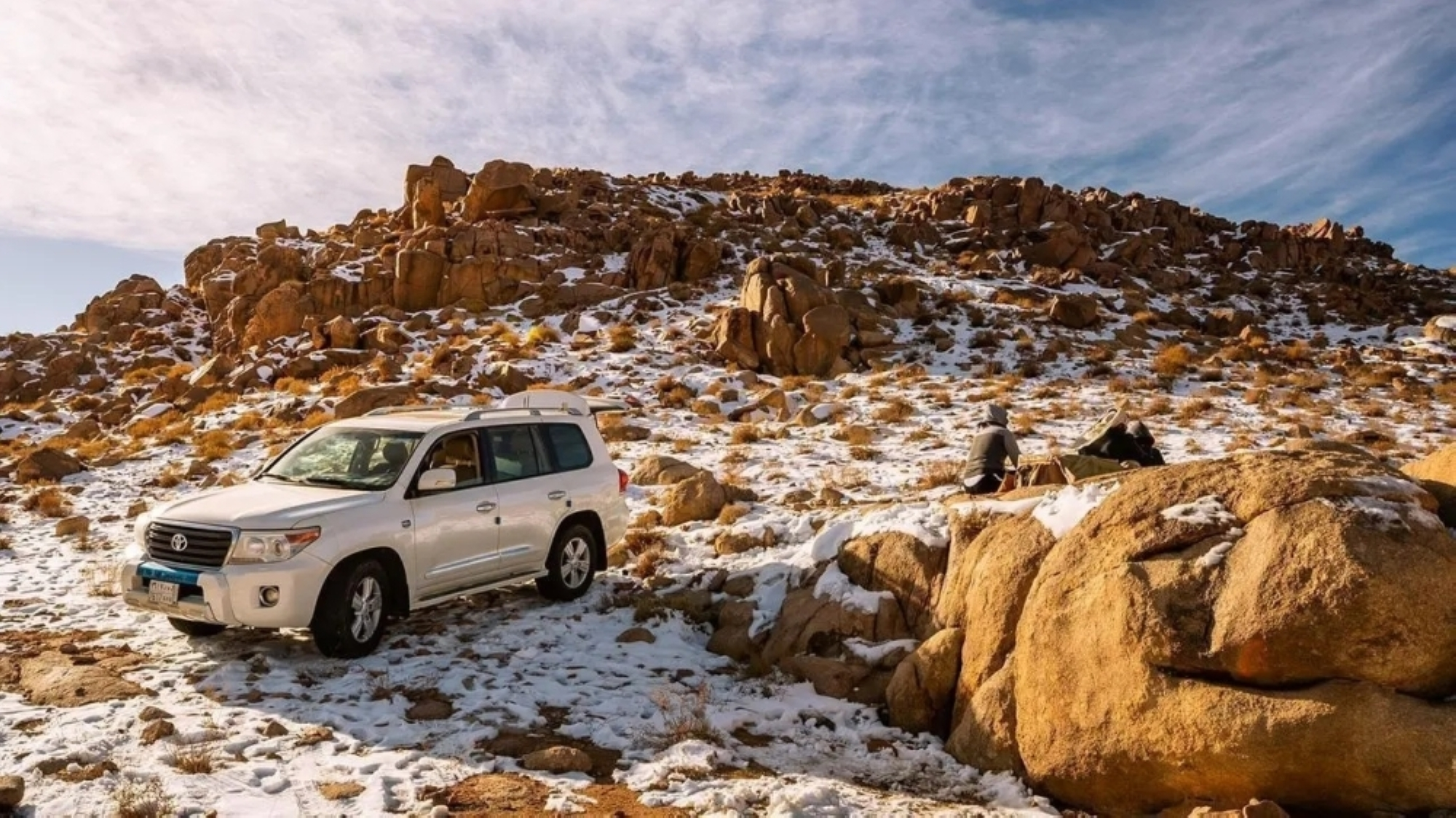
The National Center for Meteorology in Saudi Arabia issued its daily weather report, indicating significant weather changes affecting several regions of the Kingdom. The center warned of a noticeable drop in temperatures today (Sunday) in Al-Jawf, the Northern Borders, and Hail regions, as well as parts of the Tabuk region, urging residents to take precautions and prepare for relatively cold weather in those areas.
In a related context, the center drew attention to the continued impact of active winds that stir up dust and sand, potentially reducing horizontal visibility. This impact includes areas in the Eastern Province, Riyadh, and Qassim, and extends to parts of the Madinah and Makkah regions. These weather phenomena are part of the usual climatic fluctuations at this time of year, as surface winds become active due to differences in atmospheric pressure between various regions.
The report also noted the possibility of fog formation over the southern and southwestern highlands, specifically in parts of the Jazan, Asir, and Al-Baha regions. This phenomenon is considered normal in these areas due to their mountainous geography (the Sarawat Mountains), which traps moisture coming from the Red Sea, leading to the condensation of low clouds and fog. This could affect traffic on mountain roads and slopes.
climatic and geographical context
The Kingdom of Saudi Arabia is characterized by a wide topographical and climatic diversity, as the northern regions (Al-Jawf, the Northern Borders, Tabuk) are the first gateway to receive cold air masses coming from the north of the globe and Europe, and therefore they are often the first regions to record a drop in temperatures before the cold waves move to the center and east of the Kingdom.
General effects and recommendations
Due to these weather conditions, traffic safety experts advise drivers to exercise extreme caution, especially on highways and open roads in areas experiencing wind and dust storms (Riyadh and the Eastern Province), where visibility can suddenly decrease. Those with respiratory conditions and asthma are also advised to avoid direct exposure to dust.
In areas experiencing lower temperatures, residents are advised to dress appropriately for the cold weather, especially at night and in the early morning. In southern regions experiencing fog, drivers should use fog lights and drive at reduced speeds to ensure public safety.
Local News
School hours in Al-Jawf during Ramadan (full details)
Find out the school hours in Al-Jawf during Ramadan for public, private, and continuing education schools. Public school hours start at 9:30 AM, and continuing education at 9:00 PM.

The General Directorate of Education in Al-Jawf region officially announced the adoption of new school hours, coinciding with the approach of the holy month of Ramadan, for all public, private, and international schools, as well as kindergartens in the region. This announcement comes as part of the annual preparations undertaken by education departments across the Kingdom of Saudi Arabia to create a learning environment conducive to the spirituality of the holy month and the conditions of fasting.
Working hours details for Ramadan in Al-Jawf region
The administration clarified in its statement that the school day for public schools will begin at 9:30 AM . This applies to all grade levels in both public and private schools. Regarding adult education programs, the first class will begin at 9:00 PM to ensure the continuity of education for this group at times that accommodate their professional and family commitments during the holy month.
The context of flexibility in school timing in Saudi Arabia
This decision aligns with the general directives of the Ministry of Education in the Kingdom of Saudi Arabia, which grants education departments in regions and governorates the authority to determine the start time of the school day during Ramadan. This flexible policy aims to accommodate the differences in local sunrise times across the Kingdom's far-flung regions, as well as taking into account social conditions and traffic flow in each area.
These measures are part of the ministry’s strategy to ensure that students’ academic achievement is not affected by changes in daily life during the month of fasting, as most families experience changes in their sleep and wake times due to Iftar and Suhoor meals and performing Taraweeh and Qiyam prayers.
Educational and social objectives of adjusting school hours
Delaying the start of the school day until 9:30 AM aims to achieve several educational and health benefits, most notably giving students sufficient rest and sleep after performing the Fajr prayer, which positively impacts their concentration and comprehension in the classroom. This timing also helps alleviate traffic congestion during the early morning hours, making it easier for students and teachers to reach their schools safely and conveniently.
In closing, the General Directorate of Education in Al-Jawf region stressed to school principals the need to inform parents and students in general and continuing education of the new dates through the official school channels, stressing the importance of adhering to the specified attendance times to ensure the smooth running of the educational process, wishing everyone success and a blessed month of fasting.
Local News
Smart traffic signals in Buraidah are being operated using artificial intelligence technologies
The Qassim Municipality has begun operating smart traffic lights in Buraidah using artificial intelligence to improve traffic flow and facilitate the movement of emergency vehicles. Learn more.

In a move reflecting the rapid technological advancements in Saudi Arabia's municipal services and infrastructure sector, the Qassim Region Municipality, in close collaboration with the region's traffic department, announced the activation of a smart traffic signal system in the city of Buraidah. This ambitious project utilizes the latest artificial intelligence technologies in traffic management, representing a radical shift from traditional fixed-time systems.
Artificial intelligence technologies to improve quality of life
The new system relies on advanced sensors and high-resolution cameras that analyze traffic density in real time. Instead of depending on predetermined time cycles, artificial intelligence algorithms process the data and adjust traffic light timings based on the volume of vehicles in each lane. This dynamic approach directly contributes to reducing waiting times at intersections, which positively impacts driver comfort and reduces wasted time and fuel, aligning with the goals of Saudi Vision 2030 to improve quality of life and enhance the efficiency of smart cities.
Targeted locations and operational details
According to reports, the system was successfully piloted at the intersection of King Abdullah Road and King Saud Road on the Northern Ring Road, a vital artery in the city. Work is currently underway to expand the pilot to include intersections along Al-Bayariq Road, in addition to a comprehensive plan to cover the remaining busy intersections in Buraidah. These successive steps confirm the municipality's commitment to implementing the system nationwide to ensure smooth traffic flow throughout the city.
Priority given to emergency vehicles and green wave technology
One of the most prominent features of this smart system is its ability to enhance traffic safety and speed up emergency response. The system is equipped with smart sensors that connect to emergency vehicles (ambulances, civil defense, and security patrols), automatically granting them priority access as they approach the intersection, which can be a crucial factor in saving lives.
In addition, the system activates the "Green Wave" technology at successive intersections, allowing vehicles to travel longer distances without frequent stops at traffic lights, thus reducing traffic congestion and limiting carbon emissions resulting from frequent stops and starts, thereby contributing to environmental protection and promoting sustainability.
-

 Local news one week ago
Mohammed Al-Rasasmeh appointed as official spokesperson for the Ministry of Municipalities and Housing
-
Politics, one week ago
German Chancellor Friedrich Merz departs Riyadh after an official visit
-
Local news one week ago
Agreement to regulate and empower street vendors in Jeddah: Details and objectives
-
Local news one week ago
The Spears of Victory 2026 military exercises concluded in Saudi Arabia with international participation
-
Culture and Art 3 days ago
The "Between and Between" exhibition in Jeddah: 5 artists reshape Saudi memory
-
Culture and Art, 1 week ago
Ahmed Dawood in Ramadan 2026 with the series "Baba and Mama Jiran"
-
Culture and Art 5 days ago
Shakira's concert in Jeddah: Details of the international star's first concert in Saudi Arabia
-
Culture and Art 7 days ago
The truth about Nancy Ajram's video and Epstein Island, and her legal response


