Local News
Blood donation is available at 185 centers and through the Sehaty app
Discover how you can contribute to saving lives by donating blood at 185 centers across the Kingdom, and promote social solidarity through the Sehaty app.

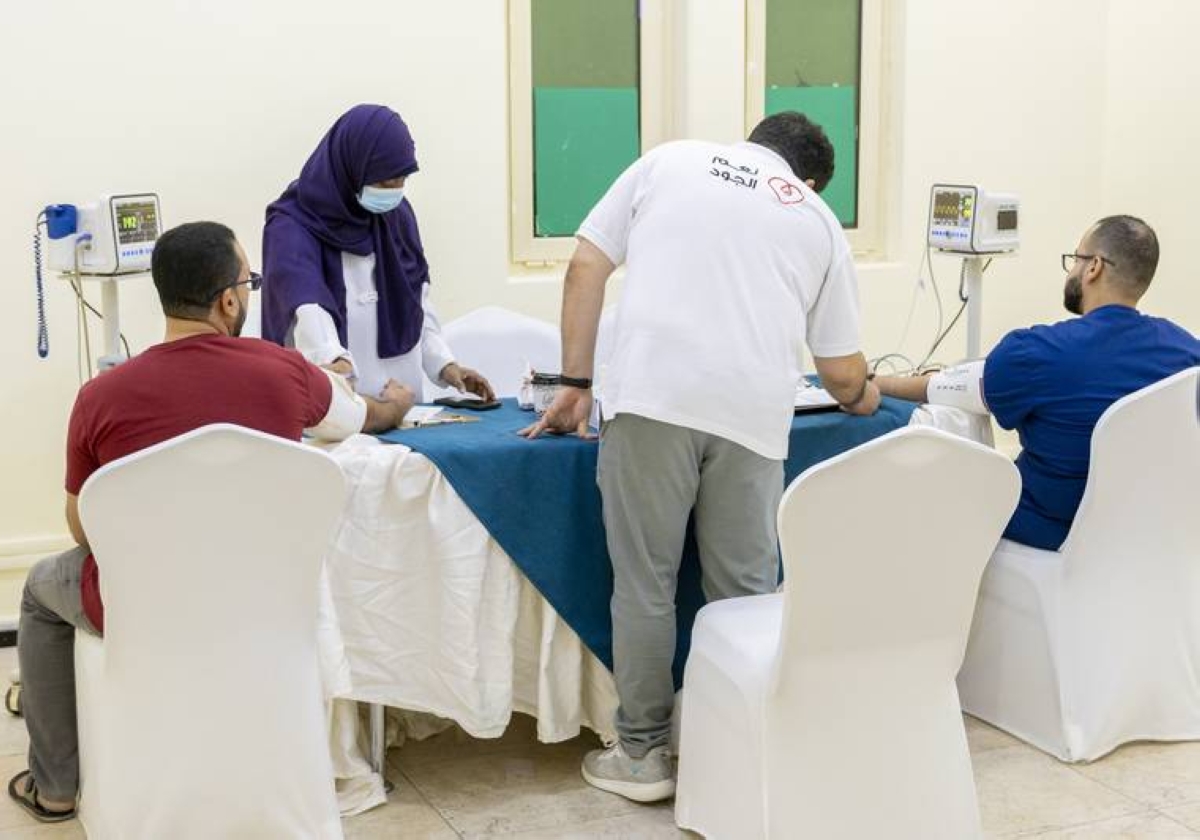
Donating blood: A step towards a healthy and cohesive society
The Ministry of Health invites citizens and residents of the Kingdom to participate in the Crown Prince's annual blood donation campaign. This campaign aims to promote voluntary blood donation and raise health awareness among members of society, in line with the Kingdom's Vision 2030 to build a vibrant and healthy society based on social solidarity and humanitarian giving.
Convenient donation options
Those wishing to donate blood can choose between two simple methods. The first is to go directly to one of the donation centers located throughout the Kingdom. The second method is to book an appointment electronically through the Sehaty app, which provides a convenient and easy experience for users.
Centers equipped to the highest standards
The ministry clarified that there are 185 accredited blood donation centers fully operational and ready to provide safe healthcare services that meet the highest quality standards. These centers are strategically located to cover various cities and regions throughout the Kingdom, making them easily accessible to donors.
The importance of blood donation
Donating blood is not only a noble humanitarian act, but also a medical necessity that helps save the lives of many patients who urgently need blood transfusions. Regular donations also improve the health of the donors themselves, as they are believed to help regenerate blood cells and improve blood circulation.
How can you participate?
If you wish to participate and promote a culture of humanitarian giving, you can find details about blood donation centers via the following link: Blood Donation Center Map . This link provides comprehensive information about center locations and opening hours, making it easier for you to plan your visit.
Tips for new donors
Before donating:
- Make sure you have a light meal and drink enough water before going to donate.
- Make sure you get enough sleep the night before the scheduled date.
- Wear comfortable clothes and avoid wearing tight sleeves to facilitate the blood draw process.
After the donation:
- Rest for a few minutes after you finish donating and drink some fluids to replace what you lost during the process.
- Avoid strenuous physical activity for the next few hours to ensure your body recovers to its normal state.
- If you experience any discomfort, such as dizziness or nausea, inform the medical staff immediately for assistance and guidance on what to do next. If you experience any discomfort, such as dizziness or nausea, inform the medical staff immediately for assistance and guidance on what to do next. If you experience any discomfort, such as dizziness or nausea, inform the medical staff immediately for assistance and guidance on what to do next. If you experience any discomfort, such as dizziness or nausea, inform the medical staff immediately for assistance and guidance on what to do next. If you experience any discomfort, such as dizziness or nausea, inform the medical staff immediately for assistance and guidance on what to do next. If you experience any discomfort, such as dizziness or nausea, inform the medical staff immediately for assistance and guidance on what to do next. If you experience any discomfort, such as dizziness or nausea, inform the medical staff immediately for assistance and guidance on what to do next. If you experience any discomfort, such as dizziness or nausea, inform the medical staff immediately for assistance and guidance on what to do next. If you experience any discomfort, such as dizziness or nausea, inform the medical staff immediately for assistance and guidance on what to do next.




Local News
Ramadan decorations in Jeddah bring together school friends after 46 years
A touching story from Jeddah: Ramadan decorations and a traditional Hijazi gathering reunite school friends after 46 years apart. Discover the details of the reunion that revived fond memories.

In a touching scene that embodies the spirituality of the holy month, the Ramadan decorations in Jeddah played an unexpected role in reconnecting what had been severed for decades, as the streets of the Bride of the Red Sea, sparkling with lights, became a stage for a moving reunion that brought together study friends after a separation of more than 46 years.
A Ramadan coincidence imbued with the fragrance of history
The story began when the dazzling lights and distinctive Ramadan decorations adorning the home of citizen Mohammed Al-Lakhmi caught the attention of a group of passersby. This wasn't merely a fleeting admiration for the artistic designs; it was a pivotal moment when these old colleagues found themselves face to face with the traditional Hijazi "Markaz" (a traditional gathering place) that prominently displays the front of the house.
In moments where feelings of astonishment and joy mingled, the long years of absence faded away, and colleagues Hussein Al-Qasimi, Fahd Al-Maghamsi, Fawzi Al-Harbi, Omar Bashmil, and Abdeen Sheiba got to know each other, and the surprised looks turned into a warm embrace that washed away the fatigue of the years, in a coincidence they described as “the most beautiful gift of the holy month.”.
The Hijazi Center: A social parliament and an authentic heritage
The presence of the "Markaz" (a traditional meeting place) in this gathering was not merely a fleeting decorative element, but rather a deeply rooted cultural and social symbol in the Western Region, specifically in Jeddah. Historically, the Markaz is known as a "miniature social parliament," where neighborhood issues were, and still are, resolved, guests were received, and friendly conversations took place.
Historians and those interested in Hijazi heritage point out that maintaining the traditional gathering place (markaz) in front of homes, especially during Ramadan, is evidence of adherence to the region's cultural identity. It embodies the values of generosity and good neighborliness, and reflects the open and interconnected nature of Jeddah's society.
Ramadan in Jeddah: A season for mending relationships
Ramadan nights in Jeddah have a unique character that distinguishes them from other cities, where worship blends with inherited social customs. The Ramadan decorations and lanterns that fill the streets and squares are an integral part of the city's cultural heritage, adding a special joy to the city.
In their interview with “Akhbar 24,” colleagues emphasized that the spiritual atmosphere and attractive decorations acted as a magnet, drawing them in, while the gathering place itself served as a sanctuary, holding memories spanning nearly half a century. They unanimously agreed that the continuation of these traditional celebrations is the true guarantee of social cohesion, as these customs remain a bridge connecting the past with the present, reuniting loved ones regardless of the distances that may separate them.
This incident confirms that Ramadan traditions in the Kingdom are not just formalities, but rather effective tools in promoting psychological and social health, and a strong incentive to revive human bonds in a time when the pace of life has accelerated.
Local News
Saudi Arabia weather: Cold conditions to continue until the end of the week
The National Center for Meteorology forecasts continued cold weather and lower temperatures across most of the Kingdom from Tuesday until the end of the week. Here are the details.

The National Center for Meteorology issued its weather forecast, indicating that cold weather will continue in several regions of Saudi Arabia from tomorrow, Tuesday, until the end of this week (March 2-3). This forecast confirms that large parts of the country will be affected by a noticeable drop in temperatures, necessitating caution from citizens and residents.
Weather details and affected areas
According to initial indicators and meteorological data, this cold wave is a result of cold air masses directly affecting the northern and northwestern regions, gradually extending to other areas in the central and eastern parts of the Kingdom. These weather changes are typically accompanied by increased surface wind activity, which may intensify the feeling of cold, especially during the night and early morning hours.
The climatic context and nature of the atmosphere in the Kingdom
Saudi Arabia is characterized by a wide climatic and geographical diversity. The northern regions and highlands typically experience sharp drops in temperature during the transitional seasons between winter and spring. These weather fluctuations are a natural part of the region's climate at this time of year, as warm and cold air masses clash, resulting in atmospheric instability and a noticeable decrease in temperatures before the arrival of spring weather.
The importance of warnings and their impact on daily life
The National Center of Meteorology's reports are of paramount importance in guiding daily life and economic and social activities. Locally, these alerts help families take necessary precautions to protect children and the elderly from colds and seasonal illnesses associated with changing weather. They also play a vital role in alerting drivers on highways, especially in open areas that may experience reduced visibility or strong winds.
Safety and prevention guidelines
In these cold conditions, relevant authorities, such as the Civil Defense and the Ministry of Health, consistently emphasize the importance of following public safety guidelines. This includes ensuring the safety of heating appliances and avoiding the use of coal or firewood in poorly ventilated enclosed spaces to prevent carbon monoxide poisoning, as well as wearing appropriate winter clothing to keep warm. It is also advisable to follow the continuous updates issued by the National Center of Meteorology through its official channels to obtain the most accurate information on weather developments.
Local News
Mohammed bin Salman's project is developing the historic Al-Najdi Mosque in Farasan
Learn about the development of the historic Al-Najdi Mosque on Farasan Island as part of the Prince Mohammed bin Salman project. An architectural masterpiece dating back to 1347 AH, it emulates the decorations of the Alhambra Palace.

In a move reflecting the great importance placed on Islamic architectural heritage in Saudi Arabia, the Prince Mohammed bin Salman Project for the Development of Historic Mosques has breathed new life into the historic Al-Najdi Mosque on Farasan Island in the Jazan region. This achievement is part of the first phase of this pioneering project, which aims to preserve the historical identity of mosques and enhance their religious and cultural significance.
An architectural masterpiece that tells the story of pearls
The Al-Najdi Mosque is a unique architectural icon and a living testament to a time when the pearl trade flourished in the Arabian Gulf and the Red Sea. It was built in 1347 AH (1928 CE) by Sheikh Ibrahim bin Ali Al-Tamimi, known as “Al-Najdi,” a prominent pearl merchant who migrated from Hawtat Bani Tamim and settled in Farasan during the Idrisid Emirate. Sheikh Al-Najdi wished to leave a lasting legacy, and this mosque, a blend of spirituality and exquisite architecture, became his enduring symbol.
A design that mimics the Alhambra Palace
What distinguishes Al-Najdi Mosque is its exceptional architectural style, which differs from the prevailing style in the region. It features intricate Islamic decorations and inscriptions that beautifully evoke the decorations of the Alhambra Palace in Andalusia. To realize this artistic vision, Sheikh Al-Tamimi imported building materials, paints, and artwork specifically from India, and employed skilled builders from Yemen to construct the mosque and his adjacent residence. The mosque comprises a prayer hall, an open courtyard, and the foundation for an octagonal minaret. Its roof is adorned with 12 domes supported by a precise structural system, making it an open-air museum of Islamic art.
Project importance and the context of the national vision
Prince Mohammed bin Salman's project to develop historical mosques is not limited to physical restoration; it also carries profound cultural and social dimensions that align with the Kingdom's Vision 2030. Farasan Island, which houses this mosque, is now a promising tourist destination, and preserving its historical landmarks is a cornerstone in promoting cultural tourism. The project aims to restore the architectural authenticity of these ancient mosques, transforming them into beacons of worship and sites that tell the stories of our forefathers, while ensuring their sustainability through the use of modern technologies that seamlessly integrate with their heritage.
Global development standards, Saudi-made
The mosque underwent meticulous restoration by Saudi companies specializing in heritage buildings, under the supervision of Saudi engineers, to ensure the preservation of its authentic architectural identity. The work focused on addressing structural elements, restoring the stucco decorations and original colors of the domes, and refurbishing the prayer hall, which contains an ancient mihrab and minbar brought from India, reflecting the Kingdom's cultural and commercial reach throughout history. Thus, Al-Najdi Mosque is once again filled with the call to prayer and the performance of prayers, blending the fragrance of the past with the spirit of the present.
-

 Local News 4 days ago
Saudi Arabia approves regulations for the continued presence of Gulf vehicles: duration and penalties
-
Local news two days ago
Jeddah Airport alerts for travelers due to airspace closure and flight disruptions
-
Local news one week ago
The Ministry of Interior begins procedures for a royal pardon for common law prisoners
-
Local News 6 days ago
The deadline for property registration in Hail and Riyadh is Thursday
-
Sports one week ago
Tickets for the Al-Ahli vs. Al-Hilal King's Cup match postponed: New date
-
Local News 7 days ago
Under the patronage of the Minister of Information, an agreement was signed between the Ministry of Information and Waves Marketing Company
-
Culture and Art 5 days ago
The Devil's Prisons series was halted: The full story of "The Emperor's" being moved to YouTube
-
Local news one week ago
Saleh Al-Maghamsi appointed Imam of the Prophet's Mosque: Details of the Royal Decree