Local News
Passport activation requirement after renewal for travel using national ID to Gulf countries
Saudi Arabia's General Directorate of Passports confirms the necessity of activating passports after renewal to be able to travel to Gulf countries using a national ID. Learn the details and the importance of this procedure to avoid travel bans.


The General Directorate of Passports in Saudi Arabia clarified an important requirement for citizens wishing to travel to Gulf Cooperation Council (GCC) countries using their national ID cards, following the renewal of their electronic passports. The Directorate emphasized that simply renewing the passport is not sufficient for using the national ID card for travel; the passport activation process must be completed first to ensure that the data is up-to-date in the border systems.
Details of the decision and implementation mechanism
The Directorate clarified that citizens who have renewed their passports and wish to travel to one of the Gulf countries (Kuwait, Bahrain, Qatar, the UAE, or Oman) using their national ID card will not be able to do so until the new passport is activated. Activation is achieved either by physically receiving the new passport or through the approved activation channels on the "Absher" platform, and by having the previous passport (if applicable) checked at passport offices. This technical procedure ensures data integrity between the international travel document (passport) and the national ID card, thus preventing any technical discrepancies when crossing border crossings.
General context: Mobility between GCC countries
This clarification comes as part of the ongoing facilitations provided by the Gulf Cooperation Council (GCC) countries to their citizens, allowing citizens of member states to cross borders using only their national identity cards, without needing a passport in most cases. This agreement is considered one of the GCC's most important achievements, as it strengthens social and economic ties and facilitates tourism and intra-GCC trade. However, security and technical regulations require that the traveler's official documents match perfectly in the central databases.
Digital transformation and the importance of the Absher platform
This measure reflects the significant advancements in the digital infrastructure of the Saudi Ministry of Interior. The "Absher" platform allows citizens to renew their passports electronically and receive them by mail, saving time and effort. However, the final step of "activation" remains a crucial safeguard to ensure that the new document is officially valid and has superseded the old one, preventing any loopholes that could be exploited for identity theft or the use of expired documents.
Important tips for travelers
To avoid any confusion or delays at border crossings and airports, the General Directorate of Passports always advises travelers to ensure the validity of their documents well in advance of their travel date. This includes verifying that their national ID card is valid for at least three months when traveling to GCC countries, and ensuring that the new passport has been activated if recently renewed, even if the traveler intends to use only their national ID card for their trip.


Local News
Saudi Arabia in Davos: AI and tourism investments
At the World Economic Forum in Davos, the Kingdom is showcasing its promising investment opportunities in artificial intelligence, tourism and industry, emphasizing its role as a reliable global partner.

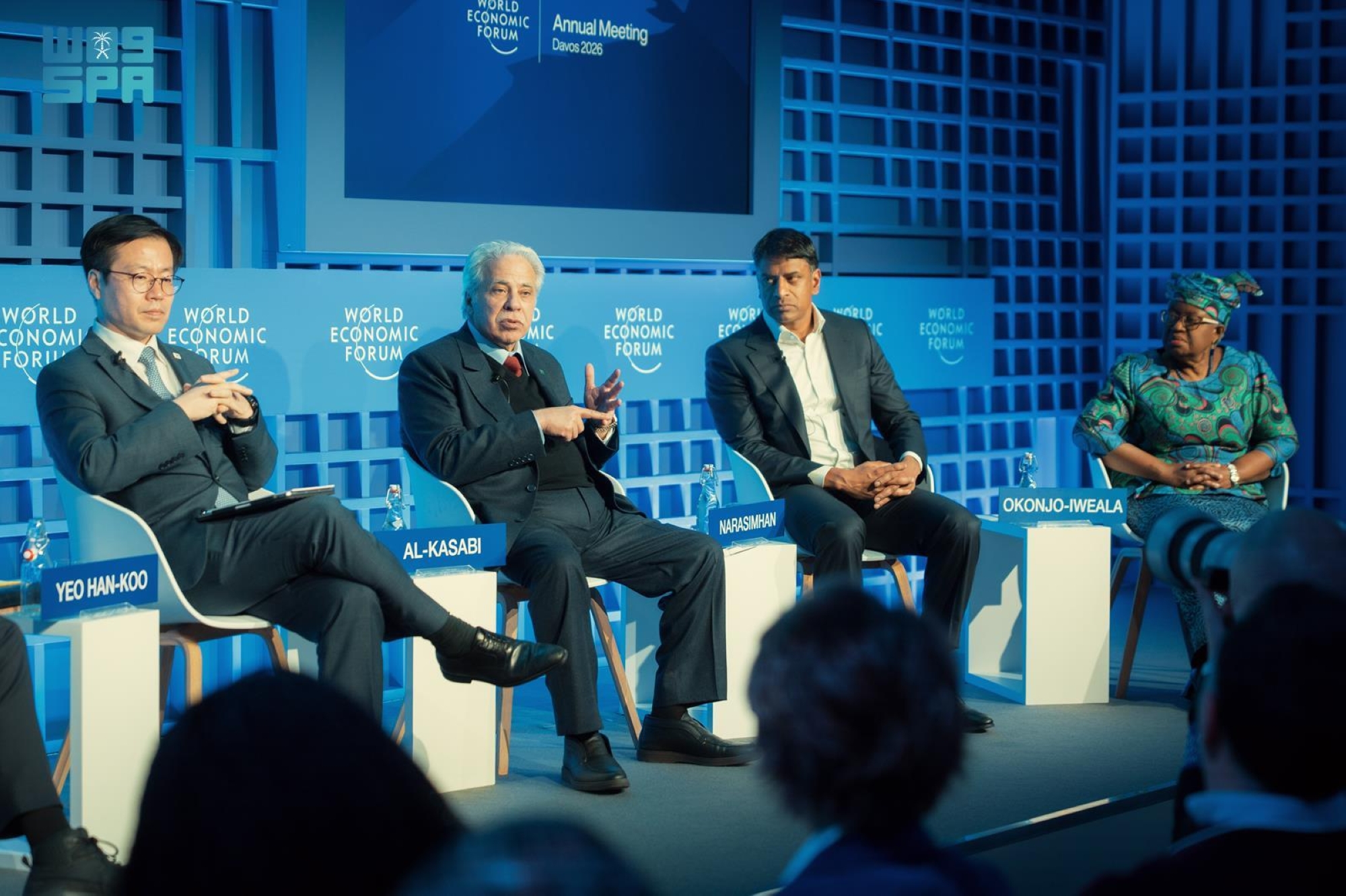
Saudi Arabia is cementing its position as a rising economic power in Davos
In a prominent appearance at the World Economic Forum's annual meeting in Davos, Saudi Arabia strongly showcased the opportunities of its new economy, emphasizing its pivotal role as an active international partner in shaping the future of the global economy. The high-level Saudi delegation, which included several ministers, highlighted the profound transformations underway in the Kingdom under Vision 2030, focusing on attracting investment in vital sectors such as artificial intelligence, tourism, and industry.
Historical background: From participant to active partner
The World Economic Forum in Davos is the world’s premier platform that brings together world leaders, major corporations, and thought leaders to discuss global challenges and opportunities. The Kingdom’s participation this year is the culmination of years of strategic planning and economic transformation. While its previous participations focused heavily on its role in stabilizing energy markets, the Kingdom is now presenting itself as a global hub for innovation and investment in non-oil sectors—a fundamental shift reflecting the ambitions of Vision 2030 to diversify the economy and build a sustainable future.
Key pillars of the new economy: trade, tourism, and technology
During its various sessions, the Saudi delegation highlighted the Kingdom's competitive advantages. His Excellency the Minister of Commerce, Mr. Majid Al-Qasabi, explained that the Kingdom's strategic location and vast resources qualify it to be a global economic bridge and a pivotal logistical hub connecting continents, especially as global trade moves towards a more managed and regulated model.
In the tourism sector, His Excellency the Minister of Tourism, Mr. Ahmed Al-Khatib, affirmed that the sector is witnessing unprecedented growth opportunities. With the United Nations Tourism Organization's projections of reaching two billion international tourists by 2030, the Saudi market stands out as one of the most attractive destinations for global investors in the hospitality, entertainment, and related technology sectors.
Artificial intelligence and economic stability: an attractive environment for innovation
The Kingdom affirmed its commitment to adopting future technologies, with His Excellency the Minister of Communications and Information Technology, Engineer Abdullah Al-Swaha, emphasizing the importance of strategic partnerships in the age of artificial intelligence. He noted that the Kingdom's ability to address energy and computing power challenges makes it a reliable partner and an ideal location for developing and implementing AI technologies. This commitment was further demonstrated by the launch of the "Saudi-American Innovation Partnership" on the sidelines of the forum, which aims to accelerate cooperation in vital fields such as life sciences and advanced manufacturing.
To support these ambitions, His Excellency the Minister of Finance, Mr. Mohammed Al-Jadaan, pointed out that the government’s role is to provide a stable and predictable economic environment, stressing that the Kingdom is constantly working to enhance the resilience of its economy and build bridges of trust with the local and international private sector.
Expected impact: To enhance local growth and regional role
The initiatives and partnerships announced in Davos have broad positive implications. Domestically, these investments are expected to contribute to creating high-quality jobs for Saudi youth, transferring knowledge and technology, and accelerating economic diversification. Regionally, these steps solidify the Kingdom's position as a leader in economic transformation in the Middle East. Internationally, the Kingdom is emerging as a key player that cannot be ignored in global value chains, whether in the field of strategic minerals, as His Excellency the Minister of Industry and Mineral Resources, Mr. Bandar Al-Khorayef, explained, or in shaping future economic partnerships.
Local News
First birth on the Riyadh train: A heartwarming story at Andalus station
The Andalus station on the Riyadh Metro witnessed its first birth, with the staff handling the situation with exceptional efficiency. Learn more about the story and the project's significance within the framework of Vision 2030.

In a unique human moment, the Andalus station within the Riyadh Metro network became the scene of the first birth witnessed by the project since its launch, in an exceptional event celebrated by the Riyadh Public Transport account, emphasizing the high readiness and professional efficiency of the operating teams.
The story began when a woman went into labor at the station. The station's operations team immediately intervened, demonstrating a swift and organized response. According to the public transport account, the emergency was handled with "utmost humanity and professionalism." Female staff provided initial support and assistance to the mother, ensuring her privacy and comfort until the arrival of paramedics, who then transported her and her newborn to the hospital in good health.
Project background and strategic importance
This event highlights the operational and human dimensions of the Riyadh Metro project, a cornerstone of the King Abdulaziz Public Transport Project in Riyadh and one of the largest infrastructure projects under Saudi Vision 2030. The project aims to transform public transportation in the capital, reduce reliance on private vehicles, alleviate traffic congestion, and contribute to environmental sustainability goals. The network is designed to cover most vital areas of Riyadh via six main lines and 85 stations, serving millions of residents and visitors efficiently and safely.
The impact of the event and its implications
This incident transcends being merely a breaking news event; it serves as a powerful indicator of the train's operational success and its ability to handle various unforeseen scenarios. The crew's swift and organized response not only reflects the quality of their training but also builds a bridge of trust between the project and the community. Locally, such positive stories reinforce the perception of the Riyadh Metro as a safe and reliable service where passengers feel secure and cared for. They also highlight the vital role of women in managing and operating this landmark project, aligning with the increasing empowerment of women across various sectors in the Kingdom.
In recognition of this joyous occasion, Riyadh Metro presented the parents with a commemorative gift: two first-class “Darb” passes valid for a full year. This symbolic gesture welcomed the newborn as one of the first passengers whose story is intertwined with the beginnings of this major national project. Gratitude was also extended to all the crew members who handled the situation with wisdom and professionalism, becoming part of this inspiring story.
Local News
Saudi 911 center receives 84,000 calls in one day
The National Security Operations Center 911 announced that it received 84,866 emergency calls in one day in the Riyadh, Makkah, Eastern and Madinah regions, reflecting the efficiency of the security system.

Standard response from the Saudi emergency system
The National Security Operations Center (911) announced a remarkable record in the volume of incoming reports, receiving 84,866 calls via the unified emergency number in just one day, on Thursday, January 22, 2026. This statistic included four main regions: Riyadh, Makkah, the Eastern Province, and Madinah, reflecting the operational pressure and high efficiency with which the center operates around the clock to serve citizens, residents, and visitors.
Call distribution and key metrics
According to data released by the center, the Riyadh region topped the list with the highest number of calls, at 35,352, followed by the Makkah region with 26,247 calls, then the Eastern Province with 16,200 calls, and finally the Madinah region with 7,067 calls. The center noted that the average number of incoming calls was approximately 58 per minute, a strong indicator of growing confidence in the security system and its ability to respond quickly and effectively to various types of reports.
Project background and strategic objectives
The Unified Security Operations Center (911) project is one of the most important initiatives launched by the Saudi Ministry of Interior as part of the Kingdom's Vision 2030. The project aims to unify the various emergency numbers (such as police, traffic, civil defense, and the Red Crescent) into a single, easy-to-remember and use number, thereby reducing response times and improving the quality of security and humanitarian services. The 911 centers are equipped with the latest global technologies to ensure immediate coordination between different security and service agencies and to direct resources to incident sites with exceptional accuracy and speed.
Local significance and impact on quality of life
The center's importance lies in its pivotal role in strengthening the Kingdom's security and public safety system. By receiving and efficiently processing security and service-related reports, the center contributes to preserving lives and property. Furthermore, the presence of qualified personnel fluent in multiple languages ensures service delivery to all segments of society, including visitors, pilgrims, and Umrah performers from around the world. This integrated service positively impacts quality of life indicators and enhances the sense of security among the Kingdom's residents and visitors.
A leading position at both the regional and international levels
The impact of this project extends beyond the local level, placing the Kingdom among the world's leading nations in emergency and crisis management. The ability to efficiently handle such a massive volume of calls, particularly in vital areas like Mecca and Medina, which experience immense population density during Hajj and Umrah seasons, highlights the Kingdom's organizational and technological capabilities. This model serves as an inspiration for many countries in the region seeking to develop their security and service systems.
The National Security Operations Center 911 affirms its commitment to handling all reports with complete confidentiality, and encourages everyone to report any emergency without hesitation, while ensuring that the report is transferred to the competent authority and followed up until the situation is resolved, within the framework of an integrated work system aimed at achieving the highest levels of security and safety for the community.
-

 Reports one week ago
Achievements of Saudi government sectors in 2025
-
Local news two weeks ago
FDA warns of contaminated Nestle infant formula | Recall details
-
Technology 4 weeks ago
US ban on drones: reasons and consequences
-
Technology 3 weeks ago
Saudi Arabia launches the world's largest government data center, 'Hexagon'
-
Technology 3 weeks ago
Merging KSA Map and Baladi Plus: A step towards Saudi digital sovereignty
-
Technology two weeks ago
Hexagon: Saudi Arabia strengthens its data sovereignty with the world's largest government center
-
Technology 3 weeks ago
European banks and artificial intelligence: A plan to lay off 200,000 employees
-
Politics 3 weeks ago
The coalition destroys smuggled Emirati weapons in Mukalla in a qualitative strike