
Politics
Sending Tomahawk missiles to Ukraine: A Russian warning of dire consequences
Russia warns of dire consequences after supplying Tomahawk missiles to Ukraine, amid escalating tensions between Moscow and Washington and significant geopolitical implications.

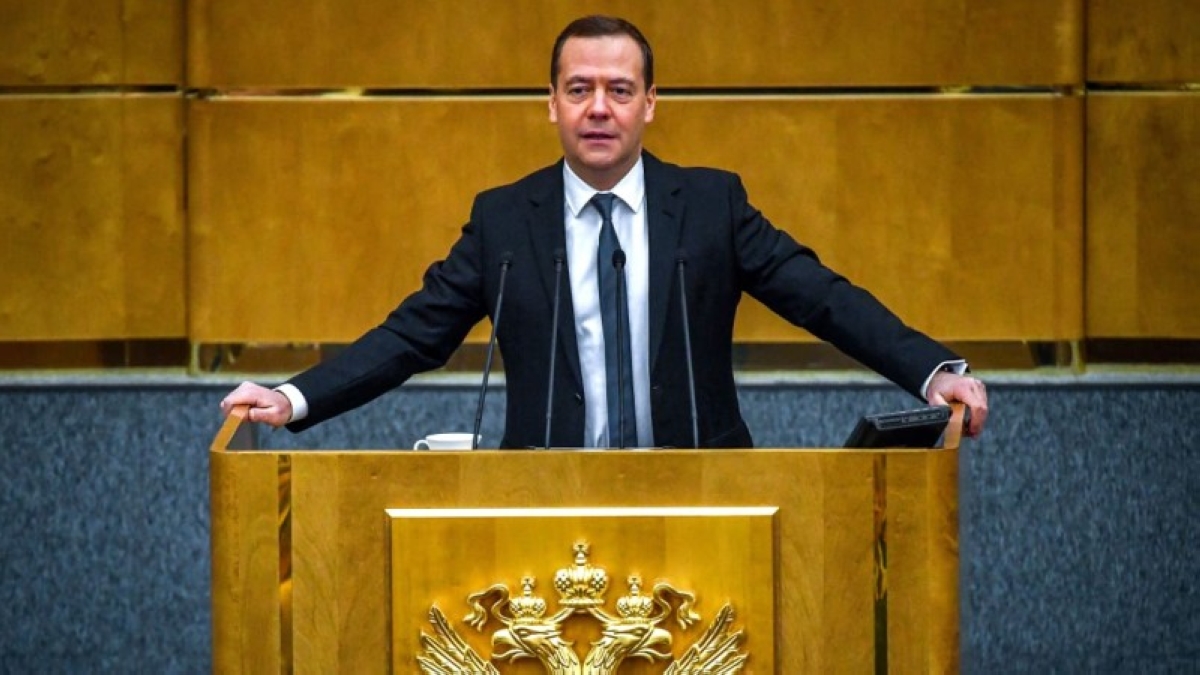
Tensions are escalating between Moscow and Washington over Tomahawk missiles
Amid escalating international tensions, former Russian President Dmitry Medvedev warned that the US supply of Tomahawk missiles to Ukraine could have dire consequences for everyone, specifically mentioning the impact on former US President Donald Trump. These remarks come against a backdrop of increasing geopolitical complexities among the world's major powers.
Russian warnings and American statements
Medvedev explained that distinguishing between conventional Tomahawk missiles and those equipped with nuclear warheads is impossible once launched, raising concerns about how Russia would respond to such a development. He hinted at the possibility of a Russian response of a nuclear nature, reflecting the gravity of the current situation.
For his part, Trump warned that he might send long-range Tomahawk missiles to Ukraine if Moscow did not end the war there soon. He emphasized that he might be prepared to increase pressure on Russian President Vladimir Putin using a substantial weapons system, stressing the power and impact of these offensive missiles.
Talks with Zelensky
Trump's remarks came after a phone call with Ukrainian President Volodymyr Zelensky, during which they discussed strengthening Ukraine's air defenses and long-range capabilities. Zelensky described the call as "very productive," indicating a convergence of views on the importance of bolstering Ukraine's defense capabilities.
International reactions and strategic analysis
Russian President Vladimir Putin has previously warned that the United States supplying Ukraine with long-range missiles would seriously damage relations between Moscow and Washington. This warning reflects Russia's deep concern about any escalatory steps that could worsen the security situation in the region.
Saudi Arabia and its diplomatic role
Amid these escalating tensions, Saudi Arabia is playing a crucial diplomatic role in attempting to de-escalate the situation and promote regional and international stability. Riyadh is relying on its diplomatic strength and strategic balance to achieve peace and stability in the region and the world.
Conclusion and analysis of the international situation
The situation between Russia and the United States remains sensitive and complex, requiring wisdom and diplomacy to avoid any escalation that could lead to disastrous consequences. Continued dialogue and mutual understanding are the best way to resolve conflicts and ensure global security and peace.




Politics
Aboul Gheit warns Iran: Your attacks are a strategic mistake that deepens the rift
Ahmed Aboul Gheit condemns Iranian attacks on Arab countries, describing them as a strategic mistake that violates good neighborliness and threatens to expand the circle of conflict in the region.

In a significant diplomatic escalation reflecting the extent of Arab concern over recent developments, the Secretary-General of the Arab League, Ahmed Aboul Gheit, issued a strongly worded warning to Tehran, describing the recent Iranian attacks targeting Arab countries as a grave "strategic mistake." These statements, made on Wednesday, express the Arab League's rejection of any infringement upon the sovereignty of its member states, emphasizing that such actions only serve to deepen the existing rift between Iran and its Arab neighbors.
A blatant violation of the principles of good neighborliness
In elaborating on the Arab position, Secretary-General Ahmed Aboul Gheit explained in a press statement published on the “X” platform that the danger of these attacks lies not only in their blatant violation of international law and the UN Charter, but also in their striking at the very heart of the principles of “good neighborliness” that should govern relations between riparian and neighboring states. He pointed out that these practices create an unprecedented level of hostility and tension, making bridging the gap between the two sides extremely difficult in the future. He warned that the repercussions of these attacks will leave deep scars on the memory of regional relations.
Regional context and risks of conflict expansion
Aboul Gheit's remarks come at a time of highly complex geopolitical tensions in the Middle East, with growing international and regional fears of the region sliding into a full-blown war. In this context, Aboul Gheit highlighted a crucial point concerning attempts to "drag the region" into conflicts in which it is not a party. He emphasized that while everyone is aware of the pressures and hardships Iran may face in its current conflicts, this does not give it any moral or political justification to target neighboring Arab states that are striving to distance themselves from the flames of war. Analysts indicate that this stance reflects the Arab League's strategy of keeping Arab states neutral in international conflicts and protecting their national security from any external repercussions.
A call to rectify the situation before it's too late
The Secretary-General of the Arab League concluded his remarks with a clear warning, cautioning against the dangers of widening the current conflict. He stressed that Tehran's continued pursuit of this course without immediate review and course correction with the targeted countries could lead to dire and irreversible consequences. This appeal represents a final opportunity to prioritize reason and shared interests, as Aboul Gheit emphasized the necessity for the Iranian side to "wake up" and immediately cease its attacks to prevent the region from reaching a point of no return in diplomatic and security relations.
Politics
The White House confirms Khamenei's death and is monitoring Mojtaba's succession
The White House announces the killing of Iranian Supreme Leader Ali Khamenei and 49 commanders in Operation Epic Wrath, and confirms that Mojtaba Khamenei is being monitored as a possible successor amid the destruction of military capabilities.

In an unprecedented military and political development, the White House officially announced Wednesday the success of large-scale military operations targeting command and control centers in Iran, resulting in the deaths of 49 high-ranking leaders, including Iranian Supreme Leader Ali Khamenei. This announcement coincided with reports from Iranian media of loud explosions that shook northern Tehran, as well as the cities of Yazd and Tabriz in central and northwestern Iran.
Details of Operation "Epic Wrath" and its results
During a press conference, White House spokeswoman Carolyn Leavitt revealed details of the operation, dubbed "Epic Wrath." Leavitt confirmed that the joint US-Israeli strikes achieved "significant results" and exceeded their planned objectives, inflicting widespread damage on the Iranian regime's leadership structure and military capabilities. She explained that the timing of the strike was extremely precise, based on confirmed intelligence regarding the whereabouts of Supreme Leader Ali Khamenei, leading to his assassination and the end of his long reign.
Mojtaba Khamenei under American scrutiny
In discussing the post-Khamenei era, the spokesperson indicated that the United States is closely monitoring internal developments in Tehran, noting intelligence reports suggesting that Mojtaba Khamenei, the late Supreme Leader's son, is the most likely candidate to succeed his father. She emphasized that US intelligence agencies are observing this matter with extreme caution, given its significance in shaping the future of Iranian politics and the regime's direction.
The diplomatic track has failed, and confrontation is inevitable
The White House addressed the background to this military escalation, with Levitt explaining that American negotiators had reached an impasse after Tehran rejected all US offers regarding its nuclear program. She stated that the Iranian regime categorically refused to abandon uranium enrichment or engage in a genuine peace process, reinforcing Washington's conviction that Tehran was less interested in a settlement than in buying time to develop a nuclear weapon, thus necessitating a decisive response.
The Trump administration's stance and the future of the region
The US administration, through its spokesperson, emphasized that President Donald Trump will not allow Iran to rebuild its military capabilities or pose a new threat to the United States and its allies. It indicated that the military operation was a preemptive step taken after detecting Iranian offensive intentions, asserting that the strategic objective of eliminating the immediate threats had been achieved. Observers suggest that this event will trigger a geopolitical earthquake in the Middle East, as the killing of the head of the Iranian regime presents the region with open-ended scenarios and reshapes the regional and international balance of power for years to come.
Politics
White House: No Iranian ground troops; plans to secure Hormuz
The White House confirms there are no plans to deploy ground troops in Iran, and announces measures to secure the Strait of Hormuz and evacuate Americans following recent developments and the killing of Khamenei.


In a significant development amid the rapidly unfolding events in the Middle East, the White House has settled the debate surrounding the nature of US military actions toward Tehran, confirming in an official statement issued today (Wednesday) that there are no current plans to send ground troops as part of the ongoing operations in Iran. This announcement outlines the contours of the US strategy for the next phase, which focuses on targeted strikes and securing vital interests without being drawn into a large-scale ground invasion.
Washington's strategy: Protect civilians and avoid attrition on the ground
White House spokeswoman Caroline Leavitt explained that the Trump administration is currently focused on two main objectives: ensuring the safety of American citizens in the region and countering Iranian threats through air superiority and intelligence operations. Leavitt indicated that the administration will announce additional measures in the coming days aimed at facilitating the return of Americans wishing to leave the Middle East, reflecting growing concern about the potential for the conflict to escalate.
This approach reflects Washington’s desire to avoid the scenarios of long ground wars that the region witnessed in previous decades, preferring to rely on the “cumulative effect” of air and missile strikes to respond to the direct threats posed by Tehran to the United States and its allies, which was clearly evident in the timing and nature of the latest strike.
Global energy security: A plan to secure the Strait of Hormuz
In a related context concerning global economic security, the statement revealed intensive efforts led by the Department of Defense (the Pentagon) in cooperation with the Department of Energy to develop a robust plan to secure navigation in the Strait of Hormuz. This waterway is the most vital artery for global oil supplies, through which a significant portion of the world's daily energy consumption passes.
Analyses indicate that this move is a preemptive measure against any retaliatory actions that might target maritime trade, as Washington seeks to reassure global markets and its allies in the Arabian Gulf that military operations will not negatively affect the flow of energy, and that the US naval presence will be strengthened to ensure freedom of navigation.
The post-Khamenei era: Intelligence agencies have their eyes on the Supreme Leader's successor
On the domestic political front in Iran, the White House spokesperson highlighted the political ramifications of the killing of Iranian Supreme Leader Ali Khamenei. She emphasized that President Trump and his national security advisors are carefully considering the role the United States can play in shaping the post-military landscape in Iran.
She added that US intelligence agencies are closely monitoring the movements of Mojtaba Khamenei, the son of the late Supreme Leader, who is reportedly the most likely candidate to succeed his father. Washington considers the power transition in Tehran a crucial turning point in the future of relations between the two countries, and is tracking all indicators to arrange appropriate diplomatic and security measures for dealing with the potential new leadership.
-
 Local News 6 days ago
Saudi Arabia approves regulations for the continued presence of Gulf vehicles: duration and penalties
-

 Local news one week ago
The Ministry of Interior begins procedures for a royal pardon for common law prisoners
-
 Local news one week ago
The deadline for property registration in Hail and Riyadh is Thursday
-

 Local News 6 days ago
The Food and Drug Administration is recalling Bebelac and Aptamil milk due to potential contamination
-
 Culture and Art, 1 week ago
The Devil's Prisons series was halted: The full story of "The Emperor's" being moved to YouTube
-
Local news one week ago
Under the patronage of the Minister of Information, an agreement was signed between the Ministry of Information and Waves Marketing Company
-

 Local News 6 days ago
Saudi Energy: A new identity for electricity that aligns with Vision 2030
-
 Local news one week ago
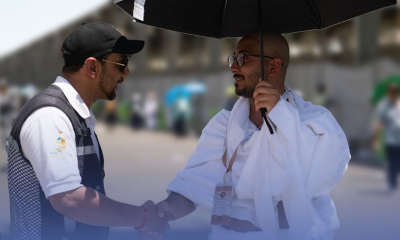
Registration is now open for domestic pilgrims for the 1447 AH season: Dates and conditions via Nusuk