Culture and Art
TV star Kim Woodburn dies at 83
British star Kim Woodburn, best known for her popular TV show "How Clean Is Your House", has died at the age of 83


British star Kim Woodburn, known for her popular TV show "How Clean Is Your House," has died at the age of 83 after a short battle with illness, according to British media reports, sparking a wave of sadness among fans of the star who was famous for her unique style of giving home cleaning advice.
Kim Woodburn, born on March 25, 1942, in Portsmouth, England, rose to prominence as one of the UK's most beloved television personalities thanks to her Channel 4 show, which aired from 2003 to 2009. She co-hosted the show with Aagee Woodcutt, visiting homes in need of a deep clean and offering practical solutions and innovative tips for improving cleanliness and organization. Known for her strong personality and sense of humor, Kim became a fan favorite, speaking frankly and making witty remarks during her home visits. She began her career as a cleaning expert before transitioning to television stardom, leveraging her extensive experience to deliver practical advice that made her show a model of edutainment. Kim also appeared in other programs, such as "I'm a Celebrity… Get Me Out of Here!" in 2009, showcasing another side of her playful and outspoken personality. Despite her age, Kim remained active in the media and participated in promotional events related to cleaning and home care. During her career, Kim Woodburn, who started her career in cleaning, became a cultural icon thanks to the program “How Clean Is Your House”, which not only provided cleaning advice, but also contributed to changing the British community’s view of home cleanliness. The program achieved great success and received international versions in countries such as the United States and Australia.
Related News


Culture and Art
Actress Kitty, star of Ismail Yassin's "Afrita" series, dies at 96
Details of the death of artist Kitty, star of the film "Afrita Ismail Yassin", at the age of 96 in Greece, and milestones in her artistic life and her retirement during the golden age of Egyptian cinema.
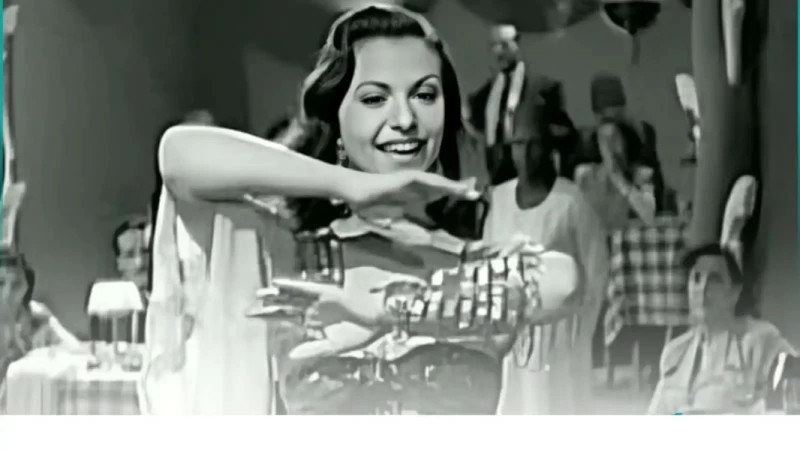
The curtain has finally fallen on the life of one of the most prominent icons of showmanship and acting in the golden age of Egyptian cinema, as the artist “Kitty” passed away at the age of 96, bringing back memories of the era of beautiful art and the magic of black and white screens.
The late artist was famously known as "Ismail Yassin's Genie," a nickname that stuck with her for decades, but her real identity was Catherine Foutsaki. Kitty was born in Alexandria in 1930, a cosmopolitan city that was then a hub of cultures and arts, which contributed to shaping her exceptional talent from a very young age. She began her journey by learning ballet and belly dancing, later becoming a star sought after by theaters and film cameras.
Artistic beginnings at Badia Masabni School
Kitty's rise to fame was no accident; it began with one of the most important schools of performing arts in Egypt, the Badia Masabni Troupe, which produced giants of the art world. She then moved on to shine on the stage of the Shahrazad Casino, where she successfully crafted a unique style that blended wit, agility, and acting ability, making her a familiar and beloved face among the Egyptian public.
The successful duo with Ismail Yassin
The 1950s marked the golden age of the artist Kitty, as she formed an unforgettable artistic duo with the comedy legend Ismail Yassin. This collaboration culminated in the 1954 film "Afrita Ismail Yassin," in which she portrayed a cheerful and energetic character, cementing her image in the collective memory of Arab viewers. Kitty was not merely a dancer in his films; she was an actress with a comedic sense that rivaled Ismail Yassin's quick wit, making their films together landmarks in the history of Egyptian comedy.
Silent departure and retirement
Throughout her career, Kitty appeared in approximately 69 films, the last of which was "Mind and Money" in 1965, in which she co-starred with Ismail Yassin and Madiha Kamel. Towards the end of the 1960s, Kitty began a gradual withdrawal from the limelight, a move that sparked much speculation and rumor at the time.
Kitty was married to director Hassan El-Seify, but they later separated. Following this, she decided to retire from acting permanently and leave Egypt, returning to her roots in Greece. There, she chose to live a quiet life away from the hustle and bustle of fame, refusing all media offers to appear or speak about her memories, preferring to remain as her fans remembered her: a beautiful, vibrant young woman.
An artistic legacy that will never fade
With the passing of the artist Kitty, an important chapter in the history of classic Egyptian cinema closes, and the artistic scene loses a witness to an era characterized by cultural diversity and artistic creativity. Despite her absence from Egypt for decades, her work remains alive, constantly being shown on screens, reminding new generations of "the little rascal" who stole laughter and hearts with her lightheartedness and enchanting smile.
Culture and Art
The tragedy of the poet Badr Al-Hazin: Calls for cultural loyalty after his leg was amputated
Poet Maneh bin Jallab (Badr Al-Hazin) is facing a health crisis after his leg was amputated following a car accident. Calls are being made for cultural institutions to support him in recognition of his poetic contributions and literary career.

In vibrant societies where culture forms the cornerstone of identity, loyalty is not measured solely by the volume of applause during moments of brilliance and success, but rather by the resilience of the cultural body and its ability to embrace its members during times of hardship and adversity. A true artist is not merely a creator of texts, but a living memory and a conscience that pulsates with the hopes and sorrows of society, making support for them in times of crisis a moral and institutional obligation before it is a social luxury.
In this context, all eyes, filled with both pain and hope, are on the poet and writer Maneh bin Jallab Al Ghanem , who has etched his name in the annals of Nabati poetry with the title "Badr Al Hazin" (The Sad Moon). This melodious poetic voice is currently facing a harsh personal turning point, following a horrific car accident that resulted in the amputation of his leg. This incident was not merely a passing physical injury, but a true test of the resilience of his creative spirit, a challenge that touches the very fabric of his daily life and his ability to connect with the world that has so often enriched his sensibilities with the most beautiful poems.
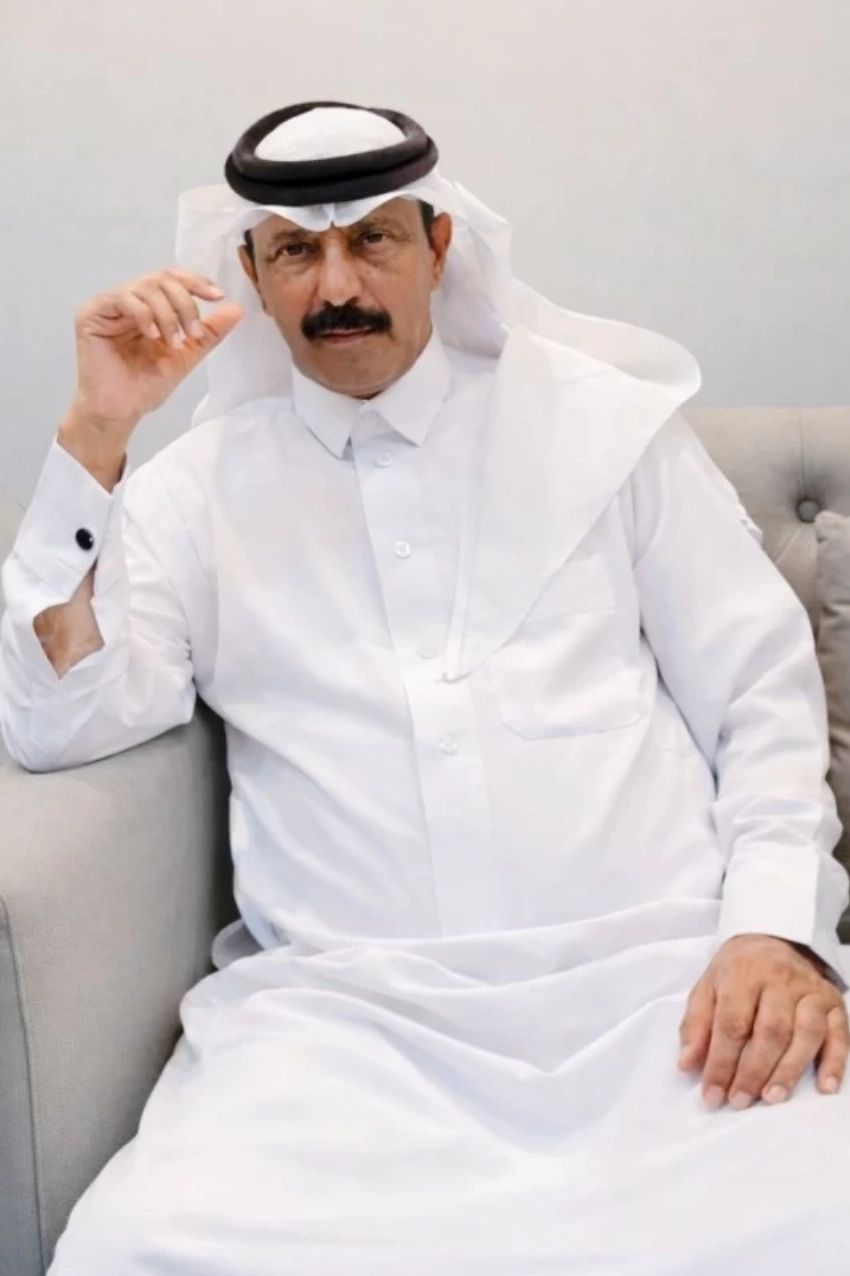
In Saudi Arabia and the Arabian Gulf, poetry is not merely a literary art; it is the Arabs' record and chronicle of their achievements. Poets have always been the voice of society and the guardians of its values. Therefore, the tragedy that befell Badr al-Hazin opens a wide door to discussing a fundamental issue concerning the mechanisms of support and care provided by cultural institutions and literary societies to their members. The role entrusted to these entities extends beyond organizing poetry readings and publishing collections; it encompasses providing a social and psychological safety net for the creative individuals who have contributed to shaping the cultural landscape, ensuring them a dignified life befitting their contributions.
Despite the harshness of the experience, the poet Mane' bin Jallab remains an example of patience and perseverance, armed with a deep faith that is clearly evident in his verses, which his admirers have shared and which have become an icon of resilience in the face of adversity. He says:
Life, with its bitterness, remains sweet as long as God is generous.
Rise up and shake off the dust of sorrow from your heart, lest it suffocate it.
He creates relief with hardship. A merciful Lord to His creation,
and He answers after the darkness and the night with a bright sun.
These words are not merely rhyming verses; they are a message of life, affirming that true disability lies in the spirit, not the body. However, the poet's resilience does not absolve the cultural and media establishment of its responsibilities. Highlighting Badr Al-Hazin's plight today is a clear call to transform feelings of sympathy into tangible initiatives, whether through honoring him morally or providing him with material and medical support to overcome this ordeal.
In conclusion, honoring the poet Badr Al-Hazin is honoring poetry itself, and a message affirming that creative individuals in our nation are not left alone to face their fate. We await action from the relevant authorities that matches the magnitude of the pain, and restores the smile to a poet who so often brought it to our faces, so that we may prove to the world that our culture is rooted in humanity, and that we are a nation that cherishes friendship and protects the dignity of its creative minds.
Culture and Art
Mohamed Ramadan sparks controversy with a "Number 1" photo and a message to his rivals
Mohamed Ramadan is trending with a new photo bearing the number 1, despite his absence from Ramadan dramas. Details of his message to his rivals, the controversy surrounding Lara Trump's music video, and the release date of his new film, "Asad" (Lion).

Despite his noticeable absence from this year's Ramadan drama marathon, Egyptian star Mohamed Ramadan to steal the spotlight and dominate search engines and social media, proving once again his exceptional ability to manipulate the media landscape to his advantage. This time, Ramadan returned not with a drama series, but with a single image posted on his official Facebook page. In the photo, he sports a new haircut with the number "1" tattooed on his back, accompanied by his usual defiant caption: "Number One... Some people call me that, and it's given others a complex."
A veiled message at a crucial time
This post sparked a wide range of reactions and debate among both the public and critics. Its timing is significant because it coincided with several current drama stars announcing their top viewership ratings during Ramadan, leading many to interpret Ramadan's message as an indirect response to his rivals in the entertainment industry, implying that his position as "number one" remains unchanged even in his absence from the small screen.
The history of the "Number 1" title and marketing strategy
To understand the context of this event, we must go back a little. Mohamed Ramadan adopted the title "Number 1" as part of his artistic and marketing identity since the release of his hit song of the same name in 2018. Since then, this title has become his trademark and a constant source of controversy between supporters who see it as well-deserved confidence based on viewership and revenue figures, and detractors who see it as a form of arrogance. This latest post shows that Ramadan continues to solidify this image, using social media platforms as an effective tool to remain in the spotlight.
Between globalism and Egyptian identity
The controversy surrounding Mohamed Ramadan wasn't solely due to this photo; it was preceded by heated discussions following his recent musical collaboration with Lara Trump, filmed inside her Miami home. Despite criticism regarding the absence of the Egyptian flag in the music video, Ramadan responded firmly, affirming his unwavering pride in his Egyptian identity and his commitment to representing his country. He indicated that his international experience wouldn't end there, and that he was preparing to announce new global collaborations that would further solidify his presence beyond the Arab world.
The next bet: the film "Lion"
While audiences miss his presence in Ramadan dramas, Mohamed Ramadan is currently focusing on cinema, betting on a strong and distinctive comeback with his highly anticipated historical film "Asad" (Lion). Expected to be released during the Eid al-Fitr season of 2026, the film represents a significant leap forward in his career, as it is set in a historical context requiring extensive preparations. This explains his temporary absence from television dramas, allowing him to concentrate on delivering a cinematic work worthy of his fans' expectations.
In conclusion, Mohamed Ramadan proves once again that he is an artistic phenomenon that transcends the boundaries of traditional works, as he possesses the keys to the media game that enable him to remain the talk of the town, whether through a scene in a series, a song, or even just a picture and a hairstyle.
-

 Local news two days ago
Saudi Arabia approves regulations for the continued presence of Gulf vehicles: duration and penalties
-
Culture and Art, 1 week ago
The ban on the Hamdiya series in Iraq: Reasons and official response
-
Local News 5 days ago
The Ministry of Interior begins procedures for a royal pardon for common law prisoners
-
Reports one week ago
King Salman Relief Center's Ramadan aid includes 9 countries
-
Local news one week ago
19 requirements to reduce dust from projects in Riyadh and fines for violators
-
Culture and Art, 1 week ago
Details of the first episode of the series "Al-Maddah 6: The Legend of the End"
-
Sports one week ago
Dates for the Al-Nassr vs. Al-Wasl match in the 2026 AFC Champions League quarter-finals
-
Politics, one week ago
Trump plans to create a $2 billion alternative to the World Health Organization