
Culture and Art
The rhythmic image in the collection "Walkers with the Breath of Deer"
The collection of poems (Walking with the Breath of Gazelles) by the poet Muhammad Al-Harz is a deep poetic journey into the worlds of existence, self, and the search for meaning.

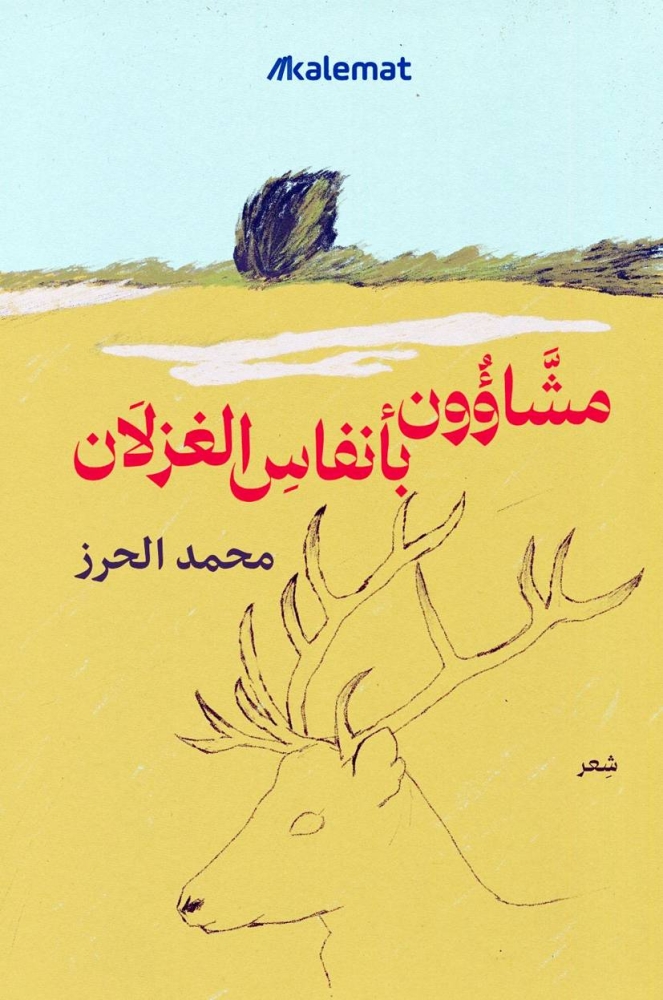
The poetry collection "Walking with the Breath of Gazelles" by poet Mohammed Al-Harz is a profound poetic journey into the realms of existence, self, and the search for meaning. This collection showcases a unique blend of rich poetic imagery and philosophical elements that invite contemplation, as the poet guides the reader through sensory and abstract details representing different dimensions of human life. Through a transparent and dense language and multi-layered imagery, Al-Harz successfully conveys his deep feelings about issues of existence, time, loss, and memory, transforming the poem into a contemplative space open to interpretation.
The collection explores themes that touch the very core of the human experience, such as the struggle between presence and absence, the search for meaning in life amidst the absurdity of existence, and the interplay between nature and humanity. The poet also employs conceptual blending techniques that combine the real and the imaginary, the sensory and the abstract, the human and the natural, lending the poems a depth and spirituality that invites the reader into an intellectual and emotional dialogue with the text.
(Walking with the Breath of Deer) is not just a traditional poetry collection, but a space for searching for the self and reflecting on what lies beyond the apparent, and a reminder of the status of poetry as a bridge that connects man to himself and to the world around him.
The poetic imagery in this collection is characterized by depth and diversity, as the poet employs complex and expressive images that reflect philosophical ideas and existential meanings. Here, images are not merely aesthetic expressions, but rather tools for exploring the self and the world, used to present visions that transcend superficial description, reaching profound sensory and symbolic expressions.
Examples of poetic imagery in the collection:
Cosmic image:
In his words, “As if I were cultivating trees in my sleep, only to awaken to find their fruit falling,” the poet uses the image of trees growing in sleep and bearing fruit as a metaphor for thoughts or feelings that take shape in the unconscious and surface upon waking. This image carries connotations of immersion in the poetic experience and the constant anticipation of its harvest.
Expressing loss:
The poet paints a poignant picture of loss in his words: “Memory… is capable of creating a deep rift, at every moment, in the souls of his loved ones and family.” Here, memory becomes like a polished mirror reflecting longing and pain, leaving profound marks on the living. The imagery here employs the relationship between memory and wounds, portraying memory as a force that influences and transforms permanently. This is also found in the poem “A Poet Who Dies Only from His Amazement,” dedicated to the poet Ali al-Dhamini.
Composite images of simple objects:
In another passage, the poet says: “To abandon poetry in the face of these difficulties… is to respect it, and respecting it means only one thing: to declare that you have Alzheimer’s.” Here, the poet merges poetry and memory loss in a composite image, reflecting the understanding of poetry as the essence of existence and continuity, and that distancing oneself from it means losing a fundamental part of one’s identity.
Sensory imagery in describing family memories:
He says: “I scream in your books, I hide among their words, I delete a line here and add two lines there.” This image carries a vivid feeling of the poet as he tries to reshape his memories and his past through manipulating words, as if he is reformulating his relationship with time and people through texts.
Surreal images:
In another text he writes: “Life near broken stairs will not prevent the blind man from the virtue of climbing,” where he blends surreal scenes and symbolic expressions to highlight the existential aspect of life. This image expresses the struggle between despair and hope, and shows climbing as a value that transcends physical disability.
The poetic imagery in this collection transcends its role as a means of conveying meaning; it functions as a catalyst for the reader's reflection and contemplation, placing them in direct confrontation with emotions of sorrow, loss, love, and the search for self. Through the interplay of sensory and abstract imagery, the poet creates a complex atmosphere that reflects his unique philosophy of existence, memory, and absurdity.
On a rhythmic level, the poems in the collection "Walkers with the Breath of Gazelles" employ a range of artistic techniques that imbue the texts with an internal musicality without relying on traditional meters. Here are some examples from the collection illustrating these elements:
Internal rhythm: We find extensive use of internal rhythm resulting from the repetition of phrases, such as his saying:
"They go on as if nothing happened. They write as if nothing happened. Then they leave life as if nothing happened.".
The repetition of the word “was not” gives the sentence a rhythmic tone that reinforces the feeling of futility and absurdity, and this repetition forms an internal music that helps to emphasize the meaning.
Switching between short and long sentences:
Another text says:
“Every time he knocks on your door, he casts his fishing line and pulls a word or two from your poem, then bids you farewell until we meet again soon.”.
Here we find short sentences followed by longer ones, creating an oscillating rhythm that resembles rapid and slow breathing, giving the reader a sense of continuity and pause, as if the text leaves spaces for contemplation.
Semantic repetition: The poet uses semantic repetition to deepen the meaning, as in the following text:
“Writing is the destruction of the world… I only want to smash its skull with the axe of words.”.
The repetition of the words “destruction” and “shattering” here contributes to a violent rhythm that reflects the writer’s strong desire to rebel and demolish, which enhances the power and momentum of the text.
Sensory visual language:
The author resorts to sensory images that captivate the reader and involve him in the experience, as is evident in his statement
"Time passes like a contagious disease... and the water has been withdrawn from the pipes to allow your hidden days to breathe.".
These images create a sense that the words are moving and breathing, enhancing the rhythm of the poem through the moving scenes in the reader's mind, and giving the text a kind of life and movement.
Meditation and free time:
The poet leaves gaps for reflection, as is evident in his style when discussing the meaning of life and time:
“Word after word, the sky descends naked into my hands, and the one wounded by the dagger of time has his face covered with the blood of language.”.
Here, the spaces between the phrases give an opportunity to pause and reflect, making the reader contemplate the images and sense the weight of time, adding a rhythmic dimension stemming from the silence of the text.
The rhythm of the poems in this collection is based on creating a smooth flow between images and linguistic structures, accompanied by elements of repetition and reflection, which gives the texts a distinctive and different musical dimension, and reflects the poet’s experience with existence and time in a way that deepens communication with the reader.
There are various types of conceptual blending in the collection that enhance the depth of the poetic imagery and lend the texts a philosophical and symbolic character. Here are some examples from the collection that illustrate these types of conceptual blending:
The fusion of the human and the natural: The poet uses imagery that combines humanity with elements of nature to illustrate his emotional and existential states, such as his line: “As if I were nurturing trees in my sleep, only to awaken to the falling of their fruit.” In this image, Al-Harz expresses his psychological experience through the image of a tree that bears fruit in secret, then its results become visible, reflecting a process of maturation and inner reflection.
Blending reality and fantasy:
In one image, the poet blends reality and imagination to present a philosophical idea, as in his expression: “Writing is the destruction of the world.” Here, he equates writing with an imaginative act, equivalent to destruction, which adds a surreal dimension and symbolizes the poet’s desire to reshape the world through words, thus imbuing the texts with a mythical quality.
Blending the concrete and the abstract:
The poet's ability to blend sensory imagery with abstract meanings is evident in his statement: "Memory... is capable of creating a deep rift in the soul of his loved ones and family." Here, Al-Hirz uses a sensory image of a wall to express the profound pain that memory can inflict, thus giving a tangible feel to abstract emotions.
The fusion of the cultural and the universal: The amulet draws on cultural elements that allude to history and existence, as seen in its description: “Your voice surprises you, emanating from your deepest recesses.” Here, it combines cultural knowledge of the human psyche with existential contemplation to present an image that conveys a sense of self-connection and profound awareness of the world.
Finally, Muhammad Al-Harz relies on these types of conceptual blending to expand the scope of the poems’ meanings, where images interact with deep philosophical and human ideas that make the reader contemplate new dimensions of the self and the world around him.


Culture and Art
Sameh El-Sereity reassures the public after suffering a stroke
Egyptian actor Sameh El-Sereity has been discharged from the hospital after suffering a stroke and has sent a message of thanks to his fans. Learn more about his health condition and his illustrious career.
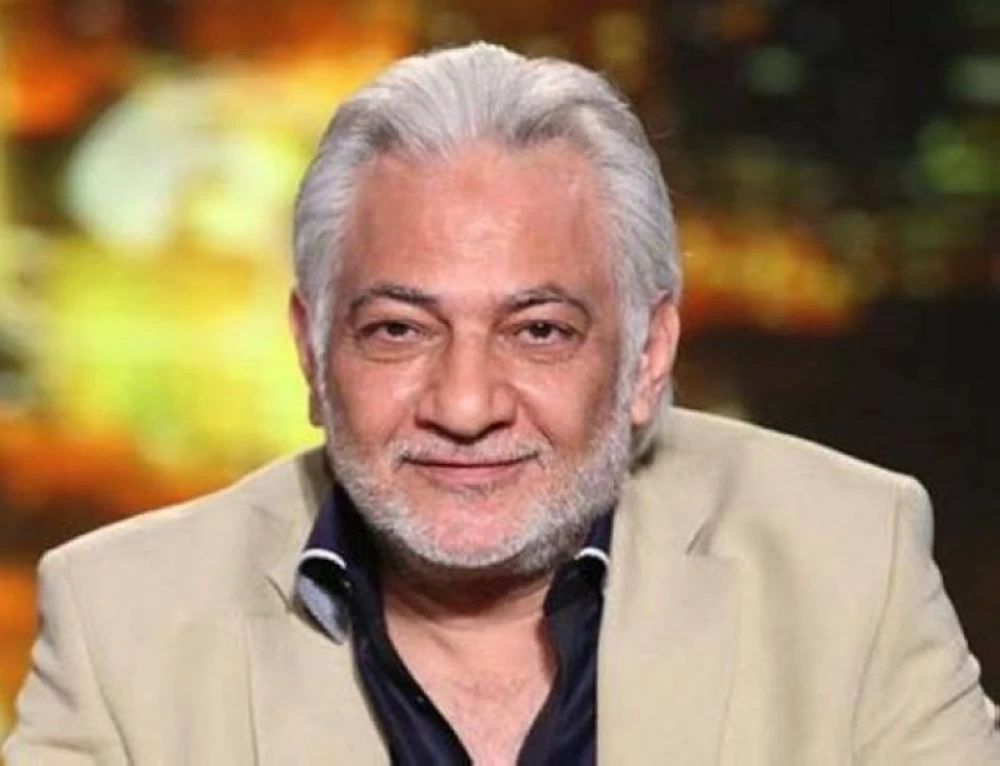
Sameh El-Sereity reassures his fans
In his first statement following a health crisis that worried his fans, the renowned Egyptian actor Sameh El-Sereity reassured his audience in Egypt and the Arab world that his health condition is stable. In an exclusive statement to the newspaper Okaz, El-Sereity confirmed that he left the hospital today and returned home after spending several days in intensive care following a sudden stroke.
The artist explained that he will continue medical follow-up in the coming period to ensure a full recovery, expressing his deep gratitude to everyone who inquired about him. He said, "It was a great ordeal, but thank God I got through it," directing a special message of thanks to his fans who showered him with prayers and concern throughout his illness.
Background of the health crisis and the reaction of the artistic community
The artistic community and the public were deeply concerned by the news that artist Sameh El-Sereity had been rushed to a major Cairo hospital last Tuesday after experiencing sudden and severe pain. He was quickly diagnosed with a stroke, necessitating his immediate admission to the intensive care unit. The news sparked a wave of sympathy and prayers on social media, with fellow artists and fans alike expressing their wishes for his speedy recovery, reflecting his esteemed position in everyone's hearts.
A prolific artistic career
Sameh El-Sereity is considered one of the most prominent stars of his generation, with an artistic career spanning more than four decades, during which he presented hundreds of distinguished works in cinema, theater, and television. El-Sereity began his career in the 1970s and was distinguished by his ability to brilliantly portray diverse roles, from complex dramatic characters to light comedic ones. Among his most prominent works that remain etched in the minds of the public are the television series "Layali El-Helmiya," "Bawabet El-Halawani," and "Ya Regal El-Alam Etahadou," in addition to his significant film roles.
Al-Seraity’s contributions were not limited to acting; he also played a prominent role in union work, serving as the deputy head of the Actors Syndicate for years, defending the rights of his colleagues and contributing to the development of the artistic industry in Egypt.
His latest artwork
On the artistic front, actor Sameh El-Sereity continues his active and strong presence in the industry. Among his most recent works are the series "Jamila," which aired during Ramadan 2023, and the series "Batn El-Hout," which achieved great success when it was released on a digital platform. His continued artistic output underscores his deep passion for his profession and his constant desire to present works of both artistic and popular value.
Culture and Art
Picasso: A biography of the genius who changed the history of modern art
Discover the life of Pablo Picasso, the Spanish artist who revolutionized modern art. Learn about his artistic phases, from Cubism to Guernica, and his turbulent life in Paris.
Pablo Picasso, the Spanish artist who made Paris the stage for his creativity, remains one of the most influential and controversial figures in the history of modern art. He was not merely a painter, but a revolutionary force who transformed concepts of beauty and artistic expression, moving masterfully between painting, sculpture, and poetry, leaving an indelible mark on the map of world culture.
From Spain to Paris: The birth of an artistic legend
Picasso was born in Malaga, Spain in 1881, and grew up in an artistic environment thanks to his father, who was a painting teacher. But his ambitions extended beyond the borders of his homeland, so at the beginning of the 20th century, he moved to Paris, which was then the world's art capital and a meeting place for creative minds. Despite immersing himself in the vibrant Parisian life and befriending artists from all corners of the globe, Picasso retained his Spanish spirit, which was clearly reflected in his works. He saw in the circus performances of Montmartre an echo of bullfighting in Spain, and he found in the clown a symbol of tragic human comedy.
The Cubist Revolution and the Redefinition of Art
Paris at that time was a cauldron of new art movements that rebelled against academic traditions. In this context, Picasso, in collaboration with Georges Braque, spearheaded an artistic revolution known as Cubism . His famous painting "Les Demoiselles d'Avignon" (1907) heralded the birth of this new movement, which shattered the rules of traditional perspective, presenting forms from multiple angles simultaneously. This was not merely a new style, but a different way of seeing the world, and this shift profoundly influenced the course of art throughout the 20th century and beyond.
Friendships and rivalries: Picasso and Matisse
A constellation of avant-garde artists gathered around Picasso, but his relationship with Henri Matisse was the most distinguished. They were both friends and rivals, each representing a pole in the world of modern art. While Matisse sought harmony and chromatic purity, Picasso delved into the depths of the human psyche and its contradictions. Despite their differing approaches, they maintained a profound mutual respect and admiration that lasted until Matisse's death, with Picasso frequently visiting his friend in the coastal city of Nice.
Art as a Mirror of Life: Artistic Phases and Women
Picasso's personal life, particularly his relationships with women, is key to understanding his artistic transformations. The colors in his paintings chronicle his different phases, from his "Blue Period," reflecting his sadness and poverty, to his "Rose Period," coinciding with his emotional stability. The women in his life, such as Fernand Olivier, Olga Koklova, and Maria Theresa Walter, were not merely lovers, but essential muses for his work, embodying his passion, anger, and love in his paintings and sculptures. He rejected the constraints of marriage and stability, seeking inspiration in the free-spirited romantic relationships that fueled his creative chaos.
Art and Politics: “Guernica” as a Cry Against War
Picasso's art was not detached from the political events that swept through Europe. His monumental mural "Guernica" (1937) the most powerful political statement in the history of art. Picasso painted it as a reaction to the Nazi bombing of the Basque village of Guernica during the Spanish Civil War. With its somber, monochromatic colors and its depiction of civilian suffering, this painting has become an enduring global symbol of the tragedies of war and a resounding cry against violence and brutality.
Khaled's legacy: Between poetry and madness
Picasso didn't confine himself to the brush and chisel; his creativity extended to the world of words, as he wrote poetry, which he saw as an extension of his painting. He used to say, "I compose the image, and I paint the poem." This intermingling of the arts reflects a comprehensive genius that refused to conform to any mold. As his friend Fernand described him, Picasso was "a flame that burned through his blood and attracted, like a magnet, everyone who knew him." His legacy is not merely a collection of paintings and sculptures, but a constant call to rebel against the familiar, and an affirmation that art, as he himself said, is "a lie that helps us discover the truth.".
Culture and Art
Iraqi artist Maksad Al-Hilli dies at the age of 71
The Iraqi Artists Syndicate mourned the passing of the great artist Maqsoud Al-Hilli, who died after a battle with illness. Al-Hilli was one of the most prominent Iraqi folk singers and left behind a timeless artistic legacy.

The Iraqi Artists Syndicate announced on Wednesday the death of the great Iraqi artist, Maqsoud Al-Hilli, at the age of 71, after a long struggle with a terminal throat disease, bringing to a close an artistic career full of contributions that enriched the Iraqi conscience for decades.
In a moving official statement published on its Facebook page, the Iraqi Artists Syndicate mourned the late artist with profound words: “With deep sorrow and grief, the Iraqi Artists Syndicate mourns the passing of the artist Maqsoud Al-Hilli.” The Syndicate prayed for God’s mercy and forgiveness for the deceased, and that He grant his family, loved ones, and colleagues patience and solace in this great loss that has befallen the Iraqi artistic community.
The health condition of the late artist had deteriorated significantly in his last days, which necessitated his urgent transfer to Baghdad Medical City Hospital, where he was admitted to the intensive care unit to receive the necessary treatment, but God’s will prevailed.
Context and History: A Voice from the Land of Babylon
The singer Maqsoud Al-Hilli was born in the village of Anana in the province of Hilla (Babylon), a city steeped in history and civilization, and known as a wellspring of poets, intellectuals, and artists. Al-Hilli grew up in a traditional rural environment, immersing himself from a young age in its rich musical heritage, which later shaped his artistic identity. He rose to prominence in the 1970s, considered the golden age of Iraqi song, appearing alongside giants of rural music such as Yass Khader, Hussein Neama, and Saadoun Jaber, and carving out a unique niche for himself thanks to his powerful voice and distinctive performance style.
Artistic significance and cultural impact
Maksad al-Hilli is considered one of the pillars of Iraqi rural singing, an art form characterized by its profound emotion and close connection to the land, its people, and the southern and Euphrates environment. Al-Hilli was renowned for his powerful and unique voice, which enabled him to perform the most challenging rural singing styles and authentic Iraqi mawwals such as the "Abudhiya." He was not merely a singer, but a faithful custodian of the heritage, contributing significantly to documenting this musical genre and protecting it from extinction in the face of modern musical trends.
The passing of Maqsoud Al-Hilli is not only a loss for his family and fans, but a profound loss for Iraqi culture as a whole. With his departure, Iraq loses a truly authentic national voice that served as a living memory of a significant part of its artistic and popular history. Al-Hilli left behind a rich artistic legacy of songs that will remain etched in the hearts of Iraqis, and he established an artistic school that inspired many young artists who sought to follow in his footsteps in preserving authentic Iraqi musical identity.
-

 Local News 4 days ago
Landslide in Riyadh: Details of the incident in Al-Sahafa neighborhood and containment efforts
-
 Local News 5 days ago
The death penalty was carried out against a citizen who stabbed another to death in Tabuk
-

 Culture and Art, 1 week ago
Ramez Galal in Ramadan 2026: Details of the bloody prank show
-
 Local News 6 days ago
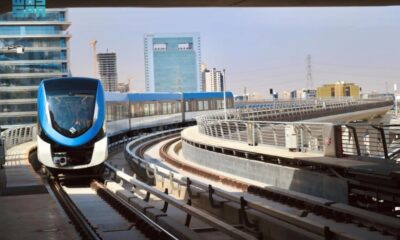
First birth on the Riyadh train: A heartwarming story at Andalus station
-

 Local News 4 days ago
Riyadh collapse: Emergency plans to secure water after a main pipeline burst
-

 Culture and Art 4 days ago
Haifa Wehbe's absence in Riyadh: A photo crisis or a strained relationship with the media?
-

 Culture and Art 4 days ago
City Kitchen series: A drama of conflict and the middle class during Ramadan
-

 Culture and Art 4 days ago
The series "Kasra": Dawood Hussein in a moving social drama this Ramadan