
Culture and Art
The "Khair Jalis" market is in love with millions of dollars
Book fairs in the Arab world (16 annually) have failed to influence the reading rate, which, according to statistics, does not exceed

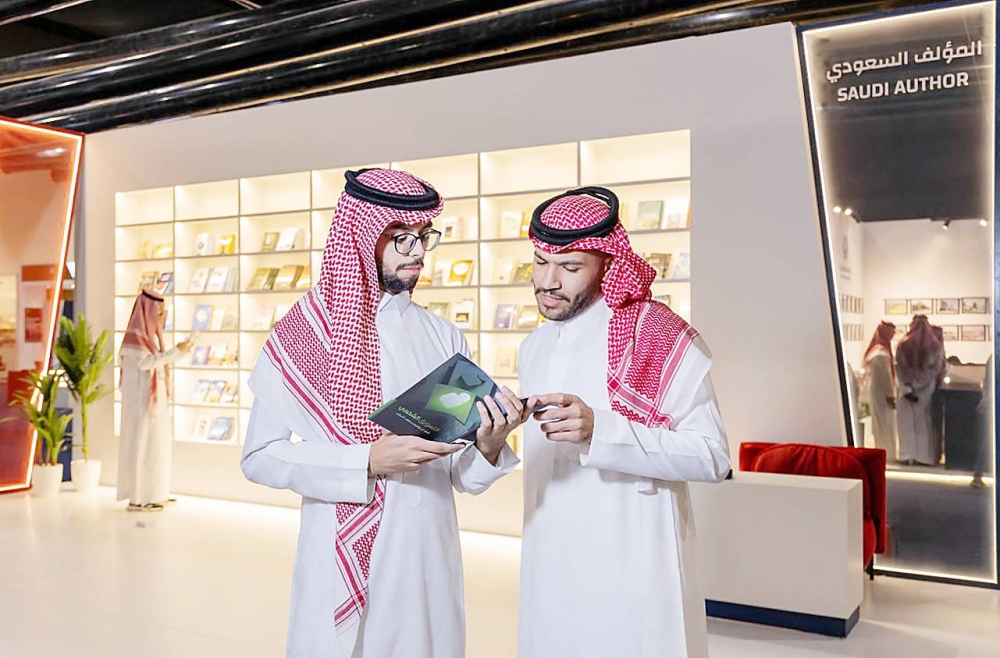
Book fairs in our Arab world (16 fairs annually) have not succeeded in influencing the reading rate, which, according to statistics, does not exceed a quarter of a page per person, compared to 11 books per year for the American reader. Meanwhile, the Arab child reads for seven minutes a year, and the American child for six minutes a day. The Arab book market does not hesitate to fall in love with the millions of visitors, even though UNESCO statistics confirm that the average reading rate for every million Arabs does not exceed 30 books, compared to 854 books per million Europeans.
Writer Abdullah Al-Jumaili believes that the findings of a previous report issued by the Arab Thought Foundation on "Cultural Development in the Arab World" are not encouraging and do not indicate that Arabs read. While there is one book published for every 12,000 Arab citizens, there is one book printed for every 500 English citizens and one for every 900 Germans. Furthermore, the reading rate in the Arab world does not exceed 4% of the reading rate in England. He also points out that some statistics indicate the average Arab citizen dedicates only 6 minutes a year to reading, compared to 200 hours for citizens in Europe and America. Al-Jumaili asserts that the high volume of visits to book fairs, or the percentage of purchases made, does not provide a true impression or indicator. Most of these practices are aimed at imitating others, seeking prestige, or posting photos for social media to show off, "Hey everyone, look at me, I'm cultured! I buy books to read!" Al-Jumaili called for a national campaign to encourage reading and spread its culture throughout all segments of society, with the Ministry of... Culture, in cooperation with institutions related to spreading the inclination towards reading, supporting school libraries, updating their books to keep pace with the changes and developments of the times, allocating study times or periods for reading, encouraging male and female students to read with competitions and prizes, and motivating readers among them with extra marks! Opening public libraries, even small ones, in neighborhoods, targeting gathering places in airports, waiting areas in parks, hospitals, and other places with various portable books, and issuing books in popular editions with suitable or symbolic prices to be accessible to everyone.
Poet Ahmed Al-Mujathal noted an increase in the number of visitors to the recent Riyadh Book Fair, despite the introduction of new regulations, including registration through the fair's electronic platform and setting a symbolic entry fee of (5) riyals. He pointed out that the printed book has a special status, and he considered it a cultural and intellectual asset despite the technological and artistic development and the multiplicity of media and means of knowledge and the modernity that the cultural content industry has undergone since the recipient's relationship with the book. The book has not complained or suffered from the competition from traditional means such as audio or visual media, and the printed book has remained vibrant in acquisition and purchase.
Al-Mujthal considered the international book fairs’ adherence to their presence in the cultural scene, from Frankfurt to Cairo to Riyadh, Jeddah to Sharjah and Abu Dhabi, as an indication of the value and motivation of the recipient, even if some opponents tried to belittle the returns of book fairs, as they are not sufficiently aware of the importance and value of the book in people’s hearts. He added that with our belief in the reality of technology, audiobooks and electronic books, book fairs have contributed significantly to the turnout at fairs and the purchase and acquisition of paper books. He looked forward to serving the spread of the paper book by reducing obstacles, including exempting publishing houses and publishers from permit fees, taxes, shipping costs, and exorbitant costs, including the amounts of renting spaces and facilitating the entry of publications.
The philosophical researcher Abdullah Al-Hamili believes that the crowds of visitors to book fairs are different from any other fairs that attract a group of visitors, as the success of the book market depends on the visitors to buy these books and the publishing houses that are present and provide the publications. There may be phenomena accompanying the fairs, but I do not think that they will be held for viewing, for example. Of course, the quality of publications and texts that people aspire to acquire and the keenness to ensure that they are books that are difficult to obtain in libraries. The phenomenon of book fairs is like the libraries of the world being present in one place. Al-Hamili attributed the eagerness to visit book fairs to the reading instinct that is active in book forums. Personally, I fear for myself because of this feeling if it does not make me crown my acquisition of books with the completion of reading them. Although book fairs are a primary goal, they are also an opportunity to hold meetings with various intellectuals and writers from different regions of the Kingdom, such as the Riyadh International Book Fair and the cultural gatherings and evenings that take place there. He pointed out that the influx is evidence of the continuity and permanence of the printed book despite the existence of alternatives that have tried to compete with it, such as audiobooks, podcasts, and electronic books. He expressed his optimism about the turnout for reading and thought and the rejection of superstition and everything that distorts awareness, as long as there is conscious reading and reading awareness.
The poet Saleh Al-Harbi is hesitant about the number of visitors to book fairs, and he sees it as greatly exaggerated to favor one fair over another, to make it appear to have a better presence and more visitors than others, stressing that the Arab reader is voracious, but his appetite has declined greatly in terms of buying paper books, as he has turned to reading electronic books and ordering them from electronic websites.
Ali Makki: "Counting in Lemons"
The writer Ali Makki believes that the question of the number of visitors to book fairs is a confusing question, and no one has an accurate or actual answer to it, perhaps because the organizers of these fairs are concerned with success by relying on statistics that promote their success, and (counting lemons) as they say. Therefore, every number or statistical figure that is put forward must be based on the credibility of the entities that organize the book fairs, in order to distance them from the suspicion of false promotion and claiming large numbers of visitors to the fairs in order to highlight their cultural effort and the importance of what they do.
In my opinion, any number announced regarding visitors to these exhibitions is unreliable unless we know the nature of these visits!
As for the question of the Arab person’s relationship with reading, I believe that the Cairo International Book Fair (in particular) has a presence that highlights the growing interest in books, and I have personally witnessed and felt a passion for books in more than one session in recent years.
But despite all that, I recall some studies – including those issued by the Arab Thought Foundation – which confirmed that the level of reading in the Arab world is still low compared to other rates in the world, due to economic and educational reasons.
Halima Muzaffar: Social media is an immediate alternative
I believe that large numbers at book fairs are a positive, vital, and delightful thing, and reflect the interest of individuals in culture in its general form. However, large numbers do not necessarily reflect their interest in reading books, because there are visitors to the fairs who are curious to discover and interested in the diverse cultural events held on the sidelines of the fairs, and this is normal. This does not mean that the relationship of the Arab person to reading is weak, as there are those who are interested in it as a conscious act and there are those who are interested in it as a mere act, like those who read what is brief and short on social media sites and draw their immediate awareness without examination or knowledge.


Culture and Art
Nesreen Amin: I escaped Ramez Galal's prank... and this is my new project for Ramadan
Actress Nesreen Amin revealed that she escaped Ramez Galal's prank this year, announcing her participation in the series 'Haq Daye' and 'Al Bakht' during the upcoming Ramadan drama season.
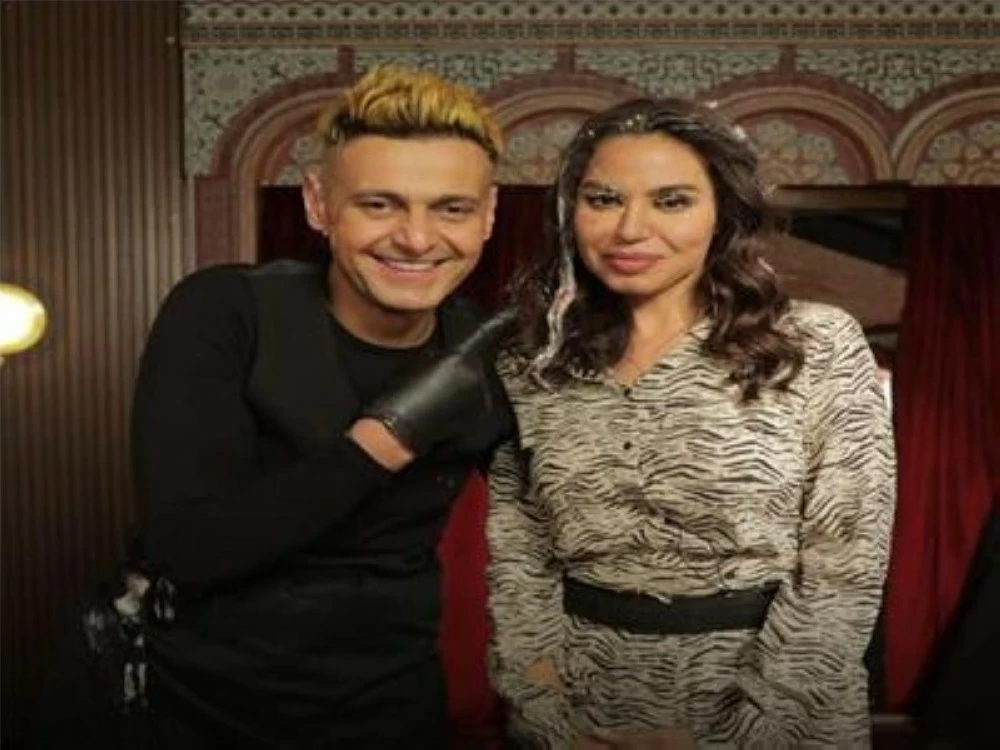
Survival from a famous prank
Egyptian actress Nesreen Amin announced that she had managed to escape the trap of the popular prank show hosted by Ramez Galal for the upcoming Ramadan season, after having been a guest on previous seasons. This announcement came during a cultural seminar held as part of the Cairo International Book Fair, where she said spontaneously, "Thank God I escaped Ramez's prank show this year," a statement that elicited reactions from the audience, who are accustomed to seeing celebrities in difficult situations on the program.
Context of Ramez Galal's programs
Ramez Galal's programs are an annual media phenomenon eagerly anticipated by Arab audiences during Ramadan. Since its first season, "Ramez the Lionheart," the show has secured a permanent place on the Ramadan entertainment map, relying on the concept of hosting a celebrity from the world of art or sports and subjecting them to an elaborate and lavishly produced prank. Despite the annual criticism leveled at the program regarding the harshness of the pranks or their potential for being staged, it achieves record viewership and becomes a hot topic on social media throughout the holy month. Any celebrity's participation in the program is an event in itself, and their survival is considered a major news story.
Importance and impact of the event
Nesreen Amin's statement isn't just a personal matter; it sheds light on the ongoing debate surrounding this type of program. Her survival has opened the door to public speculation about the identity of Ramez's next victims this year, further fueling the promotional hype for the show even before its official announcement. On a personal level, the statement reflects some artists' desire to avoid this stressful experience, while others continue to accept participation due to the widespread exposure the program offers. The news also confirms that preparations for Ramez's new show are continuing, dispelling the rumors that occasionally surface about its potential cancellation.
Intense artistic activity during Ramadan
Aside from the pranks, Nesreen Amin has confirmed her strong presence in the upcoming Ramadan drama season with two projects. She has already begun filming her scenes in the series "Haq Daye'a" (Lost Right), which co-stars Ahmed Salah Hosny. The series also features a stellar cast including Malak Koura, Lucy, Mohsen Mohi El-Din, and Nidal El-Shafei. It is written by Hussein Mostafa Moharram and directed by Mohamed Abdel-Khaleq.
She also announced her participation in another drama series titled "Al-Bakht" (The Fortune), a joint Egyptian-Emirati production, in which she will star alongside Emirati actor Marwan Abdullah Saleh. The series also features prominent actors such as Ahmed Abdel Aziz, Ahmed Wafik, Magdi Kamel, and Abeer Sabry. Directed by Moataz Hossam, filming is expected to begin soon, with the series slated for a Ramadan release.
The fate of the movie “Big Ramy”
Regarding her film projects, Nesreen Amin mentioned the film “Big Ramy” in which she co-stars with Ramez Galal himself, stressing that no final date has been set for its release yet, leaving the audience in a state of anticipation to find out the fate of this work that brings them together outside the framework of pranks.
Culture and Art
Laila Elwi celebrates her son Khaled's birthday with a touching message and video
Actress Laila Elwy shared her son Khaled's birthday celebration with her fans, expressing her pride and deep love for him. Learn more about her touching message and her latest artistic projects.
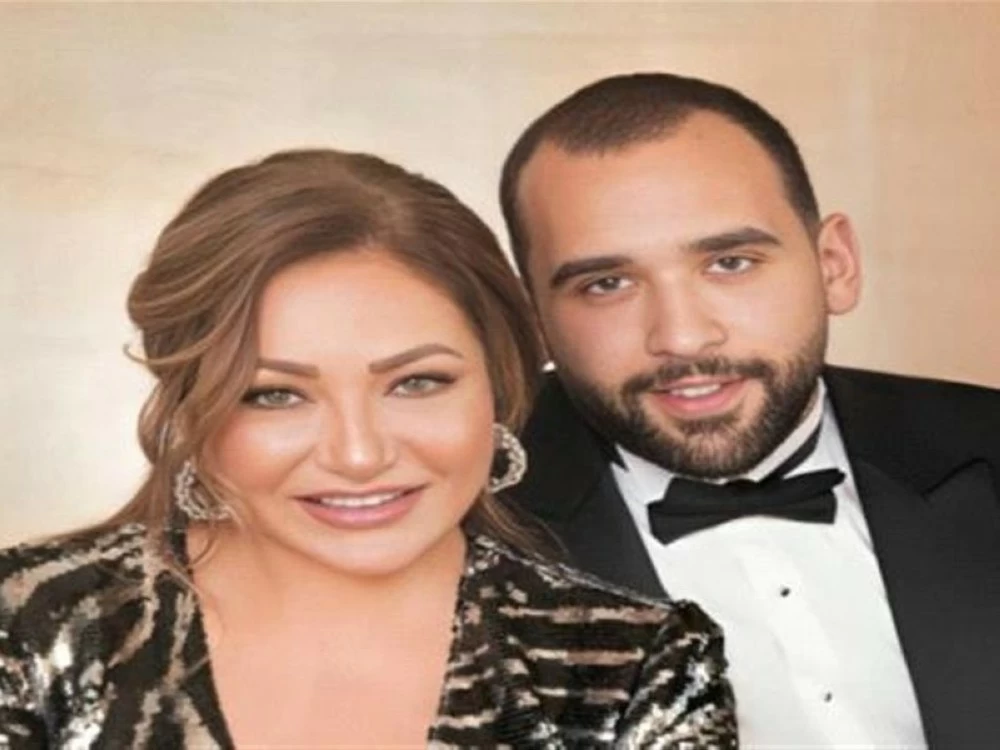
A touching celebration on Instagram
In a heartwarming gesture, the renowned Egyptian actress Laila Elwy shared her celebration of her only son Khaled's birthday with her fans and followers on her official Instagram account. She didn't just offer the traditional birthday wishes, but also posted a carefully crafted video compilation of rare and touching moments from different stages of Khaled's life, from childhood to young adulthood, reflecting the depth of their relationship and the strong bond between mother and son.
Alawi accompanied the video with a touching message that resonated deeply with her followers, writing: “Happy birthday, my darling Khaled. May you always be by my side, and may I always be happy and proud of you, my dearest, my whole life, because you, my love, are one of God’s blessings upon me.” These heartfelt words were more than just a greeting; they expressed Khaled’s pivotal role in her life, a fact clearly evident in all the occasions they share together.
Khaled: A love story and pride that never ends
The relationship between Laila Elwy and her son Khaled has a special dimension, as Khaled is her adopted son, a fact the star has never hidden, but rather spoken about with pride and affection in numerous interviews. She dedicated her life to raising him as a single mother, setting an inspiring example of motherhood and selflessness. This makes her celebrations of him, whether his birthday or his university graduation—which she described as a joy beyond compare—occasions eagerly anticipated by the public, who react with great love and appreciation, seeing in them a genuine human side of their beloved star, away from the spotlight.
The balance between motherhood and art
Laila Elwi is one of the most prominent icons of Egyptian and Arab cinema, with a career spanning decades during which she has delivered unforgettable performances. Her ability to balance her illustrious artistic journey with her role as a mother further enhances her appeal to audiences. While celebrating her son's personal achievements, she continues her artistic activities with vigor and passion, as evidenced in her latest cinematic works.
Latest work: The film “Whose Son Is This?”
On the professional front, Laila Elwy recently wrapped filming on her new movie, "Whose Son Is He?", which reunites her with comedic star Bayoumi Fouad in a highly anticipated duo. The film, a social comedy, revolves around a businessman named Rushdi (Bayoumi Fouad) who lives a carefree life until the strict lawyer Magda (Laila Elwy) enters his world, setting off a journey filled with humorous situations and ironies as he searches for his son. The film is expected to be a box office success given the popularity of its two leads and the lighthearted way the story addresses social issues. Elwy stated that she intends to take a break after filming concludes before resuming her artistic activities.
Culture and Art
The White Nightingale Crisis: An official apology to the family of Abdel Halim Hafez
Content creator Tamer Shaheen, nicknamed 'The White Nightingale', apologizes to the family of artist Abdel Halim Hafez after legal threats, pledging to stop the controversial content.

A formal apology ends the controversy
In a move aimed at ending the ongoing controversy, content creator Tamer Shaheen, known on social media as "The White Nightingale," issued a formal apology to the family of the late Egyptian artist Abdel Halim Hafez. This apology came after the family announced their intention to take legal action against him, accusing him of exploiting the name, image, and legacy of the legendary singer in content they deemed offensive and damaging to his great artistic heritage. In televised statements, Shaheen pledged to refrain from any appearances that might cause distress to the family of the iconic artist, emphasizing his complete respect for Hafez's artistic and historical stature.
Background of the crisis and the legacy of the dark-skinned nightingale
The artist Abdel Halim Hafez, nicknamed "The Dark-Skinned Nightingale," holds a unique place in the hearts of millions in Egypt and the Arab world. For over two decades, he presented a timeless artistic legacy of songs and films that have become an integral part of Arab cultural memory. After his passing in 1977, his family, specifically his nephew, Professor Mohamed Shabana, undertook the task of preserving this legacy from any distortion or inappropriate commercial exploitation. This incident comes within the context of ongoing efforts by the heirs to protect the intellectual and literary property rights of the late artist, which are often vulnerable to infringement in the digital age.
The impact of the case and its legal dimensions
This incident highlights an important issue concerning the boundaries of creativity and the rights of public figures' heirs. While the digital space offers ample opportunities for content creators to express themselves, it also presents legal and ethical challenges regarding how to handle celebrity legacy. The actions threatened by Abdel Halim Hafez's family send a clear message that artistic heritage is not public property to be used without restraint, especially if the use aims to achieve fame or profit in a way that might tarnish the original artist's image. In his defense, Shaheen emphasized that he never intended to compare himself to the Nightingale, stating, "I disavow that and I will not become Abdel Halim," explaining that he portrays diverse artistic characters and is not simply imitating a single figure.
The future of celebrity-inspired content
With Shaheen's retraction and apology, the crisis appears to be nearing resolution, but it leaves a significant mark on the media landscape. It sets a new standard and serves as a reminder to content creators of the need to respect artistic icons and their legacy. It may also encourage the heirs of other artists to take similar steps to protect their loved ones' heritage. Ultimately, this incident underscores that the stature of an artist of Abdel Halim Hafez's caliber remains vibrant and influential, and that the public's love and his family's appreciation form a strong shield protecting his legacy from any attempt to tamper with it or diminish its value.
-

 Local news two days ago
Landslide in Riyadh: Details of the incident in Al-Sahafa neighborhood and containment efforts
-
 Local News 3 days ago
The death penalty was carried out against a citizen who stabbed another to death in Tabuk
-

 Local News 4 days ago
First birth on the Riyadh train: A heartwarming story at Andalus station
-
 Culture and Art 7 days ago
Ramez Galal in Ramadan 2026: Details of the bloody prank show
-
 Local news two days ago
Riyadh collapse: Emergency plans to secure water after a main pipeline burst
-
 Culture and Art 2 days ago
Haifa Wehbe's absence in Riyadh: A photo crisis or a strained relationship with the media?
-
 Culture and Art 2 days ago
City Kitchen series: A drama of conflict and the middle class during Ramadan
-

 Culture and Art 2 days ago
The series "Kasra": Dawood Hussein in a moving social drama this Ramadan