Culture and Art
The library of the Al Abdul Mutali family contains rare documents, manuscripts, and genealogical trees dating back to 204 AH!
In the home library of researcher Muhammad bin Ali Al Abdulmutaali there are documents, manuscripts, genealogical charts and pictures about the Asir region, its people and its place

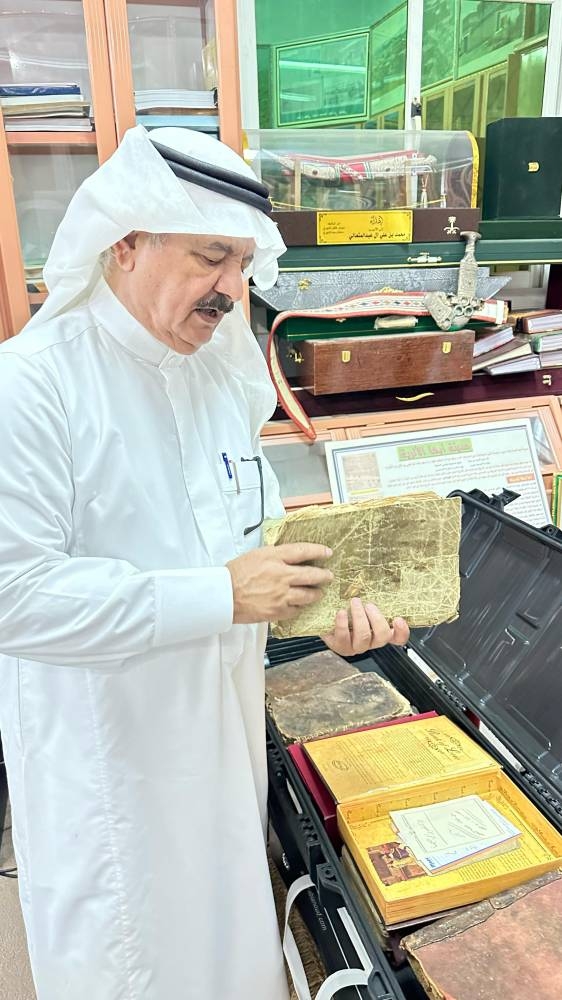
The home library of researcher Mohammed bin Ali Al Abdulmutaali contains documents, manuscripts, genealogical charts, and photographs about the Asir region, its people, and its landscape, in addition to books on various sciences and fields of knowledge. For years I had longed to visit this library, but it was only recently that I was able to do so!
The contents of the library were not surprising to me, as I knew of its owner’s great interest in history and its people, documentation, and the pursuit of the new, the strange, and the rare. But what was surprising to me - after these years of wandering - was the mental presence of the researcher Al Abdulmutaali, as our conversation never turned to a topic concerning the Asir region or a problem about which historians disagreed and the circle of controversy widened, except that the document was present with him, and the evidence was ready!
What caught my attention in this library was its spaciousness. Its owner chose a prominent place overlooking a spacious courtyard that draws its radiance from the sun’s glow, the fresh air of Abha, the warmth of books, the conversations of elders, and the images of place and people that the researcher Al Abdulmutaali cared about in his youth, and which still inhabit him, and to which he remains devoted in his old age!
When did the Al Abdulmutaali family begin this interest, and how?
The affiliation of the Al Abdulmutaali family to a large family with a prominent position in the Asir region played a major role in this interest. He was preoccupied with collecting books in 1396 AH and with photography in 1394 AH. His family's books played a major role in this, as he collected his family's books in 1398 AH. Then this interest moved to the formation of a private library that is comprehensive in sciences and knowledge in 1399 AH.
This interest resulted in rare manuscripts and documents dating back to 900 AH, 1168 AH and 1181 AH, and genealogical charts dating back to 204 AH, in addition to dozens of albums of rare photographs of the Asir region, its people and places, and more than 20,000 books in various sciences and knowledge, in which history had the lion’s share!
Researchers' reference
There is hardly a researcher in the history of the region, nor a modern book published about the region, that does not mention and acknowledge this library. The Al Abdulmutaali home library is one of the most important private libraries in the Asir region, to which researchers of the region’s history refer. Thanks to it, many studies, university theses, and academic promotion research papers have been written. Many people return to it in search of a document, event, story, or situation that people are talking about, and they find in the Al Abdulmutaali library what confirms or refutes this. Al Abdulmutaali’s conversation is never without his hope that researchers in the region will benefit from these documents, and his emphasis that he will not withhold from the serious ones among them the most precious of what he owns of these documents and manuscripts!
Related News
Mischief and disagreements
Al Abdulmutaali is not biased towards the men of Al-Alma'a, despite being one of its sons and one of its most dedicated writers. He has written about its prominent figures and pioneers, as well as its landmarks, and has photographed its historical sites and monuments. Books about Al-Alma'a occupy a large space in his library. In 1399 AH (1979 CE), he established a publishing house in its name (Dar Al-Alma'a for Culture and Heritage), dedicated to collecting, documenting, and photographing heritage. He also published a series about it entitled "The Antiquities of Al-Alma'a: People and Place," which has reached nearly forty volumes. However, this love has not relieved him of his concern for the Asir region. He collects writings about Sarat Abidah, Ahad Rafidah, Bishah, Mahayil Asir, and Al-Barak, and traces historical events in Asir, from north to south and east to west. He keeps manuscripts, letters, photographs, interviews, and newspaper and magazine clippings in his library. When he speaks to you, you sense a fragmentation of efforts, a lack of unification and coherence in writing. Writing befitting the place and its people, as he sees most of the efforts as wasted. His greatest concern, however, is evident in his conversation, as he laments the scarcity of researchers from the region capable of interpreting the numerous photographs, documents, and manuscripts he painstakingly acquired, investing considerable money and effort. His reproach extends to academics specializing in history from the region, some of whom, he says, have overlooked the region's rich archaeological and cultural heritage. He never fails to extend a warm welcome to serious researchers, whether from his home governorate of Rijal Alma'a in particular, or from the Asir region in general. Despite having published dozens of books, journals, guides, and pamphlets, Al Abdulmuta'ali readily admits that his work merely presents information to the reader, hoping it will attract the attention of researchers, leading to its study and presentation to the public and libraries with greater scholarly rigor
While I was listening to him in his private library, I would tease him with some inquiries, objections, and even information that came up in the context of our long conversation that lasted for hours. I would tease him with an objection here and a difference of opinion there, and he would give his opinion without being decisive in his opinion or fanatical about it!
A message to researchers
I left the Al Abdul Mutali Library happy, and at the same time wondering about the researchers in the Asir region. I chose to direct this appeal to the serious ones among them, so I say: O researchers and specialists in the Asir region, does your region not need to have its markets and customs written about, its traditions and customs, its history and heritage, its scholars and landmarks, its people and the social and economic life of its inhabitants?
If it needs all this, and someone like Muhammad bin Ali Al Abdulmutaali has saved you a lot of time and prepared to serve you for the sake of the difficult place and people, isn’t this region more deserving of your scientific efforts than the history of the Umayyads, the Andalusians, the Ottomans, Saladin, Khalid bin Al-Walid and others who have been thoroughly researched and studied?


Culture and Art
Amr Diab appears with his four sons and a highly anticipated concert in Türkiye
Details of Amr Diab’s rare appearance with his children Nour, Abdullah, Kenzy and Jana in a new advertisement highlighting the value of family, and his preparations for his upcoming concert in Türkiye in August.

The Plateau's Surprise: A Rare Family Reunion
In a remarkable artistic and human gesture, the renowned Egyptian singer Amr Diab surprised his vast audience with an exceptional appearance alongside his four children: Nour, Abdullah, Kenzy, and Jana. This appearance was part of a new advertising campaign filmed in a warm, family-oriented atmosphere, far removed from the hustle and bustle of the stage and the usual spotlight. The scenes were filmed inside Diab's home, as well as in distinctive outdoor locations across Cairo, lending authenticity and visual appeal that reflects the spirit of the Egyptian capital.
Directorial vision and social message
Under the direction of the talented Omar Al-Mohandes, the video emerged with a blend of simplicity and visual appeal. Its aim was more than just commercial appeal; it carried a profound message about the value of family. The scenes emphasized the importance of family bonds and the warmth of family gatherings—values that Diab consistently cherishes in his personal life. This appearance reflects a human side of the star who has reigned supreme in Arabic music for decades, demonstrating that true success begins with a stable and loving family.
Amr Diab: An artistic career that is constantly renewed
This appearance further cements Amr Diab's status not only as a global superstar but also as an influential cultural icon. Throughout his long and illustrious career, Diab has successfully bridged generations, and this appearance with his young children reaffirms his enduring ability to connect with the younger generation through a shared visual and emotional language. The collaboration of Nour (his daughter with actress Sherine Reda) with Abdullah, Kenzy, and Jana (his children with Zeina Ashour) in a single project is a rare event eagerly anticipated by fans of the superstar, adding a personal and endearing dimension to his audience.
Preparing to invade Turkish theaters
On the live music front, Amr Diab continues to expand his international concert tour. He is currently preparing for a massive and exceptional concert in Turkey on August 2nd. This concert further confirms the immense popularity the superstar enjoys beyond the Arab world. The organizers have announced that tickets are now on sale, divided into six different categories to suit a diverse range of audiences. A large turnout is expected from the Arab communities and Turkish audiences who appreciate modern Arabic music.
Culture and Art
Melhem Zein defends Fadel Shaker: He's innocent and the case is baseless
Melhem Zein sparked controversy with his statements regarding Fadel Shaker's innocence in the Abra events, revealing a new artistic collaboration between them on the song "Tala'at Shams" (The Sun Has Risen). Details of the situation and the history of the case are available here.

Lebanese star Melhem Zein has brought the case of retired and wanted singer Fadel Shaker back into the spotlight in Lebanon with recent fiery statements declaring his complete and unwavering solidarity with Shaker. Zein asserted his firm belief in his compatriot's innocence of the charges against him, describing the legal case as "empty" and based on inaccurate information, at a time when the issue continues to deeply divide Lebanese society.
A desperate defense and an artistic gift
Melhem Zein didn't just express sympathy; he addressed the core issue decisively, denying Shaker's involvement in any acts of violence or murder. Zein used a striking phrase, saying, "Fadl Shaker wouldn't even shoot an ant," indicating that he possesses detailed information about the events, which makes him confident in his position. In a related matter, Zein revealed an artistic surprise: his new song, "Tala'at Shams" (The Sun Has Risen), explaining that it's a gift and a special melody from Fadl Shaker. He described it as having a "special flavor" that reflects the depth of a friendship spanning approximately 26 years, predating Zein's rise to fame.
Background to the events in Abra: Historical context
To understand the dimensions of this controversy, it is necessary to go back, specifically to the bloody events of June 2013 in the Abra area of Sidon (southern Lebanon). Violent clashes erupted between the Lebanese army and armed groups affiliated with Sheikh Ahmad al-Assir, who was one of Fadel Shaker's closest associates at the time, following his retirement from music. These battles resulted in the martyrdom of a number of Lebanese army officers and soldiers, leading to widespread legal proceedings against al-Assir, Shaker, and a large number of their supporters.
Legal status and societal division
Legally, the Lebanese Military Court issued several in absentia sentences against Fadel Shaker, including lengthy prison terms with hard labor, on charges related to forming an armed gang and attacking the military establishment. Despite these sentences, some Lebanese, including Melhem Zein, believe that Shaker was a victim of certain circumstances and did not actually participate in fighting against the army, demanding a fair retrial. Conversely, another group, particularly the families of fallen soldiers, rejects any talk of a settlement or acquittal, insisting that justice must take its full course.
Melhem Zein’s statements come to throw a stone into stagnant waters, and bring back into focus a thorny issue that combines art, politics, and security, thus opening the door to a new round of discussions about the possibility of resolving the issue of Fadel Shaker or maintaining the status quo inside the Ain al-Hilweh camp where the latter is taking refuge.
Culture and Art
The court rejects the release of Fadel Shaker: Details of the new trial
The military court rejected the release of Fadel Shaker in four cases. Details of the Abra events case and the date of the trial for the attempted murder of Hilal Hammoud before the Beirut Criminal Court.
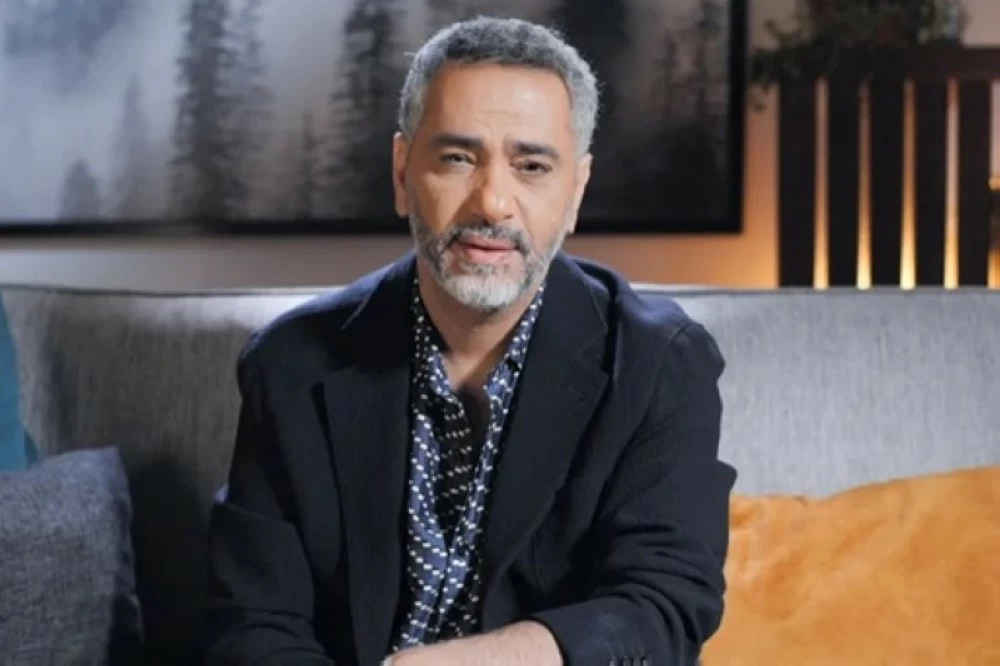
The case of the fugitive Lebanese artist, Fadel Shaker, has returned to the forefront of the judicial and media scenes in Lebanon, following rapid developments in the corridors of the military court, where all requests for his release submitted by his defense lawyers in the four cases against him were rejected.
Shock among the defense and family circles
Sources close to the family of artist Fadel Shaker reported that the recent court ruling came as a shock to his family and legal team. Expectations had been that a legal breakthrough, even a partial one, was possible in two specific cases considered less complex than others: the case of "insulting a sister nation" and the case of "possession of military weapons." However, the military court's decision was decisive, temporarily closing the door on these efforts. This prompted the legal team to mobilize and draft new legal requests in various forms in an attempt to alter the current legal course.
Details of pending cases and the date of the next session
The complications don't end with the refusal to release him; the defense team is currently considering submitting an additional request related to the "threat against Hilal Hammoud" case. This case is particularly sensitive due to its direct connection to the bloody events that took place in Sidon, the repercussions of which continue to this day.
In a related development, the Beirut Criminal Court has set April 24 as the date for a new hearing in the trial of Fadel Shaker, who is being tried in absentia along with Sheikh Ahmad al-Assir and several other defendants. This hearing will focus on the 2013 attempted murder of Hilal Hammoud, a case considered one of the most serious in Shaker's legal record.
Background of events: From "The King of Romance" to the events of Abra
To understand the complexities of the current situation, we must look back a little. The transformation of Fadel Shaker from an artist dubbed the "King of Romance," enjoying immense popularity in the Arab world, to a wanted man, came as a major shock to the public. The story began to unfold with the outbreak of the Syrian crisis and the emergence of Sheikh Ahmad al-Assir in Sidon, where Shaker became involved with this movement, ultimately leading to the infamous Abra events of June 2013.
The battle between supporters of the prisoner and the Lebanese army resulted in the deaths of soldiers, transforming the issue into a highly sensitive matter of national security and public opinion. Since then, Shaker has remained in hiding within the Ain al-Hilweh Palestinian refugee camp, and several in absentia sentences of lengthy prison terms with hard labor have been issued against him on charges related to forming an armed group and carrying out terrorist acts.
The impact of the case and its future
This case has acquired significance that transcends the personal legal dimension; it touches a sensitive chord in Lebanese society, which is divided over the Abra events. While some believe the harshest penalties must be applied out of respect for the blood of the army martyrs, others see the possibility of a legal settlement that separates political stances from direct criminal acts.
With each new judicial decision, whether rejecting or postponing, Fadel Shaker's fate remains suspended between the walls of the Ain al-Hilweh camp and the corridors of the Lebanese courts, awaiting what the next round of trials will bring in April.
-

 Culture and Art, 1 week ago
The "Between and Between" exhibition in Jeddah: 5 artists reshape Saudi memory
-
Local News 6 days ago
Saudi Arabia's National Arabic Language Policy: 8 Principles to Promote Identity
-
Culture and Art, 1 week ago
Shakira's concert in Jeddah: Details of the international star's first concert in Saudi Arabia
-
Local News 5 days ago
Adopting the National Policy for the Arabic Language: Strengthening Identity and Vision 2030
-
Local News 6 days ago
The Riyadh-Rin-Bisha dual carriageway, spanning 559 km, has been completed
-
Culture and Art, 1 week ago
Ramez Level the Monster: Details of Ramez Galal's program in Ramadan 2026
-
Local news two days ago
Human Resources sets the date for the 2026 Founding Day holiday for both sectors
-
Local news one week ago
Launch of the new Dammam project with investments of 98 billion riyals