
Culture and Art
The genius of the text: "The Birth" as a model
I search through the ruins for light and for new poetry. Ah, did I realize before today that the letter in the dictionary, my love, is dull? How does this live?


I am searching through the ruins for light and for new poetry
Ah, did I realize before today that the letter in the dictionary, my love, is dull?
How do these words come to life?
How does it grow?
How do you grow up?
We are still feeding it with tears of memories
Metaphors and intoxication
(Mahmoud Darwish)
Since Muhammad ibn Sa'id ibn Hammad (al-Busiri), author of the Burda al-Muhammadiyya, the world has been illuminated by the brilliance of poetry with names of illustrious presence. However, Muhammad al-Mahdi al-Majdhub took a different path.
Just as water flows gently and softly in a stream, the mystic begins his text by praying for the Prophet - may God bless him and grant him peace - asking for forgiveness and pardon, beginning his poem with a whispering letter (the letter “Sad”), followed by listening and supplication.
O Lord, send blessings upon Al-Mudathir
Forgive my sins and help me, O God, with a greater repentance
My time is full of obsession with wrongdoing
And with ease he conveys the painting, penetrating the depth of the meanings, moving on to the letters of emphasis (Dal and Jeem)
People have become accustomed to straying from the right path and have become hostile to their desires
They persisted without a care, and they lived in misery
Because of the poet’s familiarity with the precise meanings of words, which reveal the intended connotations, he unleashes all the springs of the word and its dimensions to their fullest extent (phonetic, semantic and structural) and all the psychological suggestions and shadows that surround all of that, since the word is not separate from its context, and the phonetic dimension is linked to the rhythm, which in turn leads to the limits and ranges of psychological connotations.
As linguists know, the rhythmic dimension arises from the phonetic structure of a word through the generation and sequence of letters. Each letter has its own point of articulation, and the harmony or dissonance of the letters gives the word a particular resonance through the resulting harmonies and the consonance of the letters in a specific phonetic pattern, sometimes whispered, sometimes pronounced, and sometimes loud. For example, the word "panting" in the Quranic verse (like a dog: if you chase it, it pants, or if you leave it alone, it pants) suggests, through its letters, the interruption of breath and panting. Similarly, the English word "crash" evokes the idea of collision and impact. Furthermore, a single word is affected by changes in its meaning and conjugation as its meanings shift.
Not only that, but what is remarkable about this text is (Al-Majdhub’s) bet on the idea on which the poetry was woven, the idea that became a nucleus like an island surrounded by the water of poetry, which created an amazing cohesion between the structure and the meaning, on (Al-Majdhub’s) ascent to the heights of the kingdom of poetry in this text. However, the text raised the most complex intellectual issues, establishing the connection between the discordant and the homogeneous in intimate affection, addicted to the dialogue between opposites in captivating harmony and smooth agility. Thus, the vocabulary of poetry was exploded and taken to distant horizons of intellectual spaciousness, and the deepest concerns and greatest questions were addressed without resolution.
Is good concealed within evil?
And the forces emerged from an atom pregnant with nothingness
Does she think war kills and peace survives?
Weakness, like strength, is a right and a responsibility
The nations will take care of it
And the earth returns with love and smiles
This question embodies a philosophy of life, grounded in the dialogue of opposites, distributing its fruits, both hidden and manifest. It establishes that bridge between opposites: (Pray, O Lord, for the best of mankind, who lit in the night of Hira / a moon that shone brighter than the full moon of the sky). (He reads to people by its light the wisdom of creation / and the secrets of survival). From a God who guided with the pen, teaching humankind / what they did not know.
The connection between these opposites is the night of Hira, a moon that shone brighter than the full moon of the sky, and between knowledge and what is not known, the veil, the temptation of beauty, and the place of longing feet, birds falling into nets, as if a fire had broken out, the body is amazed, and the soul is illuminated, it stood upright, it fell, asceticism is wealth, slowness is anticipation, restraint is launching, disturbance is harmony, with it from joy, tears fluttered, and they returned to the birth with longing, and they returned with dust.
Because of his deep sense of kinship between them, he incorporated his memory and conscience from the radiant and bright burdens of the Qur’anic text, abandoning the familiar preamble for an innovative and palatable preamble.
Although the text deals with many (themes), it proceeds in a continuous line that does not meander or twist, like a ray of light that reveals the beauty within beauty and the beauty within majesty. All this flow takes place in the text, which is a collection of paintings between whispering and speaking, between intensity and eloquence, with ease and simplicity.
The night of the Prophet's birth, O secret of the nights
And beauty
And a spring that captivated souls with permissible magic
Zaha Square Abdel Moneim
That benefactor, the life of the clouds
With crowds that meet in the season
The tents have been adorned and the passion has been declared
The poet, in his graceful movement, is fully aware of the meanings behind the words, meaning that the context in which the words appear reveals the intended meaning through the pulse of the words. The words with which he describes the Nubian dance form a tableau full of fervent rhythm. He strikes the Nubian drum, and it moans and rings, then refuses to roar or goes mad, leaping through the nights. It is as if the blending of letters reflects the echoes of the Nubian dance with its varying rhythms and the diversity of its drums. Perhaps what is striking is how the poet harnesses his ability and energy as an artist to employ contrast with a magical power and with movements that are imperceptible. (The place of the yearning legs is birds.) The legs suggest a grounding, but their place is in the sky, for they are birds. The images are exchanged, moved, and rotated like a flame. And amidst the clamor of the arena and the noise of the movement, the poet captures subtle details with penetrating insight.
And he walked in the circle of remembrance with apathy
A moment when body and soul are amazed, illuminated
With the beating of the drums and the bowing and bending of the people, the horned cap became a source of sensation, a focal point of feeling, as it rose above a broad forehead thinned by the light of certainty.
The true poet is one who captures the fleeting gesture and sees more than the average person. We notice in the poem that the lines are not equal in length, nor in the metrical feet. Perhaps we should also notice the distance between some words; the word "al-muqaddam" (the one who advances) has become a word with its own existential stance, its own meaning and significance. In this position, it is able to reveal its way of being to us and transport us from the atmosphere of the text to circles of remembrance, just as the verb "taqaddam" (advances) does.
And the presenter
He sings loudly to me
And it offers
The drum beats with fever
He threw the pebbles and sang the zamzam
The word (al-Muqaddam) and the verb (taqaddama) each occupy a separate line, a clever and insightful indication of the position of al-Muqaddam among the people, as he is the one who comes first in mention.
While in the context of praise, the letters blossom, bear fruit, and the rhyme flows abundantly.
And in his right hand, his staff bends
The praise singer played a game
The transition between the tanween in (la’ban) and the ha’ in (haraka) is the same as a sweet movement employing the sound effect of the letter.
This poem addresses many issues, linking homeland and celebration through vocal movements, varied rhythm, suggestion, and the simplicity and richness of its language. It explores themes of war and peace, existence and nothingness, will and oppression, poverty and wealth, and the roles of girl and woman. It is a comprehensive poem, and perhaps Al-Majdhub's complete immersion in the Mawlid (birth anniversary celebration) allowed him to move from one scene to another with the ease of someone moving from one room to another within their own house. As is well known, conciseness represents the soul of poetry, while digression can rob poetry of its vitality and stifle its spirit. If Edgar Allan Poe claimed that the long poem does not exist, Al-Majdhub, in his poem "Al-Mawlid," refutes this claim. The poem's length does not threaten its unity and cohesion, nor does it stray from description, as is common in modern poetry. Rather, its proximity to description contributes to its fluidity and brilliance. Despite being written over half a century ago (in 1957), "Al-Mawlid" is a modern poem in its formal and semantic structure. It is a smooth and accessible poem. Will the song be sung? It is incredibly enjoyable, even though Al-Majzoub took an unconventional approach. He achieved a level of enjoyment that is both visually appealing and deeply moving. It is a truly beautiful music video.


Culture and Art
The death of artist Huda Shaarawi “Umm Zaki” and her funeral in Damascus
The Syrian Artists Syndicate mourned the passing of the esteemed actress Huda Shaarawi, famous for her role as "Umm Zaki" in Bab Al-Hara. Learn about her artistic career and the details of her death.
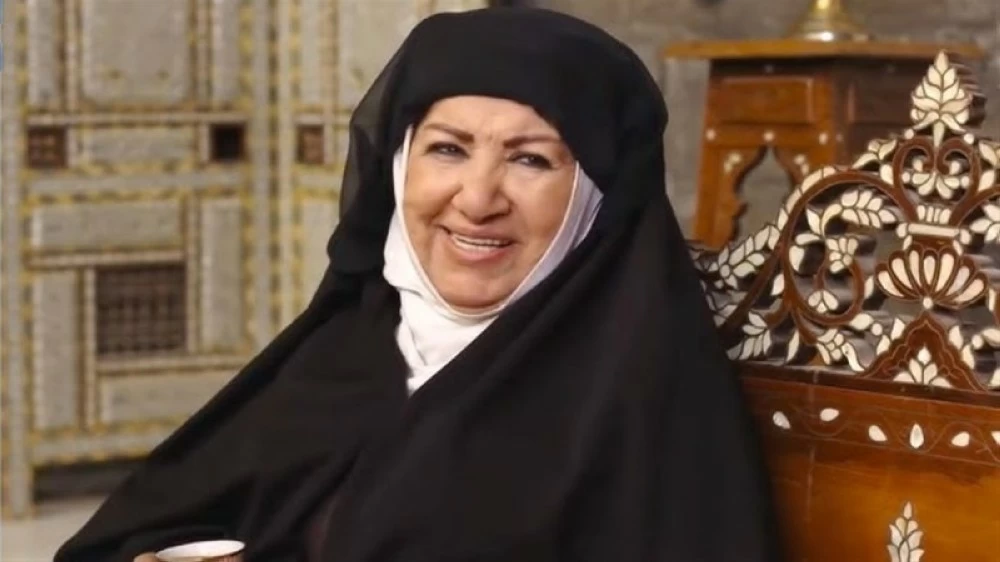
Funeral procession for the artist Huda Shaarawi in Damascus
The head of the Syrian Artists Syndicate, Mohsen Ghazi, announced the death of the esteemed Syrian actress Huda Shaarawi at the age of 85, after a long and distinguished career spanning decades, during which she left an indelible mark on the memory of the Arab public. He confirmed that the funeral procession for the late actress will depart after noon prayers from the Lala Pasha Mosque in Damascus, and she will be laid to rest in the family cemetery, thus concluding an important chapter in the history of Syrian art.
An artistic journey from radio to television
Huda Shaarawi was born in the historic Shaghour neighborhood of Damascus on October 28, 1938, and her passion for art began at a young age. Her true breakthrough came through the airwaves of Damascus Radio in the 1950s, where she participated in numerous radio programs that honed her talent and vocal expression. With the launch of Syrian Arab Television in 1960, Shaarawi was one of the founding names who transitioned to the small screen, becoming a familiar face to Syrian and Arab households. Her roles spanned both theater and television, and she performed in comedic and tragic works that demonstrated her exceptional artistic abilities.
“Umm Zaki”... the character who captured the hearts of millions
Despite her long and illustrious career, the character of "Umm Zaki" in the popular series "Bab Al-Hara" remains the iconic role synonymous with Huda Shaarawi. She portrayed the role of the "daya" (midwife) and traditional herbalist in the old Damascene quarter with unparalleled skill, transforming the character into a cultural symbol that transcended the series' boundaries. With her authentic Damascene accent, her folk wisdom, and her interventions in the affairs of the neighborhood's residents, "Umm Zaki" became an integral part of the collective memory of the Arab viewer. This role not only brought her widespread fame but also cemented her status as an artist capable of embodying the most subtle nuances of the traditional Damascene character.
Artistic legacy and lasting influence
Huda Shaarawi's career wasn't limited to "Bab Al-Hara"; it encompassed dozens of prominent television, theatrical, and cinematic works, including the series "Yawmiyat Mudir Aam" (General Manager's Diaries), "A'ilat Khams Nujoum" (Five-Star Family), and "Maraya" (Mirrors). Her death came as a shock to the artistic community in Syria and the Arab world, with her fellow artists and artistic institutions rushing to mourn her, praising her talent, character, and dedication to her work. Her passing is considered a great loss to Syrian drama, which has lost one of its cornerstones and a part of its living memory. Huda Shaarawi will remain in the hearts of her fans as a genuine artist who managed to enter every Arab home and leave an indelible mark.
Culture and Art
Huda Shaarawi: Farewell to “Umm Zaki,” the icon of Syrian drama
The tragic passing of Syrian actress Huda Shaarawi, "Umm Zaki" from Bab Al-Hara. We review her journey from a daring childhood to an indelible mark on the history of Arab art, and her tragic end.
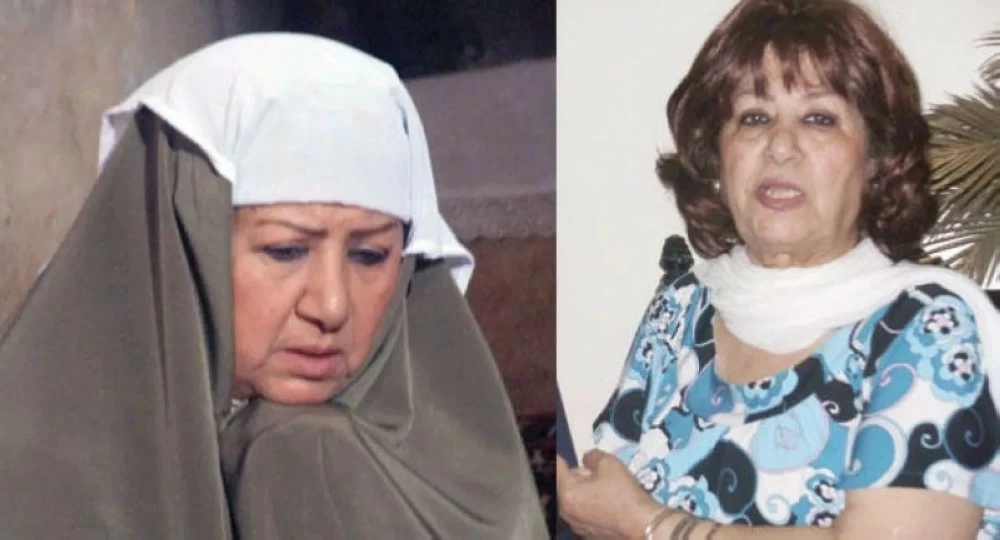
On a sorrowful Damascus morning, the curtain fell on the life of one of the most prominent icons of Syrian drama, actress Huda Shaarawi, who was found dead in her home, leaving behind a profound shock in the artistic community and across the Arab world. This tragic and solitary end stood in stark contrast to a career brimming with fame and success that spanned more than seven decades, during which she gifted art and audiences with unforgettable moments of life, laughter, and tears.
The passing of Huda Shaarawi was more than just the news of an artist's death; it marked the end of an era in the history of Syrian drama, a genre that shaped the consciousness of generations. Shaarawi grew up in a time when Syrian drama was building its glory, becoming a leading artistic force in the Arab world. She witnessed and participated in this golden age, as Syrian productions moved from local screens to every Arab home, carrying with them authentic stories and unforgettable faces, of which Huda Shaarawi was one of the most prominent. She lived through the transformation of art from black and white to the era of mass production, maintaining her presence as a constant artistic force representing authenticity and quality.
A rebellious childhood and a bold beginning
Huda Shaarawi was born in 1938 in the historic Shaghour neighborhood of Damascus, in a conservative environment that did not consider art a suitable profession for women. But her passion was stronger than any social convention. At the age of nine, she took her first step towards her dream by joining Damascus Radio, with a confident voice and rare determination. She faced strong family opposition that even amounted to a ban, but she did not give up. In an unprecedented move at the time, she submitted a formal request to appear on television, breaking down barriers and opening the doors to fame that remained open for 72 years of continuous contribution.
“Umm Zaki”: A character that transcended the screen
Although her artistic career includes more than 50 television works and significant theatrical and cinematic roles, such as her role as "Umm Taysir" in the popular comedy series "Five-Star Family," the character of "Umm Zaki" in the series "Bab Al-Hara" was the crowning achievement of her career. "Umm Zaki" was not merely the neighborhood midwife or the nosy woman; she became an Arab cultural icon. Huda Shaarawi was able to imbue the character with soul and authenticity, making her a mirror of the simple, strong, witty, and cherished Damascene woman, the keeper of her neighborhood's secrets. The character's influence transcended the borders of Syria, with the name "Umm Zaki" and her sayings becoming part of everyday speech in many Arab countries, demonstrating art's ability to cross borders and create universal symbols.
A lasting legacy and a painful end
The role of “Umm Zaki” was a testament to Huda Shaarawi’s ability to touch the hearts of the public. She transformed from a seasoned actress into a part of the collective Arab memory. For this reason, the news of her passing alone in her home was so painful and heartbreaking, a tragic end for an artist who lived her life among and for the people. Huda Shaarawi has departed physically, but she left behind a rich artistic legacy and the immortal character of “Umm Zaki,” which will remain alive in the memory of millions, a testament to a beautiful era of authentic art and to the story of an exceptional woman who defied the odds to create her own legend.
Culture and Art
Syrian artist Huda Shaarawi was killed in Damascus; investigations are underway
The Syrian Ministry of Interior announced the murder of renowned artist Huda Shaarawi at her home in Damascus. Details of the incident and the ongoing investigation into the crime, which has shocked the artistic community, are forthcoming.
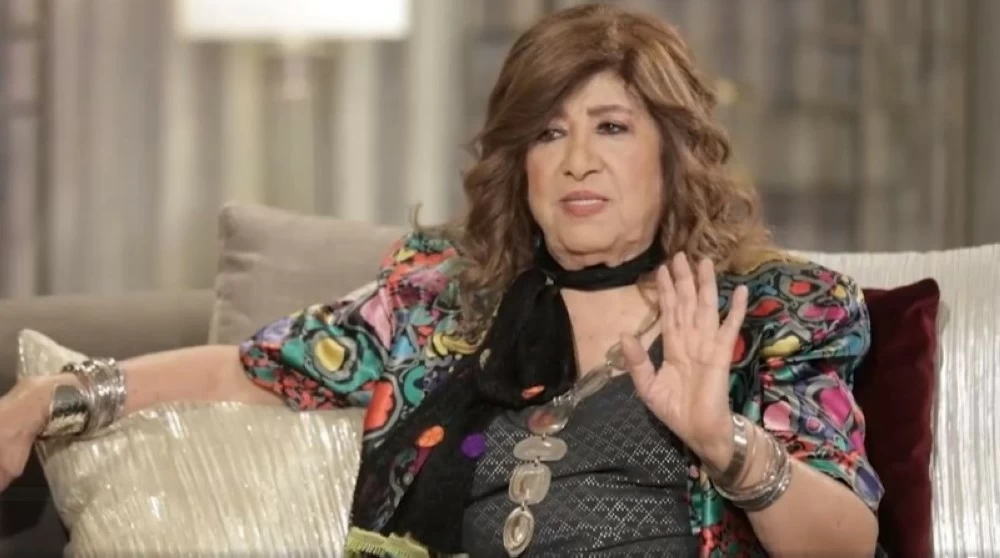
The Syrian Ministry of Interior announced the opening of a comprehensive investigation into the murder of renowned artist Huda Shaarawi, who was found dead in her home in the historic Bab Sreijeh neighborhood in the heart of Damascus. In an official statement, the Ministry confirmed that internal security units and criminal investigation teams immediately began the necessary procedures, cordoning off the crime scene and collecting forensic evidence to document all field findings. The aim is to uncover the circumstances surrounding this tragic crime, which has shocked the Syrian artistic community and society at large.
Background of the event and the importance of the late artist
The late Huda Shaarawi was one of the most prominent stars of Syrian drama, with a career spanning decades during which she delivered unforgettable performances. Her name and persona became synonymous with the Arab audience, particularly through her iconic role as "Umm Zaki" in the popular series "Bab Al-Hara," a character who embodied the quintessential Damascene woman with her wisdom and strength of character. Shaarawi began her artistic career in the 1960s, participating in dozens of television, radio, and theatrical productions, making her an integral part of Syrian and Arab artistic memory. Her tragic death is not only a loss to the arts but also raises deep concerns about the safety of public figures in the country.
Local and regional impact of crime
Locally, the incident sparked widespread shock, with social media flooded with expressions of grief and condemnation. Fellow artists and official artistic institutions mourned her passing, demanding the swift apprehension and prosecution of the perpetrators. This crime underscores the ongoing security challenges facing the Syrian capital, despite the relative stability achieved in recent years. Regionally, the Arab public reacted with sorrow to the news, given the high esteem in which Syrian drama and the late artist were held. The incident is seen as part of the tragedies that have befallen Syria, which have not spared its artistic and cultural icons.
Investigations continue and public anticipation
The Ministry of Interior clarified that the investigations are still in their initial stages, and that specialized teams are working around the clock to analyze evidence and question potential witnesses in order to determine the motives behind the crime and identify those involved. A sense of anticipation prevails among the Syrian public regarding the results of the investigations, with great hope that the authorities will be able to achieve justice for the family of the deceased artist and her fans, and put an end to such crimes targeting prominent figures in society.
-

 Local News 4 days ago
Landslide in Riyadh: Details of the incident in Al-Sahafa neighborhood and containment efforts
-
 Local News 5 days ago
The death penalty was carried out against a citizen who stabbed another to death in Tabuk
-
 Culture and Art, 1 week ago
Ramez Galal in Ramadan 2026: Details of the bloody prank show
-

 Local News 6 days ago
First birth on the Riyadh train: A heartwarming story at Andalus station
-
 Culture and Art 4 days ago
Haifa Wehbe's absence in Riyadh: A photo crisis or a strained relationship with the media?
-

 Local News 4 days ago
Riyadh collapse: Emergency plans to secure water after a main pipeline burst
-
 Culture and Art 4 days ago
City Kitchen series: A drama of conflict and the middle class during Ramadan
-

 Culture and Art 4 days ago
The series "Kasra": Dawood Hussein in a moving social drama this Ramadan