
Culture and Art
The Exclusion of the Author: Between Roland Barthes, Jacques Derrida, and Abdullah al-Ghadhami
I have not found an Arab critic whom I can equate or compare with Jacques Derrida and Roland Barthes in terms of French and Western culture in general

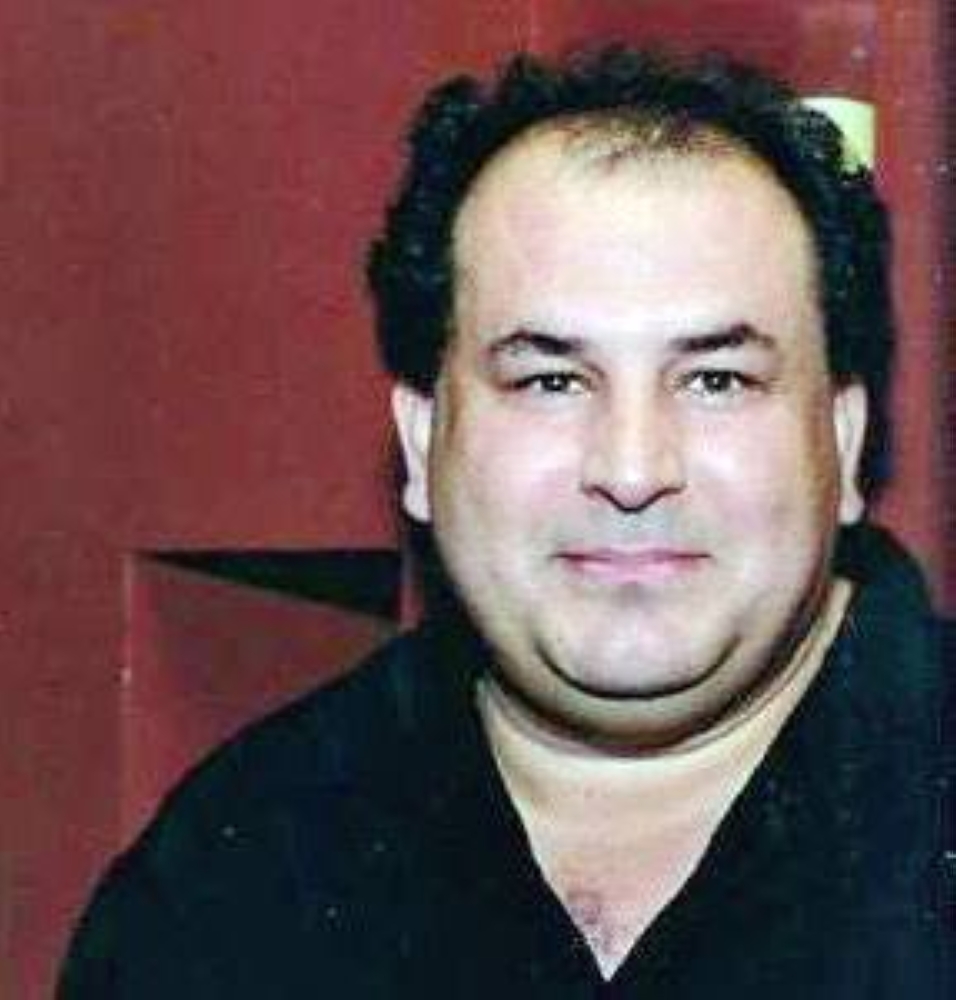
I have not found an Arab critic whom I can associate or compare with Jacques Derrida and Roland Barthes in French and Western culture in general, other than Dr. Abdullah Al-Ghadhami, with the accuracy of his analyses, the breadth of his knowledge, the originality of his culture, the splendor of his writings, the accuracy of his diagnoses, the abundance of his knowledge, and finally the splendor of his proposals and the importance of his books. If the French nation boasts of its scientists and philosophers, then the Arab nation has every right to boast of what Dr. Abdullah Al-Ghadhami has presented in terms of critical, intellectual and philosophical proposals. Hence came the idea to write a book that brings together the three philosopher critics to shed light on the importance of this comparison and approach between Arab and Western thought in criticism, which means, among other things, not only text criticism but also the concept of the philosophy of the text. These three critics met in a single vision based on the exclusion of the author, as their arguments theorized through this philosophy or this concept to treat the text from the angle of excluding the author. We know that the concept of excluding the author has been linked to the schools of criticism that came after postmodernism, as the three great critics focused on one concept, which is resorting to the text without its author. Hence came Jacques Derrida’s philosophy of excluding the author, which means, among other things, breaking the connection between the linguistics of words and everything that is interpreted outside of them. On the other hand, we see that Roland Barthes dedicated a famous article to the death of the author, not just his exclusion as Derrida or Al-Ghadhami did. Roland Barthes' article constituted a historical turning point in the course of modern criticism, to officially announce the death of the author. This author was sent by Abdullah Al-Ghadhami to the museum by firing the coup de grâce through the philosophy of cultural criticism, which moved global criticism from one era to another, with its bold and renewed concepts that keep pace with the spirit of the age, its rhythms and rapid developments, and respond to its aspirations. In this book, which I have begun to write, I examined the experiences of these three great critics. It was necessary to analyze their most important books, which were profound experiments in this philosophy, such as Roland Barthes' book, The Semiology Lesson, and Dr. Abdullah Al-Ghadhami's books, Sin and Atonement, and The Culture of Questions, and finally, Jacques Derrida's books on Grammatology and Writing and Difference.
The end of the modern era
With the end of structuralism, the era of modernity, both philosophically and critically, came to an end. This school—structuralism, which drew its starting point from the ideas of the Swiss linguist Saussure and the Russian Formalists, and later from the critic who rebelled against structuralism, including Roland Barthes—closed the text to any external factors, limiting its analysis to the critic's perspective solely through its words and meanings. Its ideology crystallized concurrently with the Russian Formalists' call to exclude the author's role in the work. Then came postmodern movements like deconstruction, which opened the text to interpretations reached by the deconstructionist critic and the reader. In other words, authority shifted from the text to the reader, and texts moved from closed to open. This can be considered a prophecy or an advanced reading of what followed, namely our arrival at cultural criticism and how its mechanisms operate. Dr. Al-Ghadhami is considered a true pioneer of this school and a legitimate heir to the Birmingham school. He was the first to practically and applied the concept of cultural criticism. Literature, where the three great figures met on: excluding the author, giving absolute power to the reader, and opening the text to external interpretations.
The Death of the Author according to Roland Barthes
The death of the author, a practical application of structuralist theory that emerged in the 19th and 20th centuries, was advocated by the French literary critic Roland Barthes in a 1968 essay in his book "The Semiotic Lesson." Barthes's call came after the pre-modern era and in response to criticisms of structuralism and its perceived impasse. He advocated for the death of the author to open the door to the continuous renewal of the text, restoring the reader's role in shaping their interpretation. The reader becomes the space from which the quotations that constitute the text originate. The unity of the text lies not in its origin but in its target audience. Barthes was distinguished by his insightful critical vision and broad, precise culture. His call for the death of the author in literary texts was serious, not accidental or arbitrary. He sought to shift European consciousness from tradition to knowledge and inquiry. His call garnered widespread attention in literary and cultural circles. This call represented a revolution against traditional criticism, which considered a literary work to be based on three elements: the author, the text, and the text itself. The recipient, and any study of a literary work must include a study of the author’s life and the reason behind the composition of this work, which structuralism did not accept, as it called for the death of the author. The interpretation and analysis of a literary work is based on language in terms of the words and structures that the author used to express his ideas and opinions. Roland Barthes was the true godfather of this call, on which Jacques Derrida built his theory of deconstruction with the expansion and development that he brought about in it.
Author exclusion
According to Derrida's vision
This theory emerged as a fierce reaction against structuralism, which completely excluded the reader from the interpretation of a text. Deconstruction is based on penetrating the unknown by delving into the hidden depths of the text, viewing it as a critical tool or a new intellectual space, distinct in style and vision from the text itself. This leads us to rely solely on the text; any problem, interpretation, or ambiguity we encounter must be referred back to the text alone for clarification, not to the author. In this way, we are freed from the author, their explanations, excuses, and circumstances, which the text alone will explain. More precisely, we begin by observing the contradictions and dead ends within the text without external assistance
We must move away from traditional and historical reading and what it entails in terms of dividing eras, because it looks into non-linguistic influences, which leads to distancing the researcher from the linguistic differences in texts. According to this view, everything exists in difference, postponement, and the series of differences, meaning that the text creates its reality, imposes itself, and forms its field, worlds, images, and aesthetics through the written language. Thus, we dismantle its mechanisms from within through a single means, which is the written language only, not attributed to the author or the external circumstances that surrounded the text. All of this can be compensated for and dispensed with through the energy of the language included in the text. Deconstructive reading is not simply what is understood from the text, but rather things that were not mentioned in the written words of the text. This means that the text contains gaps. The text, in reality, is made up of labyrinths, and this is what absence and forgetting are built upon. Thus, deconstruction gives power to the reader and not to the author, and focuses primarily on writing by giving the reader the power of reading and deduction to be more able to decode the text and assemble it according to what he wants and what the text gives him in terms of signs and worlds whose symbols are decoded.
Abdullah Al-Ghadhami and the exclusion of the text
Al-Ghadhami is considered the legitimate heir to the Birmingham group, which introduced cultural criticism, though he did not belong to it. This group advocated for the possibility of applying cultural criticism to literary works, but their call remained merely theoretical until a distinguished critic, possessing a broad and authentic culture, deconstructed this new theory of cultural criticism and practically applied it to literary works. He accomplished what the Birmingham group, who believed in the possibility of such application, had failed to do. This critic is Dr. Abdullah al-Ghadhami. The philosophy of cultural criticism is based on reinforcing the reader's role in the reception process, returning the text to them by extracting language and rhetoric and examining them through their structures. This is expressed in his famous statement: "The time has come for us to search for the systemic flaws of the pretentious Arab personality, which are carried by the Arabs' literary canon and manifest in our social and cultural behavior in general." Literary criticism has played an important role in identifying the aesthetics of texts and in training us to appreciate beauty and accept textual beauty. However, despite this, or perhaps because of it, literary criticism has trapped itself and us in a state of... Complete cultural blindness to the systemic flaws hidden beneath the cloak of aesthetics. His discussion in his book *Cultural Criticism* of the aesthetics of texts and their study through their structures, independent of the author, is a clear indication that he believes in the philosophy of the text, the text alone, without its author. Dr. Abdullah al-Ghadhami adopted this approach of excluding the author from the beginning of his book *Sin and Atonement*, which led him to analyze modern critical theories such as structuralism, semiotics, and deconstruction. He then applied these theories in compelling practical ways to reading the text, relying on semantic codes, deconstructing and dissecting its units, and then reconstructing them. Throughout, his reliance was on the text itself, independent of its author. He analyzed, deconstructed, and dissected these texts, then restored them to their original state, in a compelling scientific style and with the insight of a scholar who has mastered his field with precision and high self-confidence. In this book, he relied on the foundations of Western critical theory and other aspects of the Arab rhetorical and critical heritage, in a precise and brilliant comparative process. He linked heritage, modernity, and postmodernity, as seen in his analysis of Hamza Shehata's poetry, by introducing new angles for approaching the text through the process of reception, and then comparing it with He studied prose texts, and then he studied the effect that reaches the reader, and then he described reaching it as a creative activity of the critical reader. In this particular reading, he met Roland Barthes in the concept of excluding the author and Jacques Derrida in giving the reader the first role in reading the text. It is to Al-Ghadhami’s credit that he created in this book a method that goes into the depth of the text, which is a new method in the theory and process of reception that differed completely from what was prevalent in rhetorical and literary studies, as this method established a reading of the text according to new horizons, whose function is to study and analyze the relationships between the elements of the text by tracing the effect. His second book, *The Culture of Questions*, comprises critical, analytical, and deconstructive essays on selected texts and poems. Each essay is followed by a question, and the final section consists of correspondence between the author and several critics, along with answers to readers' questions. Among the texts he analyzed and dissected, after excluding their author, were two poems by Mahmoud Darwish. He delved into the structure of these poems, applying his concept of dissection to them and creating explanatory tables to illustrate each sentence's linguistic, stylistic, and rhetorical features, as well as its opposite. He justified this approach by stating, "I say this to connect my themes, as we touch upon what we previously indicated: that Mahmoud Darwish's poem *Passersby in Passing Words* moves towards the rhetorical function of language." He then connects it semantically to Ibn Sina's first conception, which he sees as having an effect on the soul, as he perceives it through the text: "In the soul is something that prepares it for action or reaction." This is how Al-Ghadhami engages with the text; he does not merely analyze it. Or even dissecting it, rather he deliberately links it semantically in a critical philosophical heritage vision. Thus, he completely excludes the author and his circumstances and interprets the text, according to its meanings and linguistic contexts and through its constituent structures, then links it to the heritage concept in a segmental way, as if he were using the technique of cinematic cutting, in every sentence of the poem. Thus, he excludes the author and enters the text through its linguistic contexts and what corresponds to them of contradictions. Thus, he revives the concept of deduction according to Jacques Derrida to work on deciphering the text and assembling it according to what he wants and what the text gives him of signs and worlds whose symbols and meanings are deciphered.
Conclusion
In this book, the critic transforms into someone in a state of continuous interaction with texts, where creativity blends with critical anxiety and a constant desire to improve his writing. The critic, as a creator, does not see texts as a final, complete product, but rather as an ongoing project of critique and renewal. The conviction of perfection in criticism is one of the greatest challenges facing critics, for complacency with the results of analysis and complete satisfaction with the text hinders creative growth and limits the writer's ability to develop. Here, both Al-Ghadhami and Jacques Derrida converge: whenever they arrive at a meaning, they hasten to refute it, never settling on a particular interpretation. They never stop or reach a center or path without shifting it further, moving it from one circle to another, as if perpetually preoccupied with distancing themselves from meaning, leaving things fragmented and without identity until they gradually transform into accumulations of transformations with no final boundaries. They adopt Barthes' philosophy of the death of the author as a context or analytical method that enables them to reach distant worlds and uncharted territories. Discovered by the text, as if they were in a persistent search for renewed meanings through the text’s references, as if they were in a state of creative anxiety to incite them to experiment in continuing to think about new ways and methods to reach the unknowns of the text, reveal them and illuminate them, as the three critics met in that critical analysis does not stop at a certain point, but is a continuous renewal process through the revelation and evaluation of texts.


Culture and Art
Mai Ezz El-Din and her husband Ahmed Taymour: A romantic celebration at the Pyramids
See photos of artist Mai Ezz El-Din celebrating her husband Ahmed Taymour’s birthday in a historical setting in front of the Giza Pyramids, and her emotional message that received widespread interaction.

An exceptional celebration nestled in history
In a uniquely romantic gesture, renowned Egyptian actress Mai Ezz El-Din chose one of the world's most prominent historical landmarks, the Giza Pyramids, as the backdrop for her husband Ahmed Taymour's birthday celebration. Ezz El-Din shared these special moments with her wide audience on her official Instagram account, posting a series of photos of herself and her husband against the backdrop of the majestic pyramids, lending the occasion a unique character that blended love and history.
An emotional message and "God's compensation"
Mai Ezz El-Din didn't just post the photos; she accompanied them with a touching and heartfelt message expressing the depth of her feelings, writing: "Happy birthday, my love, my joy, and God's blessing to me." These simple yet sincere words resonated deeply with her followers, reflecting a state of happiness and gratitude. The public reacted strongly, believing this appearance confirms the stability and happiness of her personal life.
Background on Mai Ezz El-Din's artistic career
Mai Ezz El-Din is one of the most prominent stars of her generation in Egypt and the Arab world. She began her artistic career in the early 2000s and quickly proved her talent and ability to portray diverse roles, from comedy to profound drama. She has delivered unforgettable performances in film and television, most notably the "Omar & Salma" trilogy and series such as "Qadiyat Safia" (Safia's Case), "Dalaa Banat" (Spoiled Girls), and "Al-Princessa Beesa" (Princess Beesa). Despite her widespread fame, Mai is known for her relative discretion in keeping her private life out of the spotlight, making any sharing of intimate moments a significant event for her fans, who eagerly await news of her.
The importance of participation and audience interaction
This celebration underscores the role social media platforms play in the lives of celebrities, serving as their direct window to connect with their fans and share their joys and important moments. Mai Ezz El-Din's post garnered immense attention, with a flood of congratulatory messages and well wishes from her colleagues in the entertainment industry and millions of followers, all wishing her and her husband continued happiness and love. For his part, Ahmed Taymour was quick to respond to his wife's message, commenting on the post with heartfelt words: "And you too, my darling, happy and by my side," completing the romantic scene that captivated everyone.
Culture and Art
Amal Hijazi announces she has removed her hijab and declares: Sherine is the voice of Egypt
Lebanese artist Amal Hijazi confirms her final decision to remove her hijab, revealing her spiritual journey and her opinion on Egyptian artists such as Sherine and Angham.

A final decision and a spiritual experience
Lebanese artist Amal Hijazi has definitively announced that her decision to remove her hijab is final and irrevocable, confirming that she will not wear it again. In televised remarks that sparked widespread controversy, Hijazi explained that this decision stemmed from a profound personal spiritual experience that led her to re-evaluate many prevailing religious practices. She added that she does not consider herself a religious preacher, but rather a person searching for the essence of faith beyond outward appearances that may not reflect true piety.
Background to the decision: From retirement to return
This announcement marks a new chapter in the career of Amal Hijazi, who surprised her fans in September 2017 by announcing her retirement from music and her decision to wear the hijab, turning to performing religious songs. Her decision at the time was a significant event in the Arab art scene, as she was at the height of her stardom. However, her journey took another turn when she announced she was removing the hijab, explaining that wearing a head covering was linked to customs and fashions prevalent in certain eras, and that it changed with the times and fashions, considering it part of a traditional style of dress and not necessarily a fundamental aspect of personal faith.
The impact of the decision and the social media controversy
Amal Hijazi's decision did not go unnoticed; rather, it sparked widespread debates on social media platforms across the Arab world. Followers were divided between those who supported her decision as a matter of personal freedom and a right to express her evolving convictions, and those who opposed it, seeing it as a retreat from a religious commitment she had publicly declared. This controversial situation reflects the broader societal polarization surrounding issues of women, the hijab, and religiosity in the modern era, where the decisions of public figures become fodder for public debate, intersecting with religious, social, and cultural dimensions.
Her assessment of the art scene: Sherine is the voice of Egypt, and Angham's feeling is lost
Hegazi's statements weren't limited to her personal decision; she also offered an assessment of the Egyptian art scene. She described Sherine Abdel Wahab as the true "voice of Egypt," praising her profound emotion and ability to touch listeners' hearts. Conversely, she criticized Angham, saying her voice lacked "a certain feeling," and urged her to be more mindful of her artistic choices. She also noted that while Amal Maher possesses a powerful voice, she personally prefers voices that sing with a delicate touch, like Sherine's, admitting that she doesn't follow Amal Maher's work closely.
Culture and Art
Rashed Al-Majed: A song by him, a concert at Riyadh Season, and sold-out tickets
Artist Rashed Al-Majed released his new song "Biz'amah" ahead of his highly anticipated concert at Riyadh Season, which sold out completely amidst record demand. Learn more about the song and the concert.

A strong comeback for the Sindbad of Gulf song
In a highly anticipated artistic move, renowned Saudi artist Rashed Al-Majed, nicknamed "The Sindbad of Gulf Song," released his latest single, "Biz'amah." This release marks a strong comeback for him on the music scene ahead of his highly anticipated concert as part of Riyadh Season. This event comes amidst the significant artistic and cultural movement currently underway in Saudi Arabia, where Rashed Al-Majed is a prominent figure with a distinguished career spanning over three decades. During this time, he has presented hundreds of works that have shaped the sensibilities of generations of listeners in the Gulf and the Arab world.
Details of the song "Bi-Za'ma" and a prominent artistic collaboration
The new song "Bi-Za'mahu" (By His Claim) is not just a fleeting artistic endeavor, but the fruit of a collaboration bringing together distinguished artistic figures. The lyrics were penned by His Excellency Turki Al-Sheikh, Chairman of the Board of Directors of the General Entertainment Authority, who boasts a distinguished poetic career. Al-Sheikh promoted the song through his official accounts, sharing a poignant excerpt from the lyrics that poignantly describe separation in a profound poetic style: "Love and paradise don't meet; there's a vast difference between us." The song was composed by Nawaf Abdullah, with musical arrangement by Cyrus, while Tamer Faydi's strings added a refined classical touch. Engineer Jassim Mohammed oversaw the mixing and mastering, completing a cohesive team that produced a high-caliber artistic work.
Tickets sold out and unprecedented public demand
The interest wasn't limited to the new song; it extended to the announced concert. As soon as tickets went on sale, the organizing company announced they sold out completely in record time, noting that demand exceeded one million requests—a record-breaking figure reflecting the artist's massive fan base and the public's eagerness to see him on stage after a long absence. This overwhelming response not only confirms Rashid Al-Majed's stardom but also demonstrates the success of Riyadh Season's strategy in attracting audiences and delivering world-class entertainment events that meet their expectations.
The event is part of the Riyadh Season cultural vision
The concert will take place on January 30th at the Mohammed Abdo Arena, one of the largest and most luxurious theaters in the region, as part of Riyadh Season, which has become a landmark event on the regional and international entertainment calendar. This concert is part of the Kingdom's Vision 2030, which aims to enhance the culture and entertainment sectors. Majed, accompanied by his orchestra under the direction of the renowned maestro Waleed Fayad, is expected to perform a diverse selection of his most beloved classic songs, as well as his new works, with promises of several surprises that will make this night an unforgettable event in the history of concerts in the region.
-

 Local News 3 days ago
Landslide in Riyadh: Details of the incident in Al-Sahafa neighborhood and containment efforts
-
 Local News 4 days ago
The death penalty was carried out against a citizen who stabbed another to death in Tabuk
-

 Culture and Art, 1 week ago
Ramez Galal in Ramadan 2026: Details of the bloody prank show
-

 Local News 5 days ago
First birth on the Riyadh train: A heartwarming story at Andalus station
-

 Local News 3 days ago
Riyadh collapse: Emergency plans to secure water after a main pipeline burst
-

 Culture and Art 3 days ago
Haifa Wehbe's absence in Riyadh: A photo crisis or a strained relationship with the media?
-

 Culture and Art 3 days ago
City Kitchen series: A drama of conflict and the middle class during Ramadan
-

 Culture and Art 3 days ago
The series "Kasra": Dawood Hussein in a moving social drama this Ramadan