Culture and Art
Musician Omar Khairat suffers sudden health crisis

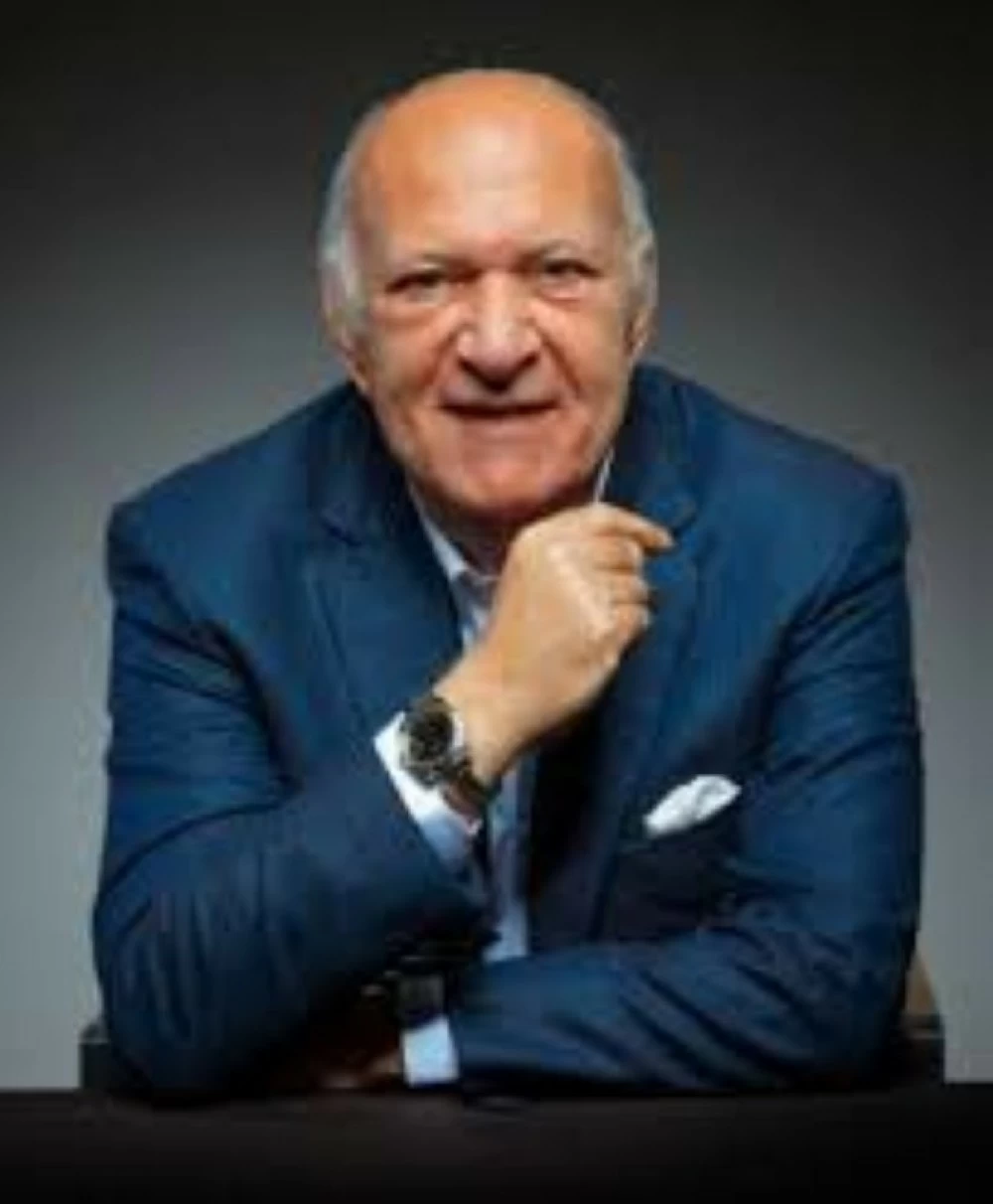
Musician Omar Khairat faces a sudden health crisis
The famous Egyptian musician Omar Khairat to one of the major hospitals in Cairo after suffering a sudden health crisis, which forced him to stop continuing his artistic activities for the time being.
Omar Khairat's media office confirmed that his health condition is stable, noting in a statement that doctors advised him to take a period of rest to recover, which necessitates postponing his artistic commitments during this time.
Public appreciation and ongoing support
The statement added that the great musician appreciates the love and continued support of his audience, and promised to return soon to present concerts befitting his artistic stature and his audience who adore music.
Details of the health crisis
According to media sources, Omar Khairat was hospitalized after suffering a sudden health crisis, forcing him to miss his recent concerts. The medical team has been closely monitoring his condition to provide the necessary care.
This news comes at a time when the public was eagerly awaiting his concerts, as Omar Khairat is known for his enchanting melodies that captivate hearts and ignite emotions.
We hope that the musician Omar Khairat recovers quickly so that he can return to his audience and fans, and continue his musical creations that have always entertained us and influenced our artistic culture.


Culture and Art
Abdulaziz Khoja at Jeddah Arts: A night where poetry and music embraced
The Jeddah Culture and Arts Association is organizing an evening of classical Arabic songs with Dr. Abdulaziz Khoja, showcasing the aesthetics of sung poetry and supporting the Madid program for Saudi cultural activism.
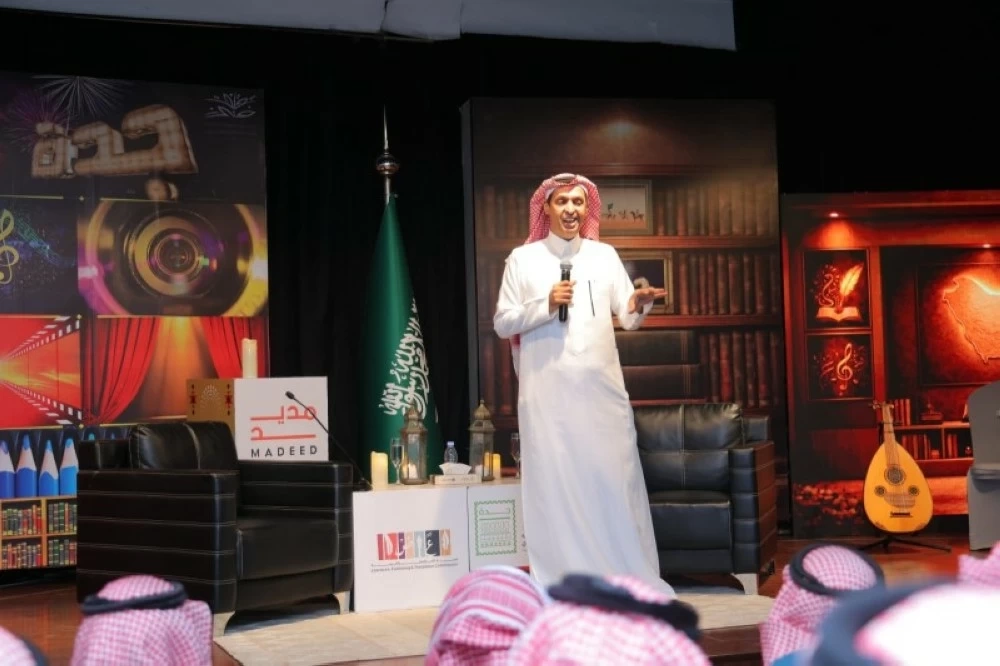
On a cultural evening where the magic of eloquence blended with the sweetness of melodies, the Jeddah Culture and Arts Association organized a unique event entitled "Classical Arabic - The Song of the Soul," hosting the distinguished literary and diplomatic figure, Dr. Abdulaziz Khoja. The evening, skillfully moderated by Dr. Zaid Al-Fadhil, was part of a vibrant cultural movement in the Kingdom, supported by the "Madid" program of the Literature, Publishing and Translation Commission, aimed at strengthening the presence of Classical Arabic in the artistic landscape and solidifying the status of poetry in the public's aesthetic consciousness.
Abdulaziz Khoja: The poet, diplomat, and human being
This evening was more than just a fleeting event; it was a tribute to the long and distinguished career of Dr. Abdulaziz Khoja. Khoja is one of the most prominent figures in the Saudi and Arab cultural scene, combining political acumen as a former Minister of Culture and Information and ambassador to several major capitals with the sensitivity of a poet who crafts words to resonate deeply. His participation is particularly significant given his pioneering role in bridging the gap between classical Arabic poetry and modern musical taste, making his texts a rich source of inspiration for leading composers and singers.
The sung poem: an artistic memory that transcends borders
During the enriching dialogue, the audience delved into the experience of the sung poem, as Dr. Khoja and Dr. Al-Fadhil explored the journey of poetic texts that transformed into iconic songs. Dr. Khoja pointed out that when a poem is sung, it acquires new life and reaches a wider segment of the Arab audience. This was evident in the list of renowned artists who have performed his words, such as Wadih El Safi, Sabah Fakhri, Mohammed Abdu, Abadi Al-Johar, Karima Al-Saqli, and Hiba Qawas. This geographical diversity of artists confirms that Saudi poetry possesses the qualities of universality and the ability to influence the Arab consciousness from the Atlantic to the Gulf.
Vision 2030 and supporting cultural activism
This event is a direct reflection of the significant cultural transformation underway in the Kingdom under Vision 2030, which has given unprecedented attention to culture and the arts as pillars of quality of life and soft power. In this context, Mohammed Al-Subaih, Director of the Jeddah Culture and Arts Association, emphasized that refined music and singing represent a civilized face of society, praising the institutional support provided by the "Madeed" program, which empowers non-profit cultural organizations to offer high-value content that strengthens national identity and belonging.
Lively interaction and elite input
The evening wasn't limited to theoretical discussions; it also featured a practical application of the aesthetic interplay between poetry and music. The audience experienced a captivating performance by artist Mohammed Hashem, accompanied by musician Dr. Madani Abadi on the qanun, in a beautiful display that embodied the elegance of the lyrics and the sweetness of the melody. The closing event was enriched by insightful contributions from prominent figures, including Ambassador Osama Naqli, Dr. Abdullah Dahlan, journalist Saad Zuhair, and poet Badia Kashgari, lending the evening the air of a distinguished literary salon and reviving Jeddah's historical cultural prestige.
Culture and Art
Launch of the Culture and Arts Guide in the Urban Landscape under the patronage of the Minister of Culture
Under the patronage of Prince Badr bin Farhan, the Ministry of Culture launched the Culture and Arts Guide in the Urban Landscape to enhance quality of life and integrate art into public spaces within Vision 2030.
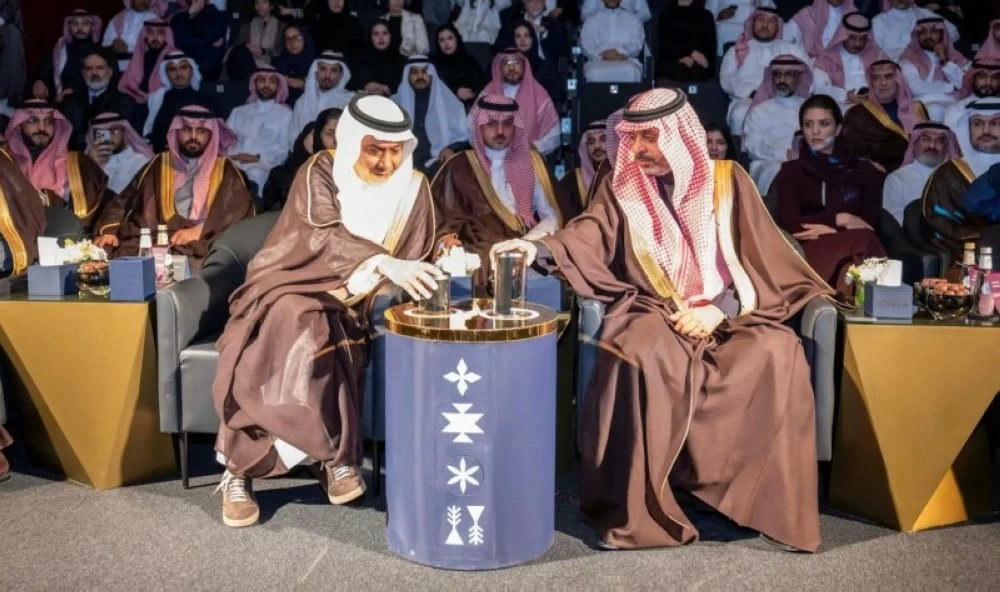
Under the patronage of His Highness Prince Badr bin Abdullah bin Farhan, Minister of Culture, the Ministry of Culture launched the “Culture and Arts in the Urban Landscape” guide yesterday (Monday) at a ceremony held at the Diriyah Center for Future Arts. This strategic step lays the foundation for a comprehensive national reference to support stakeholders in planning and implementing cultural interventions in public spaces, with the aim of improving the urban landscape and enhancing the quality of life in Saudi cities, in line with the objectives of the Kingdom’s Vision 2030.
A qualitative leap in Saudi urban planning
The launch of this guide comes at a time when the Kingdom is witnessing a radical transformation in urban planning concepts, as cities move from being mere functional concrete blocks to vibrant, human-centered spaces. This guide is a practical application of the Quality of Life Program initiatives, one of the Vision 2030 programs, which seeks to empower the cultural sector to play a pivotal role in shaping the identity of cities and making them more attractive to both residents and visitors.
The ceremony was attended by the Deputy Minister of Culture, Professor Hamed bin Mohammed Fayez, and the Deputy Minister of Municipalities and Housing, Engineer Ehab Ghazi Al-Hashani, reflecting the extent of governmental integration to achieve these goals.
An integrated partnership between culture and urban development
In his address on behalf of His Highness the Minister of Culture, Professor Hamed Fayez affirmed that the guide is the fruit of a strategic partnership with the Ministry of Municipalities and Housing. He pointed out that Saudi cities hold a rich history and profound meanings that can be revived through public spaces, saying, “These spaces can be transformed into living experiences that build a relationship between people and their surroundings, and work to transform the place into a destination, a story, and a creative space.”.
For his part, Engineer Ehab Al-Hashani explained that the ministry is working on redefining urban planning to put “people first,” stressing that the guide moves municipal work from individual efforts to a sustainable methodology, to give cities a visual language that expresses their identity and cultural diversity.
The importance of the guide and its expected impact
The role of the "Culture and Arts in the Urban Landscape" guide extends beyond aesthetics to encompass significant social and economic dimensions. Socially, art in public spaces fosters a sense of belonging and creates opportunities for community interaction, thus reducing social isolation in major cities. Economically, transforming squares and public spaces into artistic landmarks contributes to attracting both domestic and international tourism and revitalizes commercial activity in surrounding areas—a phenomenon known globally as "placemaking.".
Practical methodology and entrepreneurial projects
The guide offers a practical roadmap for municipalities, local authorities, and real estate developers, starting with understanding the nature of the community and the location, and extending to implementation and impact measurement. To ensure the guide's effectiveness, pilot projects were launched in collaboration with major entities such as the Royal Commission for Riyadh City, the King Fahd National Library, and the Madinah Municipality, serving as living examples of how to integrate art into the urban fabric.
It is worth noting that the guide is now available through a dedicated digital platform on the Ministry of Culture’s website in both Arabic and English, including tools, models and global best practices, to help planners and innovators transform the Kingdom’s cities into open museums that reflect their cultural depth and their aspirations for the future.
Culture and Art
Mustafa Gharib in his first leading role in the series "Heya Kimya" during Ramadan
Mustafa Gharib is preparing for his first leading role this Ramadan in the series "Heya Kimya" (She's Kimya). Learn about the character Sultan, behind-the-scenes details of working with writer Mohab Tarek, and the series' captivating storyline.
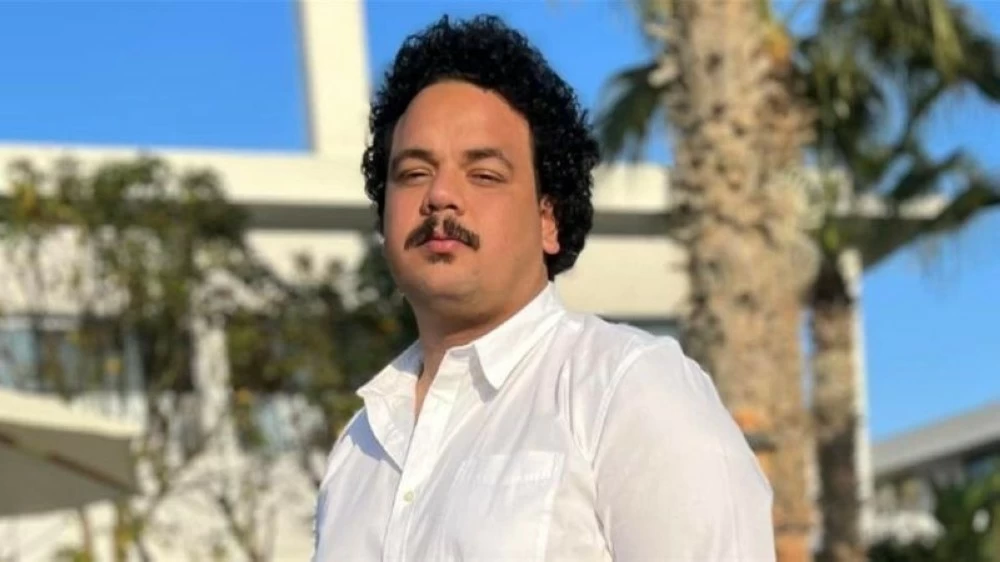
Young Egyptian actor Mustafa Gharib a new and different artistic challenge in his career, as he prepares to star in his first leading role in the upcoming Ramadan drama series "Heya Kimya" (She's Kimya) . This step comes as a culmination of Gharib's successive successes in recent years, where he has captured attention with his natural talent and commanding presence, especially in the comedic roles he has played, most notably the character "Al-Atra" in the "Al-Kabir Awi" series, making him one of the most prominent rising young stars in the Egyptian art scene.
Behind the scenes of approval and confidence in the text
In discussing his decision to join the project, Mustafa Gharib revealed in a press statement that his enthusiasm stemmed from the high quality of the writing and the thorough preparation. He explained that the writer, Mohab Tarek him at the time, informing him that half of the series' episodes had already been written before filming began. Gharib emphasized that having a well-written and clearly defined script gave him a significant sense of confidence and security, reducing the tension and risk that typically accompany an actor's first leading role, thus encouraging him to make the decision and move forward with the project.
Preparing for the character of "Sultan" and the performance methodology
Regarding his readiness to dominate the drama scene, the young actor emphasized that he follows a methodology based on focusing entirely on the quality of his work, rather than being preoccupied with competition or ranking among stars. He indicated that he is currently meticulously and deeply studying the character of "Sultan," whom he portrays in the series. This study includes a careful reading of the scripts to grasp the psychological and social dimensions of the character, as well as determining the physical appearance that best serves the role. He also noted his commitment to creating opportunities for thoughtful improvisation that adds dynamism to the scenes, in close coordination and continuous consultation with the director and writer to ensure the best possible performance.
Series synopsis: Thriller and mystery in the world of crime
The series "Heya Kimya" unfolds within a framework of suspense and intrigue, departing somewhat from the pure comedy in which audiences are accustomed to seeing Ghareeb. Mustafa Ghareeb portrays Sultan, a simple young man whose circumstances lead him to find himself embroiled in a mysterious and perilous world. Events force him to become entangled in a complex web of dubious relationships, where his primary goal becomes survival and uncovering the mystery behind what happened to his brother. As the plot thickens, Sultan gradually draws closer to realms of violence and corruption, presenting viewers with a dramatic experience full of twists and turns.
Betting on youth in the Ramadan marathon
The series "Heya Kimya" reinforces the recent trend in the Egyptian drama industry of giving opportunities to young stars to take center stage and shoulder leading roles, especially in productions aired during Ramadan, the most important and widely watched season in the Arab world. This work reflects the growing confidence of producers in the ability of the new generation to attract audiences and deliver compelling and engaging dramas capable of competing with the major productions of veteran stars.
-

 Culture and Art 5 days ago
The "Between and Between" exhibition in Jeddah: 5 artists reshape Saudi memory
-
Culture and Art 6 days ago
Shakira's concert in Jeddah: Details of the international star's first concert in Saudi Arabia
-
Local News 3 days ago
Saudi Arabia's National Arabic Language Policy: 8 Principles to Promote Identity
-
Local news two days ago
Adopting the National Policy for the Arabic Language: Strengthening Identity and Vision 2030
-
Culture and Art, 1 week ago
The truth about Nancy Ajram's video and Epstein Island, and her legal response
-
Local News 3 days ago
The Riyadh-Rin-Bisha dual carriageway, spanning 559 km, has been completed
-
Fashion one week ago
Sneaker Con Jeddah 2026: The largest gathering for sneaker culture and fashion
-
Local news one week ago
Launch of the new Dammam project with investments of 98 billion riyals