Culture and Art
Sound engineer accuses Mohamed Ramadan of public insult
On a night in El Alamein, Mohamed Ramadan faced a crisis with the sound engineer after the sound cut out twice, which ignited the atmosphere and sparked controversy about the incident.


Mohamed Ramadan in a heated confrontation with the sound engineer: The full story
On a magical night in the North Coast city of El Alamein, where the audience was eagerly awaiting the moment when the Egyptian star Mohamed Ramadan appeared on stage, the unexpected happened.
The sound suddenly cut out twice in a row, which angered “Number One” and ignited the atmosphere with an unexpected situation.
The moment that lit the fuse
While the audience was dancing to the tunes of his famous songs, everything suddenly stopped.
Mohamed Ramadan appeared in a video that spread like wildfire across social media, looking extremely agitated.
He addressed the sound engineer, saying: My country... don't do that again, pointing to the audience present and addressing the technician, saying: These are Egyptians.
That moment was the spark that ignited the dispute between the artist and the sound engineer, Emad Nabil.
Official complaint and accusations of defamation
Engineer Emad Nabil did not hesitate to file an official complaint against Mohamed Ramadan, accusing him of insulting the public.
He felt embarrassed and angry at the way the artist treated him in front of everyone.
Although the situation may seem simple to some, it reflects the sensitivity of the relationship between the artist and the behind-the-scenes crew.
"Out of respect for the public"
Amid this tension, Mohamed Ramadan demanded that the artist not listen to any instructions coming from anyone else, out of respect for the audience who came to enjoy the concert.
He was also asked to change the sound equipment to ensure the concert could continue without interruption again.
What's next?
The question now is: Will the two sides be able to resolve this dispute amicably, or will the escalation continue?
While awaiting the outcome of the official investigations, the public remains eager to learn more about this controversial story.
“Number One” always stirs controversy, both on and off stage!
Side note: This might be a good opportunity for Mohamed Ramadan to reconsider how he deals with the behind-the-scenes team and ensure that such situations do not happen again in the future.


Culture and Art
Ali El Haggar sings the theme song for the TV series "Ras El Afaa" in Ramadan 2026
Ali El Haggar returns to sing the theme songs for Ramadan 2026 through the series "Ras El Afaa" starring Amir Karara, with music by Yasser Abdel Rahman, in a drama that documents real events.
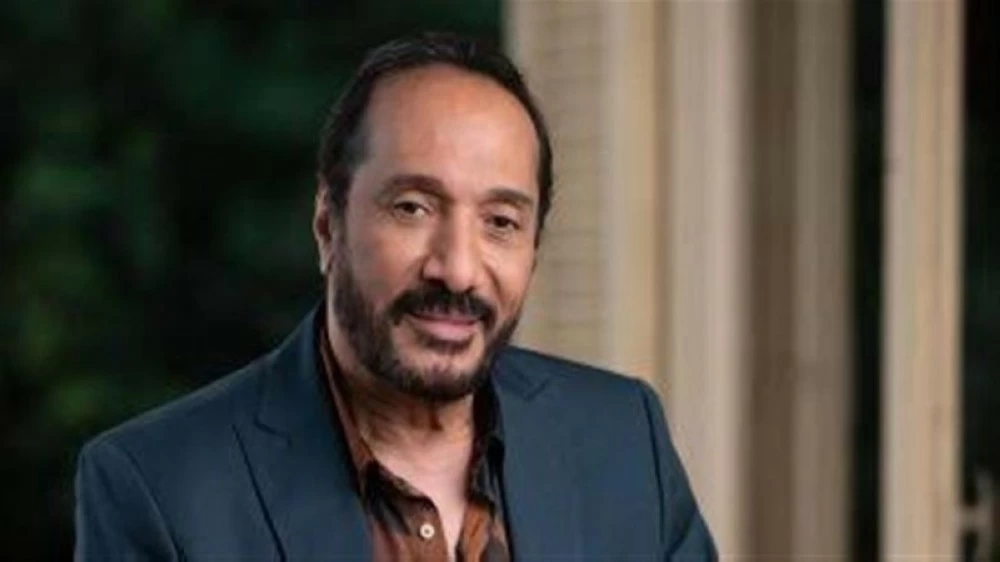
In a major artistic surprise that brought back memories of the golden age of Egyptian drama, the great singer Ali El Haggar announced his return to singing the theme songs of Ramadan series, specifically for the series "Ras El Afaa" (The Head of the Snake), scheduled to air in the 2026 Ramadan season. This news brings great tidings to the Arab audience, not only because of El Haggar's return, but also because of his renewed collaboration with the brilliant composer Yasser Abdel Rahman.
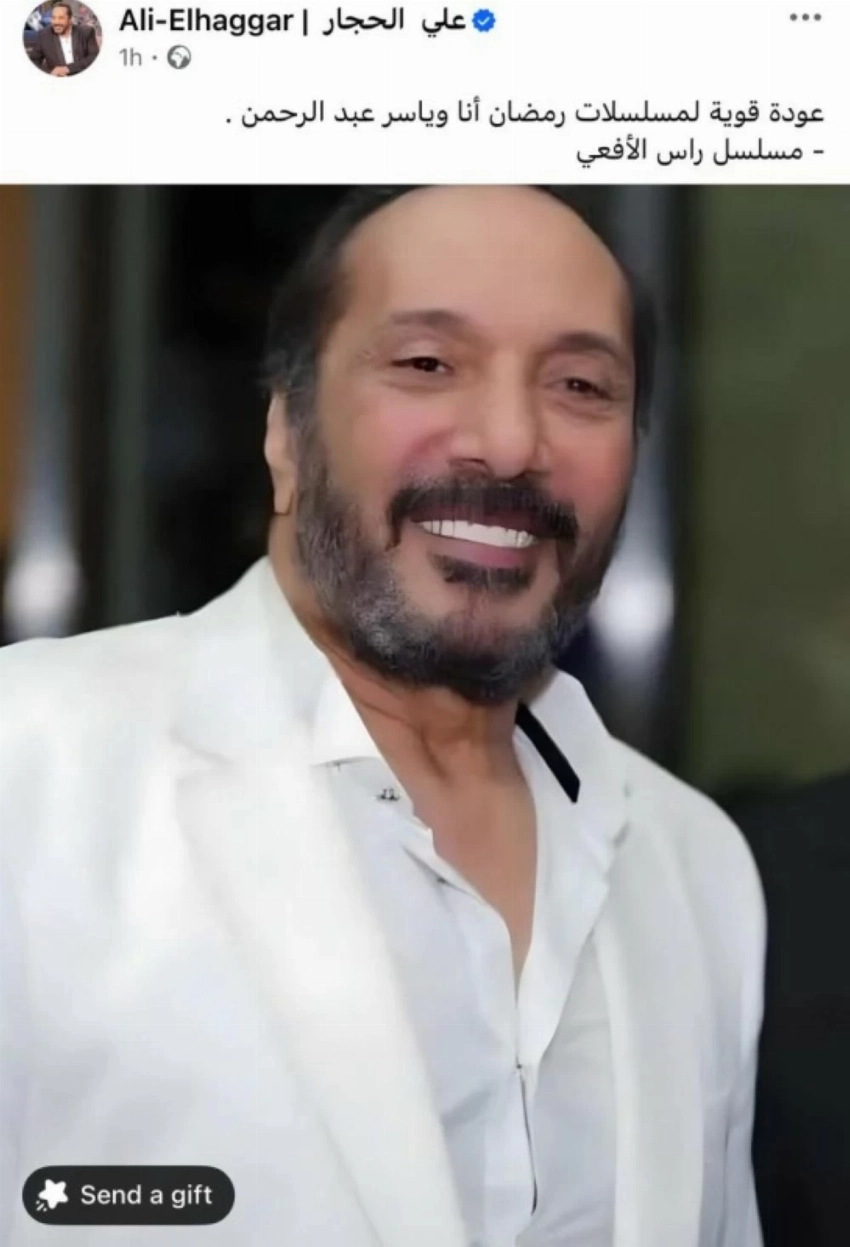
Al-Hajjar revealed this anticipated collaboration via his official Facebook account, posting a brief but exciting message: "A strong comeback to Ramadan series with Yasser Abdel Rahman... the series 'Ras Al-Af'a' (The Head of the Snake)." This announcement brought back memories of the duo's resounding successes in Egyptian drama masterpieces such as "Al-Mal Wal Banoun" (Money and Sons) and "Al-Layl Wa Akhro" (The Night and Its End), raising expectations for this new project.
A true story documenting an important period
The series "The Snake's Head" derives its significance not only from the return of the musical duo, but also from its storyline, inspired by true events. The drama unfolds as a suspenseful thriller, documenting a meticulously planned security operation: the capture of prominent Muslim Brotherhood leader Mahmoud Ezzat. The series details his hiding place in an apartment in the Fifth Settlement district and how security forces tracked his movements until his arrest, placing it firmly within the category of nationalistic and documentary dramas that have gained considerable popularity in recent years.
The context of national drama and its impact
This work comes as a continuation of the tradition of dramas that document the political and security events that Egypt has experienced, a genre in which star Amir Karara excelled in previous years, particularly in the "Al-Ikhtiyar" series. Presenting such works is of paramount importance in shaping collective consciousness and documenting modern history through drama, giving the series an impact that transcends mere entertainment, making it an artistic document of a sensitive period.
Stars' Battalion and the Return of Magda Zaki
The series "The Snake's Head" boasts a stellar cast, including Amir Karara, Sherif Mounir, Tarek Lotfy, Ahmed Ghazi, and Caroline Azmy. The show also features notable guest appearances by Fathy Abdel Wahab and Nidal El Shafei. One of the biggest surprises is the return of the esteemed actress Magda Zaki to the screen after an absence of more than four years, adding significant artistic weight and diverse acting to the production.
The series is written by Hani Sarhan, directed by Mohamed Bakir, and produced by Synergy Company. It is expected to be one of the most prominent competitors in the Ramadan marathon of 2026 due to the integration of its artistic elements, including music, acting, directing, and a realistic story.
Culture and Art
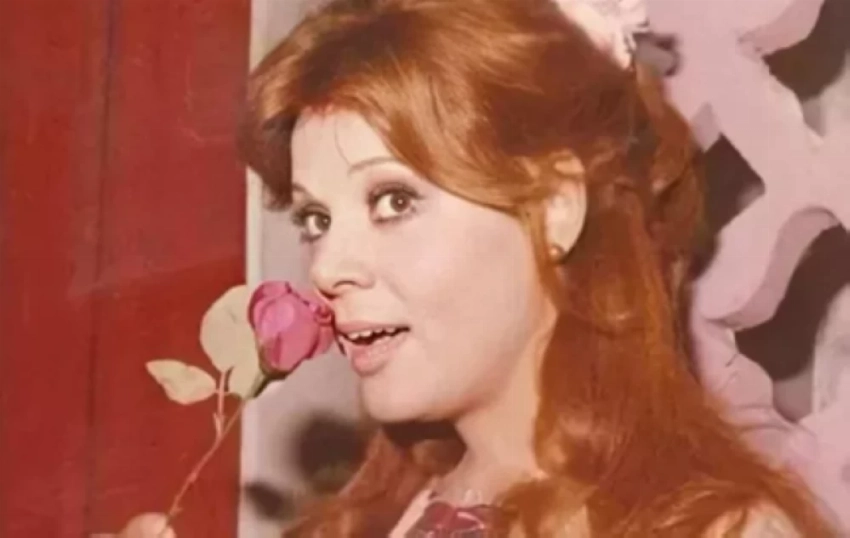
Safaa Abu Al-Saud in Ramadan: A strong return to radio with two works
Learn about the details of artist Safaa Abu Al-Saud’s return to radio during Ramadan through the series “Awdatin wa Sala” and “Bahjat Ramadan,” with the participation of a selection of stars and young talents from the Creativity Festival.

The esteemed Egyptian artist Safaa Abu Al-Saud returns to grace the microphone of Egyptian radio during the upcoming Ramadan season, where she embarks on a distinctive artistic experience through her participation in two radio works that carry a social and humanitarian character, to bring back memories of the good old days and consolidate the values of the authentic Egyptian family.
"Two Rooms and a Living Room"... A social drama featuring young faces
In her debut project, Safaa Abu El-Saoud stars in the radio drama "Two Rooms and a Hall," a rich dramatic offering that explores societal issues from within the heart of the Egyptian home. She is joined by a stellar cast including Ahmed Siam, Nashwa Mustafa, Adel Shaaban, Nagah Hassan, and Ali Murad.
What distinguishes this work is its support for emerging talent, featuring a group of outstanding young graduates from the "Creativity" festival, reflecting the continuity of artistic generations. The series is written by Amani Dargham and directed by Tamer Shehata, and is expected to garner a wide audience due to its storyline that resonates with the realities of middle-class families.
"The Joy of Ramadan"... A return to the spirit of the holy month
The second project, titled "The Joy of Ramadan," is a radio drama series broadcast on the "General Program" and several local stations. Alongside the "Icon of Joy," it stars Mai Abdel Nabi, Adel Shaaban, Mustafa Darwish, and Abeer Makawy. The series is written by Ahmed El-Kasaby and co-directed by Tamer Shehata and Abdo Bakry.
The series offers a dose of light social atmosphere that reflects the spirit of harmony and joy within Egyptian homes, highlighting the Ramadan customs and traditions that bring the family together, a style that has always characterized Safaa Abu Al-Saud’s works.
An icon of joy and emotional connection with the audience
Safaa Abu El-Saoud's return to radio is particularly significant given her prominent place in the hearts of Egyptian and Arab audiences. She is not merely an artist, but an "icon of joy" associated with holidays and happy occasions, especially through her timeless song "Ahlan Bil Eid" (Welcome to Eid) and her theatrical performances that shaped the consciousness of entire generations. Her return via radio represents a revival of a bygone era of refined art and reaffirms that a distinctive voice remains capable of captivating and influencing, regardless of the evolution of performance methods.
The magic of radio during Ramadan... a tradition that will never fade
These two works reaffirm the continued vitality of radio drama in Egypt. Despite the dominance of television series and digital platforms, radio retains its unique charm, especially during Ramadan. Millions listen to dramatic stories over the airwaves, whether while driving before Iftar or at home. The participation of a star of Safaa Abu El-Saoud's caliber makes this year's Egyptian radio programming a significant addition and reinforces the status of "the theater of the mind," which relies on imagination and voice.
Culture and Art
Ali Al-Sharqawi: A Biography of the Bahraini Poet and Pioneer of Dramatic Song
Learn about the biography of the poet Ali Al-Sharqawi, from his upbringing in Manama and his experience in detention, to his pioneering role in dramatic song and Bahraini theater and his collaboration with Khalid Al-Sheikh.

The great Bahraini poet Ali Al-Sharqawi is a landmark figure in the history of literature and culture in the Arabian Gulf region. He represents a model of the engaged intellectual who was able to blend national concerns with profound personal experience and artistic creativity that resonated deeply with the masses. Speaking about Al-Sharqawi is not merely recounting the life of a poet, but rather exploring a significant era in Bahrain's cultural and social history, stretching from the alleyways of old Manama to the pinnacles of Arab literary achievement.
Origin and formation in Fereej Al-Fadhel
Ali Ahmed Jassim Al-Sharqawi was born in 1948 in the Al-Fadhil neighborhood of Manama, and grew up in a modest environment in his father's pearl-fisher home. Despite the harsh circumstances, he armed himself with determination to complete his education, obtaining his high school diploma in 1967. He then moved to Iraq to obtain a diploma from the Institute of Human Laboratory Sciences in Baghdad in 1971, and later completed a training course in Britain in 1981. This educational journey coincided with an early passion for reading, as he devoured books and magazines, influenced by prominent figures of Arabic and international poetry, from Al-Mutanabbi and Shawqi to Lorca and Rimbaud.
Intellectual transformations and the prison experience
Against the historical backdrop of the 1970s, the region was awash with intellectual and political currents. In his youth, Sharqawi embraced leftist ideas and slogans of social justice, which was reflected in his early poems, characterized by a revolutionary tone and political incitement. This activism led to his arrest, and he spent four years (1975-1979) behind bars. This period served as a "spiritual laboratory" for the poet, where he reshaped his consciousness, moving away from direct political expression towards broader humanistic and mystical horizons, believing that the message of human brotherhood was paramount.
Pioneer of dramatic song and theater
Critics, including Yousef Al-Hamdan, point to Al-Sharqawi's mastery of the "dramatic poem," which differs from the personal lyric, as it requires the ability to embody conflict and action. This creativity was evident during the golden age of Bahraini drama in the 1990s, where Al-Sharqawi, along with composer Khaled Al-Sheikh and director Ahmed Yaqoub Al-Muqla, formed a "golden trio" that produced works still etched in the Gulf's collective memory.
Al-Sharqawi's influence transcended local boundaries, as the opening and closing credits of television series he wrote became part of the cultural identity of Gulf viewers, such as "Saadoun," "Farjan Lawal," "Al-Bayt Al-Aoud," and "Malfa Al-Ajawid." These were not merely songs, but artistic documents that chronicled heritage and social values, thus becoming deeply ingrained in the popular consciousness and passed down through generations.
Love and creative partnership
In a remarkable display of humanity, Sharqawi defied strict social traditions to crown his love story with the poet Fathia Ajlan with marriage, after they met by chance in a medical laboratory. This marriage resulted in an artistic family and three daughters (Fay, Fayd, and Fawz), and despite his widespread fame, Sharqawi remained simple and humble, as attested to by those close to him.
A literary legacy that transcends borders
Al-Sharqawi did not limit himself to lyrical poetry; he enriched the Arabic literary canon with plays for adults and children, and poetry collections that have been translated into several international languages, including English, French, and Russian. This “mischievous boy” from Manama managed to become a global voice, affirming that true creativity springs from the local and resonates with all of humanity.
-

 Local news one week ago
The Spears of Victory 2026 military exercises concluded in Saudi Arabia with international participation
-
Culture and Art 4 days ago
The "Between and Between" exhibition in Jeddah: 5 artists reshape Saudi memory
-
Culture and Art 6 days ago
Shakira's concert in Jeddah: Details of the international star's first concert in Saudi Arabia
-
Culture and Art, 1 week ago
The truth about Nancy Ajram's video and Epstein Island, and her legal response
-
Culture and Art, 1 week ago
Rawan Bin Hussain's first appearance after her imprisonment and deportation from Dubai
-
Local News 3 days ago
The Riyadh-Rin-Bisha dual carriageway, spanning 559 km, has been completed
-
Local news two days ago
Adopting the National Policy for the Arabic Language: Strengthening Identity and Vision 2030
-
Local News 3 days ago
Saudi Arabia's National Arabic Language Policy: 8 Principles to Promote Identity