
Culture and Art
Soft power is a weapon in hands that do not know how to use it
No cultural, intellectual, or artistic project can express a national identity except by adhering to its roots, and by the smooth flow of its branches, limbs, and fruits

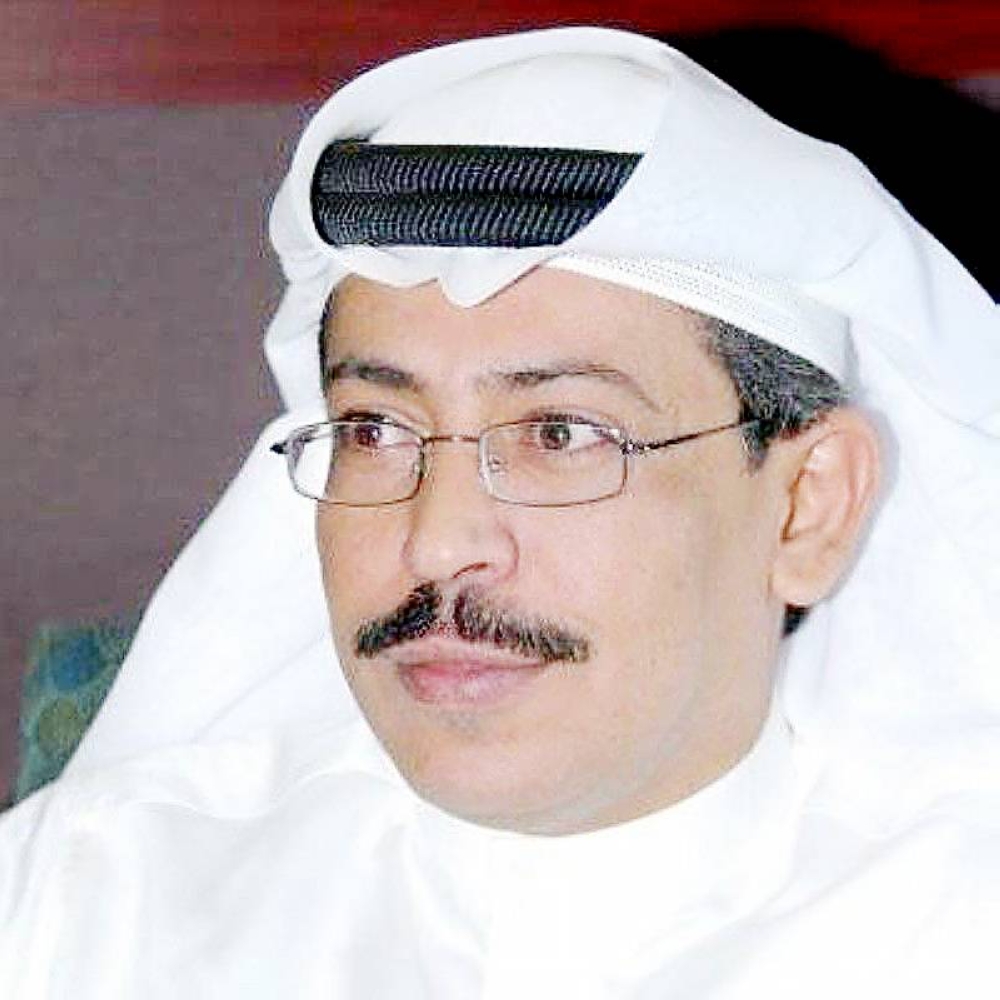
No cultural, intellectual, or artistic project can express a national identity except by adhering to its roots, and by the smooth flow of its branches, twigs, and fruits in all spaces. Perhaps the term soft power will become present in the second decade of the third millennium, due to the inability of hard power to usurp identities and change cultures, let alone erase them. There are models and indicators that show the progress of our soft power in the Arab world, albeit cautiously, but it needs material and legislative components to strengthen its presence, prove its parity, boldly cross the borders of others, and raise the efficiency of elites to perform their role. Some misuse this power due to their limited capabilities, lack of awareness, or prejudice. This review examines some aspects of soft power in the Arab world, through the perspectives of several intellectuals who have observed the advantages and challenges facing this rapidly developing, albeit cautious, force. Poet Hashem Al-Jahdali observes that the term "soft power" is one of the most ambiguous and unclear terms. While relatively recent, it emerged to fill a void in political discourse, which often relies on coercive means, particularly weapons and money. He explains that since the term's inception, the world has been in dire need of it, perhaps even practicing it without the technical connotations it later acquired.
Al-Jahdali argued that soft power is represented in the spiritual, historical, cultural, artistic, intellectual, aesthetic, sports, tourism, media, and food culture of any country, and it tries to impose it on others without violence.
He stressed that UNESCO is working to be the center of the circle to document this heritage, while international politics is its broad field, in light of the multiplicity of circles of polarization, as if there is a battle against prevailing values and the lack of values, which necessitates that every country fortify itself against the other who wants to completely obliterate its heritage without any justification.
He added: In a confused world like this, culture and national identity must regain their role by creating a balance between the past, present, and future. The media bears the responsibility of spreading them, without limiting the bet to the past only, and without building a bridge between the past and the future so that we do not live in the atmosphere of (a series about Bedouin life) nothing more and nothing less.
Writer Lotfi Naaman affirmed that soft power has had a significant presence and role in the Arab world since early times, and continues to do so, despite appearances to some. He pointed out that since Arab countries ventured into various fields of this power, they have successfully activated its influential tools: arts, culture, thought, and a sophisticated press and media that keeps pace with the spirit of the age. He noted that the continued pioneering experience of Egypt in the arts, Lebanon and Morocco in culture and thought, and Saudi Arabia and the Gulf states in media, among others, are clear evidence of this. He explained that each country has the capacity to employ and innovate in the tools of this soft power, even though its strength is a distinctive characteristic of each individual nation.
He considered social media to be the most prominent manifestation of the new soft power weapon, through which its principles can be disseminated. He expressed concern that the unchecked use of social media could lead to the emergence of those incapable of employing this power, and the rise of those who lack understanding, thus diminishing the positive impact of soft power and its targeted, informed messages, due to the negative influence of ignorance and the pretense of knowledge.
Novelist Ali al-Muqri considered soft power a fluid concept dependent on political and cultural backgrounds, and its application varies according to general social conditions. While it was practiced differently during the Cold War, or what is known as the conflict between capitalist and socialist states, than it is today, the nature and objectives of this power have evolved.
Al-Muqri noted that some Arab countries have begun to focus on establishing an infrastructure that qualifies them for an advanced position in this field, given that countries like Egypt and Lebanon were at the forefront in possessing this power in the past, and the political activity of local and Arab forces was accompanied by broad cultural activity at all levels, such as the spread of songs, cinema, books, literature and arts in general, in addition to open social life and press and personal freedoms.
He believes that at the moment, there seems to be a renaissance in these fields in Saudi Arabia, the UAE and Qatar, but this renaissance lacks some necessary foundations or a clear methodology in how to practice it and legislation that promotes it. He pointed out that one of the Arab countries tried to activate the field of book publishing through translation, but it entrusted the task to its cultural attaché in one of the Arab countries, which reduced the chance of success of this goal, since no one reads books that are published with official labels and in a style that does not take into account the arts of publishing.
He added: Some Arab countries previously used London and Paris as platforms for disseminating their media propaganda. Some succeeded in this, while others failed, and their impact remained limited, as these efforts did not contribute to spreading any particular idea widely due to the absence of open social structures that support such attempts. He pointed out that any propaganda effort, especially in the cultural sphere, cannot achieve the desired success without integration with other aspects—political, social, and economic. With the decline of these aspects in Egypt, Lebanon, and also Kuwait, the soft power that was a prominent feature of these countries has also declined. Al-Muqri suggested that the main reason for this decline is the absence of major development projects.
Al-Rumaihi: The Kingdom enhances its soft power with a knowledge society
Professor of Political Sociology, Dr. Muhammad Al-Rumaihi, explained that since academic Joseph Nye coined his concept of “soft power” in his book “Committed to Leading in 1990,” and returned to it repeatedly and extensively in his second book “Soft Power: The Means to Success in Foreign Policy” (2004), the concept of “soft power” is something American academics proudly refer to, boasting of that great and influential power (cinema, music, books, modern technology, the system of government, the independent judiciary, and even jeans), which they see as the tools that demolished the Berlin Wall before the real tools and bulldozers began to demolish it! The concept has also been widely used in international literature.
Al-Rumaihi emphasized that the concept of “soft power” is present in political literature around the world and in diplomatic conferences, and it means “the power that a society possesses in order to convince others, not only of the correctness of its path, but also of the necessity for others to voluntarily follow its example”; that is, to subdue others without the need for what is known as “hard power.”.
He pointed out that the Gulf states possess numerous sources of soft power today, whether administrative, developmental, or cultural, and each country has, so to speak, a surplus of soft power. The Gulf states share some of these sources of soft power, while others differ. There is a clearly defined developmental model stretching from Dubai to Riyadh, from Manama to Muscat, and from Doha to Kuwait, albeit to varying degrees. This model has witnessed remarkable progress in planning and construction, with wide roads, towering buildings, and rapid transportation systems that rival, and perhaps even surpass, those found in the capitals and cities of developed countries. This developmental model is a positive indicator of soft power, particularly its free-market economic model, modern education, and advanced technological management that prioritizes efficiency and speed.
In recent years, the Kingdom has become an attractive venue for conferences and meetings at a high level of representation, as well as a hub for global investment. The knowledge society has recorded steady growth, given that the Kingdom is the largest country in terms of area and population in the Gulf Cooperation Council countries, and is witnessing the activation of the 2030 development vision conceived and adopted by Crown Prince Mohammed bin Salman, which includes a huge development revolution in all fields, whether in infrastructure or in soft power in its various forms.
He pointed out that about a year ago, the Kingdom sent (a young man and a young woman) into space, and the world was amazed by that scene. Its students also won 22 awards in international scientific competitions with the participation of 80 countries, and their share was abundant and exceeded that obtained by major countries with long-established scientific traditions, such as Britain, for the pre-university stage. These are examples of a number of projects, whether material or moral, that can be observed in the development of the modern Kingdom. Global public opinion (and even Arab opinion) has shifted from criticizing what is happening in the Kingdom (and most of the criticism was political and had purposes) to almost continuous praise for the development process that is taking the country to compete with major countries, which has provided the Kingdom with a remarkable soft power.
He attributed this success to the presence of a leadership with a clear vision, who knew where they wanted to take society, a leadership that was both scientific and courageous, and also to the presence of a large number of highly educated people who were the product of modern scientific institutions, which came to produce cinema and series, to publish books, and to make outstanding progress in the use of technology to provide services to the citizen, and became a model for others.
All of the above, along with the foreign policies adopted by the Kingdom in recent years, which are building bridges between East and West, near and far, can comfortably be described as the Kingdom’s “soft power”.


Culture and Art
Sameh El-Sereity reassures the public after suffering a stroke
Egyptian actor Sameh El-Sereity has been discharged from the hospital after suffering a stroke and has sent a message of thanks to his fans. Learn more about his health condition and his illustrious career.
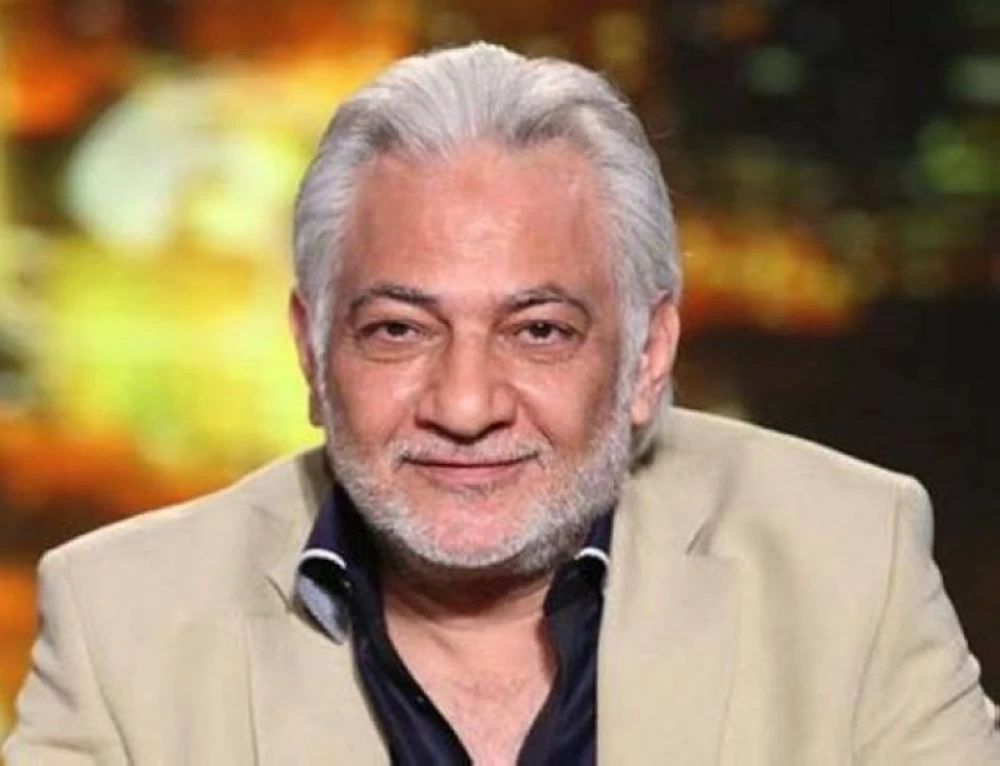
Sameh El-Sereity reassures his fans
In his first statement following a health crisis that worried his fans, the renowned Egyptian actor Sameh El-Sereity reassured his audience in Egypt and the Arab world that his health condition is stable. In an exclusive statement to the newspaper Okaz, El-Sereity confirmed that he left the hospital today and returned home after spending several days in intensive care following a sudden stroke.
The artist explained that he will continue medical follow-up in the coming period to ensure a full recovery, expressing his deep gratitude to everyone who inquired about him. He said, "It was a great ordeal, but thank God I got through it," directing a special message of thanks to his fans who showered him with prayers and concern throughout his illness.
Background of the health crisis and the reaction of the artistic community
The artistic community and the public were deeply concerned by the news that artist Sameh El-Sereity had been rushed to a major Cairo hospital last Tuesday after experiencing sudden and severe pain. He was quickly diagnosed with a stroke, necessitating his immediate admission to the intensive care unit. The news sparked a wave of sympathy and prayers on social media, with fellow artists and fans alike expressing their wishes for his speedy recovery, reflecting his esteemed position in everyone's hearts.
A prolific artistic career
Sameh El-Sereity is considered one of the most prominent stars of his generation, with an artistic career spanning more than four decades, during which he presented hundreds of distinguished works in cinema, theater, and television. El-Sereity began his career in the 1970s and was distinguished by his ability to brilliantly portray diverse roles, from complex dramatic characters to light comedic ones. Among his most prominent works that remain etched in the minds of the public are the television series "Layali El-Helmiya," "Bawabet El-Halawani," and "Ya Regal El-Alam Etahadou," in addition to his significant film roles.
Al-Seraity’s contributions were not limited to acting; he also played a prominent role in union work, serving as the deputy head of the Actors Syndicate for years, defending the rights of his colleagues and contributing to the development of the artistic industry in Egypt.
His latest artwork
On the artistic front, actor Sameh El-Sereity continues his active and strong presence in the industry. Among his most recent works are the series "Jamila," which aired during Ramadan 2023, and the series "Batn El-Hout," which achieved great success when it was released on a digital platform. His continued artistic output underscores his deep passion for his profession and his constant desire to present works of both artistic and popular value.
Culture and Art
Picasso: A biography of the genius who changed the history of modern art
Discover the life of Pablo Picasso, the Spanish artist who revolutionized modern art. Learn about his artistic phases, from Cubism to Guernica, and his turbulent life in Paris.
Pablo Picasso, the Spanish artist who made Paris the stage for his creativity, remains one of the most influential and controversial figures in the history of modern art. He was not merely a painter, but a revolutionary force who transformed concepts of beauty and artistic expression, moving masterfully between painting, sculpture, and poetry, leaving an indelible mark on the map of world culture.
From Spain to Paris: The birth of an artistic legend
Picasso was born in Malaga, Spain in 1881, and grew up in an artistic environment thanks to his father, who was a painting teacher. But his ambitions extended beyond the borders of his homeland, so at the beginning of the 20th century, he moved to Paris, which was then the world's art capital and a meeting place for creative minds. Despite immersing himself in the vibrant Parisian life and befriending artists from all corners of the globe, Picasso retained his Spanish spirit, which was clearly reflected in his works. He saw in the circus performances of Montmartre an echo of bullfighting in Spain, and he found in the clown a symbol of tragic human comedy.
The Cubist Revolution and the Redefinition of Art
Paris at that time was a cauldron of new art movements that rebelled against academic traditions. In this context, Picasso, in collaboration with Georges Braque, spearheaded an artistic revolution known as Cubism . His famous painting "Les Demoiselles d'Avignon" (1907) heralded the birth of this new movement, which shattered the rules of traditional perspective, presenting forms from multiple angles simultaneously. This was not merely a new style, but a different way of seeing the world, and this shift profoundly influenced the course of art throughout the 20th century and beyond.
Friendships and rivalries: Picasso and Matisse
A constellation of avant-garde artists gathered around Picasso, but his relationship with Henri Matisse was the most distinguished. They were both friends and rivals, each representing a pole in the world of modern art. While Matisse sought harmony and chromatic purity, Picasso delved into the depths of the human psyche and its contradictions. Despite their differing approaches, they maintained a profound mutual respect and admiration that lasted until Matisse's death, with Picasso frequently visiting his friend in the coastal city of Nice.
Art as a Mirror of Life: Artistic Phases and Women
Picasso's personal life, particularly his relationships with women, is key to understanding his artistic transformations. The colors in his paintings chronicle his different phases, from his "Blue Period," reflecting his sadness and poverty, to his "Rose Period," coinciding with his emotional stability. The women in his life, such as Fernand Olivier, Olga Koklova, and Maria Theresa Walter, were not merely lovers, but essential muses for his work, embodying his passion, anger, and love in his paintings and sculptures. He rejected the constraints of marriage and stability, seeking inspiration in the free-spirited romantic relationships that fueled his creative chaos.
Art and Politics: “Guernica” as a Cry Against War
Picasso's art was not detached from the political events that swept through Europe. His monumental mural "Guernica" (1937) the most powerful political statement in the history of art. Picasso painted it as a reaction to the Nazi bombing of the Basque village of Guernica during the Spanish Civil War. With its somber, monochromatic colors and its depiction of civilian suffering, this painting has become an enduring global symbol of the tragedies of war and a resounding cry against violence and brutality.
Khaled's legacy: Between poetry and madness
Picasso didn't confine himself to the brush and chisel; his creativity extended to the world of words, as he wrote poetry, which he saw as an extension of his painting. He used to say, "I compose the image, and I paint the poem." This intermingling of the arts reflects a comprehensive genius that refused to conform to any mold. As his friend Fernand described him, Picasso was "a flame that burned through his blood and attracted, like a magnet, everyone who knew him." His legacy is not merely a collection of paintings and sculptures, but a constant call to rebel against the familiar, and an affirmation that art, as he himself said, is "a lie that helps us discover the truth.".
Culture and Art
Iraqi artist Maksad Al-Hilli dies at the age of 71
The Iraqi Artists Syndicate mourned the passing of the great artist Maqsoud Al-Hilli, who died after a battle with illness. Al-Hilli was one of the most prominent Iraqi folk singers and left behind a timeless artistic legacy.

The Iraqi Artists Syndicate announced on Wednesday the death of the great Iraqi artist, Maqsoud Al-Hilli, at the age of 71, after a long struggle with a terminal throat disease, bringing to a close an artistic career full of contributions that enriched the Iraqi conscience for decades.
In a moving official statement published on its Facebook page, the Iraqi Artists Syndicate mourned the late artist with profound words: “With deep sorrow and grief, the Iraqi Artists Syndicate mourns the passing of the artist Maqsoud Al-Hilli.” The Syndicate prayed for God’s mercy and forgiveness for the deceased, and that He grant his family, loved ones, and colleagues patience and solace in this great loss that has befallen the Iraqi artistic community.
The health condition of the late artist had deteriorated significantly in his last days, which necessitated his urgent transfer to Baghdad Medical City Hospital, where he was admitted to the intensive care unit to receive the necessary treatment, but God’s will prevailed.
Context and History: A Voice from the Land of Babylon
The singer Maqsoud Al-Hilli was born in the village of Anana in the province of Hilla (Babylon), a city steeped in history and civilization, and known as a wellspring of poets, intellectuals, and artists. Al-Hilli grew up in a traditional rural environment, immersing himself from a young age in its rich musical heritage, which later shaped his artistic identity. He rose to prominence in the 1970s, considered the golden age of Iraqi song, appearing alongside giants of rural music such as Yass Khader, Hussein Neama, and Saadoun Jaber, and carving out a unique niche for himself thanks to his powerful voice and distinctive performance style.
Artistic significance and cultural impact
Maksad al-Hilli is considered one of the pillars of Iraqi rural singing, an art form characterized by its profound emotion and close connection to the land, its people, and the southern and Euphrates environment. Al-Hilli was renowned for his powerful and unique voice, which enabled him to perform the most challenging rural singing styles and authentic Iraqi mawwals such as the "Abudhiya." He was not merely a singer, but a faithful custodian of the heritage, contributing significantly to documenting this musical genre and protecting it from extinction in the face of modern musical trends.
The passing of Maqsoud Al-Hilli is not only a loss for his family and fans, but a profound loss for Iraqi culture as a whole. With his departure, Iraq loses a truly authentic national voice that served as a living memory of a significant part of its artistic and popular history. Al-Hilli left behind a rich artistic legacy of songs that will remain etched in the hearts of Iraqis, and he established an artistic school that inspired many young artists who sought to follow in his footsteps in preserving authentic Iraqi musical identity.
-

 Local News 4 days ago
Landslide in Riyadh: Details of the incident in Al-Sahafa neighborhood and containment efforts
-
 Local News 5 days ago
The death penalty was carried out against a citizen who stabbed another to death in Tabuk
-
 Culture and Art, 1 week ago
Ramez Galal in Ramadan 2026: Details of the bloody prank show
-
 Local News 6 days ago
First birth on the Riyadh train: A heartwarming story at Andalus station
-
 Local News 4 days ago
Riyadh collapse: Emergency plans to secure water after a main pipeline burst
-
 Culture and Art 4 days ago
Haifa Wehbe's absence in Riyadh: A photo crisis or a strained relationship with the media?
-
 Culture and Art 4 days ago
City Kitchen series: A drama of conflict and the middle class during Ramadan
-

 Culture and Art 4 days ago
The series "Kasra": Dawood Hussein in a moving social drama this Ramadan