Culture and Art
Sherine Abdel Wahab is suing those who spread AI-fabricated images
Artist Sherine Abdel Wahab is taking urgent legal action against pages that published fake and offensive photos of her, in a move to confront the danger of deepfake technology.


Egyptian singer Sherine Abdel Wahab, through her lawyer Yasser Qantoush, announced the initiation of strict legal proceedings against those circulating fabricated and offensive images of her on social media platforms. This move highlights once again the growing threat of deepfake technology, which now endangers the privacy and reputation of public figures in the Arab world.
Details of the crisis and its psychological impact
In an official statement, lawyer Yasser Qantoush explained that his client is going through a difficult psychological crisis, exacerbated by seeing the doctored images created using artificial intelligence to portray her in compromising situations. Qantoush confirmed that the artist, Sherine, is determined to pursue legal action against everyone involved in producing and distributing this offensive material. He noted that the legal team has already begun gathering evidence and identifying the responsible accounts and pages in preparation for filing the necessary lawsuits to protect her reputation, which has been directly affected and has distressed her entire family.
The Deepfake Phenomenon: A Global and Local Context
The case of Sherine Abdel Wahab is no longer an isolated incident, but rather part of a worrying global phenomenon known as “deepfakes,” which use artificial intelligence to create fake videos or images that are difficult to distinguish from reality. Initially used for entertainment purposes, this technology has quickly become a dangerous tool for defamation, blackmail, and spreading misinformation. In the Arab world, there has been a recent increase in the targeting of artists and celebrities, raising widespread concern about the lack of effective legal deterrents to combat these emerging cybercrimes.
The importance of legal action and its potential impact
Sherine Abdel Wahab's move is particularly significant, coming as it does after actress Yasmin Abdel Aziz announced she was taking similar legal action against similar defamation cases. This joint action by Egypt's top female stars sends a powerful message that the artistic community will not stand idly by in the face of such violations. These cases are expected to spark a broader societal and legal debate about the need to update legislation to keep pace with technological advancements and to establish strict regulations criminalizing the creation and distribution of fake content. These lawsuits could also set an important legal precedent for similar future cases, further strengthening the protection of the right to privacy and reputation in the digital age.
The battle that Sherine is fighting today is not only about defending her personal reputation, but also represents a front in defense of the dignity of every public figure who may be the next victim, and it underscores the urgent need to raise awareness of the dangers of these technologies and the need for concerted efforts to combat them at all levels.


Culture and Art
Beginnings Exhibition: A Journey Through the History of Modern Saudi Art in Riyadh
The Saudi National Museum is hosting the 'Beginnings' exhibition, which documents the history of Saudi art from the 1960s to the 1980s, highlighting the works of the pioneers of the visual arts movement.
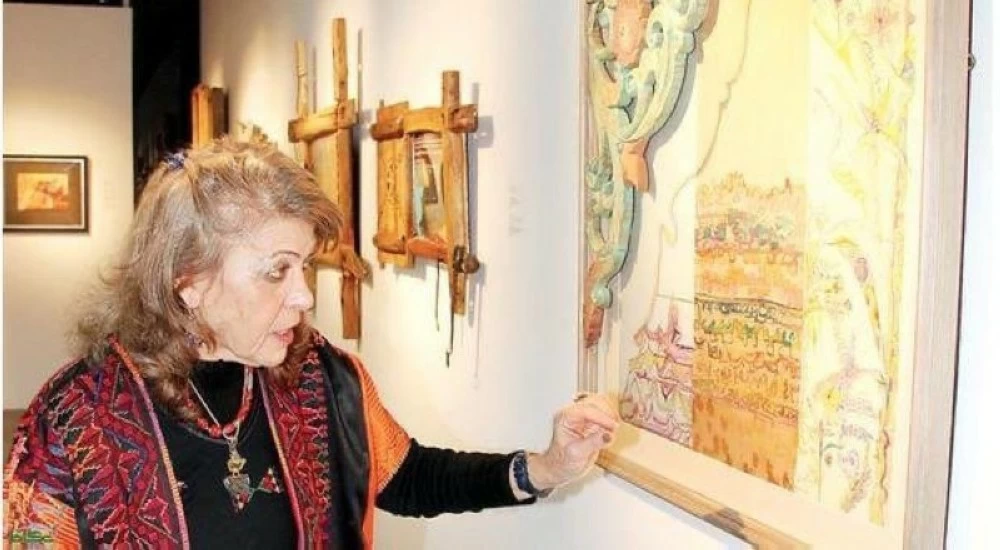
The capital city of Riyadh is preparing to host a prominent art event, as the exhibition “Beginnings: The Beginnings of the Saudi Art Movement” at the Saudi National Museum in the historic Al-Murabba neighborhood, from January 27 to April 11, 2026. The exhibition presents a rich documentary journey, exploring the roots of visual art in the Kingdom of Saudi Arabia and its development during a pivotal period that extended from the 1960s to the end of the 1980s.
Historical background and cultural context
The period covered by the exhibition coincided with major social and economic transformations in the Kingdom, which profoundly impacted the cultural landscape. During those decades, a generation of Saudi artists, many of whom had received their education abroad, began returning home, bringing with them modern artistic styles and new visions. This return was not merely a transfer of Western artistic trends, but a creative interaction through which these pioneers sought to integrate modern concepts with elements of local heritage and Saudi identity, resulting in unique artistic experiences that formed the nucleus of the country's visual arts movement.
The importance of the exhibition and its expected impact
The “Beginnings” exhibition is of exceptional importance because it not only displays artworks but also offers an in-depth analysis of the intellectual and cultural contexts that surrounded that foundational period. Locally, the exhibition provides an opportunity for new generations to connect with their artistic history and understand the efforts of the early pioneers. Regionally and internationally, the exhibition contributes to highlighting the depth and history of the Saudi art scene, presenting it as an integral part of the history of modern Arab art, which aligns with the goals of Saudi Vision 2030 that aim to promote culture as a fundamental element of national identity and a soft power for the Kingdom.
Exhibition contents and main themes
The exhibition showcases the evolution of artistic practices through a diverse collection of works, including paintings, sculptures, and works on paper, alongside rare archival materials displayed for the first time. This offers visitors a unique opportunity to view the initial drafts and documents that accompanied the creation of these works. The exhibition is divided into three main sections: the first addresses the origins of the modern art movement; the second explores the various modernist currents embraced by artists; and the third focuses on the contributions of four of the movement's leading figures— Abdulhalim Radwi, Mohammed Al-Saleem, Munira Mosli, and Safia Binzagr —as pivotal figures who helped shape the landscape of Saudi art.
Accompanying cultural program
To support the exhibition’s message, an integrated cultural program will be launched, including the publication of a documentary print, the screening of a documentary film that tells the stories of pioneers, as well as organizing a series of dialogue sessions and workshops that discuss pressing issues such as early art education, the role of cultural institutions in supporting artists, and the importance of building and documenting the Saudi art archive to preserve the Kingdom’s cultural memory and make it available to researchers and the public.
Culture and Art
The future of culture: between profound knowledge and the superficiality of marketing celebrities
An in-depth analysis of how social media celebrities and marketing algorithms are influencing the cultural landscape, and whether genuine value is threatened by the allure of false fame
In an era dominated by social media algorithms that control the flow of information, the Arab cultural scene finds itself at a critical crossroads. The question is no longer limited to the quality of content, but has expanded to include the mechanisms of dissemination and influence. The future of culture is increasingly dependent on the marketing and commodification skills mastered by digital celebrities, raising deep concerns among elites and intellectuals about the fate of identity and social consciousness.
Historical context: From established institutions to the open space
Historically, culture had its own institutions that acted as gatekeepers, granting legitimacy to knowledge. Universities, prestigious publishing houses, literary journals, and critical forums represented the “old algorithm” that separated the wheat from the chaff and ensured that profound content reached the public. As critic Osama bin Yahya Al-Wasli explains, culture triumphed not only because of the depth of its content, but also because it possessed a robust infrastructure for distribution and evaluation. These institutions were the ones that set standards of quality and rewarded the accumulation of knowledge, not fleeting flashes of brilliance.
Digital transformation and the game-changer
With the dawn of new media, the equation was turned upside down. Writer Muflih Al-Balawi argues that what we are witnessing today is a “reversal of the natural order.” Whereas intellectual excellence was once the path to fame, fame—regardless of its source—has now become the gateway to cultural platforms. Traditional cultural institutions have left a massive void by failing to keep pace with the times, a void filled by social media celebrities who have mastered the language of the age: fast-paced, easily digestible, and virally-spreading content. As Al-Wasli points out, the problem is not with “celebrity media” as a new space, but rather with the “institutional vacuum” that has allowed this space to become the judge, the market, and the arbiter.
The effect of the phenomenon: flattening awareness and commodifying thought
The greatest danger lies in transforming culture from a project for cultivating awareness into a mere "raw material" for manufacturing interaction. Playwright Ahmed Al-Sarawi argues that the problem isn't the medium itself, but rather its exploitation to transform cultural work into a superficial consumer commodity whose value is measured by the number of followers and likes, not by the depth of the idea and its genuine impact. Critic Dr. Maryam Al-Ghaban adds a more pointed dimension, describing the scene as a struggle between "the hoopoe of wisdom and the parrot of absurdity," where the celebrity appropriates the intellectual's voice to embellish their own pronouncements, presenting a false consciousness to a broad audience that has replaced in-depth reading with the "fluctuating labyrinth of trends." This transformation not only threatens public taste but also undermines the foundations of critical thinking, substituting value for fame and knowledge for superficiality.
Towards restoring cultural sovereignty
Faced with this reality, critical voices agree that the solution lies not in demonizing social media, but in restoring the "sovereignty of cultural evaluation." Al-Wasli calls for culture to reclaim its right to define quality through rigorous critical platforms, rigorous reviews, and projects that reward intellectual depth. Cultural institutions must evolve and utilize the tools of the digital age without succumbing to its consumerist logic. The goal is for fame to become merely a "transmission medium" of knowledge, not a "source of legitimacy." Saving the future of culture requires societal critical awareness, support for serious intellectuals, and rebuilding bridges between authentic knowledge and the public before everything is lost, like foam on a flood.
Culture and Art
Youssef Aba Al-Khail: The Saudi Intellectual and His Role in the Era of Reforms
A dialogue with the philosophical researcher Youssef Aba Al-Khail, in which he discusses the legacy of the Awakening, the role of the intellectual in light of Vision 2030, and the challenges of the digital age, emphasizing the importance of sound thought.
In a profound dialogue, philosophical scholar Yousef Aba Al-Khail opens a window onto his intellectual journey, which began in the 1980s, addressing the cultural and social transformations that Saudi Arabia has witnessed. Aba Al-Khail emerges as a thoughtful voice advocating for deep and serious reflection, rejecting what he calls "superficial writing," and emphasizing the pivotal role of the intellectual in establishing the values of enlightenment and humanism amidst the major reforms underway in the country.
Historical background: The awakening phase and its impact
To understand the depth of this dialogue, it is essential to consider the historical context of the "Awakening" movement, which dominated the cultural and social landscape in Saudi Arabia for decades, particularly since the late 1970s. This movement was characterized by a rigid, monolithic discourse that imposed its vision on all aspects of public life, thereby shrinking the space for free discussion and equitable dialogue. In this climate, proposing enlightened ideas that championed life and pluralism was considered an act of intellectual courage, as exemplified by Abu al-Khail and other intellectuals who faced significant challenges in expressing their diverse perspectives.
What remains of the era of debate and dialogue with the mosaic currents?
•• At that time, there were no dialogues in the true sense of the word. For a dialogue to be genuine, it must be equal, whereas discussions at that time took place under the control of a single voice over the joints of cultural life. Consequently, the different voice was a whisper, fearful and apprehensive of clashing with the crowds, which at that time represented the fanaticism carrying the awakening idea.
• How do you interpret the absence of fears and concerns that the revivalist movement used to warn about if society were to become more humane?
The Islamic revival, as an ideological movement, is based on the concepts of "chosenness" and "monopoly," which rely on controlling followers by instilling fear of deviation and misguidance if they follow a path other than the one they have chosen. These were merely statements and ideas that reflected an individualistic orientation, which was transformed into a collective discourse through mass mobilization.
The era of reforms and the role of the new intellectual
Aba Al-Khail points out that the sweeping reforms launched during the reign of the Custodian of the Two Holy Mosques, King Salman bin Abdulaziz, and embodied in Saudi Vision 2030, have significantly relieved the enlightened intellectual of a considerable burden. These reforms were not limited to the economic sphere but extended to include radical social and cultural transformations, such as women's empowerment, support for the arts and culture, and a review of religious discourse, thus restoring society to its natural course. Aba Al-Khail believes that the role of the intellectual today has not ended, but has shifted from demanding change to the responsibility of embedding these transformations in the collective consciousness of society.
• Have the burdens of the idea of change been lifted from the chest and shoulders of the intellectual by the reform decisions in the Kingdom?
Undoubtedly, the sweeping reforms have relieved the enlightened intellectual of the burden of demanding change. However, the crucial role of the intellectual in grounding these changes from a socio-cultural and legal perspective remains vital and pressing; it is their primary task today. While the leadership has set things right, integrating them into the collective consciousness depends on the role of the elite.
• Did the Enlightenment fall into fear of the awakening?
I don't think they are afraid, but they are wary of the positions of some extremists on social media platforms. However, it must be acknowledged that the Salafist discourse, though seemingly lost in its appeal, has not yet been subjected to rigorous scholarly critique, in my opinion.
Thought and philosophy versus superficiality
Abu al-Khail delves into major philosophical issues, emphasizing that the relativity of truth is an existential law, and that openness to philosophy and sociology liberates the mind from the constraints of absolute certainty. He also criticizes the phenomenon of the "digital intellectual" who relies on copying and pasting, and sounds the alarm about the "culture of triviality" that threatens new generations, calling for the establishment of the values of beauty and serious scientific thinking in education and society.
When did you become aware of the relativity of truth?
Relativity is an existential law. In-depth reading in philosophy and sociology trains one to perceive and then embrace the relativity of truth. As the philosopher of science Gaston Bachelard says, what distinguishes scientific theories is their falsifiability, and this is profound evidence of the relativity of truth.
• Has the era of rigid culture and harsh ideas come to an end?
What I fear most for society is the accelerating immersion in what Alain Durneau called "the culture of triviality." We observe that the interests of some young people today are deeply superficial, with a lack of wonder at scientific progress, and this is an indication of the weakening of the scientific spirit.
An intellectual project, not something to be rushed
At the end of the interview, Aba Al-Khail reveals the reason for his lack of published works: his profound appreciation for rigorous intellectual work that takes years, citing Marx and Spencer, who spent decades crafting their timeless masterpieces. He rejects the temptation to rush into writing for the sake of book fairs or to show off in cultural cafes, preferring instead patience and in-depth analysis to superficial production.
• What are the most prominent published works? And is there a cumulative project?
Unfortunately, I have no authored books. When I began reading philosophy, I was amazed by people who spent their lives writing a single book, like Karl Marx. I found myself unable to spend a reasonable number of years writing, and at the same time, I did not want to take the path of superficial writing, where the author spends a few months showing it off in cultural cafes.
-

 Reports one week ago
Achievements of Saudi government sectors in 2025
-
Local news two weeks ago
FDA warns of contaminated Nestle infant formula | Recall details
-
Technology 4 weeks ago
US ban on drones: reasons and consequences
-
Technology 3 weeks ago
Saudi Arabia launches the world's largest government data center, 'Hexagon'
-
Technology 3 weeks ago
Merging KSA Map and Baladi Plus: A step towards Saudi digital sovereignty
-
Technology two weeks ago
Hexagon: Saudi Arabia strengthens its data sovereignty with the world's largest government center
-
Technology 3 weeks ago
European banks and artificial intelligence: A plan to lay off 200,000 employees
-
Politics 3 weeks ago
The coalition destroys smuggled Emirati weapons in Mukalla in a qualitative strike