
Culture and Art
Details of Sawsan Badr's emergency surgery and its impact on her artistic work
The Actors' Syndicate announced that actress Sawsan Badr underwent emergency surgery after fracturing her foot. Learn about the latest developments in her health and the status of her upcoming projects.

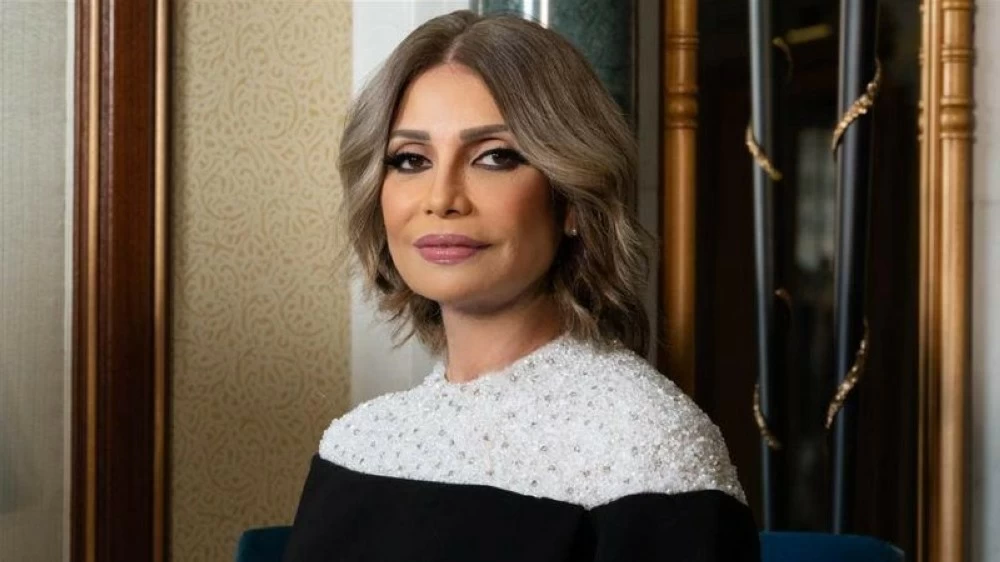
The Actors' Syndicate's statement reassures the public
The Egyptian Actors' Syndicate, headed by Dr. Ashraf Zaki, announced that the renowned actress Sawsan Badr suffered a health crisis requiring urgent surgery. In an official statement, the syndicate reassured fans of the "Nefertiti of Egyptian Cinema," confirming that her health is completely stable and that she is in high spirits despite her recent illness.
The statement explained that actress Sawsan Badr suffered a fracture in one of her legs, necessitating delicate surgery this evening at a major hospital in the Mohandessin district. The surgery aims to stabilize the fracture and ensure a swift recovery, allowing her to return to her normal life and artistic activities as soon as possible.
Background on a prolific artistic career
Sawsan Badr is one of the most prominent stars of her generation and subsequent generations in Egypt and the Arab world. She began her artistic career in the late 1970s, quickly capturing attention with her authentic Egyptian features and exceptional talent. The late director Shadi Abdel Salam dubbed her "the Nefertiti of Egyptian Cinema" after casting her in the lead role of his unfinished film "Akhenaten." For over four decades, Sawsan Badr has performed hundreds of diverse roles in film, television, and theater, demonstrating her remarkable ability to embody a wide range of characters, from historical and complex roles to social and comedic ones, making her a widely respected and admired artistic icon.
The expected impact on her artwork
This incident comes at a time when actress Sawsan Badr is involved in several important artistic projects. She recently joined the cast of the series "El Faransi" (The Frenchman), starring Amr Youssef and featuring a stellar cast including Gamal Soliman and Ahmed Fouad Selim. The necessary recovery period following her surgery is expected to temporarily postpone filming her scenes, which may affect the production schedule.
On the Gulf front, Sawsan Badr is participating in the second season of the hit series "Al-Baa'a Tahtaha Nuqta" (The Letter Baa' Under a Dot), scheduled to air during Ramadan 2026. This follows the immense success of the first season, making her participation highly anticipated by Gulf audiences. The Actors' Syndicate confirmed that it is closely monitoring her health to ensure she receives the best possible medical care, expressing its wishes for her speedy recovery and swift return to her illustrious artistic career.


Culture and Art
Controversy over comparing Amr Diab to Abdel Halim: The Nightingale's family responds to Ibrahim Eissa
Ibrahim Eissa's statements about Amr Diab's superiority over Abdel Halim Hafez sparked widespread controversy. Learn about the Nightingale's family's response and the details of the cultural clash between the two generations.
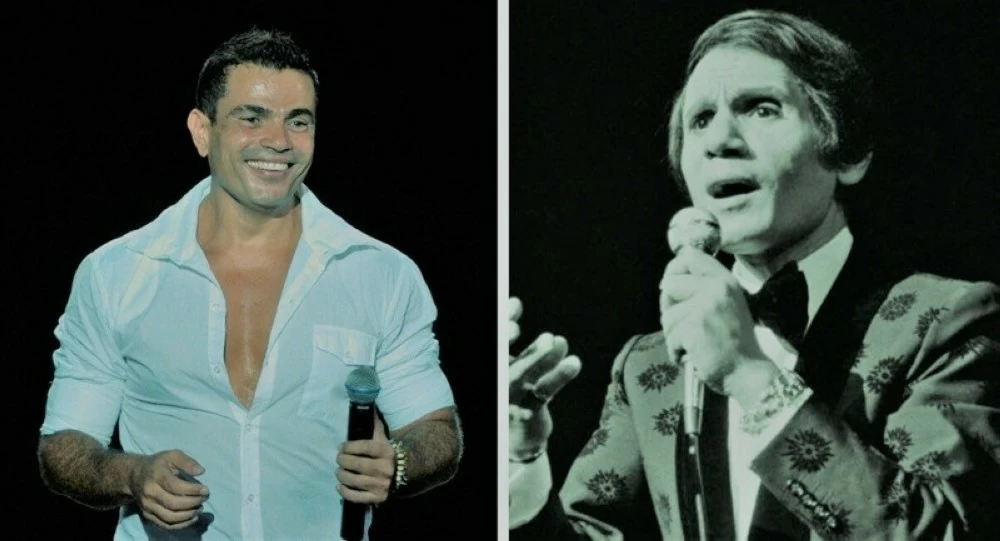
Writer and media personality Ibrahim Eissa sparked widespread controversy in Egyptian and Arab cultural and artistic circles after his remarks in which he preferred singer Amr Diab to the legendary Arab singer Abdel Halim Hafez. In a swift and decisive response, the family of the "Dark-Skinned Nightingale" described the comparison as "laughable" and a "joke," emphasizing Hafez's inviolable historical status.
A decisive response from the Nightingale's family
Mohamed Shabana, the nephew of the late artist, took on the task of responding to Issa, asserting in press statements that "Abdel Halim Hafez passed away nearly 50 years ago, yet he remains at the pinnacle of Arabic song." Shabana added that the comparison was inappropriate, pointing out that "Amr Diab himself, a highly respected artist, has expressed on numerous occasions his deep love and artistic influence from Abdel Halim Hafez, considering him a role model and an artistic school in himself." The family maintains that Hafez's legacy is not merely songs, but rather an integral part of the Arab nation's consciousness and history.
Historical context: A comparison between two different eras
The challenge of comparison lies in the differing historical and cultural contexts of each artist. Abdel Halim Hafez emerged during the "golden age" of Arabic song, the period following the July 1952 revolution, when art was an integral part of the Arab nationalist project. Hafez sang of patriotism, love, and revolution, collaborating with giants of composition and poetry such as Mohamed Abdel Wahab, Baligh Hamdi, Kamal El Tawil, and Nizar Qabbani. His songs expressed the sentiments of an entire generation, and his voice became intertwined with the major events that swept the region, granting him a symbolic status that transcended his role as a mere singer.
In contrast, Amr Diab emerged in the late 1980s and 1990s, in a completely different era characterized by the rise of music videos, the ascendancy of pop music, and the influence of Western styles. Diab spearheaded a revolution in the form of the Arabic song, presenting modern, fast-paced music that resonated with a new generation. His success was linked to his ability to constantly reinvent himself, keep pace with technological advancements, and achieve global recognition through awards like the World Music Awards, thus representing a model of a successful "commercial artist" in the age of globalization.
The impact of the controversy and its timing
Critics believe that Ibrahim Eissa's statements, coinciding with the announcement of his new novel "Amr... Where He Is Alone," which chronicles the life of "El Hadaba" (Amr Diab), may be part of a promotional campaign for the book. This timing has raised questions about the objectivity of the argument, with some considering it an attempt to generate media buzz to benefit the literary work. Media professor Mohamed Fathi Younis pointed out that "the comparison is flawed because it overlooks the fact that Abdel Halim Hafez sang about national values and authentic artistic expression, while Amr Diab sang about commercial identities and media consumption," emphasizing that Eissa's statements lack impartial critical standards.
Ultimately, the debate remains open between those who see Amr Diab as a symbol of global success and innovation, and those who cling to Abdel Halim Hafez as an immortal artistic icon and part of the collective Arab memory, stressing that each of them has an indelible mark on the history of Arab music.
Culture and Art
The Free Market series: Details of the Ramadan 2026 comedy and the cast list
Discover the details of the highly anticipated Ramadan 2026 comedy series, "Free Market." The show brings together a stellar cast of comedians in humorous and human situations set within an international airport.
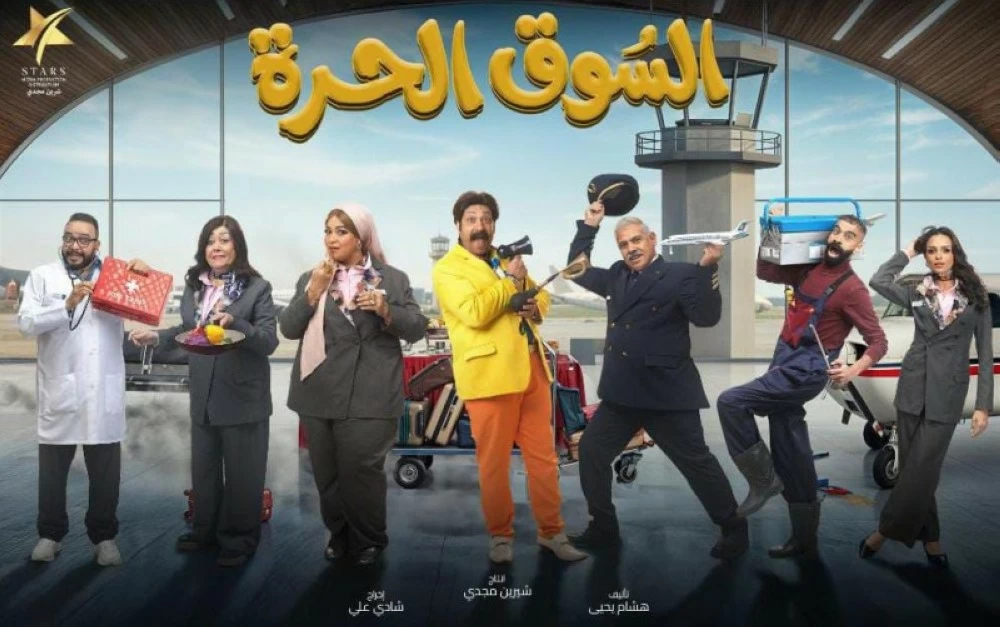
Official announcement of the series “Free Market”
The production company revealed the first teaser trailer for the series “Free Market”, announcing its entry into the comedy drama race for Ramadan 2026. The work, which the audience is eagerly awaiting, is scheduled to be shown on Saudi channels SBA and a number of other Arab channels, to provide a rich comedic treat for viewers during the holy month.
Background of Ramadan dramas and the importance of comedy
The series “Free Market” comes during the most important drama season in the Arab world, Ramadan, which witnesses fierce competition among major production companies and satellite channels to attract viewers. Comedy is a cornerstone of this season, with Arab families gathering around it after Iftar (the breaking of the fast) in search of laughter and light entertainment. The success of these shows depends on their ability to deliver clever humor and simple, relatable human situations that reflect people's daily lives, which is what “Free Market” seems to aim for.
Story details and events
The series consists of 30 episodes set in the unconventional and vibrant location of a duty-free shop within an international airport. Through this unique setting, the show explores a range of humorous everyday situations and human contradictions that arise between employees and travelers from diverse nationalities and cultures. The series focuses on the intertwined relationships within the staff, friendships, and professional rivalries, all presented with quick wit and situational comedy, making it suitable for the whole family.
A team featuring a selection of comedy stars
The series boasts a stellar cast of comedy stars from Egypt and the Arab world, guaranteeing its success. The cast includes prominent names such as Bayoumi Fouad, Mohamed Tharwat, Mohamed Radwan, Wizo, Mahmoud El-Leithy, and Hala Fakher, alongside other stars like Monther Rayahneh, Reem Raafat, Menna Mohamed Mahmoud, Mohamed El-Qass, and Hossam Dagher. This blend of different generations of artists promises a rich and diverse artistic experience. The series is written by Hisham Yehia, known for his witty comedic scripts, and directed by Shady Ali, a director with a proven track record of successful comedies.
Importance and expected impact
The series holds special significance as it's a production that brings together Egyptian talent and airs on a leading Saudi platform, reflecting the significant development of the entertainment industry in the region and the growing artistic collaboration between Arab countries. "The Free Market" is expected to achieve widespread popularity thanks to its innovative storyline and strong cast, and could become one of the standout shows of Ramadan 2026, further solidifying the position of social comedy as a staple of the Ramadan programming schedule.
Culture and Art
Hanan Shawky: The story of her departure from art, her health crisis, and her return
Artist Hanan Shawky reveals details of her spiritual journey that distanced her from art, her health crisis, the secret behind her return to the theater after a long absence, and her opinion on the privacy of the artist.
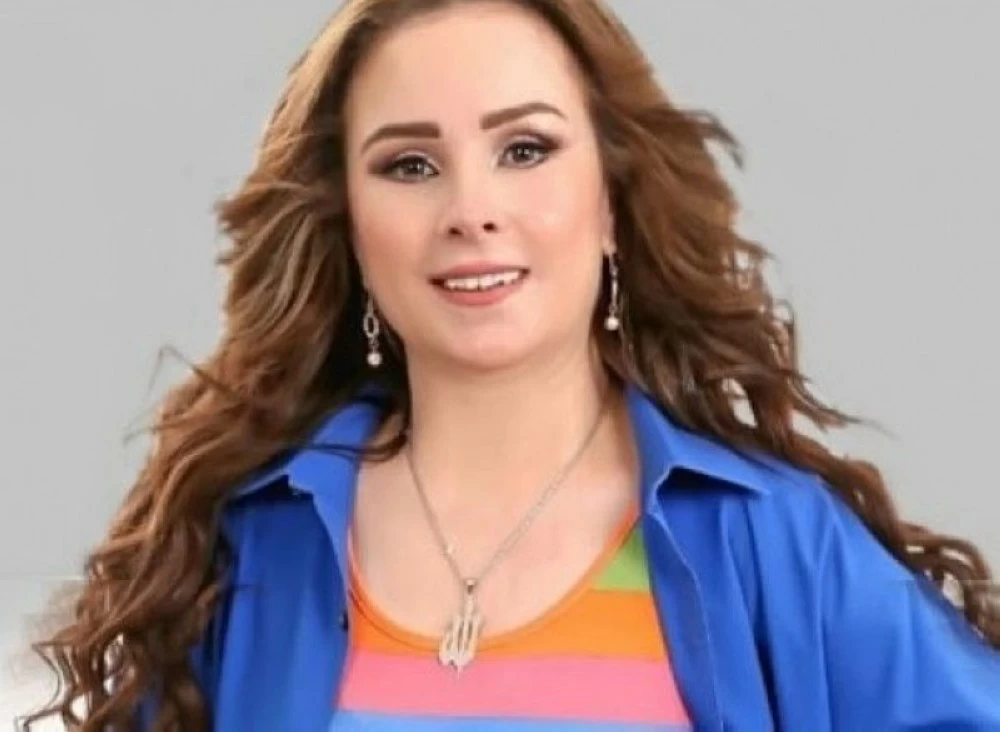
A spiritual journey and a decision to distance oneself
Egyptian actress Hanan Shawky revealed the deep reasons that led her to withdraw from the art scene, emphasizing that her decision was not a coincidence or a result of a lack of offers, but rather the culmination of a profound spiritual and personal journey that began in 2002. Shawky explained that during that period she felt a significant gap between the world of fame and the needs of her soul, feeling as though she "didn't exist among people." This prompted her to make the bold decision to dedicate herself to self-discovery and drawing closer to God through Sufism. This step was an attempt to overcome the feelings of sadness and disappointment that had overwhelmed her, and to seek inner peace away from the clamor of the spotlight.
Artistic background and golden age
Hanan Shawky's decision to step away from the spotlight comes after a prolific career that established her as one of the most prominent stars of her generation during the 1980s and 90s. Her career took off with great force, and she shone in roles that left a lasting impression on Arab audiences. Among her most notable television works that cemented her stardom are iconic series such as "Layali El Helmeya," "El Mal Wel Banoun," and "Beit El Qadi." She also had a remarkable presence in cinema, and her role in the 1994 film "El Erhabi" (The Terrorist) alongside Adel Imam was a landmark in her career, as she delivered a powerful performance in a film that tackled a sensitive social issue. This great success made her absence from the artistic scene a significant event and a source of much speculation among her fans for many years.
Health crisis and personal strength
Hanan Shawky's journey was not without its physical challenges, as she revealed that she endured intense psychological stress that directly impacted her health. This stress culminated in a heart attack while driving, an experience she described as harrowing but one that changed her perspective on life. Shawky affirmed that these trials and tribulations did not break her; on the contrary, they were key factors in shaping her character, increasing her strength and maturity, and giving her a different perspective on dealing with life's difficulties.
Her view on privacy and personal life
Speaking about her personal life, the actress revealed that she had been married once, and the relationship ended in divorce. She emphasized her deep respect for the institution of family, which is why she hesitated before making the decision to divorce. She also touched on the importance of maintaining privacy in personal relationships, especially after a separation, and praised actor Ahmed El-Awady for keeping his relationship with his ex-wife, Yasmine Abdel Aziz, private and not discussing it in the media, considering this behavior a reflection of noble character and respect for their shared history.
Return to the stage
After a long absence, Hanan Shawky returned to her audience through the stage, with her last work being the play “Witness, O Time,” which was performed in 2023. This play, in which she collaborated with director Abdel Ghani Zaki and a group of theater stars, constituted a strong and anticipated return, through which she proved that her passion for art was still burning, and that her spiritual journey had given her a new artistic and human depth.
-

 Local News 5 days ago
Landslide in Riyadh: Details of the incident in Al-Sahafa neighborhood and containment efforts
-
 Local News 6 days ago
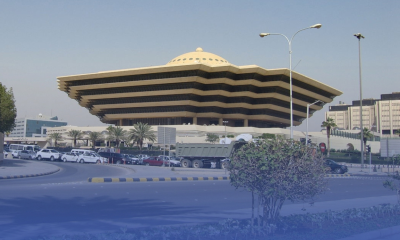
The death penalty was carried out against a citizen who stabbed another to death in Tabuk
-
 Culture and Art, 1 week ago
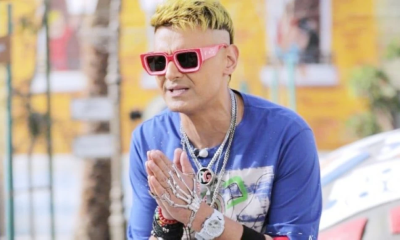
Ramez Galal in Ramadan 2026: Details of the bloody prank show
-
 Local news one week ago
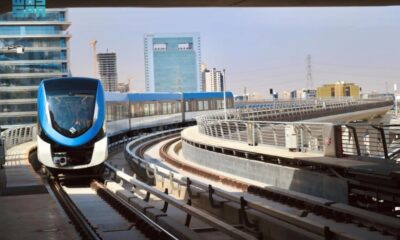
First birth on the Riyadh train: A heartwarming story at Andalus station
-
 Culture and Art 5 days ago
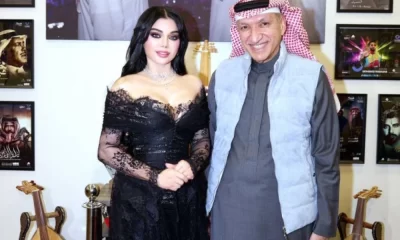
Haifa Wehbe's absence in Riyadh: A photo crisis or a strained relationship with the media?
-

 Local News 5 days ago
Riyadh collapse: Emergency plans to secure water after a main pipeline burst
-
 Culture and Art 5 days ago
City Kitchen series: A drama of conflict and the middle class during Ramadan
-
 Culture and Art 5 days ago
The series "Kasra": Dawood Hussein in a moving social drama this Ramadan