Culture and Art
The Minister of Culture meets his Syrian counterpart at the Damascus Book Fair 2026
Saudi Minister of Culture Prince Badr bin Abdullah met with his Syrian counterpart in Damascus. The Kingdom is the guest of honor at the 2026 Damascus International Book Fair, and discussions were held to enhance cultural cooperation between the two countries.


In a move reflecting the deep fraternal and historical ties between the Kingdom of Saudi Arabia and the Syrian Arab Republic, His Highness Prince Badr bin Abdullah bin Farhan, Minister of Culture, met today in the Syrian capital, Damascus, with Syrian Minister of Culture, Muhammad Yassin Saleh. This important meeting took place as part of His Highness's official visit to Syria, coinciding with the launch of the 2026 Damascus International Book Fair, where the Kingdom of Saudi Arabia is the guest of honor, an initiative that reflects the Kingdom's distinguished cultural standing regionally and internationally.
His Highness the Minister of Culture began the meeting by congratulating his Syrian counterpart on the organization and hosting of this edition of the Damascus International Book Fair, expressing his sincere wishes for Syria, its government and people, for continued stability and further prosperity, progress, and flourishing. The selection of the Kingdom as the guest of honor at the fair is a culmination of the significant cultural activity taking place in the region and a reaffirmation of the Kingdom's leading role in supporting culture, arts, and literature in the Arab world.
The meeting included extensive discussions during which both sides affirmed the strength of the cultural ties between the two brotherly countries and explored ways to develop and expand them. Emphasis was placed on the importance of activating joint cultural cooperation across various sectors, including the exchange of expertise in heritage, visual arts, literature, and publishing, as well as unifying visions and positions in international cultural forums to serve the best interests of both countries and strengthen their shared Arab cultural identity.
This visit is of particular importance in the context of strengthening joint Arab action, as culture is one of the most important soft powers that contributes to bringing peoples closer and building bridges of communication. Under its Vision 2030, the Kingdom of Saudi Arabia places great importance on the cultural sector and its openness to the world, making its participation in the Damascus International Book Fair an opportune moment to showcase the rich and diverse Saudi cultural output to the Syrian and Arab public.
The meeting was attended by a high-level delegation from the Saudi side, including His Excellency Advisor at the Royal Court, Mr. Mohammed Al-Tuwaijri; His Excellency Deputy Minister of Culture, Mr. Hamed bin Mohammed Fayez; and His Excellency Assistant Minister of Culture, Mr. Rakan bin Ibrahim Al-Tuwaiq. Also participating were His Excellency Advisor at the Royal Court, Mr. Abdullah Al-Muhaisen, and His Excellency General Supervisor of the King Abdulaziz Public Library, Mr. Faisal bin Muammar, reflecting the great importance the Saudi leadership places on strengthening bilateral relations.
At the conclusion of the meeting, both parties reaffirmed their commitment to continued coordination and ongoing consultation to implement joint cultural initiatives that would enrich the cultural landscape in both countries and contribute to preserving and transmitting authentic Arab heritage to future generations.




Culture and Art
The series "Taht El Ard" (Underground) has been postponed and will not air during Ramadan 2026
The series "Taht El Ard" (Underground) has been officially postponed and will not be part of the Ramadan 2026 lineup. Learn about the reasons for the decision and the list of newly added stars, led by Sulafa Ma'mar and Maxim Khalil.
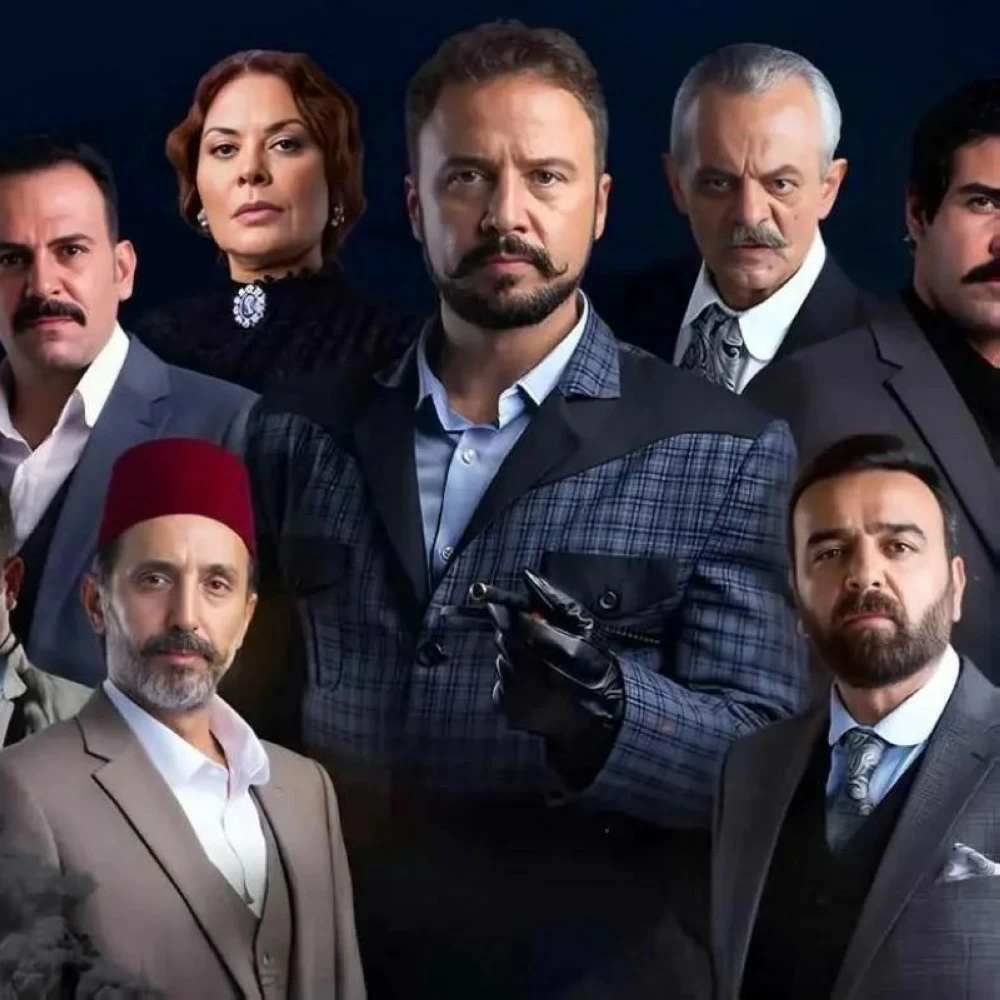
In a surprising development for the artistic community and the eager audience, the production company of the series “Underground – Accountability” officially announced the postponement of the show and its withdrawal from the competition in the Ramadan 2026 drama season. This news came as a shock to followers of Syrian and Arab drama who were waiting for the return of this huge work within the upcoming Ramadan marathon.
Reasons for the postponement: Quality first
The production company issued a press release explaining the reasons for the decision, emphasizing that the primary goal of the postponement was to maintain the high artistic quality of the project. The company indicated that the time constraints associated with the Ramadan season could negatively impact the meticulous technical processes required for the series, especially given its status as a production demanding extensive production and technical resources.
The statement confirmed that filming and preparation operations have not stopped, but are proceeding intensively and thoughtfully, as the team continues its artistic and technical efforts to ensure that the project comes out according to the highest standards of visual and dramatic quality that the Arab viewer expects, which gives the advantage of showing it outside the Ramadan season (Off-season) so that the work will enjoy more focused viewing away from the crowd of shows.
The context of Syrian drama and alternative seasons
This decision comes at a time when the drama industry is witnessing a noticeable shift towards promoting parallel broadcast seasons outside of Ramadan. Art critics believe that large-scale productions featuring top stars are often overshadowed by the sheer volume of Ramadan series. Therefore, postponing "Taht El Ard - Jard Hesab" (Underground - Accountability Reckoning) may ultimately benefit the show's audience appeal, allowing viewers to follow the intricate plot and high-caliber acting with a clear mind.
A battalion of heavyweight stars
What makes this work even more significant and highly anticipated is its exceptional cast. The second season boasts a selection of Syria's brightest drama stars who have achieved widespread success in recent years. The series continues its run with the return of stars from the first season, most notably Maxim Khalil , Samer al-Masri , Rozina Lazkani, Farah Youssef, and Ahmed al-Ahmed.
The cast also includes Karam Shaarani, Yazan Al-Sayed, Lynn Ghurra, Lujain Ismail, and Kifah Al-Khous. The biggest surprise this season is the addition of the esteemed actress Sulafa Ma'mar to the cast, a significant artistic boost that raises expectations given Ma'mar's acting abilities and immense popularity in the Arab world.
A message of reassurance to the public
The company concluded its statement with a message of reassurance to the "Underground" audience, emphasizing that the postponement does not in any way signify the abandonment or cancellation of the project. Rather, it is a strategic pause to reorganize and deliver a compelling dramatic experience worthy of the history of the show's creators and stars. The audience will soon be able to see the continuation of "The Reckoning" at a later date, which will be announced once all technical aspects are complete.
Culture and Art
Ahmed Ezz reveals the writing crisis and details of the film 7 Dogs with Monica Bellucci
Ahmed Ezz criticizes the script crisis in Egypt and reveals behind-the-scenes details of the film 7dogs with Karim Abdel Aziz, Monica Bellucci and Nasser Al-Qasabi, emphasizing his ambition to present art that will live on.
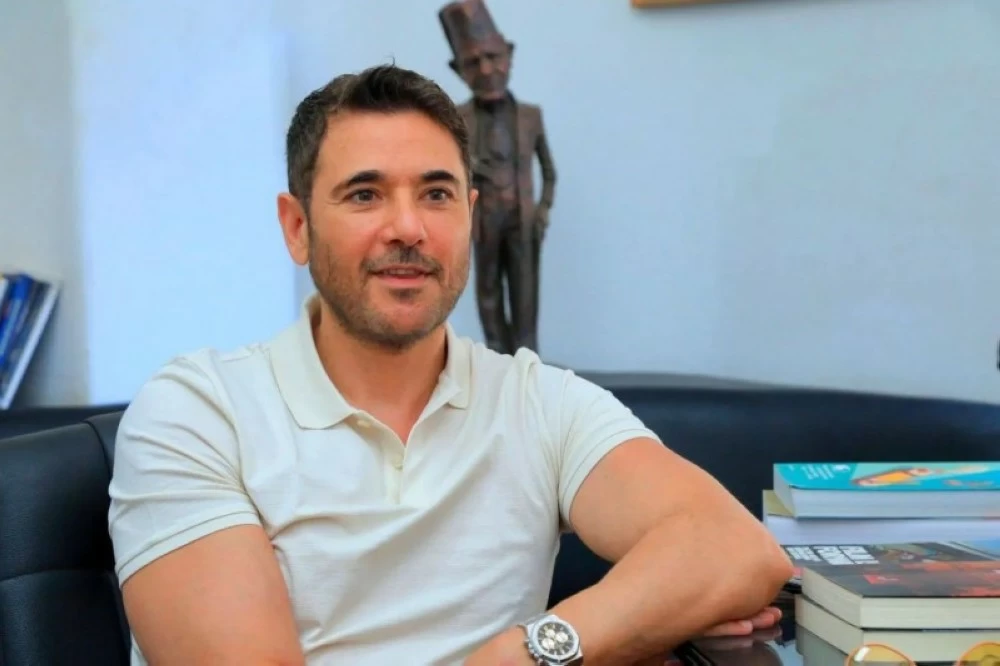
In candid remarks highlighting the challenges facing the Egyptian film industry, Egyptian star Ahmed Ezz a genuine crisis in screenwriting in recent years. Ezz asserted that this crisis stems not so much from a lack of production as from a homogenization of ideas. He pointed out that a significant percentage of Egyptian films have fallen into the same trap, regardless of their quality, reflecting a clear lack of diversity and innovation in dramatic approaches.
The crisis of the text in the face of industrial development
Ahmed Ezz's statements come at a time when Egyptian cinema is witnessing tremendous technological advancements in image and direction, yet the fundamental element of the screenplay still faces significant challenges. Critics and observers of the arts scene believe that Ezz's remarks touch a sensitive nerve within the industry, as reliance on repetitive themes could diminish the cinema's appeal and allure in the long run. This candid statement from a star of Ahmed Ezz's stature is an indirect call for writers and producers to seek out unconventional ideas that will restore Egyptian cinema's narrative leadership, not just its visual prowess.
An ambition that transcends the box office
In his radio interview, Ezz explained that his artistic ambitions are no longer limited to achieving immediate box office success or acquiring prestigious titles. His ultimate goal, he said, is to create works of art that will live long in the public's memory. He pointed out that an artist's true value lies in the ability of their films to withstand the test of time, to continue to be watched and enjoyed twenty or thirty years after their production, drawing inspiration from the golden age of Egyptian cinema, which remains vibrant to this day.
Behind the scenes of the global phenomenon with Monica Bellucci
Regarding his latest cinematic work, Ahmed Ezz spoke about his exciting experience in the film "7 Dogs ," expressing his immense happiness at participating in this major production, which greatly enriched his professional experience. He specifically mentioned working with the international star Monica Bellucci , emphasizing that standing before such a global artistic icon was a lesson in professionalism. Ezz explained that this experience reinforced his conviction that true stardom is not measured solely by displays of luxury or box office records, but rather by complete commitment and rigorous discipline in one's work, qualities he clearly observed in Bellucci's approach.
A huge Arab artistic consortium
The film "7 Dogs" holds special significance beyond being just a new cinematic work, representing a unique artistic collaboration between Arab and international actors. It stars a constellation of the Arab world's brightest stars, led by Karim Abdel Aziz and Ahmed Ezz, in a partnership reminiscent of successful cinematic pairings. The film also features the renowned Saudi actor Nasser Al-Qasabi in a leading role, giving it a broad regional appeal and attracting audiences in the Arabian Gulf. The cast also includes actresses Tara Emad and Hana El Zahed, and the veteran actor Sayed Ragab.
Anticipation for the Eid al-Fitr season
Ahmed Ezz concluded his remarks by expressing his excitement about the audience's reaction to the film "7 Dogs," which will be released during the Eid al-Fitr holiday in cinemas across the Arab world. This anticipation stems from expectations that the film will achieve significant box office success, given its large-scale production and the participation of prominent actors. He hopes the film will be well-received by audiences and represent a significant step towards creating a distinctive and high-quality cinematic experience.
Culture and Art
Ramadan songs: From Siraj Omar to Bashar Al-Shatti and Hamoud Al-Khader
Explore the evolution of Ramadan songs, from the masterpieces of Siraj Omar and Tariq Abdul Hakim to the compositions of Bashar Al-Shatti and Hamoud Al-Khader. A look at the transformations of Ramadan music between tradition and innovation.
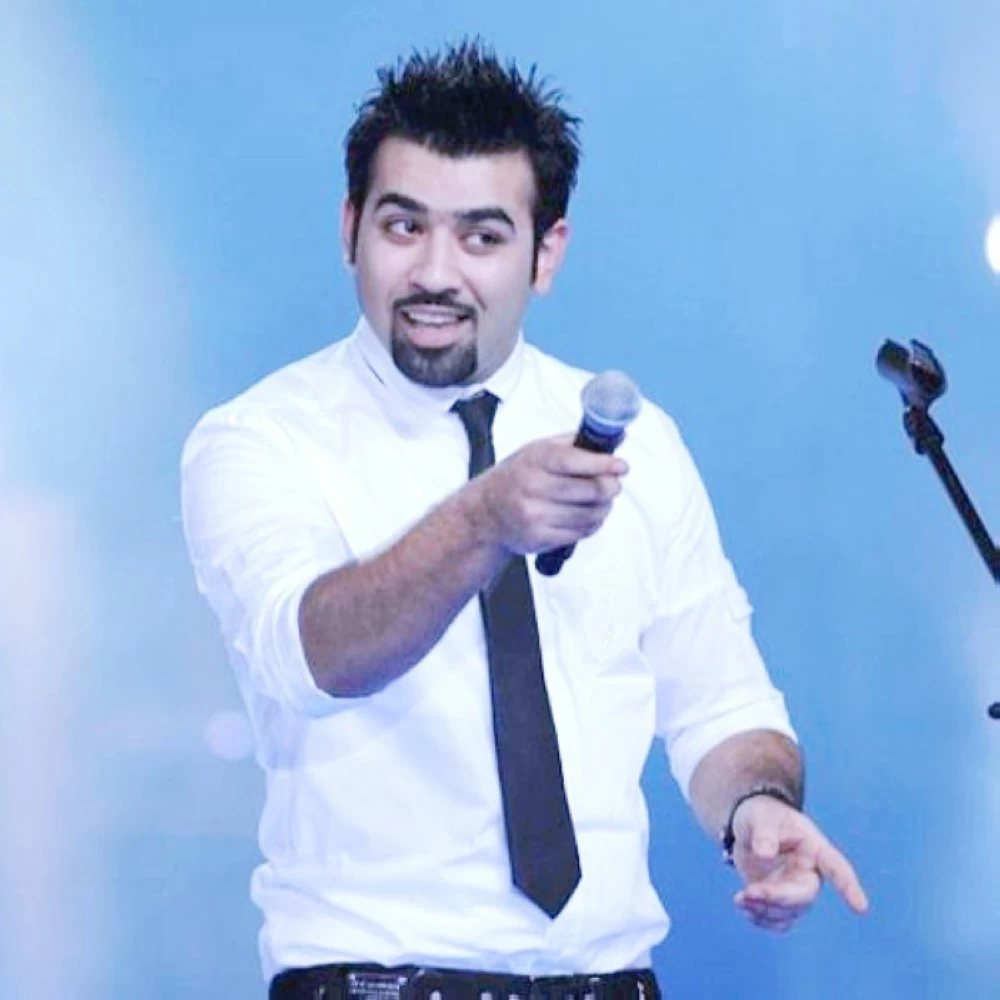
With the arrival of the holy month of Ramadan each year, the Gulf and Arab artistic scene is revived, as Ramadan songs are no longer merely a fleeting seasonal tradition, but have become emotional icons that reshape the listener's connection to the spirituality of this blessed month. In recent years, the artistic landscape has witnessed a remarkable transformation with the emergence of modern melodies that have rightfully earned their place alongside timeless classics, most notably the melody of "Star Academy" star Bashar Al-Shatti in his modern anthem, "Marhab Marhab Ya Hilal" (Welcome, Welcome, O Crescent).
Bashar Al-Shatti and Hamoud Al-Khader: The Making of Modern Memory
The song "Marhab Marhab Ya Hilal," with lyrics by Hiba Mishari and performed by Hamoud Al-Khader, has become a modern-day Ramadan anthem. Composed by Bashar Al-Shatti, this melody is more than just a fleeting promotional piece; it has established itself as a lasting icon, renewed annually. Leveraging technological advancements and social media platforms, it has spread regionally and internationally, becoming an integral part of Ramadan traditions for new generations. This reflects the power of modern music to touch the heart when it possesses genuine artistic merit.
Siraj Omar: A pioneer of Saudi Ramadan songs
This recent success opens a wide window for comparison with the golden age of Saudi music, when Ramadan songs had their great pioneers. The name of the late composer Siraj Omar stands out here, whose role cannot be reduced to that of a composer who presented seasonal works. Rather, it was a complete artistic project that transformed the holy month into a space for melodic contemplation. Siraj Omar's name became synonymous with Ramadan through a series of timeless works that shaped the Saudi consciousness, such as "The Month of Fasting," "O Nights of Ramadan," and "The Month of Piety." The late composer formed a unique artistic partnership with the poet and writer Ahmed Ba'atab, composing and singing these poems himself, culminating this journey with the masterpiece "Hani'an Hani'an.".
Tariq Abdul-Hakim and the historical dimension of anthems
In a related context, the role of the late dean of Saudi art, Tariq Abdul-Hakim, cannot be overlooked. He presented a distinct musical approach based on authentic Eastern maqams and collective choral performance. This was clearly evident in the anthem "Nur al-Huda bi-Ramadan" (The Light of Guidance in Ramadan), with lyrics by Saeed al-Hindi, where Abdul-Hakim combined composition and singing, offering a spiritual style that reflects the cultural identity of the Kingdom during that era. Other names such as Mahmoud Khan with the anthem "Anist wa Halait Ya Ramadan" (You Have Arrived and Been Welcome, O Ramadan), Abdul-Qader Halwani, and Samir al-Wadi also contributed to enriching the Ramadan audio library.
Transformations in production: from pure art to commercial promotion
Comparing the two generations reveals a fundamental shift in the motivations behind artistic production. While pioneers like Siraj Omar and Tariq Abdul-Hakim embarked on an artistic and cultural project aimed at documenting spiritual feelings, the current scene tends to hand the reins to commercial entities and satellite channels that use songs as a promotional tool for their brands. This is evident in highly successful but promotional works, such as Majid Al-Muhandis's song "Ramadan, You've Returned," which has become central to the Ramadan scene and is among the most popular. This raises questions about the future of Ramadan songs, specifically the balance between preserving authenticity and meeting the demands of the advertising market.
-

 Culture and Art 6 days ago
The "Between and Between" exhibition in Jeddah: 5 artists reshape Saudi memory
-
Local News 5 days ago
Saudi Arabia's National Arabic Language Policy: 8 Principles to Promote Identity
-
Culture and Art, 1 week ago
Shakira's concert in Jeddah: Details of the international star's first concert in Saudi Arabia
-
Local News 4 days ago
Adopting the National Policy for the Arabic Language: Strengthening Identity and Vision 2030
-
Culture and Art, 1 week ago
The truth about Nancy Ajram's video and Epstein Island, and her legal response
-
Local News 5 days ago
The Riyadh-Rin-Bisha dual carriageway, spanning 559 km, has been completed
-
Local news one week ago
Launch of the new Dammam project with investments of 98 billion riyals
-
Politics, one week ago
Kuwait adds 8 Lebanese hospitals to its terrorism lists