Culture and Art
Saad Lamjarred denies his participation in the 2025 Mawazine Festival
Moroccan artist Saad Lamjarred revealed the truth about his participation in the upcoming edition of the Mawazine Festival, scheduled to take place from June 20 to 28


Moroccan artist Saad Lamjarred revealed the truth about his participation in the upcoming edition of the Mawazine Festival, scheduled to take place from June 20 to 28, 2025 in the capital, Rabat, stressing his great love for the Moroccan public and his pride in the festival.
Saad Lamjarred denied his participation in the Mawazine Festival through a post on his personal Instagram account, in which he said a message to his fans: “To avoid any rumors or false news, I lovingly clarify that I will not be participating in the Mawazine Festival this year. The festival remains dear to my heart, and God willing, we will meet in the coming years with joy and pride.”.
Saad Lamjarred expressed his love and appreciation for his Moroccan fans, explaining: “Your love and interaction are greatly appreciated in my heart, and I always feel grateful to everyone who waits for me and loves me. It is a responsibility that I cherish after God’s pleasure and the pleasure of my parents.”.
He concluded his message with a phrase that had a local Moroccan character, saying: “Every delay has its benefits,” indicating that his absence this year may be for the best for him and the public, with the hope of meeting on other upcoming occasions.
Related News
In another context, Saad Lamjarred finally reassured his fans about his health condition, after he was transferred to a clinic in Casablanca where he underwent a minor surgical procedure.
He wrote a post to his fans saying: “My dear ones, thank you for your love and concern. It was a simple procedure on my ears, and thank God it was successful. I am fine and in the best of health. I love you all very much.”.
The Mawazine Festival had revealed the initial list of stars participating in the 20th edition, and among the most prominent international stars are American star Kid Cudi, star Will Smith, and other international stars.


Culture and Art
The Belt Novel: How Ahmed Abu Dahman Presented His Village to the World in French
Discover 'The Belt' by Ahmed Abu Dahman, the first literary work from the Arabian Peninsula translated into French. A deep analysis of the novel, which chronicles life in a Saudi village and the challenges of modernity.
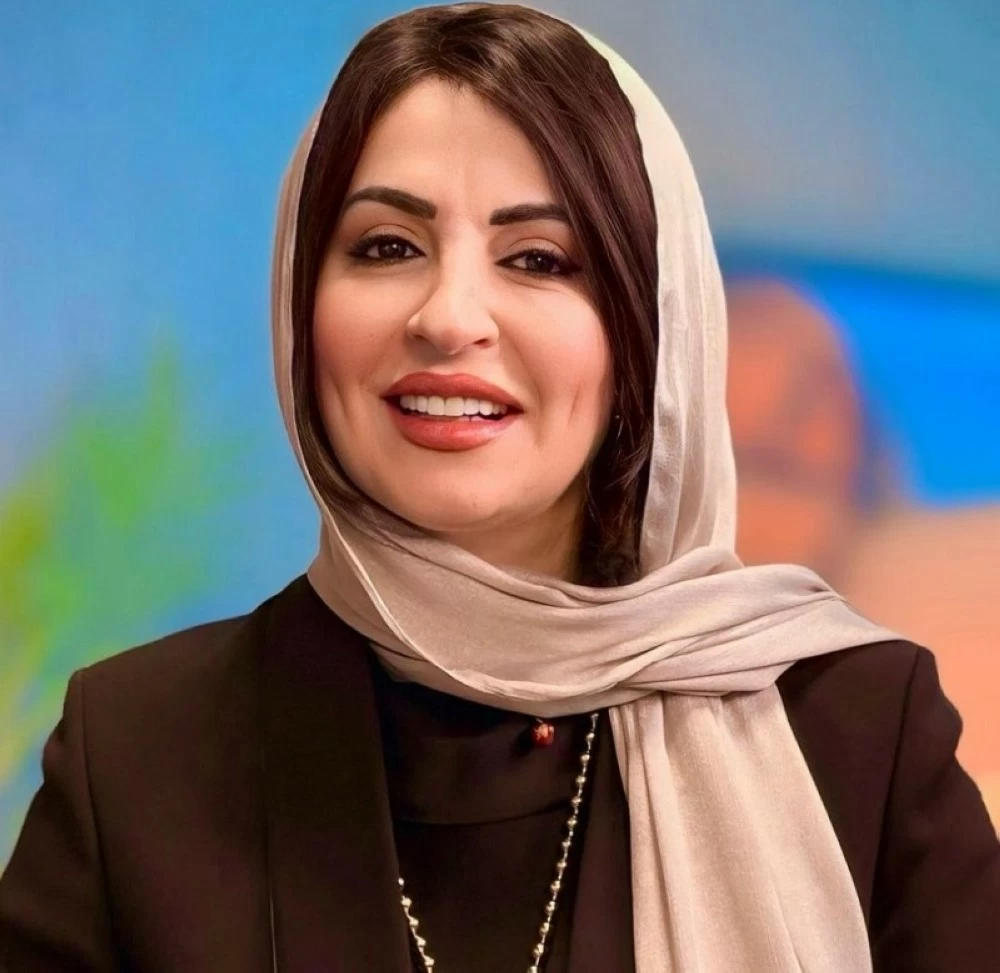
The greatest literary works remain those that spring from their author's authentic environment and resonate with the details of their life and experiences. The novel "The Belt" by Saudi writer Ahmed Abu Dahman is a vivid embodiment of this idea; it is not merely a narrative, but a unique literary document born from the heart of a village suspended between heaven and earth in southern Saudi Arabia.
A unique literary context: from oral poetry to world literature
In the literary landscape of the Arabian Peninsula, dominated for centuries by the traditions of oral and Nabati poetry, the novel emerged as a relatively recent art form. In this context, Ahmed Abu Dahman's achievement stands out as a bold and remarkable step. He not only wrote a novel, but also chose to write it in French, thus becoming the first novelist from the Arabian Peninsula to publish his debut work in that language. This choice was not arbitrary; rather, it was a cultural bridge that Abu Dahman extended from his isolated village to the heart of Europe, offering Western readers a direct window into a society long shrouded in mystery and stereotypes.
“The Belt”: The history of a village and details of life
Abu Dahman did not write a novel in the traditional sense, but rather an autobiography of a place, chronicling the life of his village in all its minute details. The work explores the rituals of daily life: from marriage and divorce, through concepts of wealth and poverty, to the social roles of men and women. The author skillfully describes how major events, such as the mass circumcision ceremonies for young men, served to strengthen community bonds. He also presents the villagers' unique philosophy of life and death, where illness was considered an illusion or a lie to avoid work, and death was the only certainty. These profound details lend the novel its anthropological dimension, making it more than just a work of literature.
The clash between modernity and tradition: the school and the doctor
The novel chronicles a pivotal moment in the village's history: the arrival of the first signs of modernity, embodied in the first health center and the first school. Abu Dahman masterfully portrays the shock and resistance the villagers displayed toward these intrusive "strange entities." The school, with its teachers from neighboring countries, represented a new system that threatened the traditional way of life. It replaced tribal flags with the national flag and substituted the songs of the fields and shepherds with the national anthem, thus challenging the identity of the older generations. This conflict between the old and the new is the novel's beating heart, reflecting the profound transformations that Saudi Arabia underwent during that period.
Importance and impact: A bridge between cultures
Locally, "The Belt" is a documentary work that preserves the memory of a region and its oral heritage from extinction. Regionally, the novel has placed its author among the leading Arab writers who have addressed themes of social transformation and identity, such as Tayeb Salih in "Season of Migration to the North" and Abdul Rahman Munif in "Cities of Salt." Internationally, the novel achieved great success in France and Europe, where it presented a different, more humane image of Saudi society, far removed from political analyses or superficial Orientalism. It allowed the French reader to see, through the eyes of a child from a Saudi village, what life, love, poetry, and nature are like, where the sun and moon have different names and poetic functions.
Ultimately, "The Belt" remains a testament to the fact that great literature can transcend geographical and linguistic boundaries. Abu Dahman used the language of Voltaire to tell the story of his ancestors, thus illuminating distant worlds that were eager to learn the tale of this poet from a land that gives birth only to poets, thus enshrining his name in the annals of immortal creators.
Culture and Art
Fadi Jamil receives the French Knight's Cross in recognition of his support for the arts
Fadi Jameel was honored with the French Knight of the Order of Arts and Letters, in recognition of the Jameel family’s 80-year journey in supporting culture and arts locally and globally through Art Jameel.
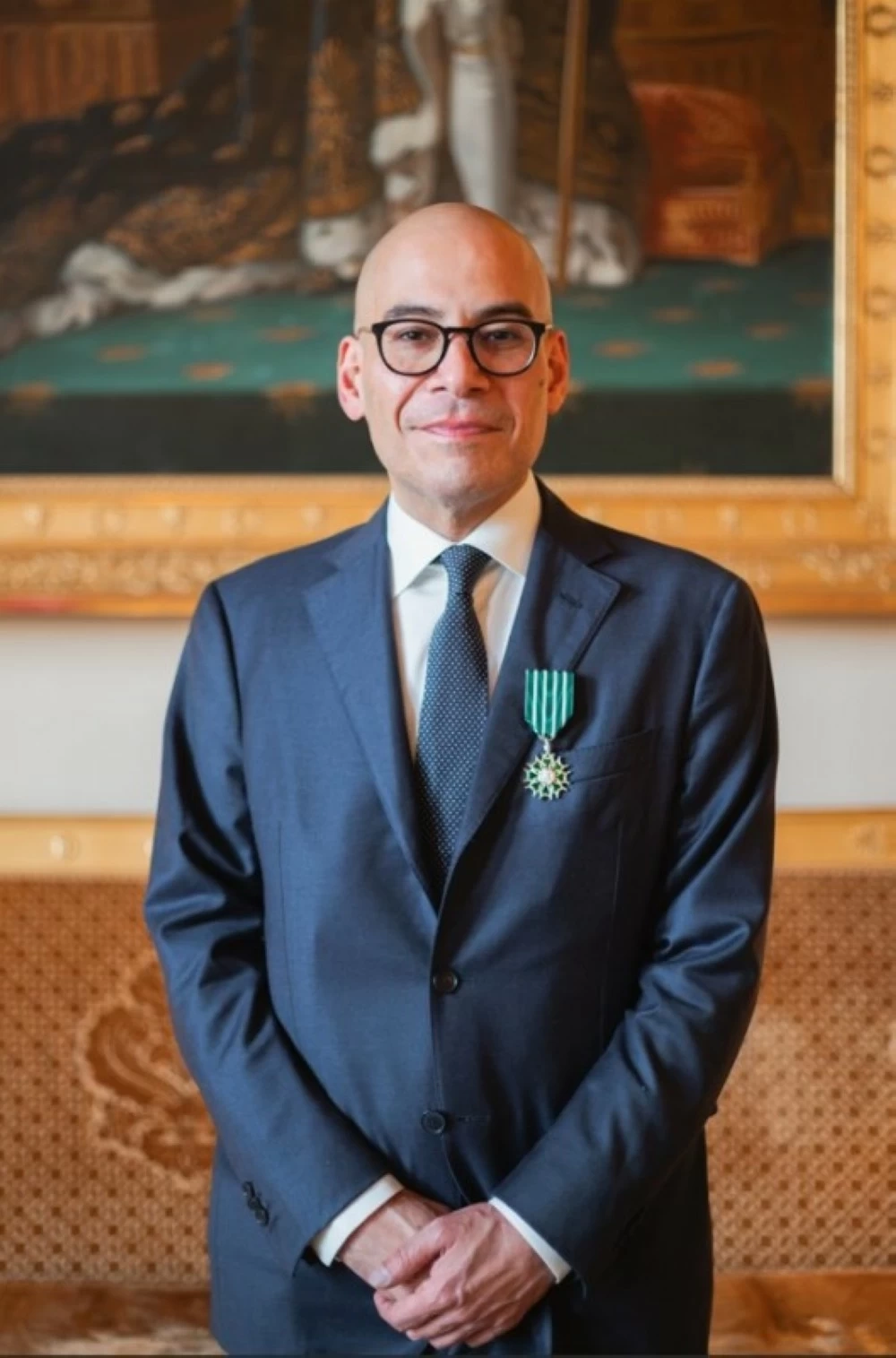
At a ceremony held in Paris, the Jameel family was honored for its global leadership in supporting the arts. Fadi Mohammed Jameel, co-founder of Art Jameel and vice chairman of Abdul Latif Jameel International Operations, was awarded the title of Knight of the Order of Arts and Letters. This honor, bestowed by the French Ministry of Culture, is one of France's highest cultural distinctions, recognizing individuals who have made a significant and lasting contribution to the cultural and artistic landscape of France and around the world.
A legacy spanning from social giving to artistic leadership
This recognition is the culmination of a long journey of giving that began more than 80 years ago in Jeddah, when the late founder, Sheikh Abdul Latif Jameel, laid the foundations for social work aimed at empowering communities. This legacy has evolved through generations, embracing art and culture as essential tools for development and human connection. Under the leadership of Fadi Jameel, this vision crystallized with the establishment of Art Jameel in 2003, an organization that has dedicated itself for two decades to supporting artists and creatives and fostering cultural ties between the Middle East and the world, including France.
The importance of honoring and its impact on the cultural landscape
This honor holds particular significance on several levels. Locally, it aligns with the goals of Saudi Vision 2030, which places culture and the arts at the heart of its development plans to build a vibrant society and a thriving economy. Initiatives such as the Jameel District in Jeddah play a pivotal role in realizing this vision by providing a comprehensive platform for Saudi artists, filmmakers, and creatives. Regionally, the award contributes to solidifying the Middle East's position as a growing global cultural hub, where institutions like Art Jameel are building bridges of creative collaboration. Internationally, this distinction enhances the standing of Arab arts patrons and institutions on the world stage and opens new avenues for cultural and diplomatic exchange between France and Saudi Arabia.
In this context, Mr. Fadi Jameel stated: “This honor of being awarded the French Order of Arts and Letters is a source of great pride for us; it would not have been possible without the tremendous support of my family. It also celebrates decades of our commitment to continuing the social work begun by my grandfather, Abdul Latif Jameel (may God have mercy on him). I would like to express my gratitude to the Ministry of Culture in the Kingdom of Saudi Arabia for its ongoing support, and I also thank the Ministry of Culture in France, as well as our partners in the public and private sectors. At Art Jameel, we believe in the transformative power of the arts, and we will continue our commitment to fostering a strong arts ecosystem in the Kingdom and beyond.”.
For his part, the French Consul General in Jeddah, Mr. Mohamed Nahhad, explained that “this honor represents an appreciation of the Jameel family’s ongoing efforts and fruitful partnership. France, a country of arts and culture, has always celebrated the efforts of those interested in spreading culture. We have extensive cooperation with Art Jameel on many projects, and we look forward to continuing this fruitful partnership.”.
"Art Jameel": A leading institution serving the community
Today, Art Jameel is one of the leading arts organizations in the Middle East, with its programs and exhibitions reaching approximately two million people annually. The organization manages two prominent art venues: Hay Jameel, an integrated creative community in Jeddah, and the Jameel Arts Centre in Dubai, a hub for contemporary art and ideas. Despite being privately funded by the Jameel family, Art Jameel operates with a spirit of public service, collaborating with governments and partners to expand learning, exchange, and development through the arts, based on its conviction that art is an essential element of life and accessible to all.
Culture and Art
The truth about Jaafar Al-Umda 2 airing during Ramadan | The fate of the series
Will Jaafar Al-Umda return in a second part? We reveal the truth about the poster circulating on social media and the fate of the series that achieved great success in Ramadan 2023.
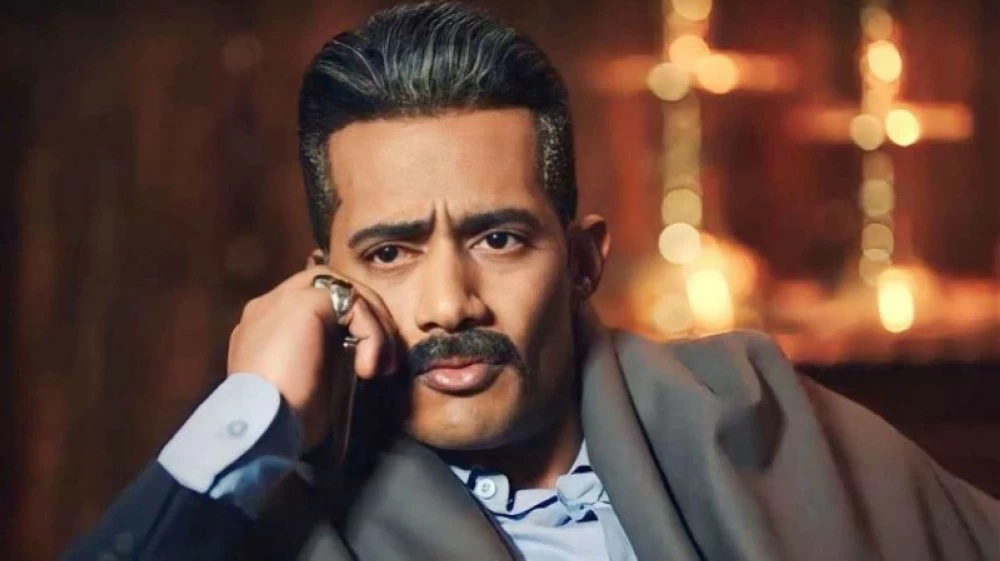
Widespread controversy over a fake poster
A promotional poster purportedly for the second season of the series "Jaafar Al-Umda" caused a stir on social media in recent hours, suggesting the series would air during the upcoming Ramadan season. However, sources close to the production team quickly denied the poster's authenticity, confirming it was merely a fan-made Photoshop design. This significant public reaction reflects the overwhelming success of the first season, which made a significant impact on Ramadan dramas in 2023.
Background to the exceptional success of the first part
The series "Jaafar Al-Omda," which aired during Ramadan 2023, is considered one of the most prominent dramatic phenomena of recent years. Set in the popular Sayeda Zeinab neighborhood of Cairo, it revolves around the character of Jaafar, played by star Mohamed Ramadan. Jaafar is a businessman with contracting companies and a high social standing, married to four women. The plot thickens dramatically after his son is kidnapped 19 years prior, beginning his long search fraught with family and social conflicts. The series captivated millions of viewers in Egypt and the Arab world thanks to its compelling storyline, written and directed by Mohamed Sami, and the outstanding performances of its cast, including Mohamed Ramadan, Hala Sedki, Zeina, Mai Kassab, and Iman El-Assy, making it a major talking point throughout its run.
The fate of Part Two: Between confirmation and postponement
Following the immense success of the first season, both actor Mohamed Ramadan and director Mohamed Sami previously announced their intention to produce a second season, sparking considerable public excitement. However, the project was quickly put on hold and postponed indefinitely. Those involved in the production explained that the postponement stemmed from a desire to maintain the high quality of the first season and the difficulty of finding a new dramatic concept with the same strength and impact. They emphasized that there is currently no official statement regarding the preparation or filming of a new season, rendering all circulating information mere rumors. Consequently, the return of "Jaafar Al-Omda" to the screen next Ramadan is highly unlikely, given the lack of a completed script and the absence of any production.
-

 Reports 6 days ago
Achievements of Saudi government sectors in 2025
-
Local news two weeks ago
FDA warns of contaminated Nestle infant formula | Recall details
-
Technology 4 weeks ago
US ban on drones: reasons and consequences
-
Technology 4 weeks ago
SRMG and Snapchat partnership: The future of digital media in the Middle East
-
Sports 4 weeks ago
Salah leads Egypt to a thrilling comeback against Zimbabwe in the Africa Cup of Nations
-
Technology 4 weeks ago
Saudi Arabia's Ministry of Islamic Affairs is employing artificial intelligence in public speaking
-
Sports 4 weeks ago
Napoli win the Italian Super Cup in Riyadh for the third time (2025)
-
Sports 4 weeks ago
Alexander Isak's injury: A major blow to Newcastle United's ambitions