Culture and Art
Regarding the seniority of the two alphabets: North Arabic and South Arabic
Scholars have disagreed on which of the two Arabic alphabets in the Arabian Peninsula came first, the South Arabian script


Scholars have differed on the primacy of the two Arabic alphabets in the Arabian Peninsula, specifically which came first: the South Arabian script or the North Arabian script. Despite the apparent differences in their written forms, there is a fundamental similarity between them, and perhaps this is what modern researchers should undertake: studying both branches together. But what is the nature of the relationship between the North and South Arabian scripts? Which one was derived from the other? Or are the mysteries surrounding the two written alphabets impossible to unravel today? And another question arises: Is it possible to definitively assert the primacy of one over the other?
Everyone knows that the North Arabian script, derived from Nabataean, is in use today. It is used by people for everyday matters, but not for monuments or formal, standardized official writings like the South Arabian script. This is where the question and research began. The North Arabian script is found in approximately two thousand inscriptions, mostly in the Hejaz and Najd regions, with some eastward to Damascus and Sinai. These are ancient Thamudic scripts, some of which are more recent. Researchers confirm that the Hejazi Thamudic inscriptions are older than the Najdi Thamudic inscriptions. Some Najdi alphabetic forms are derived from Hejazi inscriptions. Furthermore, the Thamudic script includes six forms not found in the North Arabian and Phoenician scripts. These forms, or letters, are thaa, khaa, dhaal, daad, and ghayn. The letter dhaa is common to both Thamudic and Safaitic scripts. The North Safaitic script has more inscriptions than the Thamudic ones, most of which were found in the northern Arabian Peninsula, specifically in the Safait region of the Syrian Desert. It is named after this region and bears a strong resemblance to the North Arabian script. In Thamudic, as Dr. Ramzi Baalbaki confirms in his book, The History of Arabic and Semitic Writing.
Also, the Lihyanite script belonging to the north, or as some call it, the Dedanite script or inscription, named after the era of Dedan, which dates back to 400 to 700 BC, contains the six letters that were specific to Thamudic and Safaitic. But what we want to say is that these northern scripts of Thamudic, Safaitic, and Lihyanite are all close to the southern Musnad script, the southern one which includes the Minaean, Sabaean, Himyarite, Qatabanian, Hadramite, and Awsanite scripts as well. It is established for people that the southern one is older because it dates back to the thirteenth and twelfth centuries and at least the tenth century BC, especially the Minaean, while the Sabaean one dates back to between the seventh and fourth centuries BC.
Returning to the first question: Are the written northern Arabic scripts older than the southern Arabic script?
Most people go to the southern one, because of the common theory of the tribes mediating between the north and the south, and then the transfer of the writing inscriptions to the north, although this theory has not been proven. The theory cannot be based on this logical historical sequence that the Thamudic, Safaitic and Lihanic scripts are more recent than the southern scripts, since the northern Lihanic script, in terms of its letter forms, is derived from the Sabaean letters at an early stage. Therefore, researchers must first study the relationship between the southern and northern Arabic scripts, the relationship of the two branches without the mediation of other scripts.
Researchers at the American University of Beirut in the 1980s refuted the claim that the Musnad script was older than the northern and Phoenician scripts. They argued that the Musnad script was written with great care, using harmonious geometric shapes and upright columns, and appeared formal, rejecting rapid development and preferring to maintain this formal form engraved on stones, metals, and wood. In contrast, the Phoenician script was quick to use and easy to write on pottery and other vessels. Naturally, this activity in writing caused it to lose its harmony and straightness, yet it remained older. Therefore, some mistakenly believe that the Musnad script was older because of those upright letters in front of the spiral and serpentine letters of the northern script. Another piece of evidence is that the names of the Arabic letters are older in the northern Semitic scripts than in the southern script, because the names we write with are named after the forms of the southern Semitic script, which are the same as the Arabic script, in terms of derivation and meaning. This suggests that the northern Semitic script, in terms of names and letters, is older than the southern script.
The two branches remain Semitic and separate, originating from a single source of script, even though each emerged as a distinct invention. Given the ethnic connection between the north and south, it remains undeniable that some relationship exists between the two scripts. Our task today is simply to examine the nature of this relationship.


Culture and Art
Ramadan songs: From Siraj Omar to Bashar Al-Shatti and Hamoud Al-Khader
Explore the evolution of Ramadan songs, from the masterpieces of Siraj Omar and Tariq Abdul Hakim to the compositions of Bashar Al-Shatti and Hamoud Al-Khader. A look at the transformations of Ramadan music between tradition and innovation.
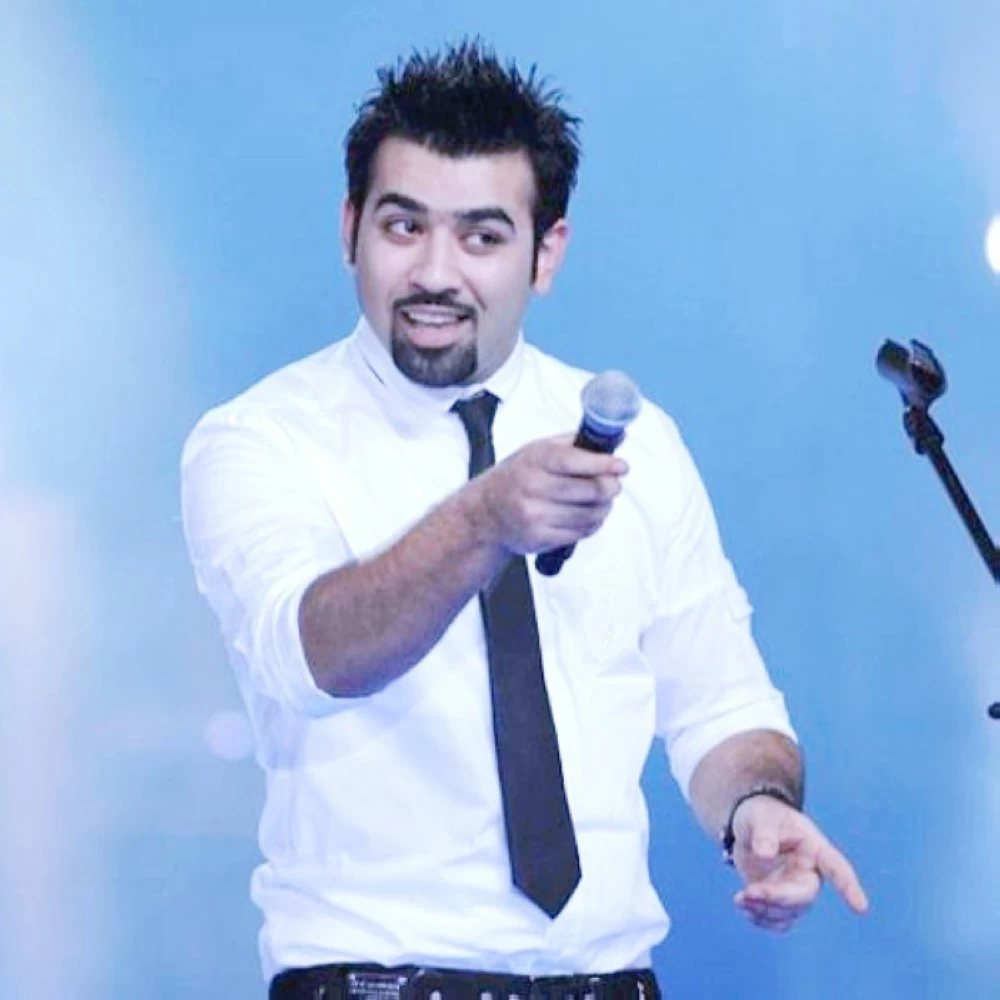
With the arrival of the holy month of Ramadan each year, the Gulf and Arab artistic scene is revived, as Ramadan songs are no longer merely a fleeting seasonal tradition, but have become emotional icons that reshape the listener's connection to the spirituality of this blessed month. In recent years, the artistic landscape has witnessed a remarkable transformation with the emergence of modern melodies that have rightfully earned their place alongside timeless classics, most notably the melody of "Star Academy" star Bashar Al-Shatti in his modern anthem, "Marhab Marhab Ya Hilal" (Welcome, Welcome, O Crescent).
Bashar Al-Shatti and Hamoud Al-Khader: The Making of Modern Memory
The song "Marhab Marhab Ya Hilal," with lyrics by Hiba Mishari and performed by Hamoud Al-Khader, has become a modern-day Ramadan anthem. Composed by Bashar Al-Shatti, this melody is more than just a fleeting promotional piece; it has established itself as a lasting icon, renewed annually. Leveraging technological advancements and social media platforms, it has spread regionally and internationally, becoming an integral part of Ramadan traditions for new generations. This reflects the power of modern music to touch the heart when it possesses genuine artistic merit.
Siraj Omar: A pioneer of Saudi Ramadan songs
This recent success opens a wide window for comparison with the golden age of Saudi music, when Ramadan songs had their great pioneers. The name of the late composer Siraj Omar stands out here, whose role cannot be reduced to that of a composer who presented seasonal works. Rather, it was a complete artistic project that transformed the holy month into a space for melodic contemplation. Siraj Omar's name became synonymous with Ramadan through a series of timeless works that shaped the Saudi consciousness, such as "The Month of Fasting," "O Nights of Ramadan," and "The Month of Piety." The late composer formed a unique artistic partnership with the poet and writer Ahmed Ba'atab, composing and singing these poems himself, culminating this journey with the masterpiece "Hani'an Hani'an.".
Tariq Abdul-Hakim and the historical dimension of anthems
In a related context, the role of the late dean of Saudi art, Tariq Abdul-Hakim, cannot be overlooked. He presented a distinct musical approach based on authentic Eastern maqams and collective choral performance. This was clearly evident in the anthem "Nur al-Huda bi-Ramadan" (The Light of Guidance in Ramadan), with lyrics by Saeed al-Hindi, where Abdul-Hakim combined composition and singing, offering a spiritual style that reflects the cultural identity of the Kingdom during that era. Other names such as Mahmoud Khan with the anthem "Anist wa Halait Ya Ramadan" (You Have Arrived and Been Welcome, O Ramadan), Abdul-Qader Halwani, and Samir al-Wadi also contributed to enriching the Ramadan audio library.
Transformations in production: from pure art to commercial promotion
Comparing the two generations reveals a fundamental shift in the motivations behind artistic production. While pioneers like Siraj Omar and Tariq Abdul-Hakim embarked on an artistic and cultural project aimed at documenting spiritual feelings, the current scene tends to hand the reins to commercial entities and satellite channels that use songs as a promotional tool for their brands. This is evident in highly successful but promotional works, such as Majid Al-Muhandis's song "Ramadan, You've Returned," which has become central to the Ramadan scene and is among the most popular. This raises questions about the future of Ramadan songs, specifically the balance between preserving authenticity and meeting the demands of the advertising market.
Culture and Art
Ramez Level the Monster promo: Prank details and list of victims this Ramadan
Turki Al-Sheikh released the official promo for Ramez Level the Monster. Learn about the show's concept, inspired by the squid game, the list of victims, and details of Caroline Azmy's injury.

In a move that has ignited excitement among Arab audiences as the Ramadan season approaches, Turki Al-Sheikh, Chairman of the General Entertainment Authority in Saudi Arabia, released the official trailer for the highly anticipated prank show "Ramez Level the Monster," hosted by Egyptian star Ramez Galal. This announcement reaffirms the ongoing fruitful collaboration between the Authority and entertainment industry professionals to deliver world-class content.
Program concept: The atmosphere of "The Squid Game" prevails
The teaser trailer revealed the main concept of this year's program, which appears to depart from traditional formats and delve into the world of complex psychological thrillers. The program draws inspiration from the internationally acclaimed Korean drama "Squid Game," with events unfolding in a secluded and mysterious setting.
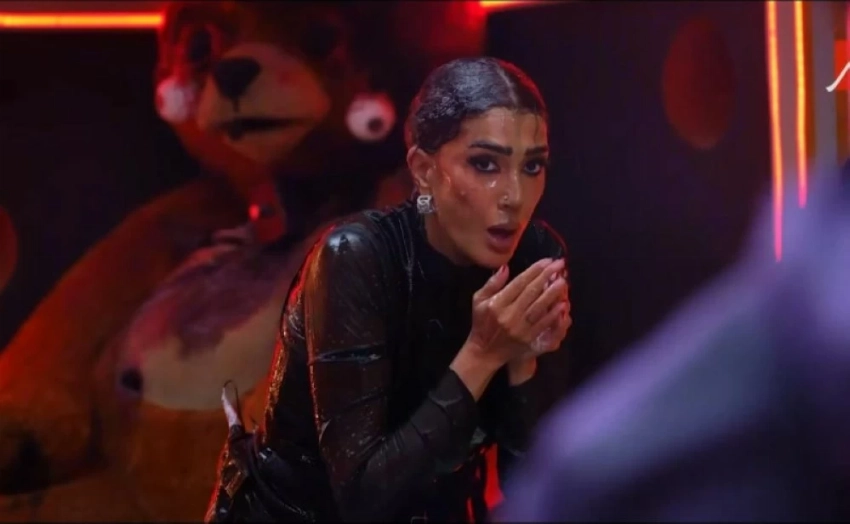
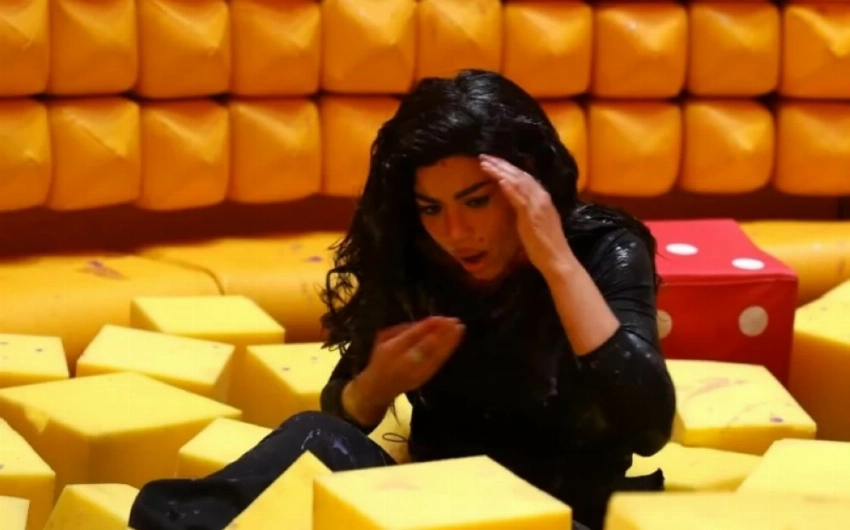
In the promo, Ramez Galal appears disguised in an outfit similar to that of the players or goalkeepers in the series, using frightening sound and visual effects to heighten the tension for the guests. The plot revolves around subjecting the victims to a series of difficult challenges and unexpected surprises, which gradually escalate before Ramez reveals himself at the crucial moment, generating hysterical reactions that combine shock and terror.
A history of controversy and popular success
The "Ramez Level Monster" program comes as a continuation of star Ramez Galal's long career in the world of prank shows, which have become an annual tradition and an integral part of Ramadan television in the Arab world. For over a decade, these programs have achieved record-breaking viewership, topping search engine results and social media platforms as soon as their episodes air.
The support provided by the General Entertainment Authority reflects the extent of interest in providing a high-quality entertainment product, as Ramez's programs have evolved from simple street pranks to huge productions that rely on cinematic techniques and complex filming locations, which enhances Riyadh's position as a supportive destination for the Arab entertainment industry.
List of victims: Art and sports stars caught in the trap
The official promo revealed that a large number of A-list celebrities have fallen victim to Ramez's pranks this year, promising some explosive episodes. The list includes prominent names from the worlds of art and sports, most notably action star Ahmed El Sakka, known for his powerful reactions, as well as football stars like Egyptian national team player Zizo.
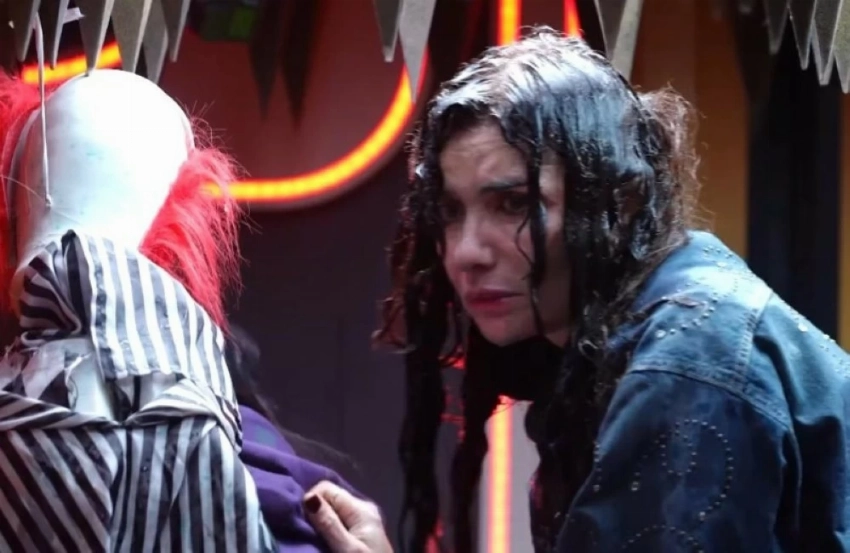
The list also included appearances by widely popular artists such as Ghada Abdel Razek, Ghada Adel, Asmaa Galal, and singer Diab, in addition to comedy and festival stars like Shaimaa Seif, Mustafa Gharib, and Hamo Beka. Veteran actress Samah Anwar, young actress Rahma Mohsen, and Caroline Azmy were also present, ensuring a wide range of reactions, from screaming and crying to violent resistance.
Dangerous behind-the-scenes details: Caroline Azmy injured
The filming of the program was not without its real dangers, highlighting the difficulty of the challenges this season. Reports revealed that the young artist, Caroline Azmy, sustained various injuries while filming her episode, resulting from a scuffle or fall during the prank. She was immediately taken to a hospital for necessary medical examinations and to ensure her well-being. This adds an air of seriousness and risk to this year's edition and increases the audience's curiosity to see what the stars faced behind the scenes.
Culture and Art
Mohamed Mounir sings the theme song for Rogina's Ramadan series "Had Aqsa"
King Mohamed Mounir returns to Ramadan drama with the theme song for the series "Had Aqsa" starring Rogina. Learn more about the song "Ta'ab," the series' plot, and its cast in the highly anticipated Ramadan season.

In a major artistic surprise that is set to ignite early competition in the upcoming Ramadan season, "The King" Mohamed Mounir has decided to return to the world of television drama theme songs, performing the opening theme for the series "Hadd Aqsa" (Maximum Limit), starring the renowned actress Rogina. This move adds significant artistic weight to the production, given Mounir's immense popularity and the enduring connection his voice has forged with timeless dramas in the hearts of Egyptian and Arab audiences.
Details of the song "Taab" and the return of the King
The new song, titled "Ta'ab" (Tiredness), has already been recorded by Mohamed Mounir and is ready for release at the start of Ramadan. The lyrics are by Ahmed Shabaka, and the music is composed and arranged by Ahmed Hamdi Raouf. It is produced by Rotana Music Group. This collaboration marks Mounir's strong return to the world of theme songs, a field in which he has always excelled, delivering memorable tracks that continue to resonate with audiences. This raises expectations for the success of both the song and the television series.
The artistic context and the importance of the event
Mohamed Mounir singing the theme song for any drama series is an artistic event in itself, not just a conventional addition. Historically, Mounir's voice has been associated with dramas that have become part of Egyptian cultural identity, and his participation in "Had Maqsa" (Maximum Limit) indicates the quality of the work and the attention to detail of its creators. This participation also reinforces Rogina's strong presence in recent Ramadan seasons, where she consistently tackles sensitive and controversial social issues.
The cast and crew of the TV series "Limit"
The series boasts a stellar cast alongside Rogina, including Mohamed El-Qass, who has recently achieved notable success, Khaled Kamal, Basant Abu Basha, Fadwa Abed, veteran actress Nashwa Mustafa, Bassam Ragab, Amir Abdel Wahed, Mariam Ashraf Zaki, and Mustafa Emad. The script is by Hisham Helal, and the series is directed by the promising young director Maya Ashraf Zaki in her highly anticipated directorial debut.
Series synopsis: Conflicts over money and influence
The series "Limit" unfolds as a social thriller, shedding light on the inner workings of the world of money laundering and financial corruption. The story centers on Rogina, who finds herself in a major predicament after mistakenly receiving a large sum of money while simultaneously taking out a massive bank loan. The plot thickens, revealing the social and psychological pressures faced by the protagonist and her husband, amidst conflicts stemming from betrayal of trust and disastrous, life-altering decisions, promising viewers a compelling dramatic experience.
-

 Culture and Art 6 days ago
The "Between and Between" exhibition in Jeddah: 5 artists reshape Saudi memory
-
Local News 4 days ago
Saudi Arabia's National Arabic Language Policy: 8 Principles to Promote Identity
-
Culture and Art, 1 week ago
Shakira's concert in Jeddah: Details of the international star's first concert in Saudi Arabia
-
Local News 3 days ago
Adopting the National Policy for the Arabic Language: Strengthening Identity and Vision 2030
-
Culture and Art, 1 week ago
The truth about Nancy Ajram's video and Epstein Island, and her legal response
-
Local News 4 days ago
The Riyadh-Rin-Bisha dual carriageway, spanning 559 km, has been completed
-
Local news one week ago
Launch of the new Dammam project with investments of 98 billion riyals
-
Politics, one week ago
Kuwait adds 8 Lebanese hospitals to its terrorism lists