
Culture and Art
Rania Yassin clarifies the truth about her outburst towards her mother, Shahira
Rania Yassin reveals the truth behind the controversial video with her mother, Shahira, and explains how it was distorted on social media. Discover all the details.


Rania Mahmoud Yassin: The truth behind the controversial video
In the world of social media, where any moment can turn into a "trend" in the blink of an eye, Egyptian artist Rania Mahmoud Yassin found herself in the midst of a storm of controversy because of a video clip that spread like wildfire.
The clip that showed her seemingly getting angry at her mother, the famous artist Shahira, during the opening of the National Theater Festival, was distorted in an exaggerated way, according to her.
The truth behind the video
Rania didn't hesitate to clarify things on her Instagram account, confirming that she wasn't angry with her mother as had been rumored. Rather, it was simply due to her impulsiveness and concern for her mother amidst the large crowds at the festival.
“I was looking for my mother and couldn’t find her, and when I found her, out of joy and fear, they said I had become angry with her!” Rania commented, pointing out that the real feelings were far from anger or agitation.
Cheap trend makers
Rania expressed her frustration with pages that edit videos to turn even the simplest situations into fodder for ridicule and distortion. She described them as "cheap trend makers" who prey on artists and transform their simplest actions into controversial material.
“People have become a source of anger and hatred, and yellow pages are profiting from our simplest actions,” Rania expressed her feelings towards this growing phenomenon in the digital age.
The health crisis of her husband, Mohamed Riad
This wasn't the only event that preoccupied Rania during the opening ceremony. Her husband, the artist Mohamed Riad, suffered a sudden health crisis, experiencing a significant rise in temperature. Despite his deteriorating health, he insisted on continuing his duties as head of the festival.
An unexpected fall on the red carpet
As for her refusal to take photos with the public, Rania revealed that she had suffered an unexpected fall on the red carpet, resulting in a sprained ankle. She explained, "I refused to take photos not to film a scene, but because I was in pain and couldn't bear it.".
She completely denied that her stance had anything to do with any attempt to attract attention or create a new trend.
“In the end, it seems that life in the spotlight isn’t always as glamorous as it appears.”


Culture and Art
The meeting of the artistic unions to discuss Hani Mehanna's statements has been postponed
The artistic unions postponed their emergency meeting to discuss the crisis surrounding musician Hani Mehanna's statements. Mustafa Kamel affirmed the preservation of Egyptian artistic icons and rejected any transgressions.
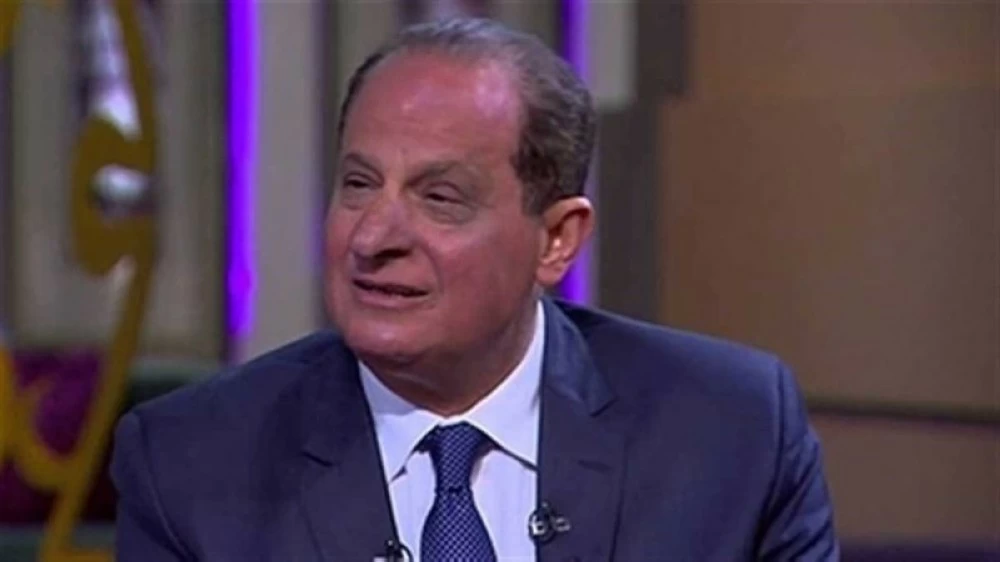
The artistic unions in Cairo officially announced the postponement of the meeting that was scheduled to be held today (Tuesday) inside the headquarters of the Musicians Syndicate, which was dedicated to discussing the repercussions of the recent statements made by the great musician Hani Mehanna, which sparked widespread controversy within the artistic and media circles in Egypt.
Urgent call and high-level coordination
Artist Mustafa Kamel, head of the Musicians Syndicate, had previously issued an urgent invitation for a high-level coordination meeting, bringing together leading figures in Egyptian artistic unions: Dr. Ashraf Zaki, head of the Actors Syndicate; director Mosaad Fouda, head of the Cinema Syndicate; and director Omar Abdel Aziz, head of the Federation of Artistic Syndicates. This invitation came in response to the anger expressed by some in the arts community, who considered the remarks made by musician Hani Mehanna an affront to the dignity of Egyptian art and its historical icons.
The importance of the Federation of Artistic Syndicates and its historical role
These meetings are of particular importance given the pivotal role played by the Federation of Artistic Syndicates in Egypt, which serves as the legitimate and legal umbrella organization for the three syndicates (acting, music, and film). Since its inception, the Federation has aimed to protect the rights of artists and defend freedom of expression, while simultaneously preserving societal values and established professional traditions. This meeting is convened to activate this institutional role, ensuring that internal crises are addressed wisely, preventing their escalation or exploitation in a way that could harm the reputation of Egyptian art.
Preserving Egypt's soft power
In a related context, Mustafa Kamel affirmed his complete respect and appreciation for all artistic figures without exception, emphasizing that the Musicians Syndicate, in full coordination with the Federation of Artistic Syndicates, is committed to preserving Egypt's "soft power." He indicated that the syndicates will not tolerate any transgressions or insults against prominent artists or any attempts to diminish their pioneering role, given that Egyptian art has been a fundamental pillar in shaping Arab and local consciousness for decades.
Adherence to legal and trade union frameworks
The head of the Musicians Syndicate added that the current delicate phase requires a great deal of wisdom and solidarity to preserve the unity of the artistic community. He explained that the aim of the upcoming meeting (once its new date is set) is to discuss the circumstances of the crisis and listen to different viewpoints in order to reach decisions or recommendations that ensure respect for artistic and professional values. He stressed the necessity of addressing any disagreements or controversial statements through established legal and syndicate frameworks, and of completely avoiding media escalation or personal attacks that could damage the image of Egyptian artists in the eyes of their wide audience across the Arab world.
Culture and Art
Ahmed Khaled Moussa's assets frozen because of Haifa Wehbe's film: The full story
The Cairo Court of Appeals has ordered the seizure of director Ahmed Khaled Moussa's assets in favor of producer Rani Meshaal due to the controversy surrounding Haifa Wehbe's film. Learn more about the ruling and the fate of Amr Saad's series.

The Cairo Court of Appeals issued a ruling to freeze the bank accounts of renowned Egyptian director Ahmed Khaled Moussa, a significant legal development coinciding with his preparations for the upcoming Ramadan television season with the series "Efrag," starring Amr Saad. This ruling marks a new chapter in the ongoing legal dispute between the director and a film production company.
Details of the ruling and the value of the seized amount
Legal advisor Yasser Qantoush, representing Dana Art Production Company, revealed the details of the court ruling, explaining that the legal procedures to freeze the company's assets were implemented in accordance with a final court judgment obligating the director to return sums of money he received without completing the agreed-upon work. In an official statement, Qantoush indicated that the court ordered the seizure to recover 500,000 Egyptian pounds, representing the advance payment received by Moussa, in addition to legal interest at a rate of 4% calculated from the date of the claim until full payment.
Background of the conflict and Haifa Wehbe's relationship
The roots of this crisis go back to March 2020, when a contract was signed between producer Rani Meshaal, representing Dana Productions, and director Ahmed Khaled Moussa. The agreement stipulated that Moussa would direct a feature film tentatively titled "From Cairo to Paris," starring Lebanese star Haifa Wehbe.
According to the lawsuit documents, the director was agreed upon at the time to have a total fee of one and a half million pounds, and he signed a receipt for half a million pounds as a first payment (deposit) to start preparations. However, the project did not come to fruition and the director did not adhere to the terms of the contract, which prompted the production company to resort to the judiciary to preserve its financial rights.
Legal proceedings and the charge of breach of trust
The dispute wasn't limited to the civil aspect; lawyer Yasser Qantoush had previously filed an official complaint with the Public Prosecutor accusing the director of breach of trust, based on the director's failure to return the money despite the project not being completed. Such cases are considered sensitive within the Egyptian artistic community, where judicial and professional bodies are keen to regulate the relationship between producers and artists to guarantee the rights of all parties.
The impact of the ruling on the current art scene
This ruling comes at a critical time for director Ahmed Khaled Moussa, who is currently busy with final preparations for his Ramadan series, "Efrag." Although this dispute is purely financial and not directly related to the new drama, such court rulings raise questions about their potential impact on current production processes and underscore the importance of adhering to contracts in the film and television industry to ensure the stability of the artistic market.
Culture and Art
Developments in the Mahmoud Hegazi case: Forensic medicine examines the Austrian girl
The investigating authorities have decided to refer the artist Mahmoud Hegazi and the Austrian woman to forensic medicine to document their injuries and collect samples in connection with the incident at the Boulaq Abu El-Ela Hotel. Here are the full details.
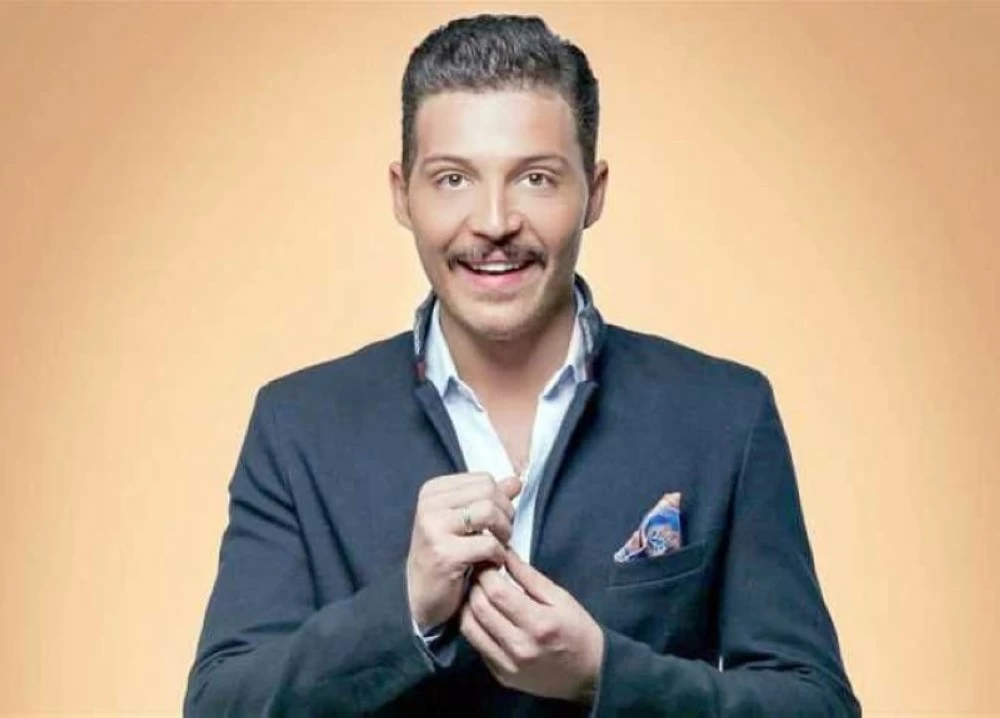
In a new development in the events that have recently captivated public opinion, Cairo's investigative authorities have issued a decisive order to refer the foreign woman (an Austrian of Egyptian origin) who accuses artist Mahmoud Hegazi of harassment to the Forensic Medicine Authority. This decision aims to determine the nature and timing of her injuries, a step intended to document the physical evidence in the case.
In parallel, the Public Prosecution ordered that the accused artist be presented to the Forensic Medicine Department as well to take samples from him, as part of completing the ongoing investigations against him for the accusations of assaulting the girl inside one of the famous hotels in the Boulaq Abu El-Ela area of Cairo.
The importance of forensic medicine in harassment cases
This step is of paramount importance in criminal investigations, as the forensic report is the cornerstone upon which the prosecution and the court base their conclusions. Through a thorough medical examination, physical contact or violence can be proven, and whether any injuries match the victim's account regarding the instrument used, the method of assault, and the timing of the incident.
Also, taking samples from the accused may be aimed at conducting laboratory analyses to detect the use of narcotics or alcohol, especially since the victim indicated in her statements that the accused was under the influence of alcohol, which may be considered an aggravating circumstance if the charge is proven, or material evidence that reinforces the account of one of the parties.
Details of the confrontation and investigations
The competent investigative authorities had begun their procedures in the presence of the accused, the victim, and the head of the Tourism Police. The decision to refer the case to forensic medicine came after a lengthy investigation session during which the complainant's statement was heard and she was confronted with the artist Mahmoud Hegazi, in addition to the prosecution reviewing the initial report of the incident.
The incident began when the Cairo Security Directorate received a report from the young woman accusing the artist of assaulting her. Security forces immediately moved in, arrested the accused, and took him to the police station, where the necessary report was filed and the Public Prosecution was notified and took over the case.
The victim's story: Shock and travel
In a shocking account given to the public prosecutor by the victim, identified as "J. Gh.," she explained that she suffered severe psychological trauma immediately following the incident. This prompted her to leave Egypt and travel to Austria in an attempt to overcome the crisis and escape the stressful environment she had been experiencing.
She added that she returned to Cairo after about 25 days, where she went to the hotel and requested access to the security camera footage to document what had happened, before filing an official report. In her statement, she indicated that she was staying in a separate room from the accused at the well-known hotel, claiming that he broke into her room while intoxicated and assaulted her.
Expected legal course
The investigating authorities are currently examining all aspects of the incident, awaiting the results of the forensic reports and supplementary police investigations. These procedures are part of the guarantees of a fair trial enshrined in Egyptian law, where every piece of evidence is scrutinized to ensure that justice is served, whether through conviction or acquittal, in a case that has garnered widespread media and public attention.
-
 Local news one week ago
Landslide in Riyadh: Details of the incident in Al-Sahafa neighborhood and containment efforts
-
 Culture and Art, 1 week ago
Haifa Wehbe's absence in Riyadh: A photo crisis or a strained relationship with the media?
-

 Local news one week ago
Riyadh collapse: Emergency plans to secure water after a main pipeline burst
-
 Culture and Art, 1 week ago
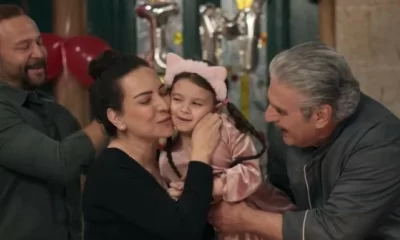
City Kitchen series: A drama of conflict and the middle class during Ramadan
-

 Culture and Art, 1 week ago
The series "Kasra": Dawood Hussein in a moving social drama this Ramadan
-

 Local news one week ago
Applying for the 1447 Opportunities Program for Teachers via the Fares System
-

 Local News 6 days ago
Ramadan 2026 discounts in Saudi Arabia: Offers valid for 54 days
-
 Culture and Art 5 days ago
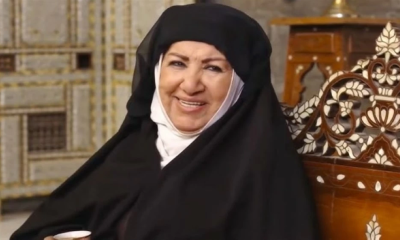
The death of artist Huda Shaarawi “Umm Zaki” and her funeral in Damascus