
Culture and Art
Ramy Sabry apologizes for not singing the theme song for the Ramadan 2026 series "We Forget What Was"
Ramy Sabry announces his withdrawal from singing the theme song for the series "We Forget What Was," starring Yasmine Abdel Aziz and Karim Fahmy, which aired in Ramadan 2026. Learn about the details and behind-the-scenes information.


In a surprising move for the artistic community and the public, Egyptian singer Rami Sabry his official apology for not performing the theme song for the series "We Forget What Was," starring Yasmine Abdel Aziz , which is scheduled to compete in the Ramadan 2026 drama marathon. This announcement raised many questions among followers, especially in light of the high expectations surrounding this artistic collaboration.
Details of the withdrawal announcement
Ramy Sabry chose Instagram to announce his decision to his fans, posting a brief and decisive message on his Instagram story: "The opening credits for the series 'We Forget What Was' have been canceled... Thank you." Sabry did not elaborate on the reasons behind this sudden apology, leaving room for speculation about whether it stemmed from artistic disagreements, time constraints, or a difference of opinion regarding the musical vision for the project.
A history of successes and artistic collaborations
This news comes after Rami Sabry's previous successes in the world of television series theme songs, most recently the remarkable success of his song "Love is Our Fault," which he performed for the series "And You Met a Lover" in a previous season. Theme songs for Ramadan series in Egypt and the Arab world are considered a key element in attracting audiences, as a successful song contributes to promoting the drama and ensuring its place in viewers' memories for many years. This makes the withdrawal of a star of Rami Sabry's stature a significant event that impacts the marketing plan of the series.
The duo of Yasmine Abdel Aziz and Karim Fahmy
The series "We Forget What Was" marks a significant milestone in Yasmine Abdel Aziz's career, as it renews her successful collaboration with actor Karim Fahmy for the third time. This duo has demonstrated exceptional on-screen chemistry that captivated audiences in previous works, beginning with the series "Why Do We Fall in Love Again?" which aired during Ramadan 2020 and achieved great popular success, followed by "Meet a Lover" in Ramadan 2025. The producers are counting on the duo's widespread popularity to ensure the success of the new series in the Ramadan 2026 season.
The story of the series and its cast
The teaser trailer for the series reveals exciting dramatic elements, unfolding within a social, romantic, and suspenseful framework. Yasmine Abdel Aziz portrays a renowned film star, while Karim Fahmy takes on a completely different role as a mixed martial arts (MMA) fighter. The plot thickens when circumstances bring these two contrasting worlds together in a working relationship that develops dramatically.
The series is written by the distinguished writer Amr Mahmoud Yassin , whose name has become synonymous with successful romantic and social dramas in recent years, and directed by Mohamed Khibiri. It features a stellar cast of Egyptian and Arab actors, including Mohamed Lotfy, Sherine Reda, Menna Fadali, Edward, Ingy Kiwan, Elham Wagdi, Omar Sharqi, Cynthia Khalifeh, Mahmoud Hafez, and Laila Ezz El Arab, promising a well-rounded and compelling drama.


Culture and Art
Mohamed Ramadan: The secret behind his absence from Ramadan dramas and the Banha video controversy
Mohamed Ramadan sparks controversy with his statement "I am Ramadan" to justify his absence from television dramas, and faces criticism over the Benha incident and its similarities to the series "Al-Ostoura" (The Legend). Details of his new song and film.
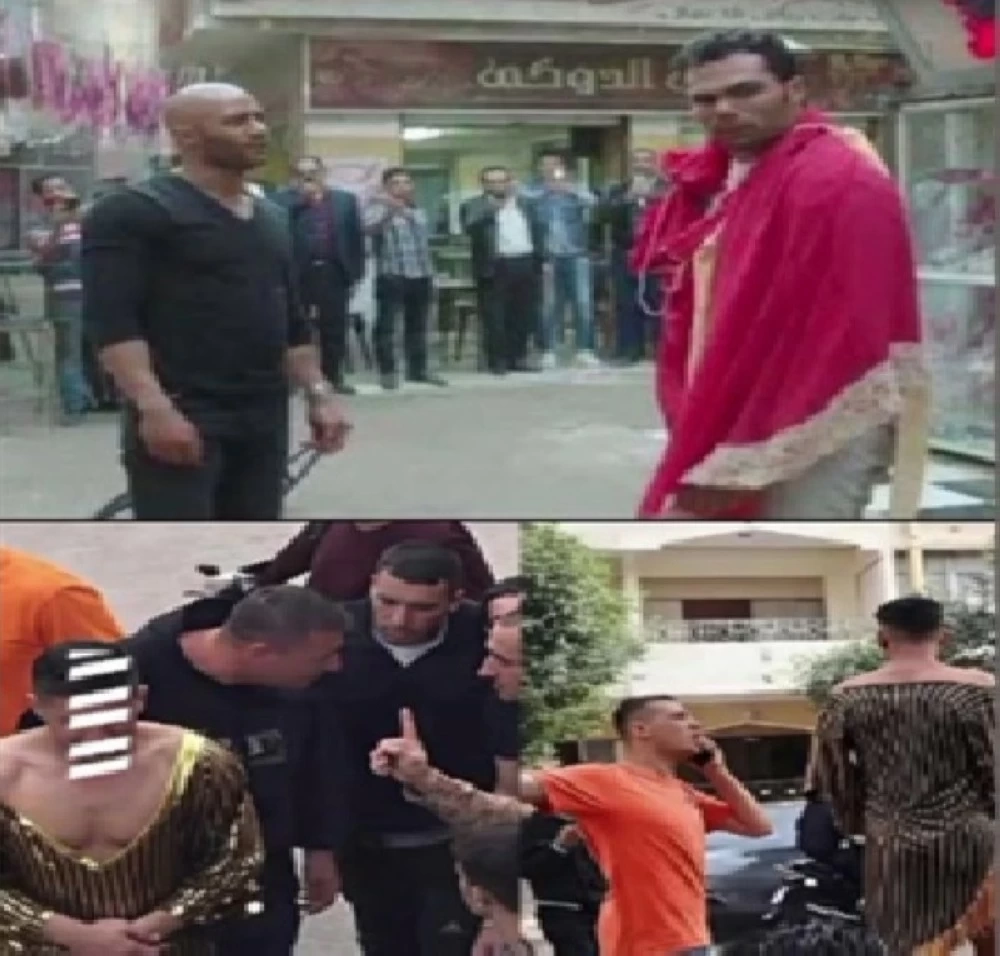
Egyptian star Mohamed Ramadan has returned to the forefront of the media and digital scene, but this time through two contradictory paths that combine excessive confidence with societal controversy. While he justified his absence from the Ramadan television season with a brief statement that sparked a storm of comments, he found himself once again under scrutiny due to the influence of his previous dramas on the behavior of the Egyptian public, particularly after an unfortunate incident in the city of Banha.
The secret behind his absence from Ramadan dramas: “I am Ramadan”
In a direct interaction with his fans on social media, Mohamed Ramadan responded to a follower's question about his absence from Ramadan television series for the third consecutive year. His reply was a concise statement laden with meaning: "Because I am Ramadan ." This statement did not go unnoticed; rather, it divided the public. Some saw it as an expression of the confidence of an artist who has reigned supreme in drama for years with iconic works such as "Jaafar Al-Omda" and "Al-Prince," while others considered it a form of arrogance and showing off.
This absence leaves a void for a wide segment of the public who were accustomed to Ramadan being a key element of the Ramadan table, as his works used to achieve record viewership and spark daily discussions throughout the holy month.
The Benha incident brings the "legend" back to the forefront
On another front, Mohamed Ramadan found himself in the midst of a storm of criticism after a shocking video circulated online showing an assault in the city of Banha. In the video, a group of young men forced another young man to wear a belly dancing costume and filmed him. This scene immediately brought to mind one of the most controversial scenes in the history of modern Egyptian drama: the scene featuring Nasser El-Desouky in the 2016 "El-Ostoura" (The Legend)
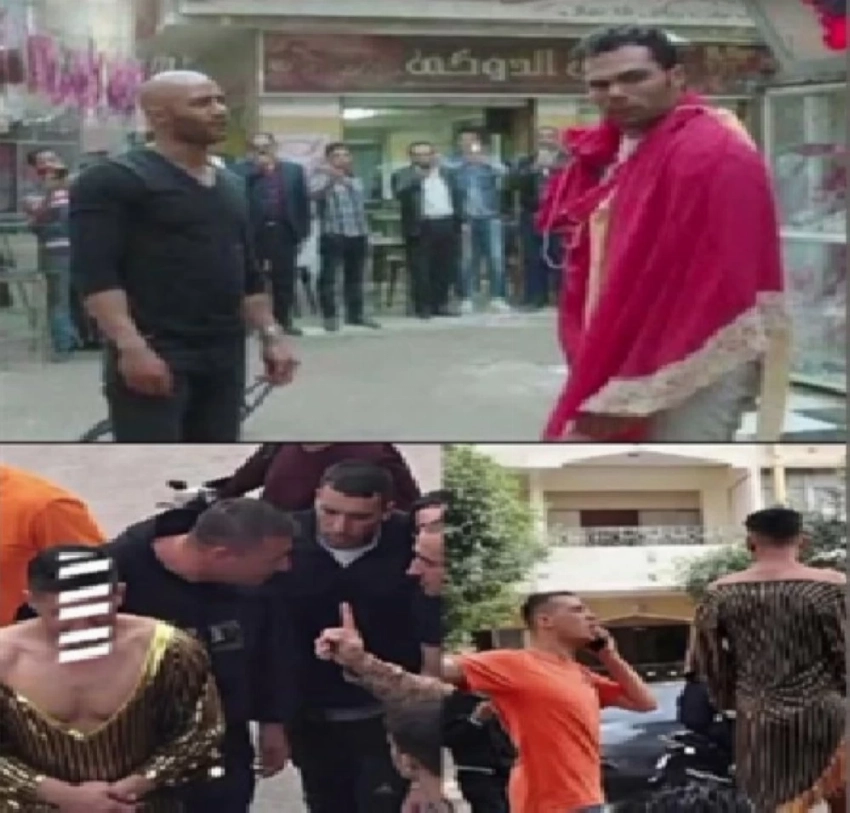
Linking the incident to the dramatic work has reopened the debate about "the impact of drama on societal violence ." While critics believe that Ramadan characters reinforce the concept of "thuggery" and taking the law into one's own hands, others argue that art is a mirror of reality, not its creator, and that deviant individual behaviors are the result of deficiencies in upbringing and awareness, not the result of a dramatic scene, pointing out that violence existed in societies before the advent of cinema and drama.
Global artistic and cinematic activity
Away from the controversy, "Number One" continues his global expansion plan, announcing the release of his new song "Sah Sah" in collaboration with Lara Trump . This move comes as a continuation of a series of international collaborations through which Ramadan seeks to reach a wider audience beyond the Arab world, expressing his confidence in the success of the work, which garnered significant attention immediately upon its announcement.
Cinematically, audiences eagerly anticipate Ramadan's strong comeback with the film "Asad ," which reunites him with renowned director Mohamed Diab (director of the series "Moon Knight"). This collaboration marks a significant turning point in Ramadan's cinematic career, given the Diab family's (Mohamed, Khaled, and Sherine) proven track record in writing and producing internationally acclaimed and high-quality content, thus raising expectations for the upcoming project.
Culture and Art
Amal Hamdan's evening in Tabuk: A dialogue about writing and cultural responsibility
Al-Masdar Cultural Club in Tabuk organized a dialogue evening with Dr. Amal Hamdan, in which she discussed the responsibility of writing and her experience between journalism and authorship, in the presence of a group of intellectuals.
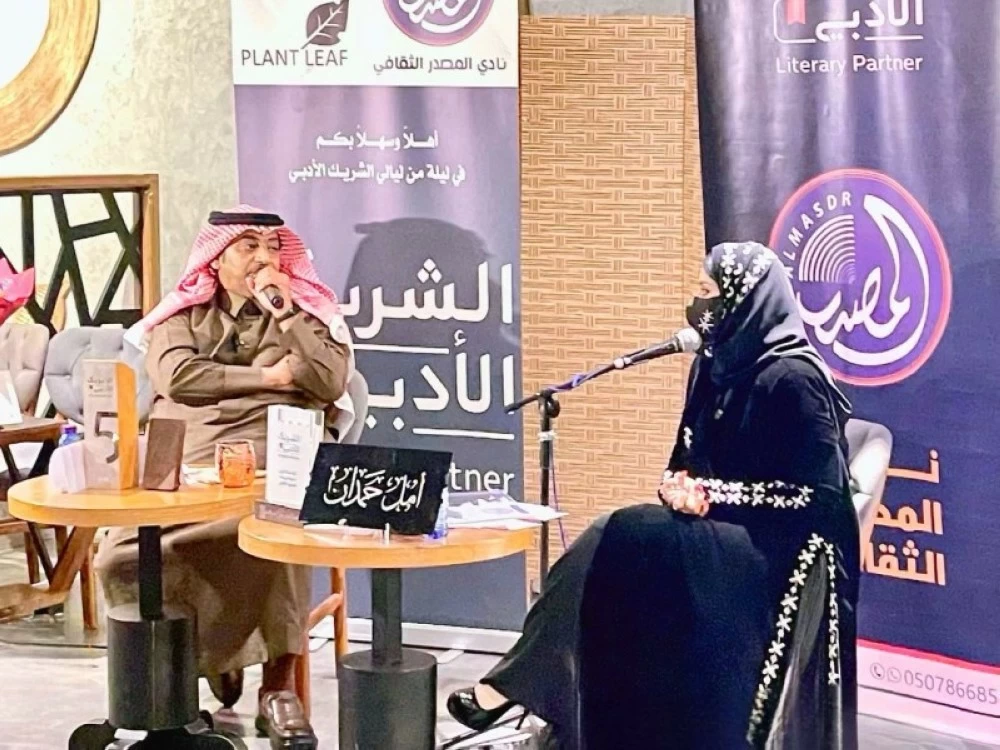
In a distinguished cultural evening characterized by insightful discussions and open dialogue, the Al-Masdar Cultural Club in Tabuk organized an exceptional literary event, hosting writer Dr. Amal Hamdan. The discussion was moderated by journalist Bader Al-Jabal, and attended by a notable and distinguished audience of intellectuals, writers, and those interested in cultural affairs in the region, reflecting the intellectual thirst for literary activity in the Kingdom.
Cultural activism in light of the national vision
This event comes within the context of the growing cultural movement in the Kingdom of Saudi Arabia, which aligns with the goals of Vision 2030 to enhance quality of life and support the cultural sector as a fundamental pillar for building a vibrant society. Cultural clubs, such as Al-Masdar Club in Tabuk, play a pivotal role in creating platforms for intellectual dialogue, contributing to enriching the local literary scene and connecting creators with their audiences, thus affirming that culture is not merely an intellectual luxury but a societal necessity.
Writing: From Self to Public Responsibility
The evening provided ample opportunity to reflect on the concept of writing, not merely as a tool for self-expression, but as an act of influence and a conscious responsibility towards society. During the meeting, Dr. Amal Hamdan shared her rich experience, which combined the realm of journalism with the world of literary writing. She highlighted her journey within the Saudi cultural scene, emphasizing her significant contributions that transcended local boundaries to include international participation in book fairs. She also discussed her unique experience in broadcasting her work on radio and television, creating a creative fusion of the written and spoken word.
Evening topics: Between journalism and literature
The fruitful meeting was divided into three main axes that formed a roadmap for dialogue:
- The first axis: Addressing writing as a cultural and moral responsibility, and the writer’s role in shaping societal awareness and directing public opinion towards fundamental issues.
- The second axis: Discuss the writer’s personal experience and the movement between the arts of news and analytical journalism and creative literary writing, and how each serves the other.
- The third axis: It addressed the presence of literary texts on modern and traditional media platforms, and the extent of their direct impact on the recipient in light of the accelerating pace of digital publishing.
Audience interaction and the importance of communication
The evening witnessed a remarkable and vibrant interaction from the audience through a series of insightful interventions and questions that enriched the dialogue and broadened the scope of discussion on complex issues related to writing, cultural identity, and the future of print literature. The evening's outcomes underscored the importance of continuing such direct encounters in revitalizing cultural activity and strengthening the bridges of human and intellectual communication between writers and readers, thus creating a fertile environment for the growth of ideas and the exchange of experiences.
Culture and Art
Rashed Al-Majed cries during his concert in Bahrain while singing "Al-Musafer" (The Traveler)
Watch the moment Rashed Al-Majed broke down in tears during his Bahrain concert while singing "Al-Musafer" (The Traveler). Details of an exceptional musical evening and sold-out tickets at the Dana Theatre, conducted by Maestro Waleed Fayad.
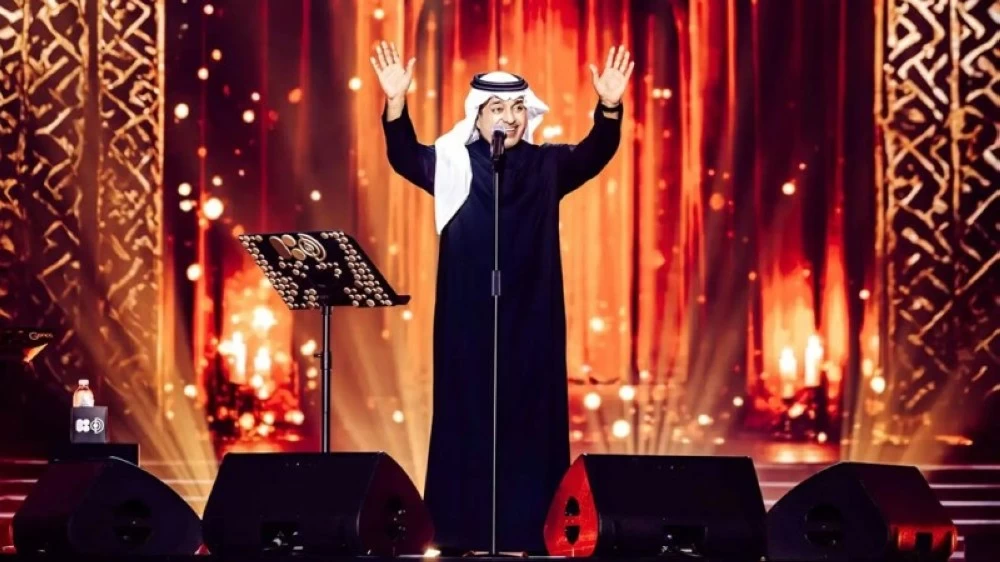
In an unforgettable evening of art, the stage of the Bayonne Al Dana Theatre in the Kingdom of Bahrain was transformed into a scene of profound emotion, as the renowned artist Rashid Al Majid was overcome with emotion during his performance at a massive concert. The most poignant moment of the evening came when the "Sinbad of Gulf Song" wept while performing his timeless masterpiece, "Al Musafir" (The Traveler), transforming the concert from a mere musical event into a deeply moving experience that resonated with thousands of attendees who responded with applause and cheers of support.
A human moment captured by the lenses
Rotana Records documented this touching moment on its official social media accounts, showing Rashid struggling to hold back his tears, which preceded his singing. This spontaneous expression of his deep connection to the lyrics of this song, a landmark in his artistic career, was a powerful statement from the company. Rotana captioned the clip: "Rashid just sang 'Al-Musafer' and was overcome with emotion in front of his audience... his tears spoke louder than any words." The clip quickly went viral on social media, with fans praising the artist's genuine emotion and spontaneity, qualities that have always endeared him to his fans.
"The Traveler"... an icon of the nineties and a history of success
The song "Al-Musafir" (The Traveler) holds a special place in the history of Gulf and Arab music, dating back to the golden era of the 1990s, which witnessed Rashid Al-Majed's rise to widespread Arab stardom. This song was not merely a fleeting artistic endeavor; it served as Al-Majed's passport to the hearts of millions beyond the Gulf region and is considered one of the works that solidified his unique artistic identity. Al-Majed's tears on stage brought back memories of decades past, reaffirming that authentic art never ages and that sincere works remain etched in the hearts of the artist and their audience, no matter how many years pass.
A musical evening led by Maestro Walid Fayad
The evening wasn't just filled with heartfelt emotions; it was a rich feast of authentic music. The orchestra was led by the veteran maestro Waleed Fayad, who added his enchanting touches to enhance the concert's brilliance. Rashed Al-Majed presented a diverse selection from his rich repertoire, blending classics with newer hits, including "Mahtar Ya Hamad," "Ya Nasina," "Walhan," "Abshir Min Oyouni," and "Azeem Ehsas," all performed in perfect harmony with a chorus of enthusiastic singers.
Public turnout reflects the status of "Sinbad"
This concert further confirms Rashid Al-Majed's immense popularity both locally and regionally. Tickets were in unprecedented demand and sold out immediately upon release, prompting the organizers to announce an additional performance on the 14th of this month, which also sold out completely. This overwhelming response reflects the Gulf audience's thirst for high-quality art and highlights Bahrain's status as a tourist and cultural destination that hosts leading Arab artists, as the Dana Theatre continues to attract the most important artistic events in the region.
-

 Local news one week ago
Launch of the city's shuttle bus service in Ramadan 1447 AH: Routes and stations
-
Culture and Art, 1 week ago
Yasser Galal and Radwa El Sherbiny: Details of a new artistic project that brings them together
-
Local news one week ago
The Ministry of Education revokes the licenses of 74 private schools due to safety and quality violations
-
Local news one week ago
Mohammed Al-Rasasmeh appointed as official spokesperson for the Ministry of Municipalities and Housing
-
Culture and Art, 1 week ago
Poster for the series "Two Others": Asser Yassin and Dina El Sherbiny in Ramadan
-
Politics, one week ago
German Chancellor Friedrich Merz departs Riyadh after an official visit
-
Local news one week ago
Saudi Arabia weather today: Thunderstorms and dust in 5 regions
-
Culture and Art, 1 week ago
Suad Abdullah cries over Hayat Al-Fahad's situation: I visited her and she didn't even notice me


