Culture and Art
The Departed: Reflections on Loss, Absence, and Memory
A profound analysis of the poem 'The Departed,' which explores feelings of loss and longing. A literary journey into how the human spirit copes with absence and the impact of the departed on our memories and dreams.

Introduction: When poetry speaks of loss
The poem “The Departed” is a profound piece of literature that delves into the heart of one of the most painful and powerful human experiences: loss. With quiet, melancholic words, the poem paints a picture of absence, not as a fleeting event, but as an ongoing existential condition that affects the souls of those who remain. It transcends traditional lamentation to offer a philosophical reflection on the nature of departure, the questions it leaves behind, and the way in which the departed continue to live on within our memories and dreams.
Literary context: Loss as a timeless theme in human literature
The theme of death and loss is not foreign to world literature; indeed, it is one of its fundamental pillars. From the Epic of Gilgamesh and his quest for immortality after the loss of his friend Enkidu, through the elegies of Al-Khansa in Arabic poetry that immortalized her brother Sakhr, to modern literature, grief for the departed has been a driving force for creativity. These literary works act as a mirror reflecting humanity's eternal anxiety about the unknown and serve as a means of reconciling oneself to the inevitability of mortality. The poem "The Departed" joins this great human heritage, offering its own vision of how the soul interacts with the void left by absence, and how silence becomes a language, and memory a homeland.
Poem Analysis: The Journey of Silence into the Unknown
The poem begins with a vivid description of the departure, where the "Guide of Absence" chooses their names in a hushed voice. This imagery imbues the departure with an inescapable, predestined quality, as if they are walking towards their fate with the serenity of the enlightened. They advance "like those confident in the book of life's illusions," alluding to their awareness of the illusory nature of this fleeting life compared to the eternal existence they seek. They depart because the earth, in all its vastness, has become too confining for their dreams and visions, and because they have found a mysterious path that promises a return to "the unseen beginning." This part of the poem does not portray death as defeat, but rather as a philosophical choice or an inevitable journey towards the origin of existence.
The effect of absence: a void that only a dream can fill
The poem's greatest impact lies in its vivid description of the state of mind of the living after the departure of their loved ones. The poet describes how the departed left behind no message or explanation, "not even a single line written for our hearts." This disconnection creates a state of bewilderment and questioning, making "contemplation of mirages' shimmering mirages" the only path to attempting connection. But the deepest impact is revealed in the final section, where the departed return in dreams "without prior arrangement." These dreamlike encounters, filled with longing and embraces, are the only remaining solace, but they are fleeting and fragile, as they "evaporate with the air" at dawn. This contrast between the intensity of their presence in dreams and the harshness of their disappearance in reality masterfully embodies the enduring anguish of loss and affirms that the impact of the departed remains with us, even though their bodies are gone.


Culture and Art
Mohamed Ramadan excluded from the Africa Cup of Nations final: The full story
Artist Mohamed Ramadan revealed details of his exclusion from the closing ceremony of the 2023 Africa Cup of Nations, expressing his displeasure with the organizers. Learn the full story and the reasons behind the dispute.

Controversy surrounds the closing ceremony of the 2023 Africa Cup of Nations
Egyptian artist Mohamed Ramadan sparked widespread controversy after announcing his exclusion from performing at the closing ceremony of the 2023 Africa Cup of Nations, held in Ivory Coast. In a video posted to his official Instagram account, Ramadan revealed details of what happened, describing the situation as "disturbing" and humiliating to him as an Arab artist representing Egypt.
Background of participation and general context
This controversy arises from Mohamed Ramadan's participation in the tournament's official song, "Akwaba," which brought him together with prominent African stars such as the Ivorian band Magic System and Nigerian singer Yemi Allied. The song achieved widespread popularity and was considered a symbol of African unity through art and music. It was natural for the public to expect to see the song's stars perform it live at one of the tournament's two main ceremonies, the opening or closing ceremony, given its significant symbolic and media impact.
Details of Mohamed Ramadan's novel
In his account of the events, Ramadan explained that he was delighted to participate in this important continental event and that he had dedicated time and effort to filming the song in Marrakech, Morocco. He noted that he was initially informed his performance would be at the opening ceremony, before being told it had been postponed to the closing ceremony. However, the shock, as he described it, came just one day before the final, when he received no official communication from the organizers to confirm his participation or arrange logistical details. He considered this unprofessional and unbecoming of the event's scale and his artistic stature.
Importance and expected impact
Participating in major sporting events, such as the Africa Cup of Nations, is a golden opportunity for artists to enhance their international presence and reach a global audience. The absence of an artist of Mohamed Ramadan's stature, who enjoys a wide fan base in Africa and the Arab world, from the closing ceremony came as a surprise to many of his followers. This situation raised questions about the organizational efficiency and communication of the tournament's organizing committee, which is affiliated with the Confederation of African Football (CAF). Ramadan concluded his remarks by expressing his deep dissatisfaction with the way he was treated, officially announcing his withdrawal from the event and emphasizing that an artist's dignity and respect come first.
Culture and Art
The future of Saudi cinema: Discussions at the Saudi Media Forum 2024
The Saudi Media Forum is hosting 8 of the most prominent art makers to discuss the transformations of cinema and drama, the impact of digital platforms, and ways for Saudi content to reach a global audience.

At the heart of the rapidly evolving cultural landscape of Saudi Arabia, the Saudi Media Forum as a vital platform, bringing together leading figures in art, film, and production to discuss the future of content creation. In its current edition, the forum hosts eight prominent figures in intensive dialogue sessions aimed at analyzing the current reality, envisioning the future, and answering the pivotal question: How can Saudi content compete globally amidst the rapid pace of technological transformation?
Background: A cultural and cinematic renaissance
This forum comes at a time of historic transformation in Saudi Arabia. With the launch of Vision 2030, the culture and entertainment sector has witnessed significant leaps forward, most notably the return of cinemas in 2018 after a decades-long absence. This decision not only opened doors to international theaters but also ignited a spark of creativity among a new generation of Saudi directors, writers, and producers who found support and opportunities to present their local stories with a contemporary artistic vision. Discussions about the identity of Saudi cinema, its accessibility, and the challenges of production have become crucial for this nascent and ambitious industry, and these are precisely the issues the forum aims to address.
Discussion topics: Between the death of cinema and the birth of innovation
The expert discussions are spread across several main sessions, most notably the session “The Death of Cinema: Did Platforms Kill the Big Screen or Redefine It?” This session features artist and cultural consultant Abdulilah Al-Sinani , who analyzes the changing mood of the audience, and director Abdulaziz Al-Shalahi , who addresses the impact of platforms on film language and narrative structure. They are joined by Hanaa Al-Omair , President of the Cinema Association, who presents a strategic vision on how traditional cinema can survive, and Manal Al-Owaibil , an expert in corporate communications, who connects cultural narrative with creating lasting impact.
Another session, titled “Local Innovations with a Global Touch,” will feature veteran producer Hassan Asiri , who will share his decades of experience in bringing local productions to the Arab world. He will be joined by artist Fahad Albutairi , who will share his expertise in establishing successful digital platforms such as “Telfaz11,” and actor Ibrahim Al-Hajjaj , who will highlight the comedy industry as a bridge to connect with global audiences while preserving local flavor.
Drama and national values: from local to global
In the session “From Epic to Screen: Employing Heroism in Drama to Promote National Values,” director Tawfiq Al-Zaidi , who recently made history with his film “Noura” as the first Saudi film to compete in the official selection at the Cannes Film Festival, will discuss how to draw inspiration from epics and history to create dramas that promote national values and resonate globally, thus opening the door for Saudi drama to become a cultural ambassador for the Kingdom.
Importance and expected impact
These sessions are not merely intellectual discussions; they serve as a compass guiding the future of investment and policy in the Saudi media and entertainment sector. The forum's outcomes are expected to contribute to charting a clear roadmap for content creators, encouraging public-private partnerships, and strengthening the Kingdom's position as a leading regional hub for creative industries. This is a strategic step towards building a diversified knowledge economy and leveraging "soft power" to present a new image of Saudi Arabia to the world.
Culture and Art
Artist Mahmoud Bashir, star of “I Will Not Live in My Father’s Robe,” dies at 76
The esteemed Egyptian actor Mahmoud Bashir passed away after a battle with illness. Learn about his artistic career and his most prominent roles in timeless works such as "I Will Not Live in My Father's Robe.".
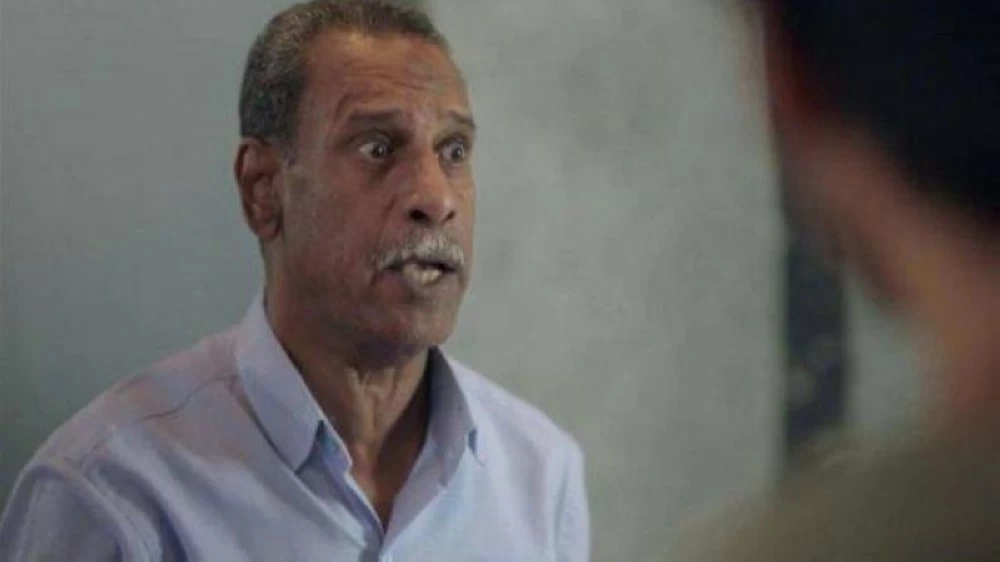
Artist Mahmoud Bashir passed away at the age of 76
The renowned Egyptian actor Mahmoud Bashir passed away at the age of 76 after a long battle with illness, leaving behind a rich artistic legacy and a special place in the hearts of viewers who cherished his memorable roles in classic Egyptian dramas. The news of his death was announced by actor Mounir Makram, a member of the Actors' Syndicate, on his official Facebook page, where he offered a heartfelt eulogy, confirming that Bashir's passing came after a period of health struggles in his final days.
Details of the last days
The late artist Mahmoud Bashir had suffered a severe health crisis recently, requiring his transfer to a major hospital in Cairo for treatment. His condition deteriorated significantly, prompting doctors to place him on a ventilator in the intensive care unit, where he ultimately passed away, bringing to a close an artistic career spanning decades.
A prolific artistic career at the heart of Egyptian drama
Mahmoud Bashir was born on March 9, 1950, and began his artistic career at a time when Egyptian television drama was flourishing. He wasn't a leading man in the traditional sense, but he was one of the most memorable and essential figures in the works he participated in. He excelled at portraying supporting roles with sincerity and professionalism, making his presence a key element in the success of many series that have become part of the collective memory of entire generations.
His role in the iconic series "I Will Not Live in My Father's Robe" is considered one of his most prominent artistic milestones, where he left a clear mark despite the limited screen time. He also shone in other works that achieved widespread popular success, such as "Morning and Evening Talk," "The Night and Its End" with the star Yehia El-Fakharany, and "Abbas El-Abyad in the Black Day." His diverse roles reflected his ability to move seamlessly between social and historical settings, proving that he is a talented artist in command of his craft.
The importance and influence of Mahmoud Bashir in the art scene
The passing of Mahmoud Bashir represents a loss for one of the "second-tier" artists who formed the backbone of Egyptian drama for decades. These artists, despite not being at the forefront of the spotlight, were instrumental in creating a complete and realistic dramatic world that resonated with audiences. Bashir was a familiar and reassuring face for viewers, his appearances associated with high-quality family dramas that brought Arab families together around the screen. His last appearance was in the series "Aho Dah Elly Sar" in 2019, marking the end of a quiet yet impactful and profound artistic career.
-

 Reports 3 days ago
Achievements of Saudi government sectors in 2025
-
Local news two weeks ago
FDA warns of contaminated Nestle infant formula | Recall details
-
Technology 4 weeks ago
Artificial intelligence regulations in Saudi education and student data protection
-
Technology 4 weeks ago
US ban on drones: reasons and consequences
-
Technology 4 weeks ago
SRMG and Snapchat partnership: The future of digital media in the Middle East
-
Sports 4 weeks ago
Salah leads Egypt to a thrilling comeback against Zimbabwe in the Africa Cup of Nations
-
Technology 4 weeks ago
Saudi Arabia's Ministry of Islamic Affairs is employing artificial intelligence in public speaking
-
Sports 4 weeks ago
Napoli win the Italian Super Cup in Riyadh for the third time (2025)