Culture and Art
Omar Taher Zayla: The intensity of the conflicts led to name-calling and entrapment of opponents
It's not just because I hosted Professor Omar Taher Zayla (a writer) in this space, but there are tangible and intangible motives and feelings

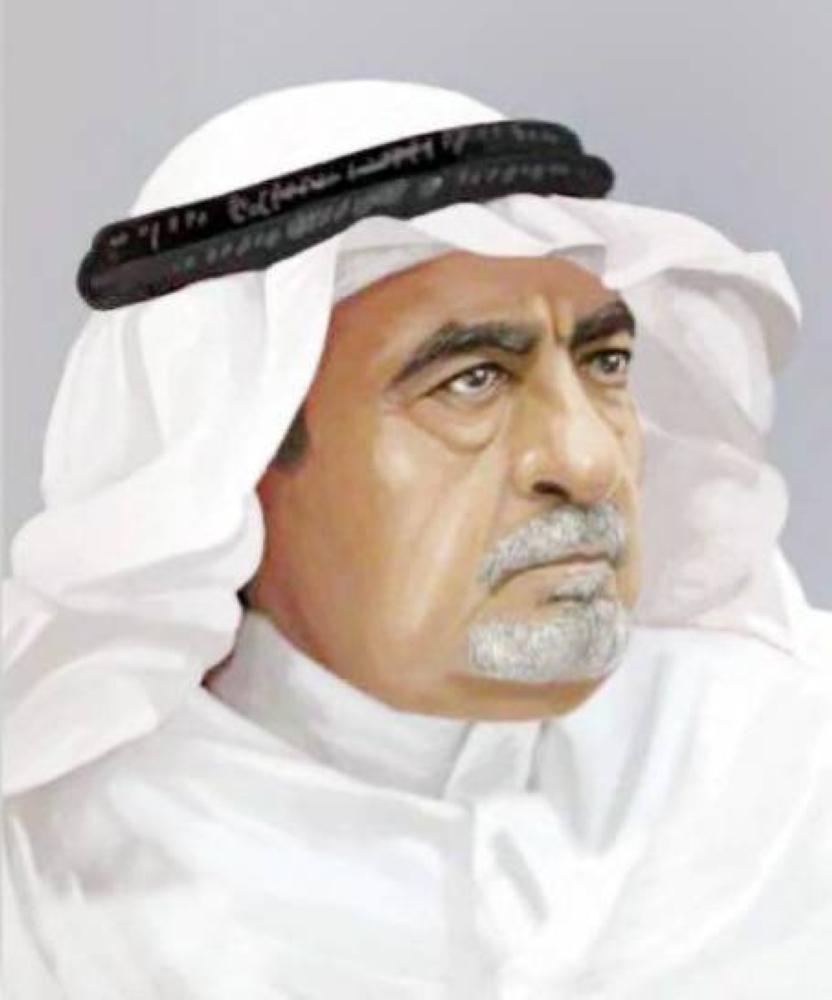
It is not only because I hosted Professor Omar Taher Zayla (a writer) in this space, but there are tangible and intangible motives and feelings. Several occasions brought us together, and fleeting encounters. I was hesitant to speak with this personality who has gathered and encompassed so much. The cultural heritage that he has embraced so readily gives you a genuine charisma, free from pretense. The arduous experience of life, with all its details, raises questions about distance, the hardships of the path, and the features of contentment etched on the face of a faithful guardian of consciousness, motivating me to seize a moment of revelation to be in the picture. All of this and more prompted me to venture to present these topics to (Abu Rafiq), and this was but a drop in the ocean:
• It is easy to know where you studied, starting with the writers, then the scientific circles, so where did the source of awareness and the wellspring of inspiration come from?
If there was any inspiration born with me, it was buried before me with the ink I spilled in the minutes, letters, and notes I wrote by hand in the corridors of the club, just as the scribes of the royal courts did in the era of conquests. My father, may God have mercy on him, was also unique among his peers in his style when he narrated and when he wrote, so perhaps this strong passion for the sentence, in reading and writing, came from that slender, astute man, may God have mercy on him.
• Surely there are invisible windows through which the suns of creativity have penetrated you. What are the most prominent of them?
I opened my eyes in a town nestled on the sea sands, its edges stretching across parched fields unless the seasons generously bestowed their bounty. It had a presence, but its future was unclear; it hung between past and present. Can creativity truly flourish where worry is ever-present?
What about the window for interacting with life?
The only window into those times was that the children shared the birds' skies, then descended to the ground in search of grain that the earth had perhaps preserved from the years of plenty. Optimism was the most prominent feature of those times.
• This calmness that characterizes your personality is different and contrasts with the anxious and impulsive personality of the intellectual. What is the secret of this calmness?
•• When I was a little older, they told me something to the effect of: “Even in your childhood you were neither loud nor talkative” and “You were shy to a disturbing degree!” This description embarrassed me greatly.
• Do the terrain and climate influence the writer's literature?
•• This is not reflected due to external factors (only), there are factors within the self as well..
Isn't Jazan a poetic region? Where are you in relation to poetry?
Poetry? What do you know? For me, it was merely a question—one I later realized was as vast as the human labyrinth itself—"Why is one born a poet?" My wealth of it lay in memorizing the Mu'allaqat and popular poems. My father sensed my inclination towards poetry, so he began reading al-Mutanabbi, Ibn Zaydun, Shawqi, and others to me, in addition to the rules of al-Ajrumiyyah (with al-Kafrawi's commentary) and the jurisprudence of Imam al-Nawawi al-Shafi'i. Despite all this, I was incapable of writing a single verse, yet I sensed a flaw in any verse I read by others, and perhaps I would go further, critiquing it from both an artistic and conceptual standpoint, in a manner similar to that of Ibrahim Hashim al-Falali in his book "Al-Marsad" (may God have mercy on him). As for why I wasn't a poet in the land of poetry, I still don't know the reasons! My place in poetry is among the readers and listeners; for poetry, though it is "the nation's amusement and tragedy," is also a beautiful art, and can sometimes be a soothing remedy for its practitioner and lovers. Perhaps it is even a preventative medicine, I think.
• Why was the story a writing project?
The question is posed as if it were a matter of choice. I was still in the village school when I discovered within myself an inclination to listen to stories and retell them. After a while, this inclination developed into reading newspapers and novels, along with various other books and magazines, including books on language, jurisprudence, exegesis, literary works, and the history of the Arabs and others. History books jumped into my interests, to the same degree that I give narrative in general, with the same focus and contemplation that I give to narrative in a way that revealed to me the gaps in history and the intertextuality in narrative. I realized that a large number of our narratives lack the vocabulary of the environment: nature and place, according to their availability at the time of writing the narrative text, especially the novel.
• How did you transition to writing novels?
•• I haven't written my novel yet!
What has writing articles added to your life?
Dozens, even hundreds, of files and envelopes piled high in a room also overflowing with other inherited papers. If I needed to enter the room, I did so listlessly, devoid of any real enthusiasm or purpose. I began to ask myself: What does it mean to write articles for newspapers and websites? Is it because newspapers can't do without commissions to gain more readers? But what does it mean for the writers themselves? They don't receive any financial compensation to support themselves, especially those who don't have enough work to live on! Add to that the fact that many of the column topics are repetitive and irrelevant to a generation completely absorbed by screens. I lived under the illusion that it was important for people to read me! If a writer manages to get even a few interactions, they're lucky to experience fleeting moments of deceptive feeling. You haven't added anything of value, sir; it's me who has given it my youth, my health, and my mind.
• When did your relationship with the poet Muhammad Ali Al-Sanousi begin, and what was your role in establishing the literary club in Jazan?
My relationship with the poet Muhammad bin Ali Al-Sanousi predates the establishment of the Jazan Literary Club in 1395 AH (1975 CE). I was working at the private electricity, salt, and ice company when he became its general manager, appointed by his friend Sheikh Muhammad Surur Al-Sabban, who was the chairman of the company's board of directors, around 1385 AH (1965 CE). When the Literary Club was founded in 1395 AH (1975 CE), Al-Sanousi became the vice-chairman of its board of directors, under Professor Muhammad bin Ahmed Al-Aqili, and I was appointed as an employee in the club's library, first as rapporteur for board meetings, and later as secretary. After his death, I took over the club's affairs, and during my tenure, a building was constructed specifically designed to meet the club's cultural and administrative needs. It was inaugurated in 1413 AH (1993 CE).
• Which writers and literary figures did you meet through culture and journalism?
•• I was brought together with all the prominent names in the cultural scene during the period (1395-1414 AH), about 20 years; that is, from the time I joined the club until the end of my presidency of it; intellectuals of the Jazan region and other regions, from the pioneers and three generations after them.. if we add the following period that ended with my departure from the board of directors about ten years ago, and it is not available for me to list hundreds of names now.
What is the most difficult stage of culture?
•• This is the stage in which conflicts between cultural orientations have intensified.
• Was the atmosphere of that period free from conflicts and rivalries? What were the most prominent of these and what were their causes? •• It was not without heated and intense disputes, even resorting to name-calling and attempts to undermine others. As for the causes, I believe they were not purely cultural or literary; several factors affected many parts of the world, and Muslim lands in particular.
• How do you interpret the conflicts and battles of writers?
The motives behind the literary disputes you described in your question, "conflicts and battles among writers," are numerous. Some stem from an endless stubbornness that extends beyond the text to the person, on both sides. Others involve displaying knowledge and claiming comprehensiveness and encyclopedic expertise. Still others arise from revealing a truth that embarrasses the other party, leaving them without the courage to withdraw. And then there are those that can be considered settling scores. This is a human phenomenon that encompasses almost all relationships, everywhere and at all times—from childhood to old age. It is not limited to literature and writers, but it is more prevalent and widespread among them due to the presence of journalistic and media outlets that promote it for their own financial, political, and other interests. Some may profit from the chaos, but others lose where they believe they are gaining because they devote themselves entirely, sincerely, enthusiastically, and devotedly to it, neglecting to dedicate themselves to their own creative projects.
Are there any gains worth fighting for in cultural warfare?
•• I remember writers from the generation that followed the pioneers, in the stage when the pace of literary battles increased, with real names and pseudonyms, with strong and attractive styles, cultural richness, and boldness, who had no purpose other than to win - in their literary battles - for what they saw as the truth itself. They wasted effort and time worthy of being occupied to highlight their creations that would imprint their career and be longer-lasting than the squabbles.
How did you avoid the clashes?
I avoided them by remaining silent, suppressing my emotions, and letting them pass without visible harm; some were overt, others covert, and these were often more exaggerated and biased. Life's circumstances, in general, sometimes—and perhaps always—force one to bow down, even if one is taller, more distinguished, and above such trivialities.
What did the transformations leave in you, and what did you leave in them?
•• I was not surprised by the transformations; because my expectations are based on the indicators of the present and on the intuition I have - which sometimes frightens me - as if I am already experiencing its labor pains! On the other hand, it may bring me more convictions.
• In your opinion, who is the writer who has had a good share of life and people?
•• True literature in many places, especially Arabic, does not grant its owner sufficient luck with what he lacks unless he is skilled in navigating with and against the winds, in trade and good relations, or has a large income in his specialized work.
What is the difference between a writer from half a century ago and a writer today?
The difference is the same between life in the past and life in the present. Culture is subject to transformations, and these influence perception and taste. I was pessimistic when, years ago, I felt that literature was nearing its end.
• Have you finished writing your biography or memoirs?
•• Perhaps I will complete it, or perhaps someone else will.
• Is it true that you “took care of publishing for others and forgot about yourself”?
•• That's largely true. I don't feel much regret when I find it fruitful.


Culture and Art
Dina El Sherbiny responds to rumors and reveals details of her Ramadan 2026 series
Dina El Sherbiny clarifies her stance on relationship rumors and confirms her focus on work. Learn details about her new series, "Etneen Gheirna" (Two Others), with Asser Yassin, airing in Ramadan 2026.

In new statements reflecting artistic and human maturity, Egyptian star Dina El Sherbiny revealed her strategy for dealing with the recurring rumors that affect her personal life, the latest of which was the news that circulated about her relationship with an Egyptian artist, stressing that "silence and work" are her strongest weapons in the face of the noise of social media platforms.
The philosophy of ignoring and professional focus
In a radio interview, Dina El Sherbiny explained that she has made a firm decision not to get caught up in the game of denial or confirmation, which drains an artist's energy. She indicated that the only practical response she believes in is success on screen. She emphasized that engaging in controversy only breeds more rumors, and therefore she prefers to focus entirely on embodying dramatic characters and presenting works worthy of her audience, considering her artistic career to be more enduring and important than any fleeting conversations.
Dealing with criticism and the tax of fame
In a related context, Sherbini distinguished between malicious rumors and constructive artistic criticism, indicating her complete respect for the opinions of critics and the public regarding her acting performance. She emphasized that she takes professional feedback into account to improve her skills. However, she stressed that she prefers not to have an extensive media presence or constant interaction on social media except in the most limited circumstances, preferring to return to her normal, simple life immediately after filming, away from the cameras' spotlight.
Psychological support and a rising artistic career
Dina addressed the human side of her life, emphasizing that maintaining her peace of mind is a top priority. She noted that the support she receives from her family and loved ones, along with the trust of her fans and credible critics, forms her first line of defense against any negativity. This comes at a time when Dina El Sherbiny has firmly established herself as one of the leading actresses in Egyptian drama, especially after her consecutive successes in previous Ramadan seasons, making her news a subject of widespread interest both locally and across the Arab world.
Details of the series "Two Others" in Ramadan 2026
On the professional front, Dina El Sherbiny is preparing to enter the 2026 Ramadan drama season with a highly anticipated series titled "Etneen Gheirna" (Two Others) . This project marks a special collaboration between her and star Asser Yassin, raising expectations due to their anticipated on-screen chemistry. The series also stars a number of prominent actors, including Fadwa Abed, Nour Ehab, Hanady Mehanna, Nardine Farag, and Ahmed Hassan. Written by Rana Abu El Reesh and directed by Khaled El Halfawy, the series is produced by Saadi Gawhar Productions, one of the region's leading production companies, promising a high-quality production that will be a strong contender in the upcoming season.
Culture and Art
The death of the husband of Lebanese artist Nour, Youssef Antaki, and the date of the funeral
Businessman Youssef Antaki, husband of Lebanese actress Nour, has passed away. Find out about the funeral and condolences in Heliopolis, and read the messages of condolence from fellow artists and director Mohamed Sami.

A state of sadness prevailed in the artistic community last night (Monday), after the announcement of the death of Syrian businessman Youssef Antaki, husband of Lebanese star Nour , according to what his brother Paul Antaki revealed through his official accounts on social media platforms.
Details of the death and funeral arrangements
Paul Antaki, the deceased's brother, announced the sad news on his Facebook page, where he mourned his brother with moving words that reflected the depth of the loss and pain felt by the family. The funeral service will be held next Thursday, March 5th, at St. Cyril's Church in the Korba area of the historic Heliopolis district.
The family is scheduled to begin receiving condolences and sympathizers at 7:30 pm inside the church halls, where a large number of relatives and friends are expected to attend, in addition to art and society stars to console the artist Nour in her great loss.

The artistic community mourns the deceased
Upon the announcement of the news, a number of artists and drama producers rushed to offer their condolences to actress Nour, expressing their full solidarity with her during this ordeal. Among the first to offer condolences was the renowned Egyptian director Mohamed Sami, who has a close professional and personal relationship with Nour.
Sami posted a message of condolence on his official Instagram account, saying: “To God we belong and to Him we shall return. The death of businessman Youssef Antaki, husband of artist Nour. We ask for your prayers for mercy and forgiveness.” This reflects the bonds that unite members of the artistic community in such difficult humanitarian circumstances.

A quiet life away from the spotlight
It is worth noting that the artist Nour married businessman Youssef Antaki in 2008, in a marriage characterized by stability and tranquility, which resulted in two children, Leonardo and Lydia. Throughout their marriage, Nour consistently and diligently kept her family life and her husband away from the media frenzy and paparazzi lenses.
Nour was known in artistic circles for her deep respect for the privacy of her home, preferring that her artistic work remain the only link between her and the public, while her personal life remains a private and sacred space away from the spotlight, which made her late husband’s media appearances extremely rare.
Nour's latest artistic milestones
On the artistic front, Nour had recently achieved remarkable success through her participation in the second season of the series “Joudar”, which was shown as part of the Ramadan 2025 drama season. The work, which starred Yasser Galal, received widespread praise and high viewership ratings, as Nour delivered a distinguished performance that added to her great artistic record in Egyptian and Arab drama.
Culture and Art
Mohamed Youssef Ozo reveals his rare illness after the series "Sahab Al Ard"
Artist Mohamed Youssef Ozo breaks his silence and reveals his diagnosis of ankylosing spondylitis after criticism of his appearance in the series "Sahab Al Ard", explaining the details of his treatment and suffering.

In a poignant moment of candor that put an end to many questions, Egyptian artist Mohamed Youssef, known artistically as “Ozo,” broke his silence to reveal to the public the truth about his health condition, following the controversy surrounding his obvious hunched back during his outstanding performance in the series “Sahab Al Ard,” which aired during the 2026 Ramadan drama season. This appearance, which attracted attention, was not just an acting performance, but rather concealed a real story of pain.
The nature of the disease: What is ankylosing spondylitis?
Ouzo explained via his official Facebook account that he is battling a rare autoimmune disease known medically as ankylosing spondylitis. Medically, this disease is a chronic type of arthritis that primarily affects the spine, causing inflammation and stiffness of the vertebrae. Over time, this can lead to some vertebrae fusing together, which explains the changes in posture and difficulty moving that the public has noticed.
The young artist confirmed that he is currently undergoing an intensive treatment program based on “biological therapy”, which is one of the latest medical protocols used to control the activity of the immune system, with the aim of stopping the deterioration of the condition and stabilizing the disease at its current level, to ensure that he can continue to practice his professional and personal life.
Behind the scenes of the medical trip and the role of the union
In a related context, Mohamed Youssef revealed his persistent efforts to find radical solutions, noting that he did not hesitate to explore both cosmetic and therapeutic surgery options to improve the appearance of his spinal curvature. He was accompanied on his search by Dr. Ashraf Zaki, head of the Actors' Syndicate, a gesture reflecting the syndicate's ongoing support for its members during health crises. Despite his strong desire to undergo surgery, the specialist advised postponing the procedure for a full year due to the complexities of his medical condition, even though the typical recovery period for such surgeries does not exceed six months.
Despite these obstacles, Ozu showed great determination to complete his treatment journey, confirming his intention to consult another doctor who has a vision that balances the cosmetic necessity and the precise medical considerations of his complex condition.
A message of awareness and apology to the public
Away from the cameras, Ozu emphasized that his decision to conceal his illness for so long stemmed from his desire to avoid seeking public sympathy, preferring to endure the excruciating pain with patience and silence. He noted that he resorts to assistive methods such as hydrotherapy and manual therapy to alleviate the stiffness and daily pain.
He concluded his speech with a noble message in which he apologized to everyone who criticized his appearance or the way he walked in the series without knowing the truth about his illness, stressing that what people see as a superficial difference is in fact a daily battlefield that he silently wages, thus highlighting the importance of societal awareness of the invisible suffering of others, and the need to be patient before passing judgment on the outward appearance of artists and public figures.
-

 Local News 3 days ago
Jeddah Airport alerts for travelers due to airspace closure and flight disruptions
-
Local News 5 days ago
Saudi Arabia approves regulations for the continued presence of Gulf vehicles: duration and penalties
-
Local news one week ago
The Ministry of Interior begins procedures for a royal pardon for common law prisoners
-
Local news one week ago
The deadline for property registration in Hail and Riyadh is Thursday
-
Sports one week ago
Tickets for the Al-Ahli vs. Al-Hilal King's Cup match postponed: New date
-
Local news one week ago
Under the patronage of the Minister of Information, an agreement was signed between the Ministry of Information and Waves Marketing Company
-
Local news one week ago
Saleh Al-Maghamsi appointed Imam of the Prophet's Mosque: Details of the Royal Decree
-
Culture and Art 6 days ago
The Devil's Prisons series was halted: The full story of "The Emperor's" being moved to YouTube