
Culture and Art
Moroccan stars attract visitors to Sharjah Book Fair
Amidst the crowds of publishing houses and literary seminar venues attracting visitors to the 43rd Sharjah International Book Fair, the theatrical performance stood out

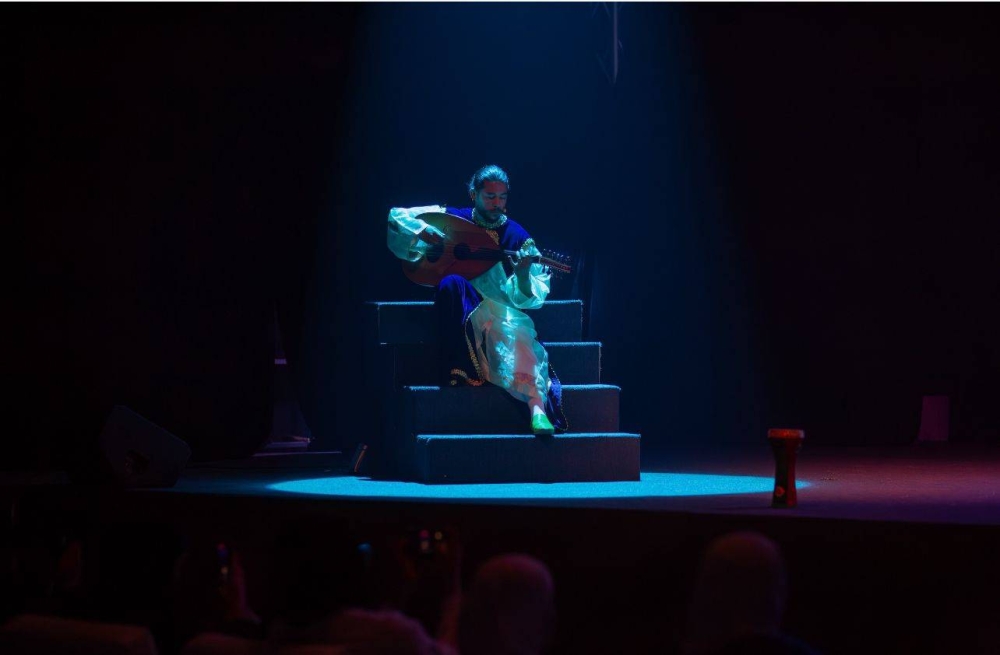
Amidst the crowds of publishing houses and literary seminar venues with visitors to the 43rd Sharjah International Book Fair, the Moroccan theatrical performance entitled “Safar” caught the attention of the fair’s visitors, who headed to the stage to witness a unique artistic experience that combined music and dramatic performance, as the play dealt with a moving human story that combined love, hope and the struggle with difficult circumstances.
The performance opened with an Andalusian piece played on the oud, creating a captivating introduction to the story. The characters recounted the journey of a couple who dreamed of a peaceful and happy life, but harsh circumstances prevented them from realizing this dream, leaving hunger and pain as their only solace. With moving performances and skillful acting, the actors touched the hearts of the audience, conveying their suffering through a blend of oral storytelling, music, and song, evoking a profound connection and empathy for the characters.
The play "Journey" was widely acclaimed for its powerful messages emphasizing the strength of love and perseverance in the face of adversity, and for showcasing the role of theater and art in expressing human emotions and conveying human values to the audience. This performance is a distinguished addition to the exhibition's events, reflecting the connections between literature and art, and highlighting the importance of dreams in human life and the profound impact of their loss.
The theatrical performance stars actor and singer Anas Abu Rizqan, and artists Asia Al-Barrah, Zikra Benouis, and Ashraf Masih. It is directed by Moroccan director Abdel Fattah Ashiq, with artistic management by Amin Al-Nassour, lighting by Abdel Razzaq Aitbaha, and makeup and costume design by Jihan.


Culture and Art
American investor: Camel festival reflects the authenticity of Saudi culture
American investor Chris Atwell visits the Custodian of the Two Holy Mosques Camel Festival, expressing his admiration for Vision 2030 and the generosity of the Saudi people, stressing that culture is the true treasure of the Kingdom.


The distance between Florida and Riyadh, the capital of Saudi Arabia, did not hinder the deepening friendship between young Saudi Musallat Al-Otaibi and American investor Chris Atwell over the course of five years. This human connection evolved into a unique cultural bridge, culminating in an exceptional meeting that reflected the highest ideals of human harmony and cultural exchange between peoples.
Vision 2030: A dazzling vision that transcends the numbers
Chris Attwell arrived in Riyadh to participate in the “Future Real Estate Forum,” bringing with him his experience as an investor seeking promising opportunities. But what he witnessed on the ground exceeded his expectations; he described the speed of implementation of the Kingdom’s Vision 2030 projects as “astonishing and impressive.” Attwell affirmed that the Saudi real estate and housing sector has become a major attraction for global investments, not only because of the economic opportunities but also because of the strong will and ambitious goals driving this historic transformation.
Background of the event: The Custodian of the Two Holy Mosques Camel Festival
The Custodian of the Two Holy Mosques Camel Festival, held annually, is one of the Kingdom's most prominent cultural and sporting events. It is more than just a race; it is a grand celebration of authentic Saudi heritage, where camels hold a deep historical and symbolic place in the culture of the Arabian Peninsula. Attracting camel owners from across the Kingdom and the Gulf region, the festival aims to preserve and promote this rich heritage as an integral part of national identity, in line with the goals of Vision 2030, which seeks to enrich the cultural experience for both residents and visitors.
From wish to lived experience
Despite his busy schedule, Chris harbored a long-held wish he had often shared with his friend Musallat: “I want to experience Saudi culture at its source.” Musallat readily granted this wish, taking him on a trip to the Custodian of the Two Holy Mosques Camel Festival in Janadriyah. There, amidst the excitement of the crowds and the scent of the desert, Chris experienced a profound cultural immersion. He commented, “In the camel races, the food, and the traditional clothing, I found deep meaning in the Saudis’ commitment to their heritage and traditions.”.
The Saudi people: the true treasure
Chris Atwell's fascination wasn't limited to the architectural projects or heritage events; it extended to the very essence of the experience: the Saudi people. He described them as a "hidden treasure," praising the warm welcome and generous hospitality that made him feel like he was among family. This deep emotional connection transformed Chris into an unofficial ambassador for Saudi culture in his country. He makes a point of greeting everyone with the Islamic greeting "As-salamu alaykum" in America and spreading the values of generosity and joy he experienced in the Kingdom.
The global impact of cultural exchange
Such individual experiences are of paramount importance both regionally and internationally. They represent effective tools of soft power, contributing to correcting stereotypes and presenting a true image of Saudi society as open and hospitable. The impressions of investors and visitors like Chris Attwell, upon returning home, create a positive impact that extends beyond commercial deals. They encourage tourism, strengthen diplomatic and people-to-people ties, and affirm that cultural diversity is not an obstacle, but rather a source of richness and beauty that opens endless horizons for cooperation and understanding between nations.
Regarding his constant use of the Saudi greeting, Chris explained, “The Saudi people have given me so much, and if I can bring a smile to their day, that makes me happy. The greeting costs me nothing, while they have given me so much.” Chris believes that Saudis in America are also a “hidden treasure,” maintaining their generosity and hospitality. He emphasized that the relationship has transcended friendship to become familial ties, as he and his family in Florida make a point of hosting Saudi families to reciprocate and strengthen this exceptional relationship that began with the word “peace” and culminated in a meeting in the heart of Saudi Arabia.
Culture and Art
The death of artist Huda Shaarawi “Umm Zaki” and her funeral in Damascus
The Syrian Artists Syndicate mourned the passing of the esteemed actress Huda Shaarawi, famous for her role as "Umm Zaki" in Bab Al-Hara. Learn about her artistic career and the details of her death.
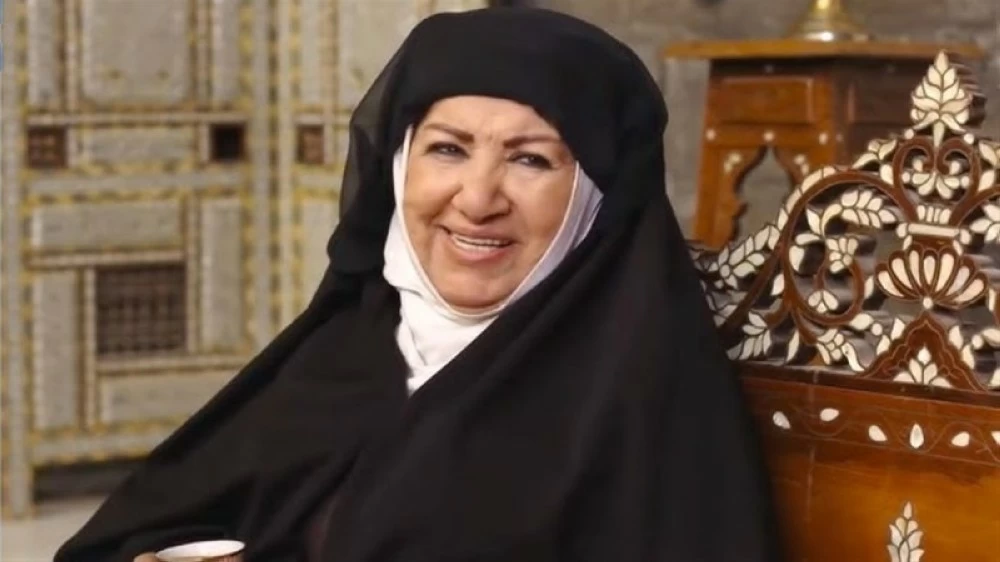
Funeral procession for the artist Huda Shaarawi in Damascus
The head of the Syrian Artists Syndicate, Mohsen Ghazi, announced the death of the esteemed Syrian actress Huda Shaarawi at the age of 85, after a long and distinguished career spanning decades, during which she left an indelible mark on the memory of the Arab public. He confirmed that the funeral procession for the late actress will depart after noon prayers from the Lala Pasha Mosque in Damascus, and she will be laid to rest in the family cemetery, thus concluding an important chapter in the history of Syrian art.
An artistic journey from radio to television
Huda Shaarawi was born in the historic Shaghour neighborhood of Damascus on October 28, 1938, and her passion for art began at a young age. Her true breakthrough came through the airwaves of Damascus Radio in the 1950s, where she participated in numerous radio programs that honed her talent and vocal expression. With the launch of Syrian Arab Television in 1960, Shaarawi was one of the founding names who transitioned to the small screen, becoming a familiar face to Syrian and Arab households. Her roles spanned both theater and television, and she performed in comedic and tragic works that demonstrated her exceptional artistic abilities.
“Umm Zaki”... the character who captured the hearts of millions
Despite her long and illustrious career, the character of "Umm Zaki" in the popular series "Bab Al-Hara" remains the iconic role synonymous with Huda Shaarawi. She portrayed the role of the "daya" (midwife) and traditional herbalist in the old Damascene quarter with unparalleled skill, transforming the character into a cultural symbol that transcended the series' boundaries. With her authentic Damascene accent, her folk wisdom, and her interventions in the affairs of the neighborhood's residents, "Umm Zaki" became an integral part of the collective memory of the Arab viewer. This role not only brought her widespread fame but also cemented her status as an artist capable of embodying the most subtle nuances of the traditional Damascene character.
Artistic legacy and lasting influence
Huda Shaarawi's career wasn't limited to "Bab Al-Hara"; it encompassed dozens of prominent television, theatrical, and cinematic works, including the series "Yawmiyat Mudir Aam" (General Manager's Diaries), "A'ilat Khams Nujoum" (Five-Star Family), and "Maraya" (Mirrors). Her death came as a shock to the artistic community in Syria and the Arab world, with her fellow artists and artistic institutions rushing to mourn her, praising her talent, character, and dedication to her work. Her passing is considered a great loss to Syrian drama, which has lost one of its cornerstones and a part of its living memory. Huda Shaarawi will remain in the hearts of her fans as a genuine artist who managed to enter every Arab home and leave an indelible mark.
Culture and Art
Huda Shaarawi: Farewell to “Umm Zaki,” the icon of Syrian drama
The tragic passing of Syrian actress Huda Shaarawi, "Umm Zaki" from Bab Al-Hara. We review her journey from a daring childhood to an indelible mark on the history of Arab art, and her tragic end.
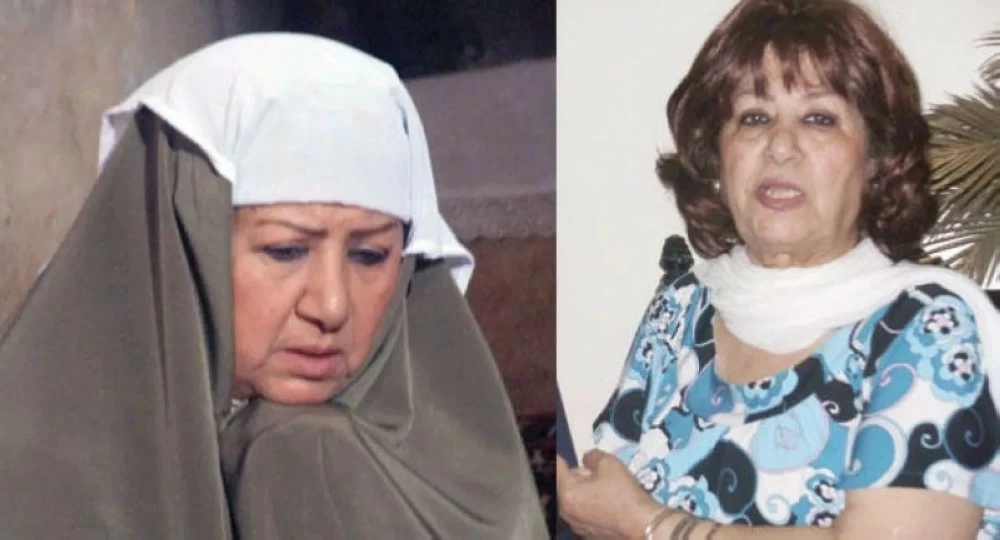
On a sorrowful Damascus morning, the curtain fell on the life of one of the most prominent icons of Syrian drama, actress Huda Shaarawi, who was found dead in her home, leaving behind a profound shock in the artistic community and across the Arab world. This tragic and solitary end stood in stark contrast to a career brimming with fame and success that spanned more than seven decades, during which she gifted art and audiences with unforgettable moments of life, laughter, and tears.
The passing of Huda Shaarawi was more than just the news of an artist's death; it marked the end of an era in the history of Syrian drama, a genre that shaped the consciousness of generations. Shaarawi grew up in a time when Syrian drama was building its glory, becoming a leading artistic force in the Arab world. She witnessed and participated in this golden age, as Syrian productions moved from local screens to every Arab home, carrying with them authentic stories and unforgettable faces, of which Huda Shaarawi was one of the most prominent. She lived through the transformation of art from black and white to the era of mass production, maintaining her presence as a constant artistic force representing authenticity and quality.
A rebellious childhood and a bold beginning
Huda Shaarawi was born in 1938 in the historic Shaghour neighborhood of Damascus, in a conservative environment that did not consider art a suitable profession for women. But her passion was stronger than any social convention. At the age of nine, she took her first step towards her dream by joining Damascus Radio, with a confident voice and rare determination. She faced strong family opposition that even amounted to a ban, but she did not give up. In an unprecedented move at the time, she submitted a formal request to appear on television, breaking down barriers and opening the doors to fame that remained open for 72 years of continuous contribution.
“Umm Zaki”: A character that transcended the screen
Although her artistic career includes more than 50 television works and significant theatrical and cinematic roles, such as her role as "Umm Taysir" in the popular comedy series "Five-Star Family," the character of "Umm Zaki" in the series "Bab Al-Hara" was the crowning achievement of her career. "Umm Zaki" was not merely the neighborhood midwife or the nosy woman; she became an Arab cultural icon. Huda Shaarawi was able to imbue the character with soul and authenticity, making her a mirror of the simple, strong, witty, and cherished Damascene woman, the keeper of her neighborhood's secrets. The character's influence transcended the borders of Syria, with the name "Umm Zaki" and her sayings becoming part of everyday speech in many Arab countries, demonstrating art's ability to cross borders and create universal symbols.
A lasting legacy and a painful end
The role of “Umm Zaki” was a testament to Huda Shaarawi’s ability to touch the hearts of the public. She transformed from a seasoned actress into a part of the collective Arab memory. For this reason, the news of her passing alone in her home was so painful and heartbreaking, a tragic end for an artist who lived her life among and for the people. Huda Shaarawi has departed physically, but she left behind a rich artistic legacy and the immortal character of “Umm Zaki,” which will remain alive in the memory of millions, a testament to a beautiful era of authentic art and to the story of an exceptional woman who defied the odds to create her own legend.
-

 Local News 4 days ago
Landslide in Riyadh: Details of the incident in Al-Sahafa neighborhood and containment efforts
-
 Local News 5 days ago
The death penalty was carried out against a citizen who stabbed another to death in Tabuk
-
 Culture and Art, 1 week ago
Ramez Galal in Ramadan 2026: Details of the bloody prank show
-

 Local News 6 days ago
First birth on the Riyadh train: A heartwarming story at Andalus station
-
 Culture and Art 4 days ago
Haifa Wehbe's absence in Riyadh: A photo crisis or a strained relationship with the media?
-

 Local News 4 days ago
Riyadh collapse: Emergency plans to secure water after a main pipeline burst
-
 Culture and Art 4 days ago
City Kitchen series: A drama of conflict and the middle class during Ramadan
-

 Culture and Art 4 days ago
The series "Kasra": Dawood Hussein in a moving social drama this Ramadan