
Culture and Art
Mohamed Ramadan responds to his second concert on the North Coast after the explosion
Mohamed Ramadan defies the odds and dazzles his audience with a magical concert on the North Coast, demonstrating his commitment and responsibility despite previous challenges.


Mohamed Ramadan: Between concerts and challenges
On a magical night on the North Coast, Egyptian artist Mohamed Ramadan appeared in his usual bold and energetic style to perform at a new concert following an unfortunate incident at his previous show. While everyone wondered if he would cancel this concert, Ramadan himself responded that international commitments and contracts are not easily broken.
Commitment and word
Ramadan wasn't just a star on stage; he was also a model of commitment and responsibility. He told the audience, "Many expected us to cancel today's concert, but this is a commitment and a responsibility." It was as if he wanted to remind us all that success isn't just about fame and stardom, but about keeping promises and keeping appointments.
Reactions and criticisms
Following the tragic death of a technician during his previous concert, Ramadan faced harsh criticism on social media. However, he didn't remain silent for long. He responded forcefully to his critics, saying, "I'm upset with the awful people who spoke ill of the deceased and gloated over his death." He boldly added that the young man met his Lord as a martyr while working to earn his living.
Releasing a new song despite the circumstances
Amid these events, Mohamed Ramadan released his latest song, "Yalla," sparking some controversy regarding its release date. Ramadan explained that the song's production company is foreign and that he cannot change the release date. He wrote on his social media accounts: "Please, let's not make a fuss. I have a contract with a foreign company, and I can't delay releasing the song.".
Steadfastness in the face of storms
Mohamed Ramadan proves once again that he is not just a stage performer, but a figure who knows how to face challenges and handle criticism with wisdom and composure. Whether you are a fan or a critic, there is no denying his unique ability to capture attention and stir controversy in a way that makes you eagerly follow him.
Ultimately, it seems that Mohamed Ramadan knows exactly how to maintain his position in the spotlight despite all the challenges and pressures he faces. This is what makes him a consistently interesting figure!


Culture and Art
The "Between and Between" exhibition in Jeddah: 5 artists reshape Saudi memory
The Saudi Center for Visual Arts in Jeddah is hosting the exhibition “Between and Between” with the participation of 5 Saudi visual artists who present contemporary visions about memory, identity and deconstructing heritage in an abstract style.

In the heart of Jeddah, a city long known as a gateway to arts and culture in Saudi Arabia, specifically at the Saudi Center for Visual Arts, the latest artistic movement was launched with the exhibition "Between and Between – Between Memory and Transformation." This event is not merely a display of artworks, but rather a visual dialogue platform bringing together five of the most prominent names in the contemporary Saudi art scene: Qusay Al-Awami, Dalia Talal, Khulood Al-Amri, Hussein Habil, and Fatima Hakami.
Context of the transformation in the Saudi art scene
This exhibition comes at a time when the visual arts sector in Saudi Arabia is experiencing an unprecedented renaissance, driven by a cultural vision that seeks to empower artists to express their local identity in a universal language. Saudi artists are no longer content with simply documenting heritage in its traditional form; they have moved into a phase of conceptualism and abstraction, where memory is deconstructed and reconstructed. The "Between and Between" exhibition is a prime example of this artistic maturity, reflecting the diversity of artistic schools from abstraction to expressionism, and reaffirming Jeddah's position as a hub for artistic creativity in the region.
Five experiences... a dialogue of memory and color
The exhibited works are characterized by being a harmonious blend of authenticity and modernity, where each artist presents his own vision of the concepts of memory and identity:
- Qusay Al-Awami: This artist from Dammam evokes the essence of history by drawing inspiration from mud-brick architecture, not to replicate it, but to abstractly reinterpret it. Al-Awami employs techniques such as layering colors, collages, and Arabic calligraphy to create a visual discourse that treats the past as a malleable material, reflecting his extensive experience and his international and local presence.
- Dalia Talal: This Jeddah-born artist and equestrian presents a unique emotional experience, taking the horse as a subject that transcends its physical form to become a psychological extension. Her works are characterized by vibrant colors and intense movement, relying on an expressionist style that reduces details to highlight the feeling and inner pulse of the painting.
- Kholoud Al- Omari delves into spatial memory, drawing inspiration from the vernacular architecture of southern Saudi Arabia and the alleyways of old Jeddah. The artist employs surface textures and peeling techniques as symbolic representations of the passage of time and absence, transforming walls and windows into visual texts open to interpretation.
- Hussain Habil: From Tarout Island, Habil embodies the philosophy of "Chapter Five," which transcends linear time. His works rely on symbolic abstraction and the interplay of color elements to express life cycles and continuous transformation, reflecting the depth of his experience as an active member of multiple artistic groups.
- Fatima Hakami: The tour concludes with Hakami's work, which focuses on deconstructing formal structures through kinetic abstraction. Her paintings address the duality of division and unity in a fluid style that transcends direct narrative, thus solidifying her place in the contemporary art scene.
Beyond the painting
The "Between and Between" exhibition affirms that Saudi visual art has moved beyond mere imitation to a stage of philosophical engagement with concepts. The convergence of these diverse yet fundamentally similar artistic experiences offers the viewer an opportunity to reflect on how individual and collective memory are transformed into visual artworks capable of speaking to both the heart and the mind.
Culture and Art
The death of the writer Saeed Al-Sarihi: The passing of a pioneer of Saudi criticism and modernism
The cultural scene mourns the passing of Dr. Saeed Al-Suraihi, who died at the age of 73. Learn about the life of this pioneer of literary modernism in Saudi Arabia, his most prominent works, and his enduring critical legacy.
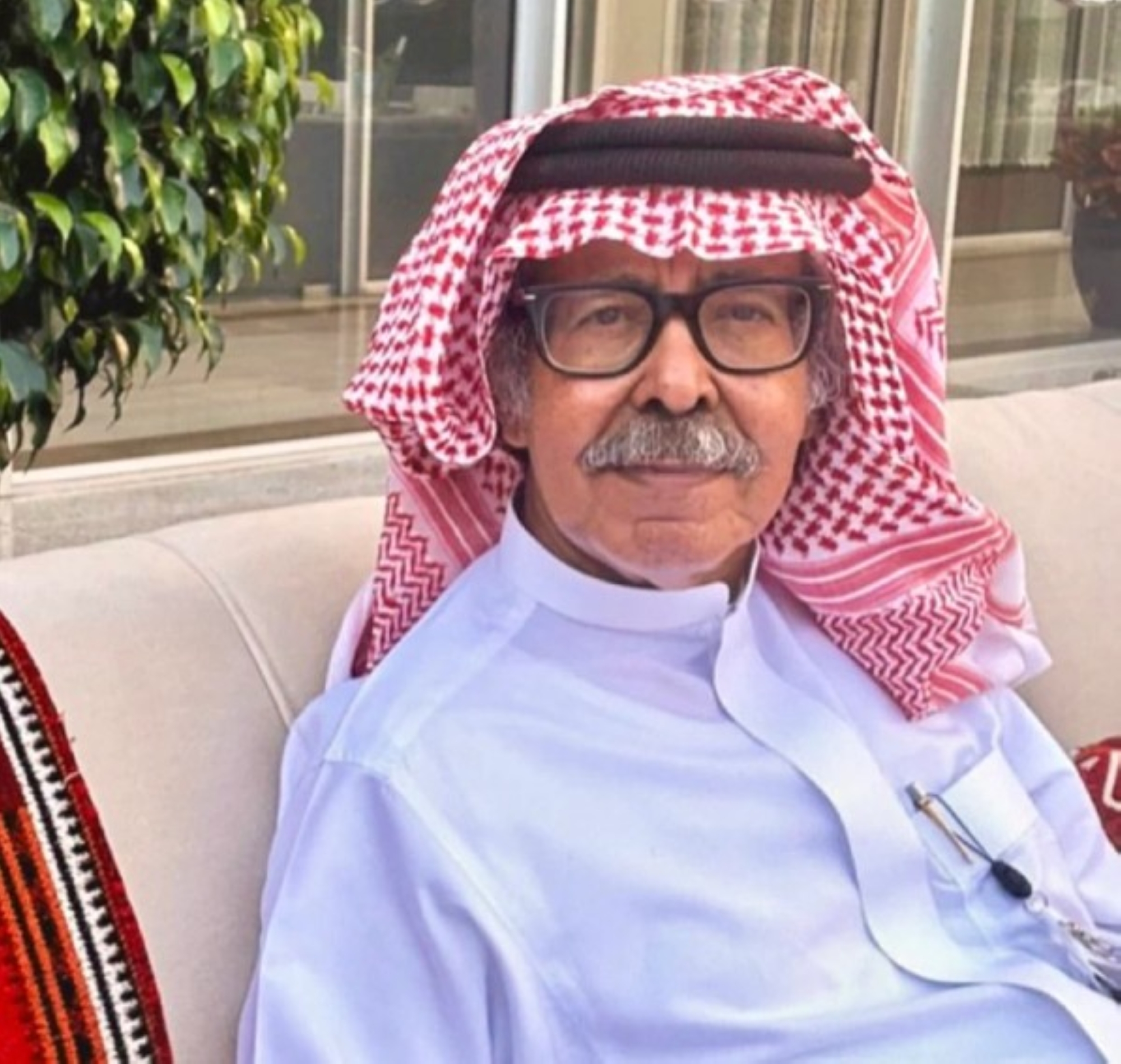
The cultural and literary circles in the Kingdom of Saudi Arabia and the Arab world were shocked by the passing of the great critical and literary figure, Dr. Saeed Al-Suraihi, who died at the age of 73, after a bitter struggle with illness, thus bringing to a close a life full of intellectual contributions and cultural battles that shaped the conscience of an entire generation of intellectuals.
Biography and career of a pioneer of modernity
The late Saeed Al-Suraihi, born in Jeddah in 1953, is considered one of the most prominent pioneers of literary modernism in the Kingdom. His academic journey began at Umm Al-Qura University in Mecca, where he progressed through his studies from the Faculty of Sharia to specializing in Arabic language and literature. Al-Suraihi was not merely a passing academic, but a unique voice. He worked in the field of education for nearly twenty years before dedicating a significant portion of his life to journalism and cultural work, contributing to the establishment and management of cultural supplements in major local newspapers, most notably Okaz newspaper.
An intellectual legacy that transcends borders
Al-Suraihi left behind a vast and diverse legacy for the Arabic library, encompassing literary criticism, narrative, and philosophy. Among his most prominent works, which sparked widespread critical debate, is "The Allure of the Name," a book linked to a famous story surrounding his doctoral dissertation, which faced considerable controversy in the 1980s due to its modernist approach. He also contributed important books such as "The Biography of Coffee and the Discourse of Prohibition," "Al-Ruways," in which he documented the memory of place in Jeddah, "Writing Outside the Brackets," "The Veil of Habit," and "The Movement of Poetic Language." His writings are distinguished by their depth and ability to deconstruct and reconstruct texts according to a profound philosophical vision.
International presence and cultural influence
Dr. Saeed Al-Suraihi's influence was not confined to local boundaries, but extended to Arab and European capitals through his active participation in seminars and lectures. Given his distinguished academic standing, he was selected as a member of the judging panels for prestigious literary awards, including the Buland Al-Haidari Prize, the Tayeb Salih International Prize for Creative Writing, the Muhammad Hassan Awad Prize, and the Muhammad Al-Thubaiti Prize. He also participated early in his career as a judge for the Saddam Hussein Prize in 1989.
Philosophy of difference and renewal
Al-Suraihi was known for his persistent call to break free from conventional norms, a principle evident in the publications of the Jazan Literary Club in 1407 AH (1987 CE), which included some of his critical readings. He believed that the "effectiveness of difference" was the essence of distinction, and that the true creative genius lay in challenging pre-established frameworks and closed circles. Throughout his life, he strived to affirm the independence and freedom of the intellectual, and to establish a critical language that was not bound by rigid principles except insofar as it opened new horizons for liberation and creativity.
With the passing of Saeed Al-Suraihi, the cultural scene loses the “godfather of modern criticism” and the teacher of generations who instilled in his students and readers a love of questioning and a passion for knowledge, leaving a great void that can only be filled by what he left behind in terms of books and articles that will remain a beacon for those searching for truth and beauty.
Culture and Art
Akroushan releases a 300-year-old operetta to mark Saudi Founding Day
Poet Abdullah Al-Yami (Akroushan) has completed writing an operetta celebrating 300 years of history, with music composed by Nawaf Munif and performed by Abdul Aziz Al-Aliwi. Learn more about the work.
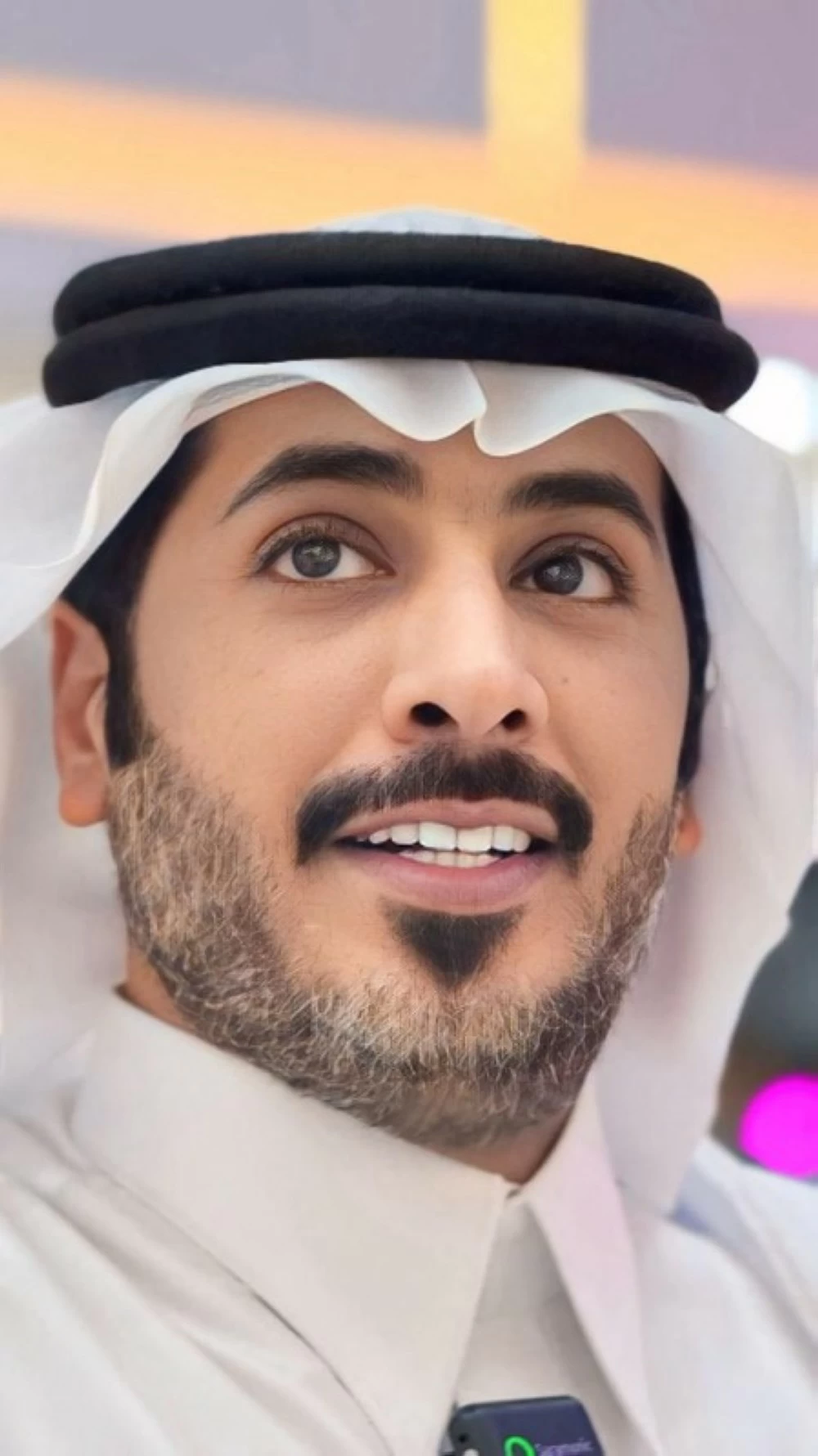
Saudi poet Abdullah Al-Yami, known as "Akroushan," announced the completion of his poetic work for a monumental national piece titled "300 Years Ago," created specifically for the Kingdom of Saudi Arabia's National Day celebrations on February 22nd. This work will be a valuable addition to the national artistic library documenting the Kingdom's rich history.
A fully integrated team and special care
This national production showcases a remarkable artistic collaboration, with music composed by Nawaf Munif, performed by Saudi artist Abdulaziz Al-Aliwi, and musical arrangement by Mohammed Kamel. The operetta enjoys the generous patronage of Dr. Faisal bin Hawas Al-Shammari, who provided both financial and moral support to ensure its production in a manner befitting this cherished national occasion.
The idea was inspired by the leadership's vision
In discussing the genesis of the text, the poet Akroushan emphasized that the initial spark for this work came from an inspiring statement by His Royal Highness Crown Prince Mohammed bin Salman – may God protect him – during his visit to the United States. The poet quoted His Royal Highness's remarks comparing the historical depth of nations, when he said: "The United States is approaching its 250th anniversary, and Saudi Arabia is preparing to celebrate its 300th anniversary in two years." These words served as the primary impetus for writing a text that highlights this historical legacy spanning three centuries.
Founding Day: Historical Depth and Deep Roots
This artwork derives its significance from the importance of the occasion on which it is presented; the Founding Day, which falls on February 22nd each year, commemorates the establishment of the first Saudi state by Imam Muhammad bin Saud in 1727 AD. This occasion provides an opportunity to remember the Saudi state's more than three centuries of existence, highlight the Kingdom's historical and cultural depth, celebrate its diverse cultural heritage, and pay tribute to those who have served the nation, from imams and kings to ordinary citizens. National artistic works, such as the operetta "300 Years Ago," play a pivotal role in strengthening national identity and instilling these values in the hearts and minds of new generations.
Continuous efforts and a remarkable journey
The poet Al-Yami indicated that writing the text took him approximately four months of diligent work to ensure precise expression and profound meaning, promising the audience that the work would be a "surprise" that would impress all Saudis. It is worth noting that Akroushan has a distinguished record of patriotic works, having previously presented the song "Dam Al-Malik Salman" (Long Live King Salman), composed by Sahm and performed by Dahoum Al-Talasi, in addition to the shaila "Ya Al-Adheem Ibn Al-Adheem" (O Great Son of the Great), performed by the singer Majid Al-Raslani, thus raising expectations for the new work.
-

 Local news one week ago
Launch of the city's shuttle bus service in Ramadan 1447 AH: Routes and stations
-
Local news one week ago
Rabigh inaugurates the world's largest water innovation oasis and enters the Guinness World Records
-
Culture and Art, 1 week ago
The series "Rouh OFF" was permanently canceled by a decision of the Actors' Syndicate
-
Culture and Art 7 days ago
Yasser Galal and Radwa El Sherbiny: Details of a new artistic project that brings them together
-
Local news one week ago
Schedule of Taraweeh and Tahajjud prayers at the Two Holy Mosques for Ramadan 1447 AH
-
Local news one week ago
The Ministry of Education revokes the licenses of 74 private schools due to safety and quality violations
-
Local news one week ago
Saudi Arabia weather: Rain in Riyadh, the Eastern Province, and Qassim, and dense fog
-
Local News 7 days ago
Mohammed Al-Rasasmeh appointed as official spokesperson for the Ministry of Municipalities and Housing


