Culture and Art
Mohamed Rahim's widow accuses the makers of "High Taste" of deleting his scenes
In an angry letter that sparked widespread reaction, Anousa Kouta, the widow of the late composer Mohamed Rahim, accused the creators of the music video for the song "Al-Thawq" (The Taste)


The controversy surrounding the "High Taste" music video: Was the late musician ignored?
In a scene that sparked widespread controversy on social media, Anousa Kouta , the widow of the late composer Mohamed Rahim, released an angry message containing accusations against the creators of the music video for the song "High Taste" by artists Mohamed Mounir and Tamer Hosny. What's the story? Let's delve into the details.
Angry letter shakes artistic circles
In a passionate post on her official Facebook page, Anousa expressed her deep resentment at what she described as the painful and unjustified disregard for her husband's artistic and human rights. In a defiant tone, she wrote: "Close the video all you want, but I won't let the rights of the deceased and the orphans be lost... and think carefully about the lie you're going to tell the public.".
These words were not merely an expression of fleeting anger, but a direct reference to the deletion of her late husband's scenes from the final version of the music video, despite his actual participation in filming the work before his death.
Video clip and audio messages supporting the cause
Anousa didn't stop at words; she confirmed that she possesses a video clip showing Mohamed Rahim appearing as himself in the music video, alongside lyricist Tamer Hussein and arranger Ahmed Tarek Yehia. As if that weren't enough, she added a recorded voice message from the late artist himself, expressing his immense happiness at collaborating and participating in the project.
The technical team remained silent, and the controversy intensified
To date, neither the song's team nor the production company has issued an official statement in response to these accusations. As the controversy intensifies on social media, calls are growing for the truth to be revealed and for respect for the memory of the late composer to be honored.
“High Taste”: A distinguished artistic collaboration or a new crisis?
“High Taste” is more than just an ordinary song; it's the first artistic collaboration between “The King” Mohamed Mounir and the star Tamer Hosny. The lyrics were written by Tamer Hussein, and the music was composed by Mohamed Rahim himself. Some scenes were filmed inside Mounir's personal home, adding a special human dimension to the work.
But with all the artistic and personal momentum that the work carries, the question remains: Will the creators of the music video be able to provide an explanation that satisfies everyone and puts things back on track? Or will this crisis continue to cast a shadow over the first artistic collaboration between the two big stars? The coming days may hold the answer.


Culture and Art
Abdel Rahman Abu Zahra's pension crisis: Taxes seize his salary
The son of the veteran artist Abdel Rahman Abu Zahra revealed that the tax authority had seized his father's pension, sparking widespread controversy about the honoring of art icons in Egypt and their financial situation.
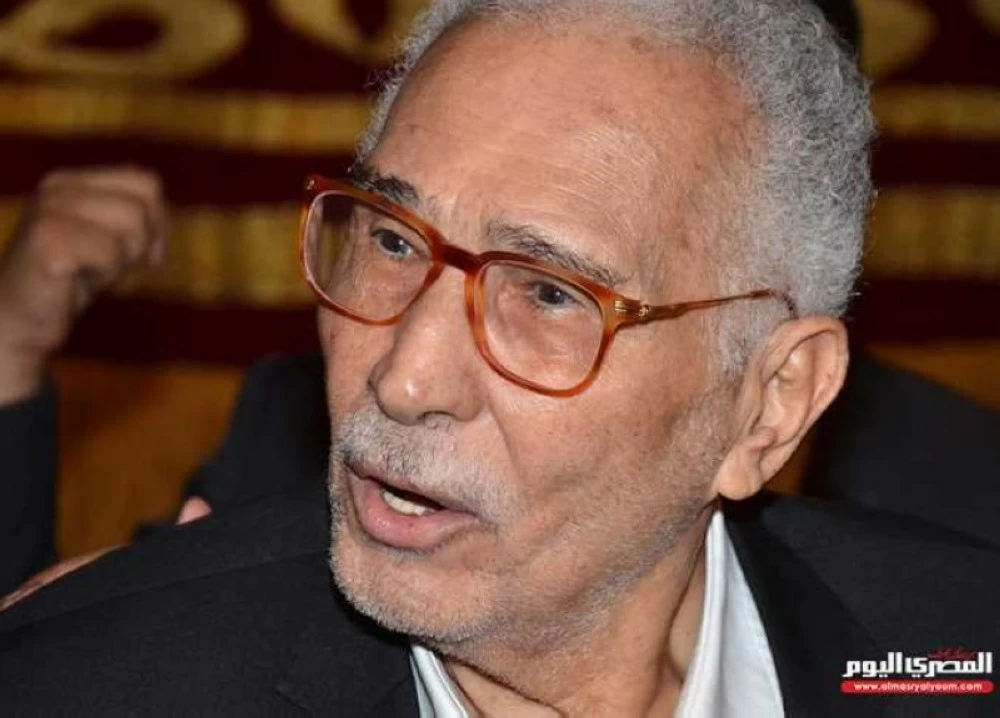
The tax authority seizes the pension of the esteemed artist
In an incident that sparked widespread sadness and sympathy in Egyptian artistic and public circles, Ahmed, the son of the renowned artist Abdel Rahman Abu Zahra, announced that the Egyptian Tax Authority had seized his father's pension. This announcement came in a poignant post on his personal Facebook account, revealing the details of the difficult situation facing one of the most prominent figures in Egyptian and Arab art.
Abu Zahra's son explained that this measure was taken despite his father not possessing substantial assets or large bank accounts, emphasizing that all he owns is his long artistic career and the love of his audience. He added that the pension from which his father's pension was seized is insufficient to cover even a small portion of the costs of the medications and treatments his father requires regularly at this stage of his life. He appealed to officials to consider with compassion and humanity the legacy of an artist who dedicated over sixty years to serving his art and his country, and whose only wish now is to spend his final days in peace and tranquility.
Abdel Rahman Abu Zahra: A prolific artistic career
Abdel Rahman Abu Zahra, born in 1934, is an exceptional artistic figure in the history of Egyptian drama, cinema, and theater. His artistic career spans more than six decades, during which he performed hundreds of roles that are etched in the memory of Arab audiences. He was renowned for his remarkable ability to embody diverse characters, from dignified historical figures to complex social roles. Among his most memorable television roles are his portrayal of "Teacher Ibrahim Sardina" in the series "I Will Not Live in My Father's Robe" and his role in the series "Money and Sons." He also left a unique vocal mark through his voice acting as the villainous "Scar" in the Arabic dubbed version of Disney's famous film "The Lion King," a role that continues to resonate with different generations.
The impact of the crisis and questions surrounding the honoring of icons
The crisis surrounding the seizure of artist Abu Zahra's pension sparked widespread controversy on social media platforms, with thousands of users and fellow artists expressing their full solidarity with him and condemning the treatment of an artist of his stature in his old age. This incident has brought renewed attention to an important issue concerning the mechanisms for honoring and protecting veteran artists in Egypt after their retirement, and the adequacy of social and professional safety nets to ensure a dignified life for them. Many are questioning the role of the Actors' Syndicate and other relevant authorities in intervening to resolve such crises that affect symbols of Egypt's soft power.
Health status and final retirement decision
In a related development, the artist's son reassured the public about his father's health, confirming in press statements that it is "completely stable and, thank God, much better." Regarding the possibility of his father's return to the art scene, he definitively settled the debate, stating that his father's decision to retire is final and irrevocable, and that he refuses any media or artistic appearances at the moment, wishing to enjoy peace and quiet away from the spotlight.
Culture and Art
Nidal Al-Shafei's mother passed away months after the death of his wife
Artist Nidal El Shafei is experiencing another tragedy with the death of his mother after a battle with illness, just months after the passing of his wife. Details of the funeral and the artist's illustrious career.
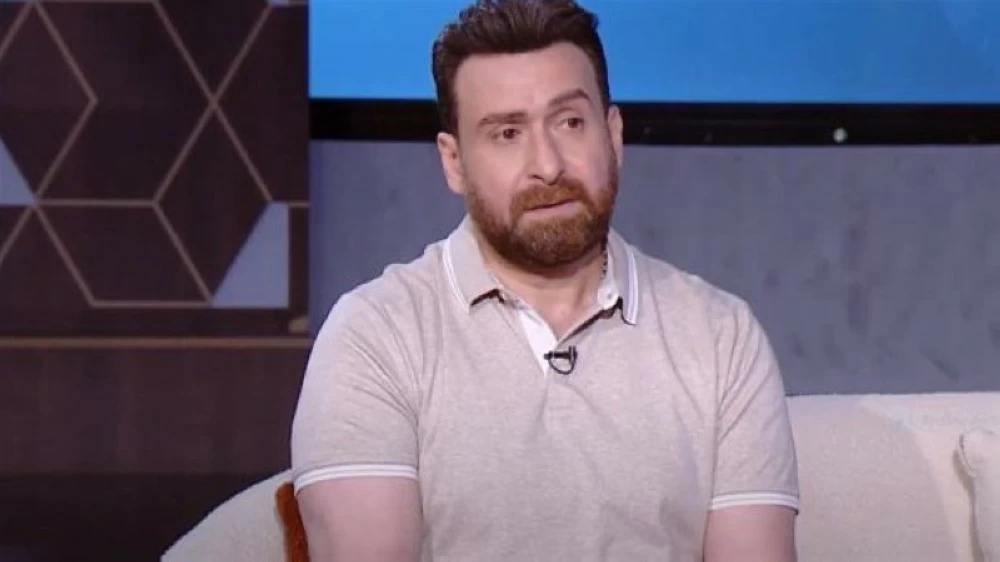
Tragedy strikes artist Nidal Al-Shafei again
In news that saddened the Egyptian artistic community and the public, actor Nidal El-Shafei announced the death of his mother after a recent health crisis. This tragic loss comes just months after the passing of his wife, Hind Mohamed Ali, leaving the actor to grieve the loss of two of his loved ones in such a short period.
On his official Facebook page, Nidal El Shafei shared the news with his followers, posting a touching message mourning his mother and asking everyone to pray for her mercy and forgiveness, and that God grant her paradise. The post received a wide response from his fellow artists and the public, who quickly offered their condolences and sympathy.
Funeral and burial details
Al-Shafi'i explained in his post that the funeral prayer for his late mother will be held after the noon prayer today at the Al-Bahgat Mosque in the Dreamland area. She will be laid to rest in the family cemetery located on the Oasis Road in Cairo, where family and friends will gather for a final farewell.
The context of successive sorrows
This tragedy brings to mind the profound sorrow that befell artist Nidal El Shafei in April 2024, when he lost his wife and life partner, Hind Mohamed Ali, after a long battle with kidney disease. Her death was a devastating blow to him and his family, as she had been a fundamental support in his personal and professional life. Today, he faces renewed grief with the passing of his mother, compounding his pain and prompting a great outpouring of support from his fans during this difficult time.
A rich artistic career and humanitarian stances
Nidal El-Shafei is one of the most prominent actors on the Egyptian art scene, having delivered many memorable performances in film, television, and theater throughout his career. He began his artistic journey after graduating from the Higher Institute of Theatrical Arts, quickly attracting attention with his powerful performances and the diversity of his roles. Among his most notable works are television series such as "Tamer and Shawqia" and "Critical Moments," and films like "The Island" and "The Dealer," where he demonstrated his ability to brilliantly portray a wide range of characters. On a personal level, he is known for his deep connection to his family, which is why his recent tragedy has garnered widespread sympathy.
Latest artworks
On the professional front, actor Nidal El Shafei's last dramatic appearance was in the series "Al-Amira Dhal Heita" (Princess, the Shadow of a Wall), which aired recently. The 15-episode series starred a number of prominent actors, including Yasmine Sabri, Nicolas Mouawad, Wafaa Amer, Hala Fakher, and Maha Nassar. It was written by Mohamed Sayed Bashir and directed by Sherine Adel. Despite his busy schedule, the difficult family circumstances he recently faced have been the subject of concern and prayers from everyone.
Culture and Art
Yasmine Abdel Aziz and the series "Elli Maloush Kebeer" | A Ramadan drama success story
An analysis of the success of the series 'Elly Maloush Kbeer' starring Yasmine Abdel Aziz and Ahmed El Awady, and how the promo and famous phrases such as 'No one has hurt me as much as you' sparked widespread controversy.
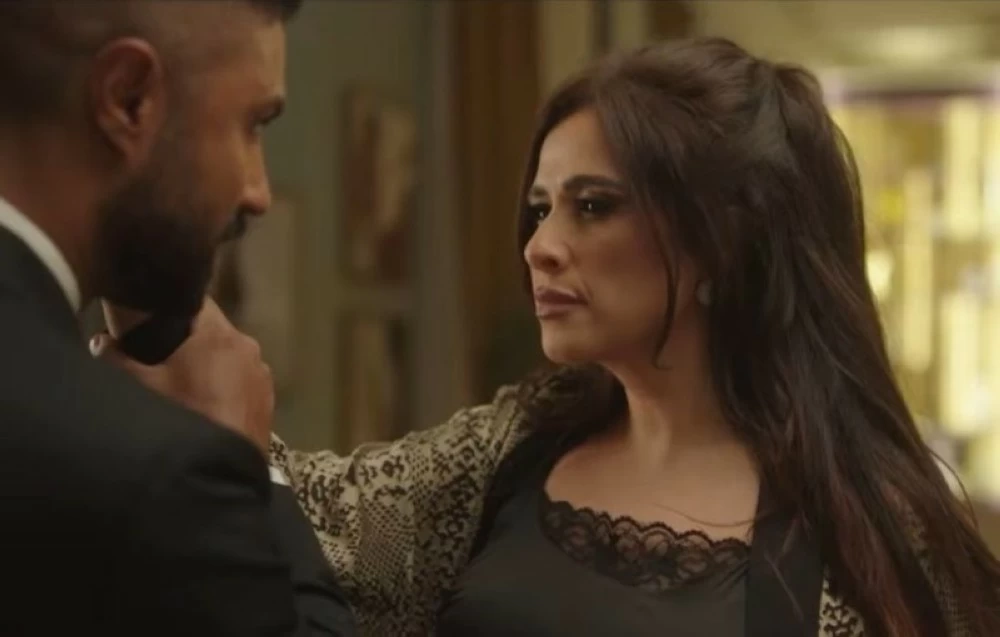
The “He who has no elder” controversy: How did Yasmine Abdel Aziz’s phrase become a trend?
The teaser trailer for the series "Elli Maloush Kbeer" (He Who Has No Big Shot) caused a sensation before its premiere during Ramadan 2021, captivating audiences with scenes that blended action, drama, and romance. However, a single line uttered by star Yasmine Abdel Aziz in one of the most poignant scenes—"No one has hurt me as much as you"—was enough to ignite social media platforms, becoming a memorable line that continues to resonate today and encapsulates the profound psychological struggle experienced by her character, Ghazal, throughout the series.
Background to Yasmine Abdel Aziz's dramatic transformation
The series “Elli Maloush Kbeer” (He Who Has No Big Shot) marked a significant turning point in Yasmine Abdel Aziz's artistic career. After years of dominating the box office in cinema with light comedic roles, she began in recent years to shift towards more complex and profound dramatic roles on television. While she successfully portrayed a romantic and social character in the 2020 series “We Nehabb Tani Leh” (Why Do We Fall in Love Again?), earning critical and popular acclaim, “Elli Maloush Kbeer” showcased her ability to powerfully embody action and suspense roles, portraying a strong female character who defies the difficult circumstances imposed upon her.
The importance of the series and its regional impact
The series' success wasn't limited to being a local hit; its impact extended to becoming a pan-Arab phenomenon during Ramadan. The on-screen chemistry between Yasmine Abdel Aziz and her then-husband, actor Ahmed El Awady, who portrayed "Saif El Khedive," created a unique level of audience engagement in Egypt and the Gulf region. Phrases like "Ala Allah Hekaytak" (God knows your story) and "Wahsh El Kon" (The Beast of the Universe) became part of everyday slang, reflecting the show's deep resonance with Arab viewers. The series tackled sensitive social issues such as domestic violence, forced marriage, and class conflict, all within a compelling and engaging framework that captivated a wide audience.
A story of struggle and power
The series revolves around Ghazal (Yasmine Abdel Aziz), who is forced by her father to marry a wealthy and cruel businessman (Khaled El Sawy) many years her senior. She endures a life filled with oppression and both physical and emotional humiliation. The phrase "No one has ever hurt me as much as you have" is uttered during her confrontation with him, expressing the depth of her suffering. Her life takes a dramatic turn when she meets Saif El Khedewy (Ahmed El Awady), a strong young man with whom she embarks on a love story fraught with challenges and dangers. In him, she finds the protection and support she has always lacked.
Integrated team
The success of "Elli Maloush Kbeer" (He Who Has No Master) is due to the combined efforts of a distinguished team. The series was written by Amr Mahmoud Yassin, who excelled in crafting complex characters and a cohesive plot, and directed by Mustafa Fikry, who delivered a modern visual style and masterful action sequences. The cast included a constellation of stars alongside Yasmine Abdel Aziz and Ahmed El Awady, including Khaled El Sawy, Dina Fouad, Iman El Sayed, and Badria Tolba, each of whom delivered a remarkable performance that contributed to the series' strength and resounding success.
-

 Reports 6 days ago
Achievements of Saudi government sectors in 2025
-
Local news two weeks ago
FDA warns of contaminated Nestle infant formula | Recall details
-
Technology 4 weeks ago
US ban on drones: reasons and consequences
-
Technology 4 weeks ago
SRMG and Snapchat partnership: The future of digital media in the Middle East
-
Technology 4 weeks ago
Saudi Arabia's Ministry of Islamic Affairs is employing artificial intelligence in public speaking
-
Sports 4 weeks ago
Salah leads Egypt to a thrilling comeback against Zimbabwe in the Africa Cup of Nations
-
Sports 4 weeks ago
Napoli win the Italian Super Cup in Riyadh for the third time (2025)
-
Sports 4 weeks ago
Alexander Isak's injury: A major blow to Newcastle United's ambitions