
Culture and Art
Experience life in Islamabad: From old knowledge to lived experience

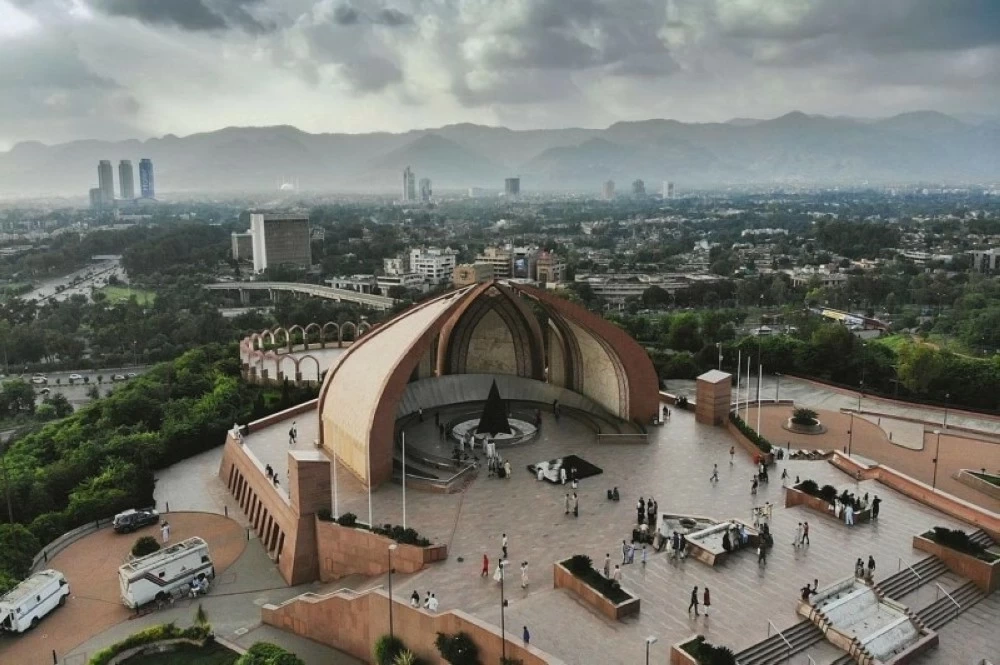
Life landed me in Islamabad a year ago
I never expected to emigrate to the ends of the earth. There was something familiar in the air, and in the faces, a lingering sense of old acquaintance. We had known Pakistanis since our childhood in Saudi Arabia: skilled workers, doctors and engineers, teachers and merchants, bus drivers and maintenance personnel.
We knew them before we knew about graphic design; partners in livelihood, neighborliness, prayer, and righteousness. They would rise at dawn to go to their work with patient diligence and a smile like a mother's prayer. Therefore, being away from home in Pakistan wasn't a feeling of alienation; it was simply a transition from an old acquaintance to a more beautiful one.
Islamabad is a city that arranges its greenery at a leisurely pace
Islamabad is a city that arranges itself in shades of green: tree-lined walkways, clean air, tranquil streets, and the Margalla Hills overlooking like a mother casting her shade over her children. After the evening rains, the earth here smells of new beginnings, and from a small prayer room to the majestic Faisal Mosque—named after a king who loved Pakistan and whom Pakistan loved in return—you feel that your soul has found its anchor.
On the lake shores and in the night markets, you witness a wonderful blend of order and payment; a system that welcomes your humanity, and a payment system that motivates you to stay put. The locals... a hospitality that speaks the language of the heart; you need a dictionary to understand a Pakistani who says to you, as he hands you a cup of tea, "Khosh amadid" (Welcome).
Hospitality here (however modest) is not just a social custom; it is a philosophy of life. They rejoice in the guest as spring rejoices in promised rain, and they accept the other without pretense, as if diversity is part of their makeup.
In schools, universities, and cafes
In the markets and gardens, you are struck by this social mood that combines dignity and kindness, conservatism and openness, pride in traditions and the ability to listen to the new.
Cities that complement each other... a history working for the future, as you discover them whenever the journey allows: La Jalal with its gardens, mosques, and tireless cultural history; Karachi with the warmth of its sea and its bustling economic rhythm; Peshawar with its gates to history; Quetta with the ruggedness of the mountains and Swat, Gilgit, and Hunza with their natural wonders.


Culture and Art
Yasmine Abdel Aziz responds to rumors with a sarcastic photo and a court ruling
Yasmine Abdel Aziz breaks her silence and responds to the rumors in a sarcastic manner, using Adel Imam as an inspiration, and announces that she will take strict legal action against those who spread false news and abuse her.

Egyptian actress Yasmine Abdel Aziz on search engines and social media platforms in recent hours after breaking her silence to respond to a wave of rumors and false reports targeting her personal and professional life. Yasmine has chosen a two-pronged strategy, combining biting sarcasm with firm legal action, reflecting her growing impatience with what she describes as a systematic campaign against her.
A satirical message using the leader
In a clever move that garnered widespread public attention, Yasmine Abdel Aziz resorted to her well-known sense of humor, posting an iconic image of the legendary actor Adel Imam from the film "Alzheimer's" on her official Instagram account, captioned with the brief phrase: "I did all of that." This indirect response conveyed a message of surprise and disapproval at the sheer volume of fabricated stories circulating about her. She chose not to delve into the details of these rumors or attempt to justify them, opting instead to ridicule them through humor—a tactic her fans have come to expect from her in difficult situations.
The end of the policy of ignoring and resorting to the judiciary
On the other hand, Yasmine didn't just resort to mockery; she also displayed a more assertive side on her Facebook account. She officially announced the end of her previous period of silence and ignoring the attacks, confirming that she had instructed her legal team to take all necessary measures against the pages and accounts that promote fabricated images or false news that damage her reputation as an artist and as an Egyptian mother. In her statement, she indicated that the transgressions had reached an intolerable level, necessitating legal intervention to deter the offenders.
The price of fame and the impact of social media
This move comes within a broader context where the Egyptian and Arab art scene is grappling with the chaos of online publishing on social media platforms, where celebrities have become constant targets of rumors aimed at generating engagement (trending). Yasmine Abdel Aziz is one of Egypt's most prominent leading actresses, whose television and film work enjoys a massive following, making any news about her a hot topic, whether true or fabricated. Her recent stance reflects a growing trend among artists to go beyond mere media denials and resort to the cybercrime unit and the Egyptian judiciary, which imposes strict penalties for defamation, slander, and the dissemination of false news online.
A decisive message to the artistic community
Observers believe that Yasmine Abdel Aziz's move carries particular significance, as it sends a strong warning message to anyone who takes it lightly to delve into the private lives of celebrities. While the public is accustomed to her lightheartedness, Yasmine has proven her ability to firmly protect her personal boundaries, emphasizing that online chaos must be confronted by law, and that her personal freedom and her family's reputation are a red line that she will not allow to be crossed under any circumstances.
Culture and Art
Ramy Sabry explains why he withdrew from the opening credits of the series "We Forget What Was"
Artist Rami Sabry revealed the truth about his dispute with Yasmine Abdel Aziz and the crew of the series "We Forget What Was," explaining the reasons for his apology for not singing the series' theme song and its airing date in Ramadan 2026.

Egyptian star Rami Sabry the widespread controversy that recently circulated on social media regarding the reasons for his sudden withdrawal from singing the theme song for the series "We Forget What Was," starring Yasmine Abdel Aziz . This clarification puts an end to the speculation and rumors that suggested personal issues or disagreements between the singer and the producers of the highly anticipated drama.
The truth about the disagreements with the team
In his first official response, Rami Sabry categorically denied any personal conflicts with the series' stars or the production and directing crew. Sabry explained that his decision to withdraw stemmed primarily from a "difference in artistic vision" regarding the form and nature of the proposed theme song. He emphasized that his relationship with all parties involved is based on mutual respect and cordiality, and that artistic differences can arise without affecting their friendship.
Explanatory message via Instagram
Keen to convey the correct image to his audience, Rami Sabry posted a brief but decisive clarification on his official Instagram account, stating: "It's a disagreement, not a conflict. All due respect to the cast and crew of the series. Wishing them success." This step aligns with Sabry's usual approach to dealing with rumors, where he prefers direct communication to preempt speculation.
The importance and impact of Ramadan series opening credits
The opening credits of television series during Ramadan of paramount importance, serving as the first introduction between the show and its audience, and a crucial marketing element that contributes to the series' success. Rami Sabry has long been a favorite voice among producers due to his ability to deliver songs that resonate with the audience and leave a lasting impression, making his withdrawal from the project a matter of great interest in artistic circles.
Past successes and an ongoing journey
This decision comes after Rami Sabry's great success in the last drama season, where his song "Love is Our Fault," performed in the series "And You Meet a Lover," topped the charts and received widespread critical and popular acclaim. This previous success raised expectations for any drama project associated with his name, which explains his keenness to choose projects that align with his artistic vision.
The cast of the series "We Forget What Was"
The series "We Forget What Was" is set to compete in the 2026 Ramadan television marathon, bringing together a stellar cast of Egyptian drama stars. Alongside Yasmine Abdel Aziz and Karim Fahmy, the series features Mohamed Lotfy, Sherine Reda, Menna Fadali, Edward, Ingy Kiwan, Elham Wagdy, Omar Sharqi, Cynthia Khalifeh, Mahmoud Hafez, and Laila Ezz El Arab. Written by the acclaimed writer Amr Mahmoud Yassin and directed by Mohamed Khibiri, the series is eagerly anticipated by audiences due to the renowned chemistry among its cast.
Culture and Art
Saleh Al-Shadi: The national song is a message of identity and historical documentation
Coverage of Saleh Al-Shadi's evening at Jeddah Arts, discussing the national song and its message, supported by the Madid Initiative. Learn about the role of Saudi song as a soft power and a historical document.

In an exceptional cultural evening that blended the beauty of language with a profound sense of belonging, the Jeddah Culture and Arts Association hosted poet Dr. Saleh Al-Shadi for a dialogue entitled "The Song and Its National Message." The event, moderated by media personality Mahdi Al-Zahrani, was part of the cultural activities supported by the "Madeed" initiative of the Literature, Publishing and Translation Commission, reflecting the Kingdom's commitment to documenting artistic heritage and strengthening national identity.
The song is a mirror of the homeland and living memory
Dr. Saleh Al-Shadi began his talk by highlighting the philosophy of the national song, describing it as a "mirror of the nation" and not merely a fleeting artistic work that ends with the occasion. Al-Shadi emphasized that the poem is the backbone of any timeless song, and that no matter how beautiful the melody, its impact is incomplete unless it is accompanied by sincere lyrics that resonate with the heart. He pointed out that it is the lyrics that grant the song its "passport" across generations, transforming it from a mere melody into a historical document that encapsulates the sentiments of an entire era.
Historical context: The Saudi song as a document of events
In further elaborating on the importance of national songs, it's worth noting that Saudi songs have historically played a pivotal role in documenting the major transformations witnessed by the Kingdom and the region. From the very beginning, national songs were not merely a form of entertainment, but rather a tool for mobilizing morale and unifying the nation, especially during times of crisis and major political shifts. Over the decades, Saudi songs have successfully served as a rich record of societal development, from nomadic life and palm groves to modern urban renaissance, making them an integral part of the Kingdom's intangible heritage.
A review of a career full of achievements
During the evening, Al-Shadi reviewed milestones in his long career writing operettas and patriotic songs performed by leading artists from the Kingdom and the Gulf. He explained that his work was not primarily aimed at celebratory writing, but rather at poetically documenting scenes of the nation and the details of popular joy. The audience enthusiastically responded to examples of his timeless works presented during the event, such as the masterpiece "We Are Abu Fahd's Men," sung by the renowned Arab artist Mohammed Abdu, and "Pledging Allegiance and Extending a Hand, This Is the Crown Prince," sung by the artist Talal Salama—works that remain vivid in the collective memory of Saudis.
Soft power and its regional influence
The discussion also touched upon the concept of “soft power,” with the intellectuals and artists present agreeing that Saudi song, thanks to its poetic depth and melodic authenticity, has transcended geographical boundaries to become a cultural influence in the Arab world. This comes at a time when the Kingdom is witnessing unprecedented cultural activity within the framework of Vision 2030, which gives special attention to arts and literature as bridges for cultural exchange.
A closing that celebrates renewed identity
The evening concluded with a speech by the association’s director, Mohammed Al-Subaih, who praised the support of the “Madid” program for this cultural movement, stressing that the Saudi song is experiencing a renewal phase in its identity, based on a great legacy of brilliant poetic names, foremost among them Saleh Al-Shadi, whom he described as “writing the homeland with the ink of love,” so his poems were anthems that people spontaneously and lovingly recited before the artists sang them.
-

 Local news one week ago
Agreement to regulate and empower street vendors in Jeddah: Details and objectives
-
Local news one week ago
The Spears of Victory 2026 military exercises concluded in Saudi Arabia with international participation
-
Culture and Art 4 days ago
The "Between and Between" exhibition in Jeddah: 5 artists reshape Saudi memory
-
Culture and Art 5 days ago
Shakira's concert in Jeddah: Details of the international star's first concert in Saudi Arabia
-
Culture and Art, 1 week ago
The truth about Nancy Ajram's video and Epstein Island, and her legal response
-
Culture and Art, 1 week ago
Rawan Bin Hussain's first appearance after her imprisonment and deportation from Dubai
-
Culture and Art, 1 week ago
Sarah Al-Wadaani without a hijab ignites social media and tops the trending list
-
Local news two days ago
Saudi Arabia's National Arabic Language Policy: 8 Principles to Promote Identity


