Culture and Art
"Writing with black ink"... or with the ink of the heart?
This is a truly enjoyable book! Written with the ink of a heart in love with the meaning of writing and reading, and with the meaning of the letter, the idea, and productive awareness

This is an incredibly enjoyable book!
He wrote with the ink of a heart that loved the meaning of writing and reading, and the meaning of the letter, the idea, and productive awareness. Writing that incites the pleasure of thinking in the context of effective cognitive reception.
It was truly enjoyable, and I wished the pleasure of reading would last longer as I approached its last page.
It is the kind of writing that is truly enamored with the art of mental and spiritual living, and the meaning of immersing oneself in the silence of writing and reading, and never tiring of touching and inhaling the scent of books, touching the pen, or more recently, typing on the laptop keyboard!
What does it mean to read? What does it mean to write and produce a new awareness?
Is there anything more beautiful than living in the depths of ideas, their conflicts and debates?!
Therefore, he is the writer who is knowledgeable about the dynamics of the writer, his psychology, the effects of his writings and creations, and his influences and impacts.
Hassan Madan is an exceptional writer and creator in his own way, and a thinker who seeks knowledge through his distinctive literary writing style.
His elegant style, his simple yet profound language, and his unique approach to his compelling subjects all testify to his latent creative talent. He possesses a distinct style in approaching the spirit of creative writing. And in my view, literary creativity is not limited to those who write novels, poems, or reflective texts, but rather encompasses those who have grasped the secret of writing, understood its absolute essence, and appreciated its power to heal the human spirit.
He was able to deconstruct its formative structure and understand its aims, implications, and signs, like a critic. The creative critic produces a statement upon a statement and writes a parallel text... producing knowledge of the criticized text that is no less valuable or conscious.
Hassan Madan writes his meticulously crafted articles with the spirit of a creative critic. He is an avid reader, following all Arab and international literary, intellectual, and creative works. His interests are broad, and when he wrote "Restoring Memory," his captivating autobiography, he did so with the spirit of an artist-storyteller who captures minute details with exquisite sensitivity, not with the spirit of a politician preoccupied with immediate issues. He is a writer who understands the act of creation in his reader—its mechanism, its meaning, and its wonder—while remaining at a distance of insightful contemplation between imaginative similarity and the dissimilarity of reality. He occupies a middle ground between the absent and the possible, and the hoped-for presence at the heart of the act of writing. I believe that if he were to return to his old notebooks, as Umberto Eco did, he would write us a profound creative work, given his daily engagement with intellectual, political, and journalistic work, and his extensive life experiences.
Hassan Madan’s book here (Writing in Black Ink) is a complete quartet in the writing process and its elements, starting from its doer: the writer, to its product: the books, and its recipient: the reader.
This quartet: “writing, the writer, books, and reading,” was skillfully woven by Hassan Madan, creating for us a wide and beautiful tapestry of knowledge in its creative colors and undulations.
And here I will contemplate this carpet woven with letters, imagining it hanging like a painting on a wall, to stand for a long time contemplating the most prominent and important threads of the fabric in the depth of its colors and gleams, and the emanations of its ideas in its four spectrums; meaning that I will not be able to stop in my reading at every material of this cultural quartet, despite its importance and distinction, but I will undoubtedly stop at everything that arouses productive contemplation and stimulates creative dialectical interaction.
In the first part of the tetralogy: (Writing), the writer paints a picture of writing in its most vibrant features, multifaceted, multi-sourced, deep-shadowed, like a living being of flesh, blood, and spirit, “insightful, affectionate, and harsh, a balm for sore souls, clear, mysterious, and flabby…”, a being of letters that is affected by place, time, history, and memory, and affects them in a dialectical embrace that is not without its paradoxes, contradictions, and oddities at the borders of imagination and liberation from the absolute of the pressing subject to the absolute of the idea and imagination.
When writing surpasses its first sentence/birth, and overcomes the difficulties and dilemma of the writer’s confusion, it declares itself and proceeds in its contexts until its end. It seems that the suffering of putting forward the first sentence, as Hassan Madan mentions in his book, was experienced by all true writers and creators such as Gabriel Marquez and Hemingway, as its writing was linked either to recalling a memory or a specific story or to the psychological state of the writer when he sits at the writing table with his mind completely empty of any ready idea, as Naguib Mahfouz faced due to the daily habit of starting a new work.
Or as the poet Mahmoud Darwish used to suffer when writing the first line of a new poem, as if he had never written a poem before!
From here the writer leads us to the springs of writing in his enjoyable chapter of this book. The first of these springs undoubtedly comes from the insight of the heart, from those “secret chambers of the heart,” as the Chilean novelist Isabel Allende spoke when she began writing the first sentence of her famous novel (The House of the Spirits) while she was suffering from a swoon of sad heartfelt emotions.
But the wellsprings of writing are not always tangible, clear, and readily available. Even if we consider the mind, feelings, and imagination to be its primary sources, there is also what is called inspiration. These wellsprings alone are insufficient to create writing unless they are represented within the context of lived experience, or drawn from the wellspring of life and its various facets. In reality, the fabric of writing is woven from all of these elements and is inseparable from the wellspring of lived experience that lies dormant for the writer at every juncture of the writing process.
We go to the second part: (the writer), and I consider it one of the most important parts in this quartet, as he is the main driver of the entire writing process. He is the one who writes and accumulates writing in books that subsequently lead us to the meaning and concept of reading, reading in its various dangerous forms: enjoyable and productive, enlightening and dark, teaching and flattening, constructive and destructive, and so on.
So how did our writer view the writer?
A writer is either socially open (organically) or a dreamy, homely recluse, and both often produce distinguished literature. When a writer is socially open, he only writes in open spaces, like Muhammad Shukri, Samir al-Fil, Yahya al-Tahir Abdullah, or Amal Dunqul, and he often draws his creative material from life and lived experience and reshapes it in his imagination. If he is a homely recluse, his literary material is drawn primarily from his mental thoughts and philosophical reflections, with a thin, invisible, and unbroken thread connecting him to reality and the outside world, like the poet Mahmoud Darwish, who might not leave his house for long days, taking refuge in the familiarity of the place, immersed in the familiarity of poetic creation, and living in harmony with his linguistic beings
Elsewhere, Hassan Madan tells us about the professional writer who does not write for himself, but rather writes necessarily with the reader in mind, even if that reader is only one
The committed writer who adopts public issues and big ideas is often keen to shape and create public opinion, but in my view, some of this type of writer slips into ideological positions, especially when the political field is the source of his writings.
This draws our attention to the prolific writer (the "bookworm"), who writes easily and prolifically, producing a number of books that no one can match, such as the philosopher-writer Abd al-Rahman Badawi, the journalist-writer Anis Mansour, or the young novelist Ibrahim al-Musallam. The former wrote 70 classified books, and when the Egyptian thinker Mahmoud Amin al-Alam asked: When and how did all this come about? He attributed it to his patience, diligence, and perseverance. Not everyone who writes many books offers creative philosophical, intellectual, and creative contributions, as Badawi did with his high-level contribution. As for Anis Mansour's writings, despite their abundance, their literary and intellectual contribution was of average level, although some of them were distinguished and important, including the book (Around the World in 200 Days). But the question I pose here is:
How and when did Ibrahim Al-Muslim write his thirty novels so far, when he is not yet thirty years old?
What real addition did he make to the novel in terms of language, narrative, and technique? Except for his additions to the huge number of teenagers who are eager to sign his novels in more than one place on the Arab map, which Naguib Mahfouz himself, the producer of nearly fifty truly creative works, could not achieve.
Perhaps that was enough for him.
In the third part, which Hassan Madan dedicated to books, these friendly, living, silent beings that look down on us with their pride and greatness from the shelves of our libraries store all of human development; its history, cultures, sciences, arts, and literature in a silence that does not leave its silence except when the covers of the book open in our hands.
The writer quotes some of the most insightful sayings about books, including those spoken by novelists such as Borges and Kafka, which invite you to reflect upon them and identify with them.
Marcel Proust said, “A book is better than a friend and more useful than the talk of wise men,” while the Argentinian writer Borges said, “A bookcase is like a magic room where the best human souls, the finest minds, and the strongest reside.”.
In the fourth section of the book, "Reading," the author addresses the profound phenomenon of "intellectual illiteracy," which is more significant and dangerous than the illiteracy resulting from a lack of reading or writing skills. He defines it as the intellectual's or writer's cessation of reading new material and keeping up with the work of their contemporaries, contenting themselves with their existing readings and established literary or intellectual standing. They become trapped in a cycle of outdated concepts and ideas that have lost their relevance, unaware that knowledge is a continuous, evolving process that knows no stagnation and is nourished by the pursuit of the new and beneficial. Hassan considers this kind of illiteracy a "real predicament in Arab culture," and indeed it is. It also deepens and becomes more entrenched when the intellectual or writer confines themselves to a single area of knowledge without cultivating the necessary connections through diverse fields. Their intellectual ties to the political, historical, economic, and artistic are severed, resulting in a strange aversion to rich sources that could enrich their writing or creative work.
Also in this last part of his enjoyable book, the writer tells us in words brimming with sweetness about his attachment to the writings of the Russian short story writer and novelist Anton Chekhov, and he wrote a sweet critical reading that lacks neither depth of vision nor warmth of interpretation:
“I became attached to Chekhov’s literature, and over time I realized that we return to it when we are bored, when we are happy, and when we love… Chekhov is a friend of writing and reading and a companion of the soul,” and so he is, my friend… How much you resemble me in this shared love and in this passion for Chekhov’s short stories, plays, and novellas, in the power of their irony and “their deceptive simplicity,” as Hassan says, and their wounding sweetness that still constitutes for me an inspiring source to which I resort whenever my soul thirsts for narrative expression and whenever I want to restore the laws of storytelling, its origins, and its aesthetics that have been disrupted and violated in our contemporary times, and narrative writing has become stripped of its soil and the spirit of its beings and its realities that walk on the earth, those that run in the fog of the ailing self, neither making us happy nor resembling us, but rather increasing our boredom and weariness.


Culture and Art
Ramez Level the Monster promo: Prank details and list of victims this Ramadan
Turki Al-Sheikh released the official promo for Ramez Level the Monster. Learn about the show's concept, inspired by the squid game, the list of victims, and details of Caroline Azmy's injury.

In a move that has ignited excitement among Arab audiences as the Ramadan season approaches, Turki Al-Sheikh, Chairman of the General Entertainment Authority in Saudi Arabia, released the official trailer for the highly anticipated prank show "Ramez Level the Monster," hosted by Egyptian star Ramez Galal. This announcement reaffirms the ongoing fruitful collaboration between the Authority and entertainment industry professionals to deliver world-class content.
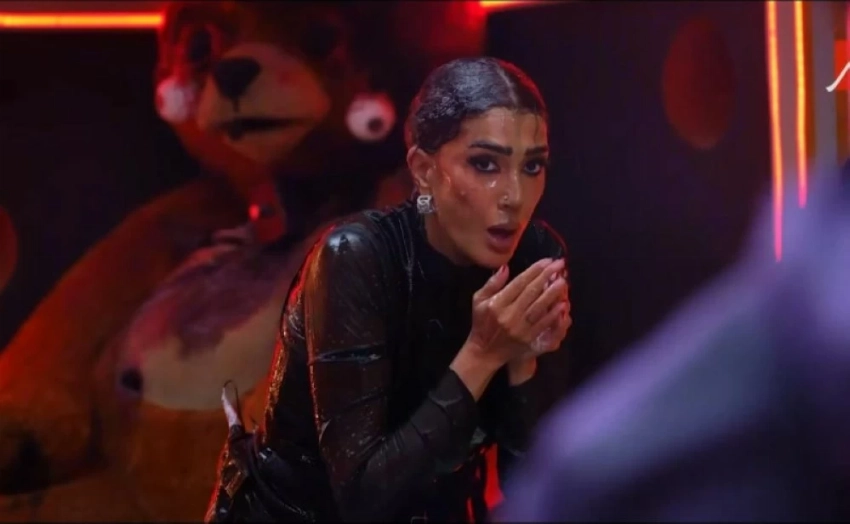
Program concept: The atmosphere of "The Squid Game" prevails
The teaser trailer revealed the main concept of this year's program, which appears to depart from traditional formats and delve into the world of complex psychological thrillers. The program draws inspiration from the internationally acclaimed Korean drama "Squid Game," with events unfolding in a secluded and mysterious setting.
In the promo, Ramez Galal appears disguised in an outfit similar to that of the players or goalkeepers in the series, using frightening sound and visual effects to heighten the tension for the guests. The plot revolves around subjecting the victims to a series of difficult challenges and unexpected surprises, which gradually escalate before Ramez reveals himself at the crucial moment, generating hysterical reactions that combine shock and terror.
A history of controversy and popular success
The "Ramez Level Monster" program comes as a continuation of star Ramez Galal's long career in the world of prank shows, which have become an annual tradition and an integral part of Ramadan television in the Arab world. For over a decade, these programs have achieved record-breaking viewership, topping search engine results and social media platforms as soon as their episodes air.
The support provided by the General Entertainment Authority reflects the extent of interest in providing a high-quality entertainment product, as Ramez's programs have evolved from simple street pranks to huge productions that rely on cinematic techniques and complex filming locations, which enhances Riyadh's position as a supportive destination for the Arab entertainment industry.

List of victims: Art and sports stars caught in the trap
The official promo revealed that a large number of A-list celebrities have fallen victim to Ramez's pranks this year, promising some explosive episodes. The list includes prominent names from the worlds of art and sports, most notably action star Ahmed El Sakka, known for his powerful reactions, as well as football stars like Egyptian national team player Zizo.
The list also included appearances by widely popular artists such as Ghada Abdel Razek, Ghada Adel, Asmaa Galal, and singer Diab, in addition to comedy and festival stars like Shaimaa Seif, Mustafa Gharib, and Hamo Beka. Veteran actress Samah Anwar, young actress Rahma Mohsen, and Caroline Azmy were also present, ensuring a wide range of reactions, from screaming and crying to violent resistance.
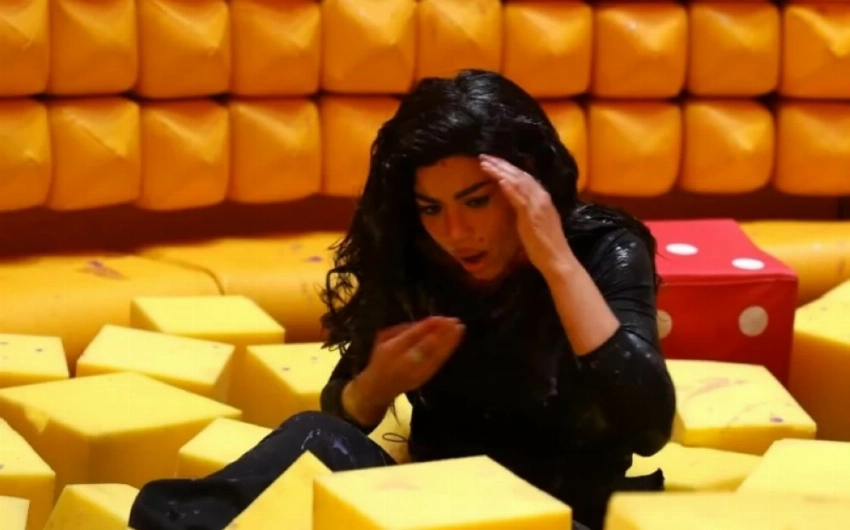
Dangerous behind-the-scenes details: Caroline Azmy injured
The filming of the program was not without its real dangers, highlighting the difficulty of the challenges this season. Reports revealed that the young artist, Caroline Azmy, sustained various injuries while filming her episode, resulting from a scuffle or fall during the prank. She was immediately taken to a hospital for necessary medical examinations and to ensure her well-being. This adds an air of seriousness and risk to this year's edition and increases the audience's curiosity to see what the stars faced behind the scenes.
Culture and Art
Mohamed Mounir sings the theme song for Rogina's Ramadan series "Had Aqsa"
King Mohamed Mounir returns to Ramadan drama with the theme song for the series "Had Aqsa" starring Rogina. Learn more about the song "Ta'ab," the series' plot, and its cast in the highly anticipated Ramadan season.

In a major artistic surprise that is set to ignite early competition in the upcoming Ramadan season, "The King" Mohamed Mounir has decided to return to the world of television drama theme songs, performing the opening theme for the series "Hadd Aqsa" (Maximum Limit), starring the renowned actress Rogina. This move adds significant artistic weight to the production, given Mounir's immense popularity and the enduring connection his voice has forged with timeless dramas in the hearts of Egyptian and Arab audiences.
Details of the song "Taab" and the return of the King
The new song, titled "Ta'ab" (Tiredness), has already been recorded by Mohamed Mounir and is ready for release at the start of Ramadan. The lyrics are by Ahmed Shabaka, and the music is composed and arranged by Ahmed Hamdi Raouf. It is produced by Rotana Music Group. This collaboration marks Mounir's strong return to the world of theme songs, a field in which he has always excelled, delivering memorable tracks that continue to resonate with audiences. This raises expectations for the success of both the song and the television series.
The artistic context and the importance of the event
Mohamed Mounir singing the theme song for any drama series is an artistic event in itself, not just a conventional addition. Historically, Mounir's voice has been associated with dramas that have become part of Egyptian cultural identity, and his participation in "Had Maqsa" (Maximum Limit) indicates the quality of the work and the attention to detail of its creators. This participation also reinforces Rogina's strong presence in recent Ramadan seasons, where she consistently tackles sensitive and controversial social issues.
The cast and crew of the TV series "Limit"
The series boasts a stellar cast alongside Rogina, including Mohamed El-Qass, who has recently achieved notable success, Khaled Kamal, Basant Abu Basha, Fadwa Abed, veteran actress Nashwa Mustafa, Bassam Ragab, Amir Abdel Wahed, Mariam Ashraf Zaki, and Mustafa Emad. The script is by Hisham Helal, and the series is directed by the promising young director Maya Ashraf Zaki in her highly anticipated directorial debut.
Series synopsis: Conflicts over money and influence
The series "Limit" unfolds as a social thriller, shedding light on the inner workings of the world of money laundering and financial corruption. The story centers on Rogina, who finds herself in a major predicament after mistakenly receiving a large sum of money while simultaneously taking out a massive bank loan. The plot thickens, revealing the social and psychological pressures faced by the protagonist and her husband, amidst conflicts stemming from betrayal of trust and disastrous, life-altering decisions, promising viewers a compelling dramatic experience.
Culture and Art
Hussein Fahmy settles the Palme d'Or controversy and Algeria: My remarks were spontaneous
Hussein Fahmy issues a statement clarifying the truth about his remarks regarding the Palme d'Or, denying any offense to Algeria and affirming his respect for the history of Algerian cinema and its global achievements.

The renowned Egyptian actor Hussein Fahmy, president of the Cairo International Film Festival, has put an end to the widespread controversy that arose in recent days across social media and news outlets regarding his remarks about the Palme d'Or award and international film festivals. In a firm official statement, Fahmy asserted that his comments had been taken out of context, emphasizing that they were part of a general theoretical discussion about the inner workings of international judging panels.

Context of the conversation and denial of offense
Fahmy clarified that his remarks came during a casual conversation about how the decisions of judging panels at major festivals are sometimes influenced by political factors and the prevailing atmosphere at the time of the festival. He emphasized that he had absolutely no intention of questioning the merit of any country or artwork in receiving awards. He explained that his use of certain examples was spontaneous and involved an unintentional overlap between events, names, and political positions. He categorically denied any intention to offend or diminish the value of leading Arab artistic works that have won international awards.
Historical background and importance of Algerian cinema
This clarification comes at a time when the Arab public, and the Algerian public in particular, holds a deep sensitivity and affection for their rich cinematic history. It is well-known that Algerian cinema boasts a golden record on the international stage, with the Palme d'Or win at the 1975 Cannes Film Festival for "Chronicle of the Years of Embers" by director Mohammed Lakhdar-Hamina being a pivotal event in the history of Arab and African cinema, as it remains the only Arab film to have received this prestigious award. Therefore, any discussion of these achievements is met with great interest and scrutiny from both critics and the public.
A message of love and appreciation to the Algerian people
In a related context, the Egyptian artist reiterated his deep respect and sincere love for Algeria, its leadership, people, and art. Fahmy stated that the achievements and international successes of Algerian cinema remain a source of pride for every Arab citizen, and that its place is always cherished and appreciated in the hearts of Egyptians and all Arabs.

Art as a bridge for communication between peoples
The president of the Cairo International Film Festival concluded his statement by emphasizing the pivotal role of art in bringing people together, noting that cinema remains a universal language that unites rather than divides, and strengthens the bonds of brotherhood among Arabs. He expressed his gratitude to his large Algerian audience, appreciating their understanding of the spontaneous nature of his remarks, and affirming that the artistic relations between Egypt and Algeria will remain a model of fruitful cooperation and shared creativity that transcends any passing misunderstanding.
-

 Culture and Art 6 days ago
The "Between and Between" exhibition in Jeddah: 5 artists reshape Saudi memory
-
Local News 4 days ago
Saudi Arabia's National Arabic Language Policy: 8 Principles to Promote Identity
-
Culture and Art, 1 week ago
Shakira's concert in Jeddah: Details of the international star's first concert in Saudi Arabia
-
Local News 3 days ago
Adopting the National Policy for the Arabic Language: Strengthening Identity and Vision 2030
-
Culture and Art, 1 week ago
The truth about Nancy Ajram's video and Epstein Island, and her legal response
-
Local News 4 days ago
The Riyadh-Rin-Bisha dual carriageway, spanning 559 km, has been completed
-
Local news one week ago
Launch of the new Dammam project with investments of 98 billion riyals
-
Local news two days ago
The Supreme Court calls for the sighting of the crescent moon of Ramadan 1447 on Tuesday evening