Culture and Art
"Is he referring to Sherine?"... A song by Hossam Habib sparks controversy
The song "Sibtak" (I Left You), released by Egyptian singer Hossam Habib as part of his new album for summer 2025, sparked widespread controversy among the public


The song “Sibtak” by Egyptian singer Hossam Habib, released as part of his new album for summer 2025, has sparked widespread controversy among the public on social media, with some suggesting that its lyrics seem to be directed at his ex-wife, Sherine Abdel Wahab.
Hossam Habib's song "Sibtak" is the first song from his new album to be released via Rotana's YouTube channel, amidst widespread interaction from the public on social media.
The song, with lyrics by Adham Moataz, music by Tamer Ali, and musical arrangement by Ahmed Wagih, explores feelings of betrayal and loss in a deeply emotional way. The lyrics say: "I let you say things about me that weren't true, I let you blame me and I still loved you. Why did you waste my soul with you? Why did my wounds increase? I was yours. My ambition was to please you one day. Because of my love for you, you hurt me, you caused me pain. I found myself living a story that changed me, and it's all thanks to you.".
Related News
Many fans linked the name and lyrics of the song to his relationship with his ex-wife, the artist Sherine Abdel Wahab, while others saw it as a clear hint at his previous personal experience with Sherine Abdel Wahab, especially since Hossam Habib had previously confirmed that his new album contained many details about the trials and tribulations of his personal life in recent years.
It is worth mentioning that Hossam Habib returned to singing after an absence of 8 years, and the song “Kaddaba” is his last musical work that he released last year. It is written by Amr El Masry, composed by Amin Nabil, and arranged by Islam Refaat.


Culture and Art
Dounia Batma recounts the painful details of her imprisonment in the Hamza Mon Baby case
In her first appearance, Moroccan artist Dunia Batma breaks down in tears as she reveals the most difficult moments she spent in prison and the impact of the 'Hamza Mon Baby' case on her life and family.

A touching appearance by the artist Donia Batma
In her first television appearance since her release, Moroccan artist Dounia Batma couldn't hold back her tears as she recounted the harrowing details of her year-long imprisonment in the Oudaya prison in Marrakech. This followed her sentencing in the case that rocked Moroccan public opinion, known in the media as the "Hamza Mon Baby" affair.
The full context of the "Hamza Mon Baby" case
The case dates back to 2018, when anonymous accounts appeared on Snapchat and Instagram under the name "Hamza Mon Baby." These accounts specialized in defaming and blackmailing public figures, artists, and celebrities in Morocco by publishing private photos, personal conversations, and confidential information, causing significant psychological and financial harm to many victims. The case sparked widespread controversy and became a matter of public concern, prompting Moroccan authorities to launch a thorough investigation to identify and hold accountable those responsible for these accounts.
Being separated from my daughters was the hardest experience
During the interview, Donia Batma broke down in tears, confirming that the hardest thing she had ever experienced was being forcibly separated from her two daughters. She explained that her family had told the girls she was traveling for work to spare them the shock of learning the truth. Her voice filled with emotion, she said, "Being separated from my daughters was incredibly difficult for me, and they are so innocent." She added that her mother had taken on the responsibility of caring for them during that difficult time, which only intensified her feelings of both pain and gratitude.
Crisis reveals people's true character
Batma confirmed that this ordeal revealed the true nature of those around her, as many she considered friends abandoned her, while only a few stood by her side, some of whom she hadn't expected to support her. She believes that difficult situations reveal people's true character, and that she learned a valuable lesson about trust and human relationships.
Judicial details of the ruling
It is worth noting that the Court of Appeal in Marrakech had increased the initial sentence against Dunia Batma, raising her prison term from eight months to one year. The conviction came after her involvement in multiple charges, including "participating in fraudulent access to an automated data processing system, intentionally obstructing the operation of this system, disseminating and distributing statements and images of individuals without their consent via information systems, and disseminating false information with the intent to harm the private lives of individuals and defame them, and participating in such actions.".
The impact of the case on the art scene and society
The "Hamza Mon Baby" case marked a turning point in the Moroccan judiciary's handling of defamation and online extortion. The conviction of a public figure of Dunia Batma's stature highlighted the authorities' seriousness in combating cybercrime and protecting individuals' privacy, regardless of the accused's social standing. The case also sparked a broad societal debate about the ethics of social media use and the limits of freedom of expression.
Culture and Art
Reda El Bahrawy retires from singing in accordance with his late mother's wishes
Popular singer Reda El Bahrawy has announced his retirement from singing, confirming that the decision was made in fulfillment of his late mother's wishes. Details of the decision and its impact on the music scene.

In a surprising move that shocked the Egyptian art scene, popular singer Reda El Bahrawy announced his decision to permanently retire from singing. This poignant announcement came after he received condolences for his mother's passing in his hometown in Gharbia Governorate. He confirmed that his decision was in accordance with his late mother's wishes, as she had asked him to leave the music industry before her death.
Background to the decision: Mother's will
In his statements, El-Bahrawy explained that the decision was not made on a whim, but rather as a fulfillment of a promise he made to his mother during her final days. He said, “This is a promise I made to her, and I ask God to grant me the strength to keep it.” This stance reflects the deep bonds of family in Egyptian culture, where the will of parents, especially the mother, is held in high esteem. This is what made his decision resonate so strongly with his fans, despite their sadness at his anticipated departure from the artistic scene.
Reda El Bahrawy: Who is he and what does he represent?
Reda El Bahrawy is considered one of the most prominent stars of popular music and festival music in Egypt over the past decade. Hailing from the city of Tanta, his powerful voice and distinctive performance have garnered him a wide fan base spanning various social classes. His songs have become associated with happy occasions and Egyptian celebrations, an integral part of the daily music scene. His work belongs to the "festival" genre, which originated in working-class neighborhoods and achieved international recognition thanks to its fast-paced rhythms and lyrics that reflect the realities of youth.
Expected impact on the art scene
Bahrawi's retirement leaves a significant void in the popular music scene. At a time when this genre is experiencing unprecedented popularity, Bahrawi was one of its main pillars. His decision reopens the debate surrounding the phenomenon of artists retiring for religious or personal reasons, a trend that has recurred in the Arab world, most recently with the Jordanian artist Adham Nabulsi announcing his retirement for the same reason. This decision is expected to spark widespread discussion about the relationship between art and personal and familial commitments.
A struggle with illness and his latest works
It is worth noting that Reda El Bahrawy's mother passed away a few days ago after a long battle with illness. Her health had deteriorated recently, and she had been admitted to intensive care several times. El Bahrawy recently released his latest song, "Enta Lessa Shoft Haga Men El Zaman" (You Haven't Seen Anything Yet), in collaboration with poet and composer Mohamed Abdel Moneim and music arranger Ashraf El Prince. This song may be his last release before his retirement.
Culture and Art
The Complete Works of the Historian Ibrahim bin Isa: A Treasure Documenting the History of Najd
Discover the complete works of historian Ibrahim bin Issa in 19 volumes, a project that documented the history of Najd and the founding of the Saudi state through the efforts of the King Abdulaziz Foundation.
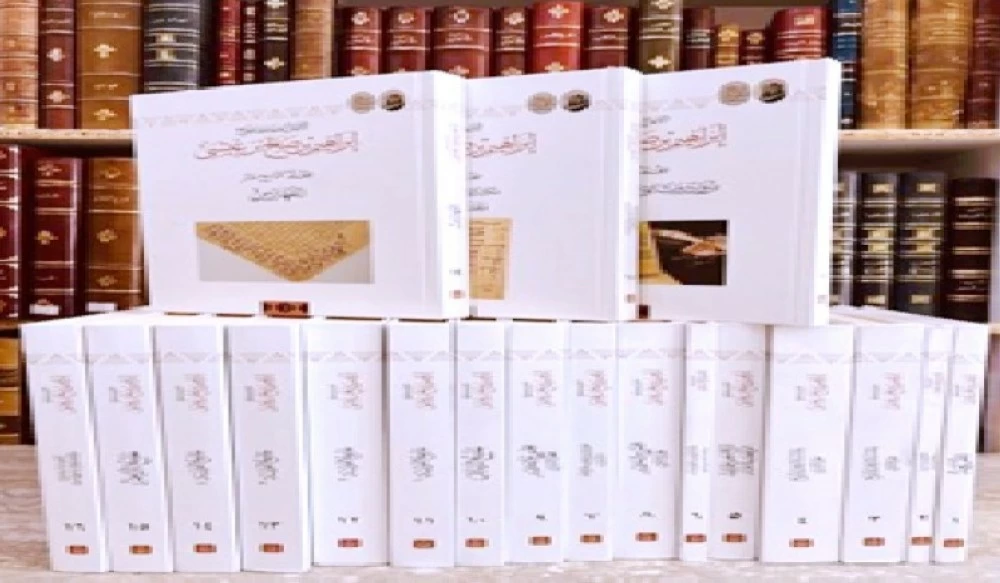
In pivotal moments of history, ink becomes more precious than gold, and documents become the voice of generations yet unborn. In the heart of the Arabian Peninsula, where oral tradition was the dominant record, the historian Sheikh Ibrahim bin Saleh bin Issa (1270–1343 AH) undertook an extraordinary task: to be the custodian of Najd's memory during a crucial transitional period that witnessed the formation of the third Saudi state. Today, his efforts are embodied in a monumental cultural and national project, "The Complete Works of the Historian Ibrahim bin Saleh bin Issa," published in 19 volumes by the King Abdulaziz Foundation, representing a solid foundation for modern Saudi history.
Historical context: We find ourselves in a time of great transformations
Sheikh Ibrahim bin Isa lived during a period when the Najd region was undergoing profound political and social transformations. This era witnessed the end of the Second Saudi State, a period of instability, and the dawn of the Third Saudi State under its founder, King Abdulaziz bin Abdulrahman Al Saud. In this climate, written documents were scarce, and the recording of events relied heavily on oral accounts, which could be lost or altered over time. Hence the exceptional value of Ibn Isa's work. He was not merely a transmitter of news, but a witness to and participant in his era, a judge, a jurist, and a traveler, which granted him a comprehensive perspective and a unique ability to verify and document.
The encyclopedia's contents: A comprehensive knowledge museum
Browsing through these nineteen volumes, the reader finds themselves not before traditional history books, but rather entering a comprehensive museum of knowledge reflecting all aspects of life in Najd. Its treasures are distributed as follows:
- The annual records: In works such as “A History of Some Events that Occurred in Najd” and “The Necklace of Pearls,” Ibn Isa provides an accurate record of political and military events, but he goes beyond that to document the climate, epidemics, years of drought, commodity prices, and the movement of people, drawing a panoramic picture of society.
- Jurisprudence and Islamic Sciences: His works, such as “Hashiyat al-Rawd al-Murabba’,” demonstrate his depth as a jurist, as he connects the legal text with lived reality, which explains his strict methodology in historical documentation.
- Social and economic history: “The Great Collection” and “The Collection of Benefits” (seven volumes) are considered among the greatest treasures of the encyclopedia. Here we find the history of daily life: folk medicine, astronomy, the geography of wells and villages, and the Nabataean poems that he preserved from being lost.
- The documentary archive: The collection of biographies and rare documents includes what can be considered the “secret archive” of Najd, including deeds, wills, correspondence, genealogies, and biographies of scholars and families not mentioned in other sources.
Importance and impact: From local to global
The significance of these complete works extends far beyond the Saudi library. Locally , they are a cornerstone in preserving national memory and an essential reference for researchers and new generations to understand the roots of their nation and identity. Regionally , the encyclopedia provides raw material for studying the history of the Arabian Peninsula and the relationships between its various regions. Internationally , it offers researchers and scholars a rare and reliable primary source, written from a local perspective, for studying the region's history beyond purely external narratives. It contributes to writing a more balanced and profound history of the Middle East.
Institutional effort to preserve an individual legacy
Collecting this heritage was no easy task, as Ibn Isa's manuscripts were scattered across libraries and archives worldwide, from Saudi Arabia, Kuwait, and Egypt to the United States. It required a monumental institutional effort from the King Abdulaziz Foundation, which formed specialized committees comprising nearly 20 researchers who worked for years to collect, verify, edit, and catalog the manuscripts. The result is this monumental work, exceeding 7,000 pages, an achievement considered one of the largest documentation projects in the Kingdom's history.
In conclusion, Ibrahim bin Saleh bin Issa passed away a century ago, but he has returned today through these volumes, more present than ever before. These are not merely books to be read, but a homeland to be explored, and proof that when ink is faithful, it becomes more powerful than time itself.
The acquisition of this collection came through a gift from Minister of State Khalid bin Abdulrahman Al-Issa, the historian’s grandson, to the editor-in-chief of “Okaz”, colleague Jamil Al-Dhiyabi, in an initiative that represents a knowledge endowment that enhances the value of the document and its role in preserving the nation’s heritage.
-

 Reports one week ago
Achievements of Saudi government sectors in 2025
-
Local news two weeks ago
FDA warns of contaminated Nestle infant formula | Recall details
-
Technology 4 weeks ago
US ban on drones: reasons and consequences
-
Technology 3 weeks ago
Saudi Arabia launches the world's largest government data center, 'Hexagon'
-
Technology 3 weeks ago
Merging KSA Map and Baladi Plus: A step towards Saudi digital sovereignty
-
Technology two weeks ago
Hexagon: Saudi Arabia strengthens its data sovereignty with the world's largest government center
-
Technology 3 weeks ago
European banks and artificial intelligence: A plan to lay off 200,000 employees
-
Politics 3 weeks ago
The coalition destroys smuggled Emirati weapons in Mukalla in a qualitative strike